JOURNEY THROUGH AMERICAN MUSIC

Here are 10 songs that celebrate the beauty of America!


Published on January 6, 2024


Image: Marius Masalar

It’s no surprise that "America the Beautiful" and its landscapes, oceans, and mountains have been recognized by countless works of art. Every state has inspired legendary musicians and songwriters with the many wonders they have to offer. From Frank Sinatra’s moonlit Vermont to Elvis's wild nights in Vegas, we remember some of these iconic composers with a selection of ten songs that celebrate U.S. states.

1

"Georgia on My Mind" by Ray Charles

Image: ibuki Tsubo

We start this list with a timeless classic. Ray Charles sings a tender and moving love song to his home state, pining for a "road that leads back" to his sweet Georgia. You might be surprised to learn that this song wasn’t actually written by Ray Charles, but rather by Hoagy Carmichael and Stuart Gorrell, and first recorded by Carmichael in 1930.

Nevertheless, Ray Charles’ version is, without a doubt, the most iconic, so much so that it was declared Georgia’s official state song in 2006.

2

"Connecticut" by Judy Garland and Bing Cosby

Image: Rusty Watson

As Dorothy Gale sings in The Wizard of Oz, "There’s no place like home." Who else but Dorothy herself could make you miss Connecticut with just a song? Judy Garland and Bing Cosby sing their praises of Connecticut in this 1944 tune written by Broadway legends Ira and George Gershwin. Garland’s happy-go-lucky voice lovingly describes this "land of dreams and moonlit streams" before declaring "Connecticut will always be my home, sweet home."

3

"Moonlight in Vermont" by Frank Sinatra

Image: Tyler Cordaro

This 1944 song has had many incredible versions (including legendary names like Louis Armstrong, Billie Holiday, and Ella Fitzgerald), but perhaps Frank Sinatra’s version is the most well-known. The Sultan of Swoon’s dulcet tones line perfectly with the lyrics: an idyllic image frozen in time of a hypnotizing, dimly lit summer night in Vermont’s majestic mountains.

4

"Floridays" by Jimmy Buffett

Image: Unsplash

Jimmy Buffet’s 1986 album Floridays, and the track of the same name, paint a lovely picture of the Sunshine State. The song’s narrator keeps "looking for better days", while apparently finding them on those Floridays filled with "blue skies and ultraviolet rays."

While the song has an unquestionable nostalgic feeling to it, one can’t help but picture cold beers and the sun setting over the Miami coastline while listening to this song. Fun fact: This was the last studio album to feature Jimmy Buffet’s trademark mustache since he shaved it by 1988’s Hot Water.

5

"Jersey Girl" by Tom Waits (and Bruce Springsteen)

Image: Manisha Raghunath

Another tale of a version becoming more popular than the original, "Jersey Girl" was written by legendary composer and musician Tom Waits for his 1980 album Heartattack and Vine, and was first covered by Springsteen in 1981. You can tell how the Boss is truly one of New Jersey’s favorite sons in his live performance of this song at Meadowlands Arena: when he sings about riding "across the river to the Jersey side", the crowd erupts in deafening cheers.

6

"Chicago" by Sufjan Stevens

Image: Joel Mott

While this is the first song in this list to reference a city rather than a whole state, Sufjan Stevens's 2005 concept album Illinois is a beautiful exploration of a state the songwriter describes as the "center of gravity of the American midwest." In that sense, "Chicago" is a sad but beautiful depiction of the Windy City. A powerful orchestra backs Steven’s melancholic voice in a song about love, mistakes, and driving back to Chicago while "all things go."

7

"Viva Las Vegas" by Elvis Presley

Image: Grant Cai

Another song named after a city, this iconic track is one of the King’s most popular songs. "Viva Las Vegas" (and the 1964 film of the same name) have become synonymous with the Entertainment Capital of the World. Elvis's energetic lyrics about the city that would be his home five years later describe the frenzy and enjoyment this "bright light city" has to offer.

8

"Kentucky Woman" by Neil Diamond

Image: lauren barton

We could have easily included Diamond’s powerful patriotic song "America" in this list, but this ode to the Bluegrass State was too good to pass. Diamond sings about a strong-willed gal who "shines with her own kind of light," and that seems to incarnate all the qualities that Kentuckians take pride in. Many are more familiar with Deep Purple’s rock cover, filled with drum fills and electric guitar solos, but Diamond’s acoustic ballad is a classic love letter to a whole state.

9

"Song of Wyoming" by John Denver

Image: Karsten Koehn

John Denver’s songs are known for their acoustic guitar chords and lyrics filled with praise for nature and disdain for city life. This melancholic ballad to the Cowboy State is no exception. The song that Wyoming sings for Denver’s narrator (a lonesome cowboy tired of riding) is comprised of the sounds of a moonlit prairie, filled with the "cottonwood whispers" and the wild melodies of nightbirds and coyotes.

10

"South Dakota Morning" by the Bee Gees

Image: Jonathan Mast

While they might be more well-known for writing the quintessential soundtrack to New York’s disco scene, the Bee Gees’s 1973 "South Dakota Morning" is a slow-paced, melodic ballad about the "Mount Rushmore" State. The Gibb brothers sing a sad but beautiful tale about a rainy South Dakota morning, and about laying down "on the South Dakota grass."

The living machine

Discover 12 of the most fascinating (and surreal) facts on the human body


Published on January 6, 2024


Image: MART PRODUCTION

The human body is an incredibly sophisticated machine, full of mysteries. Throughout history, science has revealed fascinating facts about how it works, yet lesser-known curiosities continue to surprise and challenge our understanding. Are you ready to discover 12 fascinating quirks about your body that will leave you speechless?

1

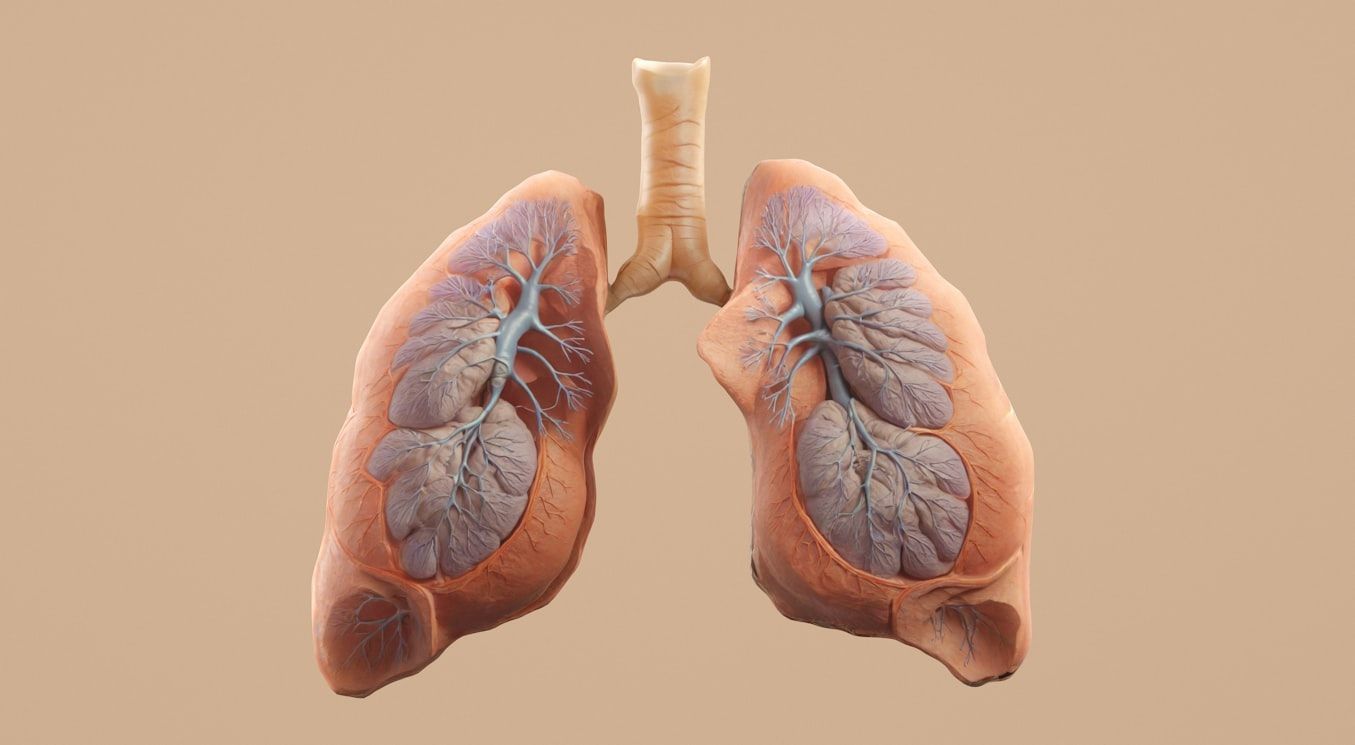
Lungs

Image: Aakash Dhage

A person inhales and exhales over 2,000 gallons of air daily, taking roughly 21,000 breaths a day. We perform this action almost unconsciously, but it is vital to absorb oxygen and expel carbon dioxide.

Now, did you know the right lung is slightly larger than the left lung to make room for the heart? And that the lungs contain over 300 billion tiny blood vessels called capillaries that, if unfolded, would extend to 1,500 miles? Don't worry, you learn something new every day!

2

Nails

Image: xx

The primary function of nails is to protect the fingertips, which contain a high concentration of nerve endings. In fact, this is one of the most sensitive areas of the human body.

Because they are more exposed, fingernails grow at a much faster rate than toenails. Fingernails grow about 1/8 inch per month, while toenails grow about half as much. Nail growth is also determined by factors such as weather, often speeding up during the summer. If you happen to lose a fingernail, it may take up to six months to grow back from base to tip.

3

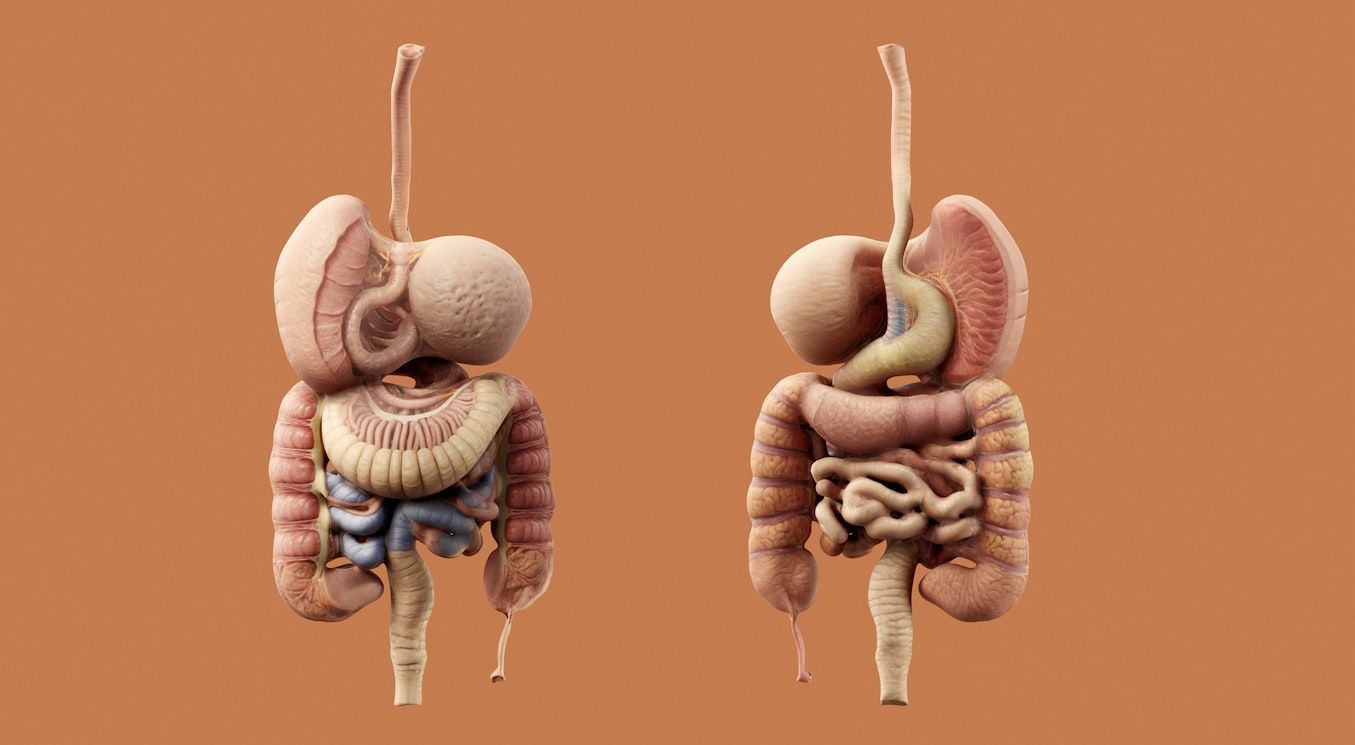
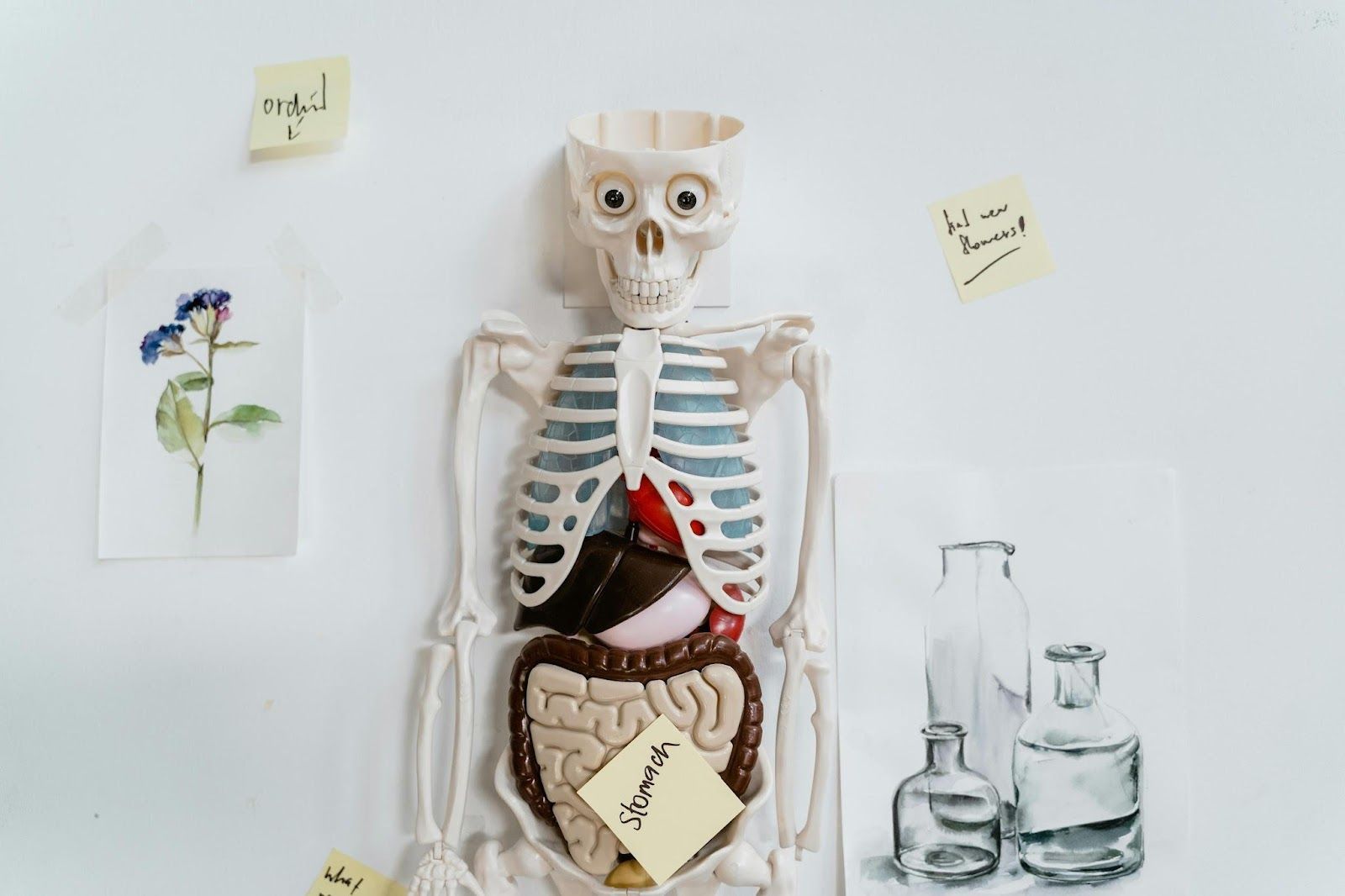
Stomach

Image: Aakash Dhage

The stomach is a fascinating organ with many peculiarities. For example, it produces hormones that influence appetite and sleep, and it can stretch to hold up to 50 ounces of food when we eat.

But perhaps its most incredible feature is its production of hydrochloric acid, which kills bacteria and aids digestion. This acid is so potent that it can even dissolve metals such as zinc. Fortunately for us, the stomach has a protective layer of mucus that is renewed every three to four days. If this lining weren’t continually replaced, it would dissolve. In other words, your stomach would digest itself.

4

Height

Image: Surja Sen Das Raj

Your thigh bone, or femur, is the largest bone in your body, accounting for about a quarter of your total height. But did you know that human height can vary throughout the day and with age?

Every morning when you wake up, you are about 0.5 to 0.75 inches taller than when you go to bed at night. This is because the soft cartilage between your bones gets compressed by the force of gravity when you stand or sit. Starting in your forties or fifties, people gradually lose nearly half an inch of height per decade due to bone density loss, disc compression, and other age-related factors.

5

Skin

Image: Leighann Blackwood

On an average adult, skin covers an area of about 20 square feet and has multiple functions. The outer layer, called the epidermis, consists of dead cells that help regulate temperature and protect the body from dirt and germs. But did you know that your body is constantly losing and replacing these cells?

Every minute, you shed more than 30,000 dead skin cells. In fact, the entire surface of your skin is replaced every month, which, in other words, means that you will lose around 40 pounds of skin and have around 1,000 different skins in your lifetime.

6

Bones

Image: Nino Liverani

We all remember what we learned in school: the human body has 206 bones. However, at birth, humans have approximately 300 bones, many of which fuse as we grow, resulting in the 206 bones found in adults. More than half of these bones are located in the hands and feet, with 27 bones per hand and 26 per foot.

Another interesting fact about human bones is that they are as strong as granite. A small piece of bone can support up to 9 tons of weight!

7

Eyes

Image: Vitalii Khodzinskyi

The eye is one of the most complex and fascinating organs of the human body. It can distinguish up to 10 million colors and adapts so quickly that it can adjust to extreme light conditions within seconds. Plus, your eyelids blink 15 to 20 times per minute, equivalent to roughly 10% of the time you spend awake!

If you have blue eyes, you are among the 8 to 10% of the world's population. Blue eyes result from a mutation that reduces pigment in the iris. Researchers believe this mutation first appeared in a person living in Europe 6,000 to 10,000 years ago, which means that all blue-eyed people living today share a common ancestor.

8

Food and drink

Image: Tony Litvyak

The human body needs food and water to survive. In fact, water makes up approximately 50% to 70% of body weight, depending on age, sex, and body composition. While the body can survive up to seven days without food, it can only last about two days without water.

Have you ever wondered how much food and drink we consume? Here's the answer: The average person eats roughly 55 tons of food and drinks about 11,000 gallons of liquid during a lifetime.

9

Temperature

Image: Liana S

We know that factors such as age, diet, physical activity, illness, and the time of day can influence temperature. In fact, body temperature tends to be lower in the morning and higher in the evening.

But here's the most surprising fact about body temperature: in just 30 minutes, the human body produces enough heat to boil half a gallon of water. Now that’s a figure you probably didn’t expect!

10

Tongue

Image: leyre del rio

For its size and composition, the tongue is the strongest and most flexible muscle in the human body. It is covered with roughly 10,000 taste buds, each containing up to 100 cells that help you detect flavors ranging from sweet to spicy. As you age, some taste buds die and are not replaced, which is why younger people often have a more sensitive sense of taste than older individuals.

But here's a fact that will blow your mind: your tongue print is as unique as your fingerprints. From the impression of a tongue, it is possible to identify a human being with similar accuracy as with fingerprints or the iris of the eyes. Luckily, it’s not a technique commonly used by forensic police!

11

Veins

Image: Elīna Arāja

Did you know that the human body contains about 60,000 miles of blood vessels, enough to circle the Earth two and a half times? Additionally, an average adult has roughly 1.2 to 1.5 gallons of blood circulating through the body. So why do veins look blue?

If you look at your wrists, you can probably see blue veins under your skin. It may sound strange, but the reason for this is to do with the way your skin absorbs light and reflects it back to your eye. So, now you know, nobody has blue blood, not even royalty!

12

Ears

Image: Franco Antonio Giovanella

Your inner ear contains fluid that helps send information about balance and movement to your brain. This fluid is also the reason you sometimes get motion sickness. When you look out of a car window, your eyes signal to your brain that your body is moving, but because you are actually sitting still, your brain becomes confused, which can make you feel queasy.

Earwax is produced by your body to protect your ear canal from dirt, insects, and bacteria. Although we commonly call it "wax," it is actually a substance largely composed of dead skin cells and other secretions. By the time it reaches the outer ear, earwax has been inside your ear for about a month!

Looking for an extra scoop of literary fun?

Learn more with our Word of the day

famous

/ˈfeɪməs/