These towns are the bee’s knees

Have you ever heard about Cat Island?


Published on March 29, 2026

Image: Geranimo

Traveling to foreign cities and towns is a great way to interact with different people and their cultures, but have you ever thought about visiting an animal town? Scattered around the world, some of these places are the result of natural reserves set up to protect endangered species, while others are simply a product of life’s circumstances. Let’s take a look at 10 "animal towns" around the world!

1

Aoshima, Japan

Image: Peter Lam CH

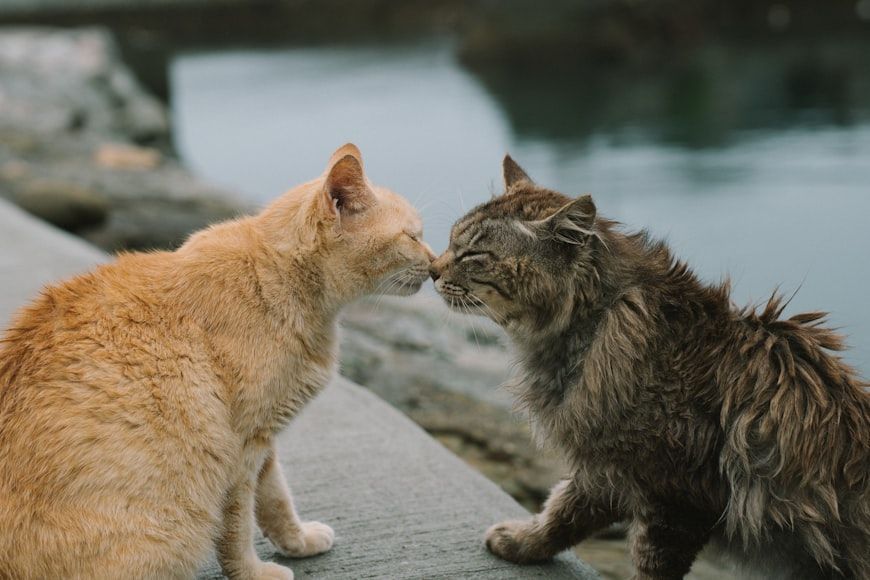
Also known as Neko no Shima, or Cat Island, this Japanese town has become a popular tourist destination for cat lovers worldwide. A former fishing town, cats were introduced to Aoshima as a means of controlling rodents, but they quickly outnumbered the human population. It is estimated that there are around 36 cats for every human on Aoshima.

2

Churchill, Canada

Image: Hans-Jurgen Mager

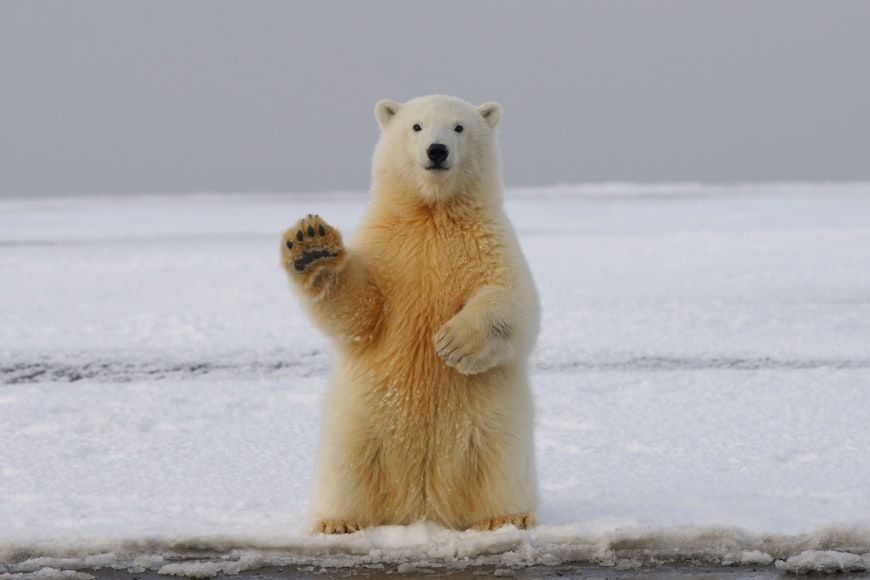
Every winter, this town in the Canadian province of Manitoba receives an influx of furry visitors when hundreds of polar bears make their way to Hudson Bay to hunt for seals. Residents do their best to avoid them, but a few curious bears still go snooping around, and some even end up in "polar bear jail" before being released back into the wild.

3

Assateague Island, USA

Image: Sara Cottle

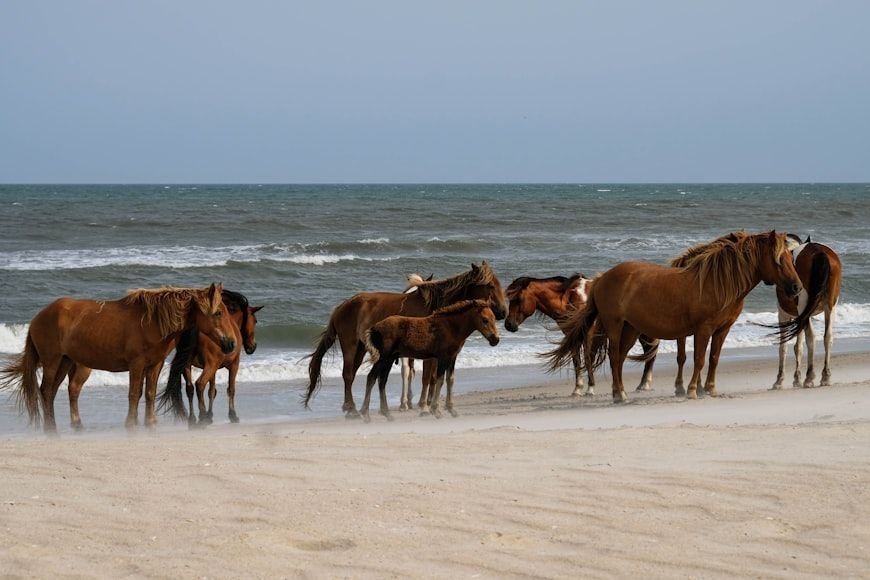
Assateague is a barrier island located along the Maryland-Virginia border on the Atlantic coast. It is famous for its population of feral horses, most likely descendants of formerly domesticated animals. Maryland and Virginia residents disagree on whether the animals should be called horses or ponies, a discussion that has not been settled because the animals have horse-like characteristics but pony-size stature, most likely due to environmental conditions.

4

Christmas Island, Australia

Image: Raphael Bick

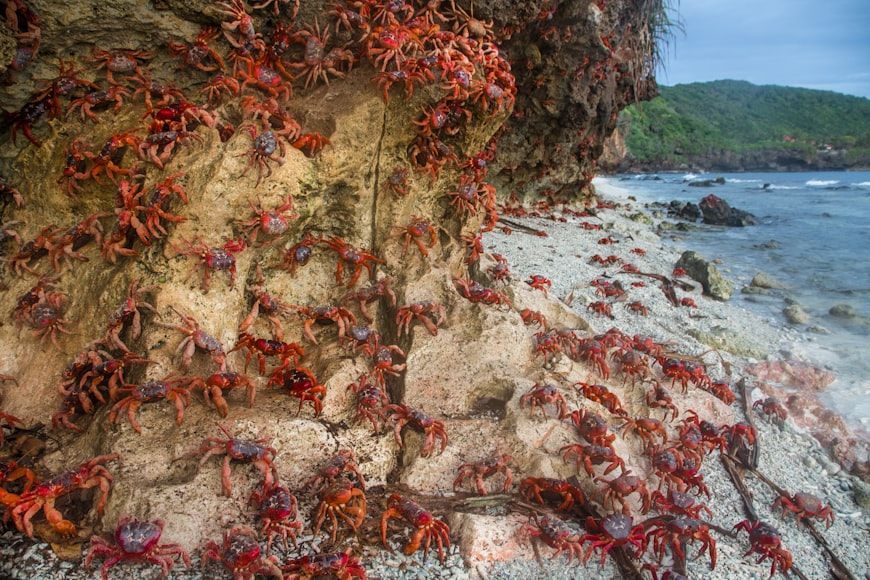
Each November, this Australian island near the coast of Indonesia becomes the setting for a natural wonder, the annual red crab migration. The island’s red crab population—estimated at around 100 million crabs—travels to the sea to lay their eggs. To allow the horde of crustaceans to safely reach the shore, authorities close off roads around the island.

5

Pig Beach, The Bahamas

Image: Roberto Nickson

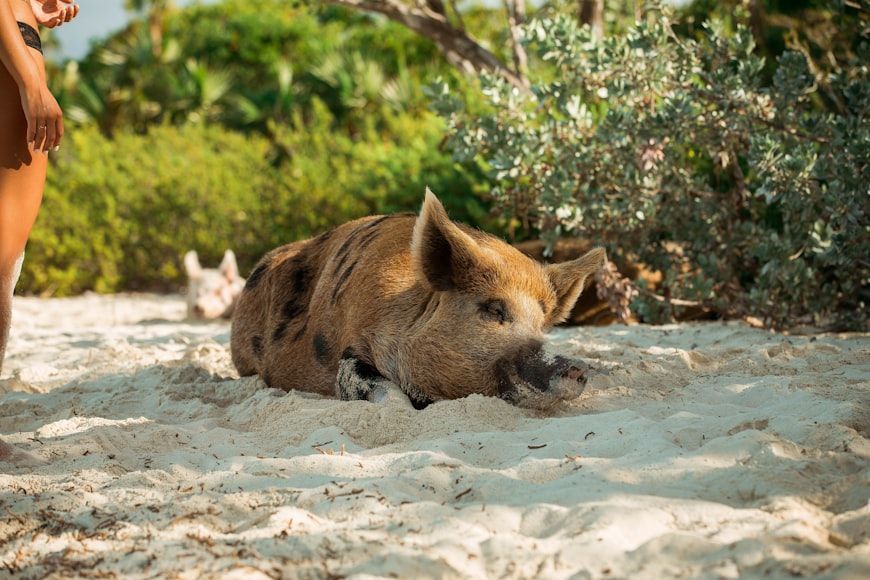
This beach on the inhabited island of Big Major Cay is not only a tropical paradise but also home to an unexpected animal community. No one knows exactly where the pigs came from, but the swimming pigs have become a popular tourist attraction, and they are often fed by the visitors of neighboring islands.

6

Pier 39, USA

Image: David Vives

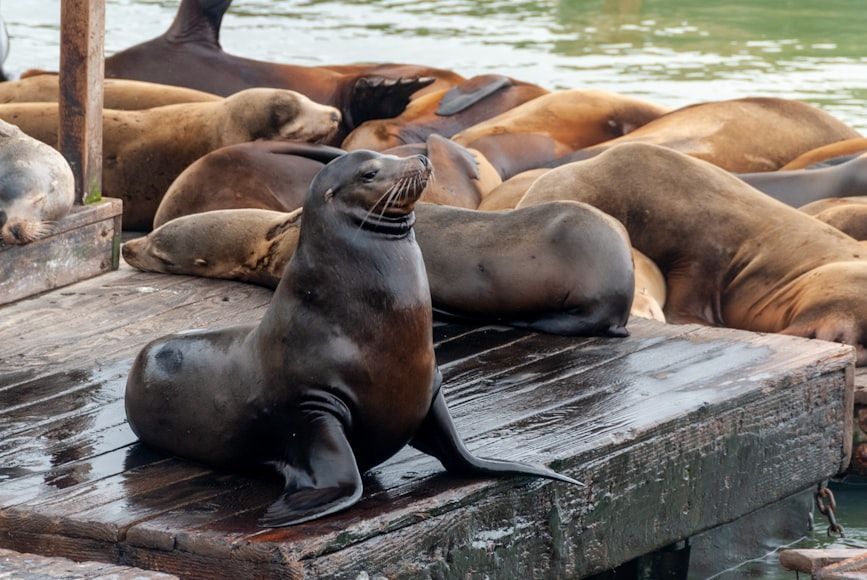
This one is not really a town, but it is home to a colony of friendly sea lions. Located at a shopping and entertainment complex on a San Francisco pier, the animals began moving in during the 1980s from a more distant colony. After an earthquake in 1989 caused residents to remove their boats while the pier was being refurbished, the sea lions made their home there and have shared the space with humans ever since.

7

Okunoshima, Japan

Image: Dave Solce

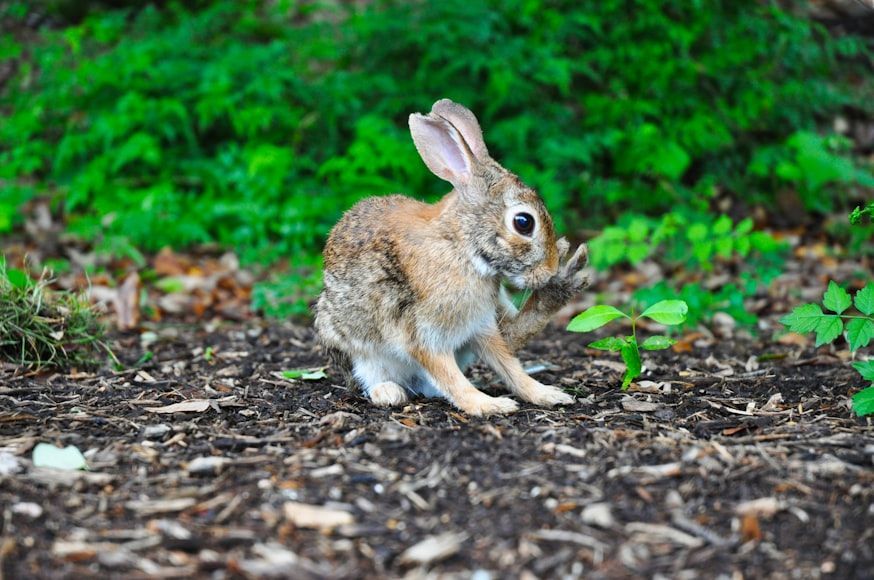
Located in Japan’s Inland Sea, Okunoshima is home to a huge population of free-roaming rabbits. These animals are descendants of domestic rabbits, so they are quite tame and will often approach humans. In order to protect the rabbits, animals like cats and dogs are banned from the island.

8

Punta Tombo, Argentina

Image: Fermin Rodriguez Penelas

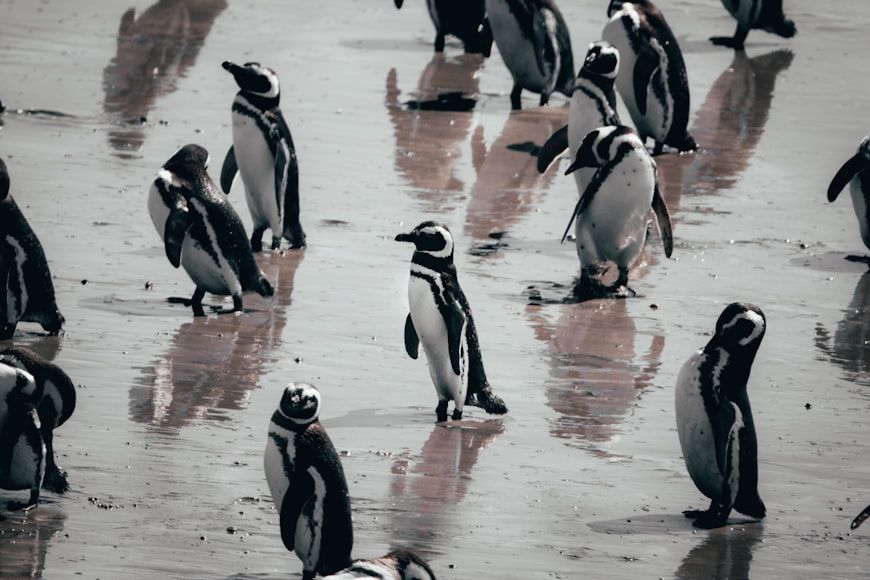
A protected reserve since the 1970s, this South American peninsula is home to the largest colony of Magellanic penguins in the world. Despite threats such as oil spills affecting the animals, the population numbers have steadily risen in the past several decades, and nowadays it’s estimated that the colony houses nearly a million birds.

9

Runde Island, Norway

Image: Sophia Becker

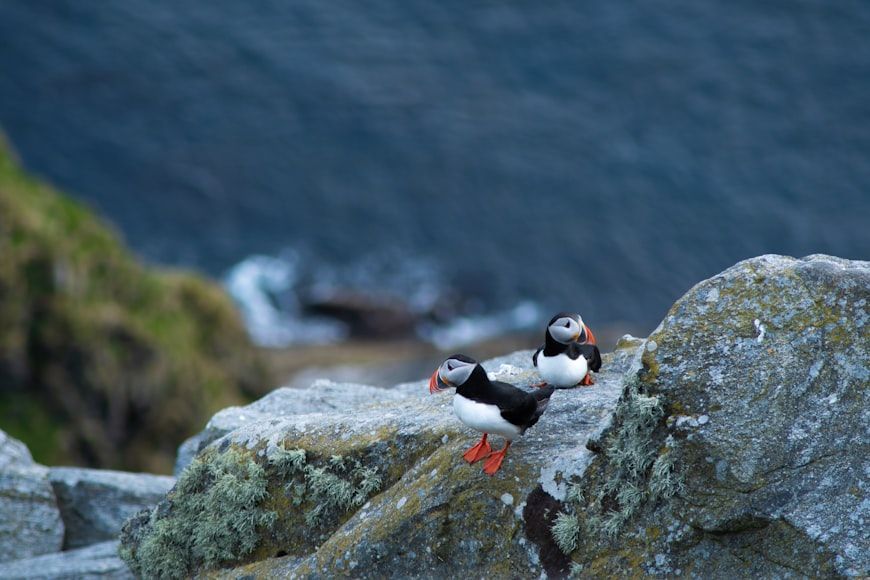
Off the coast of Norway, this island has a small human population—just a little more than 100 people—but they are greatly outnumbered by seabirds, which number between about 500,000 and 700,000. The island is considered a protected reserve and hosts many bird species, the most notable being the Atlantic puffin.

10

Polonnaruwa, Sri Lanka

Image: Timo Wagner

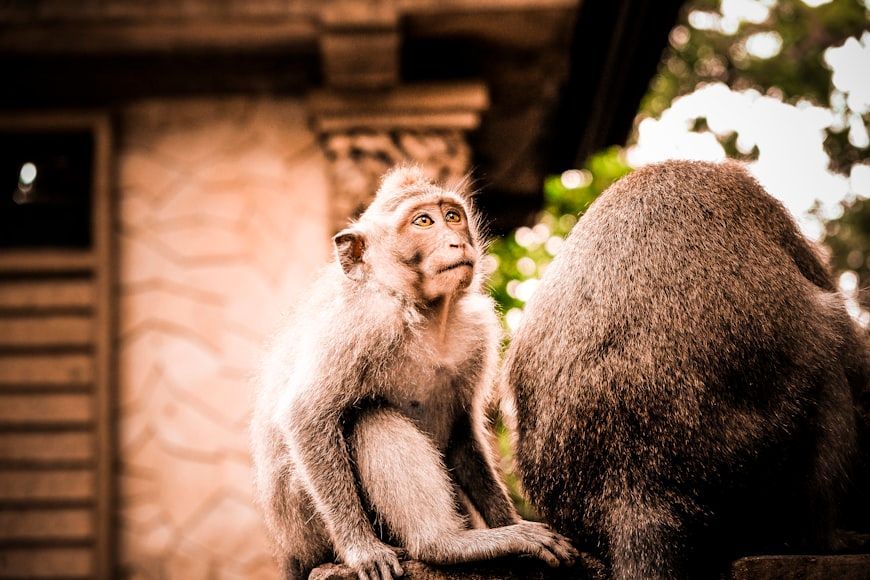
Once a royal city, Polonnaruwa is now an archaeological site near a modern town of the same name. The ruins have been declared a UNESCO World Heritage Site, but they also have an additional tourist attraction: a colony of toque macaques, residents of the ruins for centuries.


ENJOY THE HOLIDAYS

Discover 10 Traditions From Around The World To Help You Welcome The New Year!


Published on March 29, 2026


Image: Myriam Zilles

A new year is almost upon us, and with it comes the promise of resolutions, wishes, and good times with friends and family. We would like to take this opportunity to wish you a lovely new year, and we can’t think of a better way to do that than to explore ten different and exciting New Year’s Eve traditions from all over the world. Looking for a fun, new way of celebrating this year? Keep on reading and enjoy our list!

1

Grapes, anyone?

Image: Nataliya Melnychuk

Want to make sure the twelve months of the next year meet your expectations? Spanish people might be able to help: they have a hundred-year-old tradition to make sure the upcoming year is filled with good fortune. And what’s that method, I hear you ask? Grapes, of course!

The Twelve Grapes is a tradition that dates back to at least the end of the 19th century, and it consists of eating a grape for each of the midnight bell strikes on December 31st. Most people make twelve wishes, one for each grape eaten. This tradition has expanded to several other Spanish-speaking countries and communities.

2

We hope you brought a sweater!

Image: Daniel Born

This one is only for those not afraid of the cold. A rather recent Russian tradition (that goes back approximately 25 years) involves two divers planting an underwater New Year’s tree below the icy waters of the frozen Lake Baikal. These two adventurers dive for more than 100 meters in waters with a temperature of 24.8 F, after which they are aptly nicknamed "Father Frost" and "The Ice Maiden".

3

Haud Hogmanay!

Image: Chris Flexen

As anyone who has ever sung Auld Lang Syne can testify, Scotland is synonymous with New Year’s Eve celebrations. Hogmanay is a Scots word that means "last day of the old year", and it has become the name for celebrating the New Year in a Scottish manner. Celebrations usually include the morning of January 1st, and sometimes even January 2nd, which is a Scottish bank holiday.

Customs vary throughout the Scottish regions, although they usually involve celebrating and exchanging gifts with friends and family. Some regions, like Aberdeenshire, participate in a rather extreme local custom. Residents take part in a ceremony down the main street, swinging fireballs made of barbed wire and flammable materials atop their heads. This is a way to ensure that any bad spirit might be burned before the start of the new year.

4

Shh… Quiet Please.

Image: Kristina Flour

If you think back on your last New Year’s Eve celebration (or maybe even your past five), you might remember a night of enjoyable excess: it’s a loud, festive affair, filled with fireworks, laughter, and perhaps a little too much eating and drinking. Which is perfectly fine—a bit of overindulgence is a lovely way to welcome the new year. However, should you want to experience a completely opposite way of celebrating, you can always take a trip to Bali, Indonesia.

Held in March, the Balinese New Year is called Nyepi and it is a day dedicated to silence and meditation. Nyepi is held for 24 hours from 6 a.m., during which Balinese people deeply commit to self-reflection and fasting: most shops don’t open, no people are allowed onto the beaches and streets, and the only airport in Bali remains closed for the day. The only ones exempt from these restrictions are emergency services responding to life-threatening situations.

5

Water fight!

Image: Lucas Mellec

If you happen to travel to a Southeast Asian nation like Cambodia or Thailand during their New Year’s celebrations, a stranger on the street might douse you with water. This might sound rude, but in reality, that well-intended passerby might actually be wishing you good luck and blessings for the upcoming year.

These New Year celebrations, known by Westerners as the Water Festival, traditionally involve sprinkling water as a sign of respect. However, since the new year falls on the hottest month in Southeast Asia, everyone ends up involved in a boisterous and welcomed splashing.

6

We hope those are comfortable!

Image: James Lee

Shortly after Christmas, many department stores in Italy begin to sell a rather specific item: red underwear. According to Italian tradition, wearing red underwear (whichever type you prefer) during New Year’s Eve awards the wearer with good luck and a successful year. Many Italians also believe that, for this tradition to work, the underwear must be new and only worn on New Year’s Eve before being thrown out.

7

A New Year’s wish with many layers

Image: Mockup Graphics

On New Year’s Day, many Greek families hang a few onions on their doors, in a tradition that dates back at least several centuries: In ancient Greece, onions were considered a sign of renewal and a way to increase fertility. Nowadays, Greeks usually hang an onion after attending the New Year’s Day church service as a way to ensure a year filled with the promise of renewal, good luck, and personal growth.

8

Now Boarding…

Image: Sun Lingyan

Tourists arriving in Colombia on New Year’s Eve might be surprised to see that they are not the only ones carrying around luggage. Theirs might be heavier, though, as many people in Colombia carry empty suitcases up and down the street to celebrate the new year. This tradition is followed to ensure travel and leisure and as a happy reminder of the many adventures the new year might bring.

9

Care for a drink of ash?

Image: Kateryna Hliznitsova

Trust us, this one is better than it sounds. Another Russian tradition makes it to this list, and this one involves toasting with a weird component added to your glass. During New Year’s Eve, many Russians write down a wish for the next year on a piece of paper, which they then burn down and mix the ashes onto a champagne glass. Those living in Moscow also toast their glasses when the Kremlin’s Spasskaya Tower rings at midnight, and drink their slightly ashy champagne while thinking of their New Year’s wish.

10

You’ve got mail!

Image: Joshua Hoehne

While not completely restricted to New Year’s celebrations, Chinese people traditionally give out a red envelope as a gift during important celebrations. Since the color red symbolizes happiness and good luck in Chinese culture, these gifts are a way to send your best wishes of fortune to someone. The envelopes (known as hongbao in Mandarin, lai see in Cantonese, and ang pow in Hokkien) are usually filled with money, and decorated with ornate and beautiful Chinese calligraphy.

Looking for an extra scoop of literary fun?

Learn more with our Word of the day

alter

/ˈɔltər/