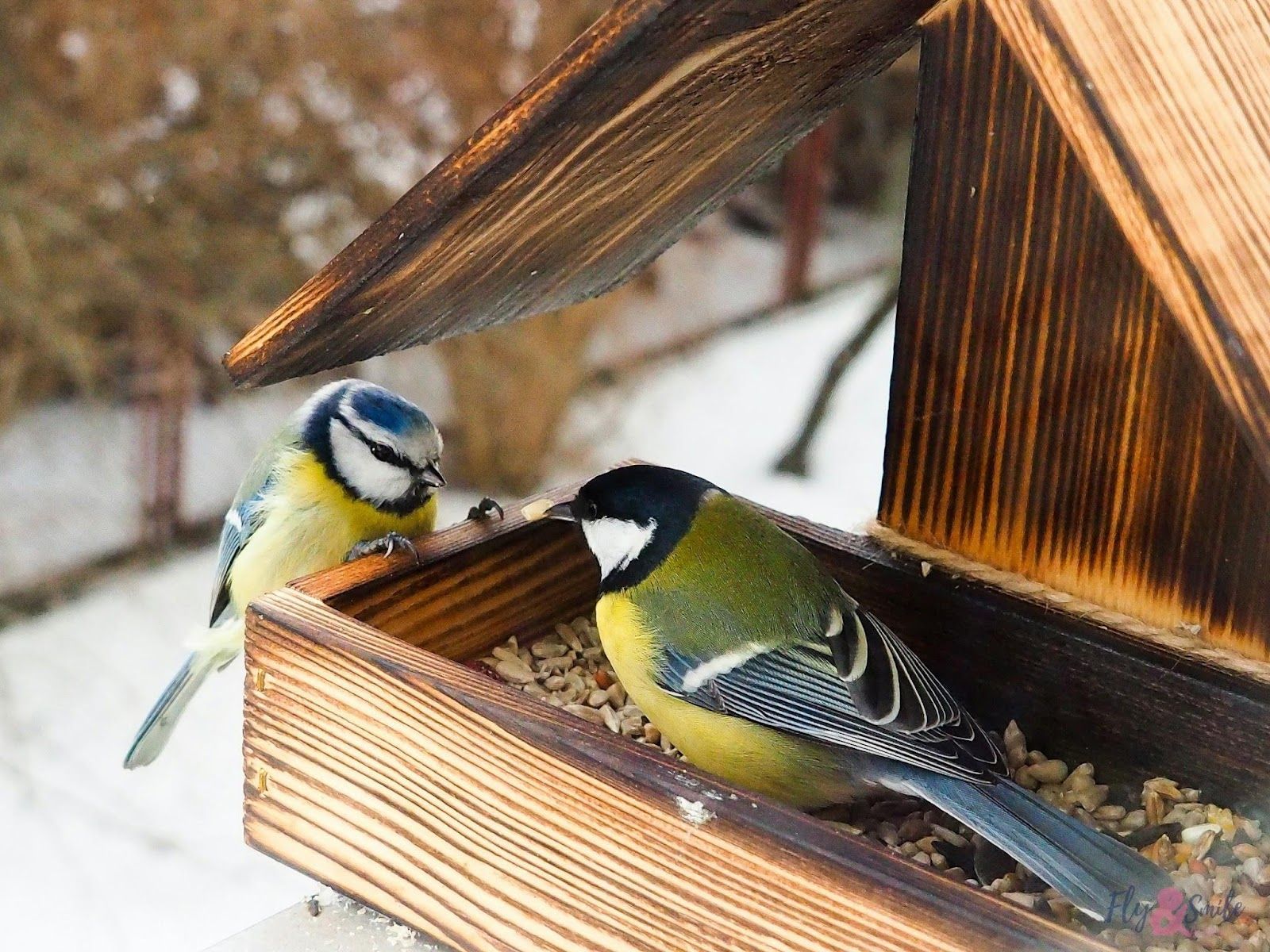
Avian vocabulary

From "mother hen" to "pecking order": 10 idioms inspired by birds!


Published on May 2, 2025


Image: Sid Balachandran

Humankind has a lot to thank birds for, from the chicken and eggs we gladly consume every day to their wonderful flights, which influenced the creation of the airplane. Not only that, but birds are truly unique creatures: Think of their bright colors and the complicated melodies found in their chirps, and you’ll see what we mean. In that sense, it seems only logical that these wonderful creatures have influenced the way we speak. With that in mind, here are 10 of the most popular phrases and idioms that reference our feathery friends. Enjoy!

1

Birds of the same feather

Image: Patrice Bouchard

The phrase "birds of the same feather" is commonly used to describe how similar or like-minded people tend to connect and form groups. Interestingly, it seems that this idiom is actually an abbreviation of a longer and older English proverb, which states, "Birds of a feather flock together." This phrase was prominently used in literary classics such as Leo Tolstoy’s War and Peace and James Joyce’s Ulysses.

2

Fly the coop

Image: Tom Ungerer

Chickens tend not to be the most secretive of birds; they are famously flightless and are not exactly known for their dexterity or stealth. Regardless, they are known to escape from time to time, which is where the idiom "to fly the coop" comes from. It is used whenever someone escapes or goes away. Notably, it is also used by broken-hearted parents whenever their children leave home.

3

Mother hen

Image: Bri Tucker

Speaking of chickens, the phrase "mother hen" is used to describe someone with a particularly strong and protective maternal instinct. As you probably guessed, this phrase comes from the way hens hatch and nurse their chicks, keeping them close for several weeks until they are able to wander off on their own. While this idiom is sometimes seen in a negative light, at the end of the day, a "mother hen" is someone with a lot of love to give. So, we’d like to take a second to salute all the mother hens out there.

4

Pecking order

Image: Lidia Stawinska

Most of us deal with one or two "pecking orders" in our lives: Think back to that boss you simply can’t talk back to, or the respect you were expected to have for your headmaster at school. This social hierarchy comes from birds that tend to live in hierarchical structures, where their social standing is determined by who they can peck without fear of retaliation (and who may peck them back).

5

Night owl

Image: Odd Sun

Many of us are night owls, and there’s nothing wrong with that. Maybe you find solace in the darkness of night, and it is during this time that you do your best work or can concentrate and study harder. As the name suggests, this idiom comes from owls, perhaps the quintessential nocturnal bird. Most owls hunt at night and sleep during the day, although some species can be crepuscular or even diurnal.

6

As free as a bird

Image: Gauravdeep Singh Bansal

Who hasn’t looked up at the clear skies and seen a flock of birds pass by without a worry in their minds? If you’re like us, you were probably a tad envious of those birds’ freedom. Coincidentally, that feeling perfectly describes the idiom "as free as a bird." The image is rather self-explanatory: Birds tend to fly wherever they want, with nothing to stop them as they traverse the skies above.

7

Feather in your cap

Image: David Trinks

Who would have known that sporting a feather in your hat was once considered a fashion statement? The phrase "a feather in your cap" is used to describe an achievement and the feeling of accomplishment that comes with it. Putting the titular feather in your cap means celebrating this success. While the origin of the phrase is unclear, some believe it is an old tradition associated with hunting, where a hunter would place a freshly plucked feather in their cap as a trophy after a successful hunt.

8

Spread your wings

Image: Mathew Schwartz

Whenever a friend or relative encourages you to "spread your wings," they are suggesting that you experiment with new things and confidently gain more experience in life. When you think about it, it’s rather funny that we find encouragement to try new things in something that birds do every day: After all, they spread their wings whenever they need to fly, right? In any case, the image invoked by this idiom is still a powerful one and remains one of the best ways to inspire someone to do great things.

9

Early bird catches the worm

Image: Jean Giroux

On one hand, the meaning of this idiom is quite literal: When you tell someone that "the early bird catches the worm," you might be suggesting that they need to get up earlier. However, this idiom can also convey the importance of being first, acting quickly to make the most of opportunities. Interestingly, this idiom seems to be at odds with another popular proverb, which states, "Good things come to those who wait." At the end of the day, both ideologies are valid, so choose whichever works best for you!

10

A little birdie told me

Image: Chris Smith

We’ll end with an idiom that made many small children loathe small birds. Whenever you did something you weren’t supposed to, did your parents confront you by saying that "a little birdie" told them you misbehaved? Nowadays, this phrase is used to refer to a piece of information heard through someone else, such as a friend or coworker who wishes to remain anonymous.


READY, SET, SAIL!

Rock The Boat With These 10 Everyday Expressions Of Nautical Origin


Published on May 2, 2025


Image: Andrew Neel

Languages in general are perpetually evolving entities, and English is no exception. Ever-changing, over the years the English language has adopted words and phrases from other languages and even completely invented slang.

Many idioms, sayings, and figures of speech like "batten down the hatches" or "hunky-dory" that we still use in the 21st century, actually have a nautical origin, from the golden days of sailing. You may already be using many of them in your everyday conversations, not knowing the true meaning behind them. That's why we've put together a list of ten naval sayings and sailing phrases to let you know the history behind them. So hoist the mainsail and set course for discovery!

1

Long Shot

Image: Andreea Swank

There’s little chance you’ve never used this expression, by a long shot. According to Merriam-Webster Dictionary, a long shot means "a venture involving great risk but promising a great reward if successful". It is an idiom we also use regularly to express "by a great deal".

Its origin can be traced back to early naval guns from the late 18th and early 19th centuries, whose accuracy left a lot to be desired. Apparently, these weapons were effective only at close range and weren’t very good for targets placed at great distances. So if a long shot managed to hit its target, it was considered out of the ordinary and something to celebrate.

2

Batten Down The Hatches

Image: Torsten Dederichs

The literal meaning of this expression is "to fasten the entrances to the lower part of a ship using wooden boards". However, in our everyday conversations, we use it when we want to prepare ourselves or others for a difficult or dangerous situation.

The term batten was originated in the 18th century. It refers to an iron bar used to secure the covering of a hatchway on a ship when bad weather was expected. **The earliest record of the expression "**batten down the hatches" was found on Vocabulaire des Termes de Marine, a French-English dictionary of sailing terms published in 1799. The first example of a colloquial use of the phrase, similar to the one we have now, appears as recently as 1955, in an article published in the Bulletin of the General Contractors Association of New York.

3

All Hands On Deck

Image: sharkolot

Name one TV crime series where the phrase "all hands on deck" has never been used. There probably isn’t a single one! Today we use this figure of speech in an informal way to call for everyone available to get involved in a group task or an urgent situation. However, a long time ago it had a more straightforward meaning. In times of pirates, captains would urge their crew to help whenever a storm was coming or if enemies were attacking the ship. It literally meant "All available sailors come to the deck". Over the years, as the English language evolved, it just became the expression we use when we need as much help as we can get.

4

Loose Cannon

Image: bernswaelz

We all have at least one family member or friend who is uncontrollable and unpredictable. In our everyday vocabulary, we usually call this type of person a "loose cannon", although perhaps we’ve never stopped to think about what it really means or where it comes from.

The origin of this metaphoric expression can be sourced from the cannons that used to be mounted on the decks of warships in the early 1900s. During combat or a storm, these big and heavy weapons sometimes got dislodged, causing serious damage to the vessel and its crew. We can say that something similar happens when people with erratic behavior are around.

5

Hunky-Dory

Image: Alex Knight

The origin of this cute little slang phrase meaning "quite satisfactory, fine" is a bit obscure. There are a few theories that explain where "hunky-dory" was first coined, but our favorite has nautical connotations. Legend has it, the expression comes from "Honcho dori", a term that means something like "main street" in Japanese, where lonely American sailors allegedly went for all sorts of diversions and services in the 1860s.

This Japanese influence was first suggested by American historian and linguist John Russell Bartlett in the 4th edition of the Dictionary of Americanisms of 1877. His theory, although picturesque and with some historical merit, can’t be 100% proven. But for the moment let’s just say: it’s all hunky-dory!

6

Tight Ship

Image: Ksenia Makagonova

Yes, the word ship has given us away. As you can imagine, this commonly used expression has a clear naval origin. The term can be traced back to when ships were made out of wood and needed to be properly sealed to prevent any leaks. Captains used to supervise this operation and apparently were very rigorous about it.

In its more metaphorical sense, it alludes to a ship in which the ropes are taut, meaning it is strictly managed. In a tight ship the crew and officers work well together, that is to say, the phrase has a very similar meaning to the one we give it today. In informal and colloquial situations we now use it to refer to an institution or business that is highly organized and running efficiently.

7

To Show One's True Colors

Image: Annie Spratt

Once upon a time, when battles were fought in faraway seas, ships would heave their national flag before a battle. However, some captains were known to be swindlers. To have an advantage over their enemies, they would carry flags of other countries in order to confuse them on the high seas. This practice was especially common in the 17th century among Spanish sailors and it was referred to as bamboozle (sounds familiar?).

Nowadays, we use this expression to describe a dishonest person who eventually reveals who he or she really is. It would be great if some people came with flags, don’t you think?

8

Learn The Ropes

Image: Tanner Mardis

Starting at a new job can feel overwhelming until you finally learn the ropes. That’s probably how rookie sailors felt like in times before steam or fossil fuel ships. A long time ago, when almost all ships had sails, new recruits had to learn how to manipulate ropes and tie knots. The nautical origin of the expression, therefore, is very clear.

It is true that ropes are rarely used in modern jobs, but the phrase has survived for centuries and we still use it today to refer to the special way things are done in a particular activity. So now that you know, you’ll never be able to teach someone to do something again without thinking of a poor young sailor handling ropes out in the cold sea.

9

Sink or Swim

Image: Jason Schuller

Not surprisingly, the origin of the idiom "sink or swim" is nautical. Today, we use it to mean that a specific situation will fail or succeed. The source of this expression, however, is purely literal and a bit bleak. In Medieval times, suspected witches were thrown into deep waters to prove their condition. If the victim sank, she would die, but if she managed to swim, she was considered evil and therefore executed.

The first written example of the idiom, as we use it today, can be found in Shakespeare’s play Henry IV: "If he fall in, goodnight! Or sink or swim!".

10

Scraping The Barrel

Image: Benoît Deschasaux

In the 17th century, sailors would rub empty barrels used to store food to recover any remaining scraps and not waste anything. These leftovers were presumably of inferior quality, giving the expression the negative connotation it has today. This metaphorical usage, to be forced to use one’s last and weakest resource, might have originated in the US in the 1930s, but it certainly never gets old.

We’ve reached the end of this ranking but that doesn’t mean we are scraping the barrel! There are a lot more idioms and figures of speech of nautical origin that you can explore. Can you think of any other examples? Now that you have a snapshot of what nautical expressions look like, you won't stop finding them!

Looking for an extra scoop of literary fun?

Learn more with our Word of the day

elation

/əˈleɪʃən/