Glitches in science

Forget conspiracy theories—these 10 weird facts are real and unexplained


Published on February 3, 2026


Image: Artur Voznenko

Despite centuries of scientific progress, the universe can still throw us some curveballs that seem to defy all logic and understanding. From bizarre sounds deep in the ocean to strange behavior of stellar objects, these unexplained phenomena continue to stump researchers. Here's a breakdown of 10 strange, real-world mysteries that seem like glitches in reality—and so far remain unsolved.

1

ʻOumuamua’s acceleration

Image: NASA Hubble Space Telescope

Discovered in 2017, ‘Oumuamua had an unusual shape and trajectory. As it exited the Sun’s influence, it accelerated slightly—an unexpected behavior that left many scientists puzzled.

Some proposed it was an alien probe or, more likely, that outgassing caused the motion, but no definitive explanation fits all the observed data. For now, the mystery of ʻOumuamua remains unsolved.

2

The weirdest form of lightning

Image: Hunter So

Ball lightning has been reported for centuries, often lasting longer than normal lightning and moving erratically indoors or out. Witnesses describe orbs ranging from pea-sized to several feet in diameter.

Even now, there is rare photographic evidence, and the phenomenon has defied controlled reproduction. A 2014 study in China captured spectral data, but scientists still can't agree on how or why it forms.

3

A signal from space

Image: Raychel Sanner

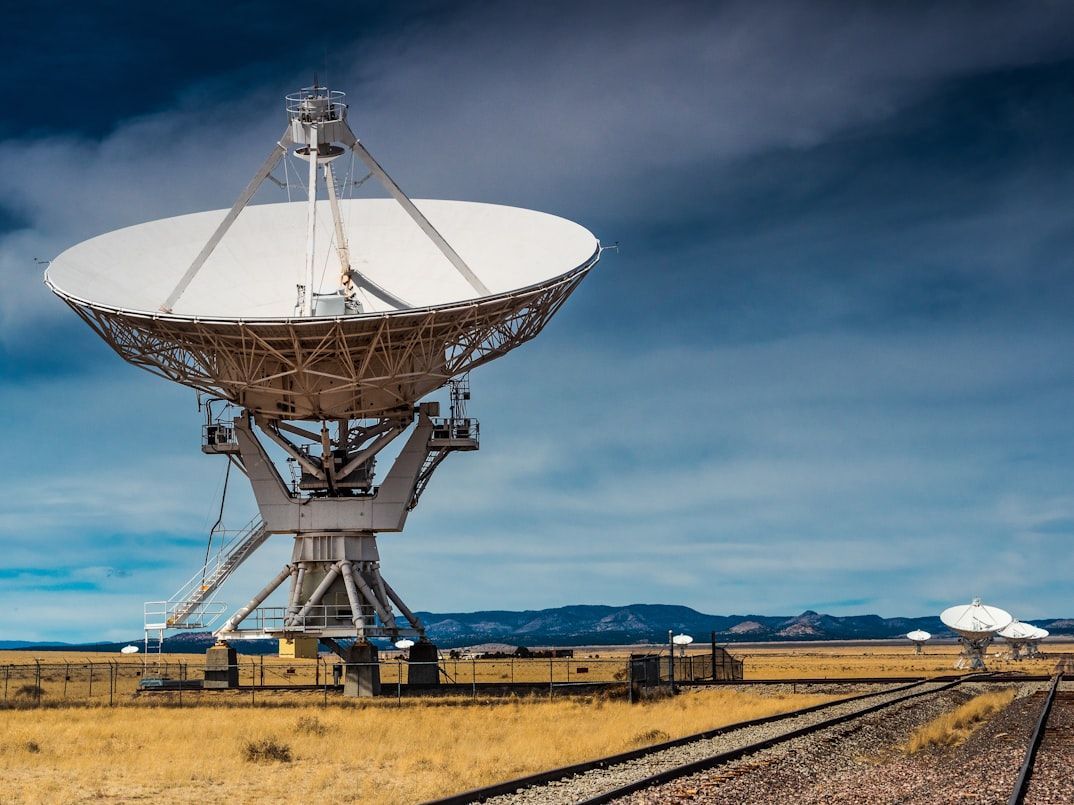
The 72-second radio burst, detected by Ohio State’s Big Ear radio telescope in 1977, was so unusual that astronomer Jerry Ehman circled it and wrote "Wow!" in the margin.

No known natural or terrestrial source matched its signature. Despite repeated searches in the same spot, the signal has never been heard again.

4

The Bloop from the deep

Image: Bradley Singleton

Captured in 1997 by underwater sensors thousands of kilometers apart, the "Bloop" was an ultra-low-frequency sound louder than any known sea creature. It matched no whale or geological activity profile.

NOAA later suggested icequakes as a possible source, but the exact characteristics didn’t match typical ice calving.

5

Earthquake lights

Image: Michael Krahn

Observed in areas like Japan and Italy, these luminous events precede seismic activity by seconds or minutes. They range from white-blue glows to flame-like columns.

No single mechanism explains them. Theories involve piezoelectric effects in rocks, but reproducible lab evidence is sparse and inconsistent.

6

Memory transfer

Image: Denise Jans

Strangely, some organ recipients report new preferences and even memories post-surgery. These aren’t rare coincidences—dozens of documented cases involve patients suddenly acquiring traits of their donors.

A woman who received a heart from a biker craved beer and fast food, which she never had before. A form of cellular memory or nervous system signaling beyond current knowledge has been proposed as a possible explanation, but too little is still known about the phenomenon.

7

The Mpemba effect

Image: aly

Apparently, hot water can sometimes freeze faster than cold water. Observed since Aristotle and confirmed in many experiments, this phenomenon—known as the Mpemba effect—defies our current understanding of thermodynamics.

While evaporation and convection may play a role, they don’t explain all scenarios. No consistent model accurately predicts when the effect will occur, despite decades of research.

8

Is dark energy real?

Image: Ryan Hutton

An invisible force is accelerating the universe’s expansion—and we still barely understand it. First inferred from supernova data in 1998, dark energy appears to make up about 68% of the universe’s mass-energy content.

Yet no direct measurement or particle-based theory explains its nature. It’s known only through its large-scale gravitational effects.

9

Tabby’s Star

Image: NASA Hubble Space Telescope

Also known as KIC 8462852, Tabby’s Star is a binary star system in the constellation Cygnus, approximately 1,470 light-years from Earth. The star dims erratically—yet in ways that don’t match common explanations like planetary transits.

Its strange behavior has led some astronomers to speculate about exotic causes, including an alien megastructure. However, current data largely rules out that possibility.

10

The Antarctic gravity hole

Image: Dylan Shaw

Weird as it sounds, a region in East Antarctica has less gravity than expected. While gravity varies slightly across the Earth, the cause of this particular anomaly remains unknown.

Known as the Wilkes Land Mass Anomaly, it covers an area approximately 200 miles wide and causes a noticeable local drop in gravity. First detected via satellite data, it may be the remnant of a massive asteroid impact—or maybe even something deeper.


ORGANIZED HOME, ORGANIZED MIND

The Ultimate Guide To Home Organization: Tips For A Clutter-Free Home


Published on February 3, 2026


Image: Douglas Sheppard

We all know keeping a house organized takes time, energy, and even money at times. But none of those are enough when you don’t know how to get the organization ball rolling.

Organization, whether it is for a house or personal, can be a powerful tool to gain control over every aspect of your life. But that is not the only benefit of having an organized home, by learning some techniques, you can maximize your spaces and make them functional to your lifestyle.

Read on and see which of these tips you can put into practice today!

1

Declutter regularly

Image: HiveBoxx

The first step to becoming an organization expert is to declutter. Decluttering means removing everything you don’t need or use, or everything that is broken or is no longer functional to you or your family.

To declutter successfully you have to be honest with yourself about those things you keep out of attachment, for example. Assess your home, and everything you own, and get rid of everything that no longer serves you any purpose to create new free space.

Consider selling or donating the things you don’t use but keep in a good state!

2

Create zones

Image: Bench Accounting

After assessing your space and removing everything you don’t use or need, start creating zones in your home. This will allow you to allocate specific areas for different activities or moments of your everyday life. For example, if you work from home, consider having a separate working space, and set up a desk with everything you need.

Establishing clear zones will make it easier to keep track of your belongings and create a more functional living space. Not to mention having specific zones for each activity will strengthen your routine and habits.

3

Assign spaces for your belongings

Image: Jarek Ceborski

After you have created different zones, assign specific homes for each item. For example, you may place a container for the keys by the main door; or a rack for the shoes you use frequently. Having a designated area and a specific home for each of your belongings will help you keep your home organized at all times.

Moreover, you will avoid losing objects and, every time you need something, you will know exactly where to go look for it. The only thing you have to work on after doing this is taking a moment every day to put things back where they belong after you have used them.

4

Invest in storage solutions

Image: Annie Spratt

Once you have taken the previous steps, you are ready to invest in storage solutions and this will feel like a pivotal step towards organization. Storage solutions will make your house both functional and visually appealing. The right containers and organizers not only help you declutter (because the space is limited), but they will also help you ensure everything has a designated spot and maintain order.

Look for available options within your area, but consider using baskets, bins, plastic containers, or any other storage item that works for you. If you still haven’t got the budget for this, use plastic containers you already have, you can always go back on this step to prioritize aesthetics.

5

Use labels

Image: Tamara Malaniy

If you choose to use colored containers, labels come in quite handy. Even with clear containers, labels will help you quickly locate items. Moreover, if there are small children in the house, labels can help them find the right container for their stuff easily which will, ultimately, strengthen their own organizational habits and independence.

Labels give uniformity and coherence to a space and you can either make them yourself or use an electronic label maker.

6

Rotate seasonal items

Image: Myriam Zilles

This is a smart strategy to maintain your space clutter-free and well-organized throughout the year. Seasonal items such as clothes, decorations, sports equipment, and more specific items like suitcases can be kept in special areas like the garage or on the highest shelves of a closet.

As you can imagine, the first step to do this is to assess your belongings and categorize them by season.

As you pack away off-season items, take the opportunity to assess their condition and decide whether anything needs to be repaired or replaced before the next season.

Consider using hard-material containers to keep your belongings well protected and avoid any possible damages unforeseen events may cause.

7

Take advantage of vertical space and dead spaces

Image: vadim kaipov

When you don’t have much space for furniture or your furniture is full of stuff (if they are, you should go back to the first tip!) vertical and dead spaces are a great solution to maximize space and create alternative areas.

You can install shelves or hanging organizers to keep your belongings off the floor and on common surfaces like the dining table. On a similar note, you can take advantage of areas such as under the bed, and behind the doors to keep appropriate stuff.

This not only creates additional storage space but also adds visual focus points to your home decor.

8

Prioritize accessibility

Image: Pierre Bamin

When defining specific areas and homes for your belongings prioritize two things: quick location and easy accessibility. Vertical space can only be used so much, that is, there is no point in having a shelf for mugs if you have to get a ladder to reach one every morning for breakfast. The same goes for kids’ wardrobes, they will never be able to hang their own clothes if they can’t reach the hangers or the rail.

Prioritize placing items in the space you most frequently use them and within reach so you don’t have to move things around, hence, creating a mess around one single item. Keep essentials accessible and less frequently objects higher up or in less accessible places.

9

Streamline paperwork

Image: Anete Lusina

Regardless of how digital our lives can be, a house is always full of important items, especially paperwork. Developing and working on a system for managing it will foster organization in the house, but also your personal life and finances.

Consider investing in a filing cabinet or organizer and set aside a time and day each week to sort out paperwork. Create folders for different types of documents and label them accordingly to make it easier to find what you need when you need it. And never forget the first step, declutter when necessary, and get rid of old bills or documents that are irrelevant to your present life.

10

Work on your organizational habits

Image: Paico Oficial

Rome wasn’t built in a day, organizational habits weren’t either, so, be patient and find ways to foster your habits. Create routines for tidying up and maintaining organization. For example, divide the chores within the week. That way, you will ensure everything gets done at least once a week. Laundry on Saturdays, bathroom cleaning on Sundays and Thursdays, and so on.

Now, within a day, create small routines that guarantee everything is in its place before you go to sleep. There is nothing like waking up to a clean and organized home every day, this will boost your inspiration and productivity.

Looking for an extra scoop of literary fun?

Learn more with our Word of the day

contented

/kənˈtɛn(t)əd/