Clockwork wonders
For whom the bell tolls: 10 ways to tell time without a clock!
Published on April 14, 2025
 Image: Jon Tyson
Measuring time has always been a challenge. Before the advent of modern clocks, how did people keep track of the hours? Well, they had to rely on a mix of strange yet ingenious methods. While these early timekeeping devices lacked the precision we expect today from an average clock, they were still effective tools for organizing daily life and gaining a sense of time's passage. Here are 10 quirky timekeeping methods that shaped how we understand time today.
Sundials
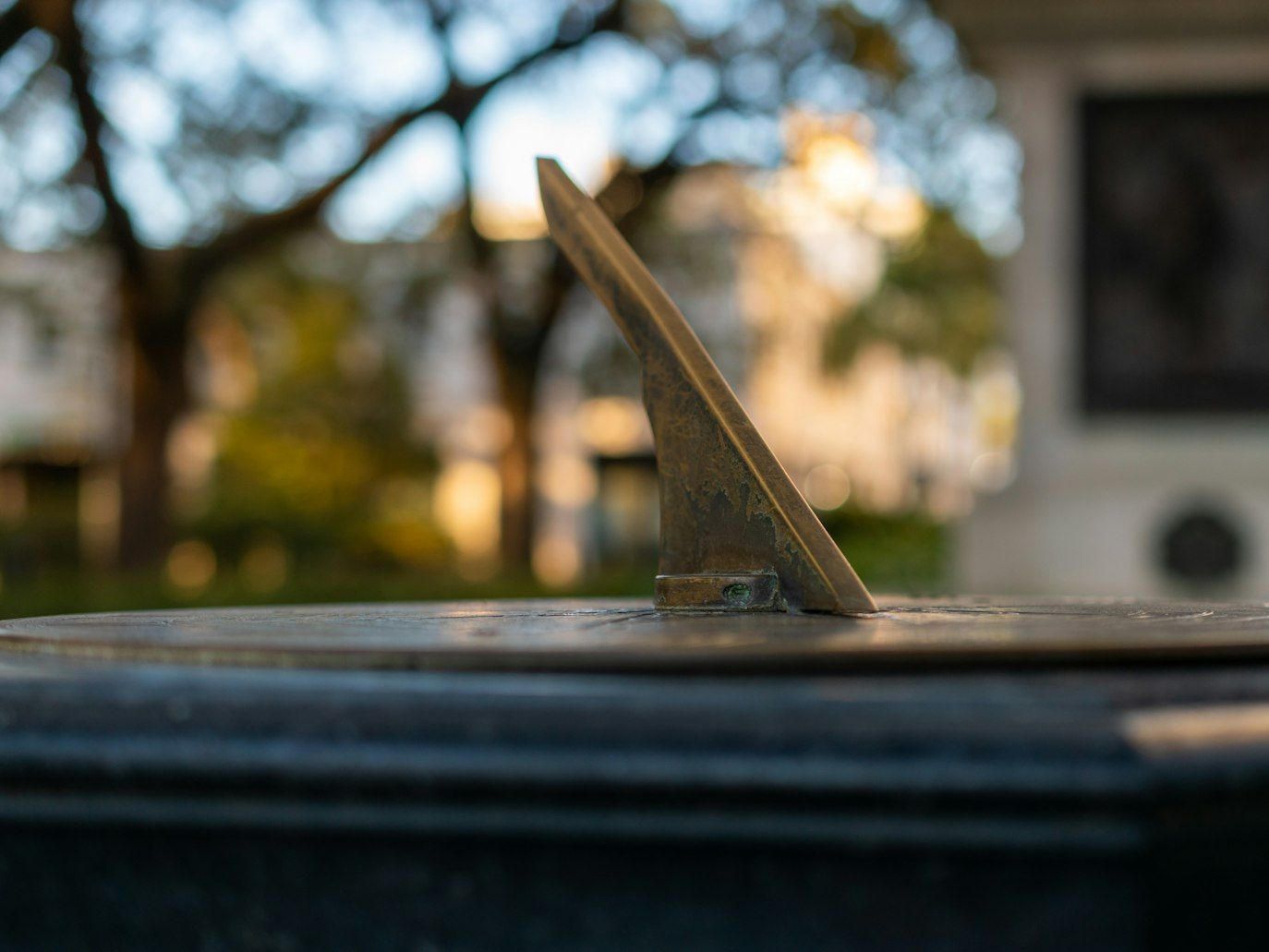 Image: Elijah Mears
The ancient sundial relied on the position of the sun to tell time. A vertical stick, or gnomon, cast a shadow across a circular plate marked with hours of the day. As the Earth rotated, the shadow moved, indicating the time.
Sundials are one of the oldest timekeeping devices, dating back over 4,000 years.
Water clocks
 Image: chris robert
Water clocks, also known as clepsydra, date back to ancient civilizations like Egypt and Greece. Water would drip steadily from one container to another, and the water level in the container indicated the passage of time.
Though simple, water clocks were essential, especially in places where sundials weren’t efficient at night or on cloudy days.
Candle clocks
 Image: Paolo Nicolello
Candle clocks were quite literally a burning representation of time. Wax candles would be molded with markings that melted away as time passed, revealing a rough estimate of how long the candle had been burning.
Often used in medieval times, these candles allowed people to track the passage of time with enough accuracy for everyday tasks like cooking, especially in the absence of better methods.
Knotted cords
 Image: Adrian Dascal
The Inca civilization was built around the worship of the Sun, so it's no surprise they developed several solar dial-like systems —often integrated into the architecture itself— to tell time during the day.
For longer periods, they relied on a complex system of knotted cords called quipu, which served as both a data storage and record-keeping method. It could also function as a calendar, making it into a sort of "ancient computer."
Hourglasses
 Image: Towfiqu barbhuiya
Hourglasses have been used since ancient Greece as a portable timekeeping tool. Two glass bulbs connected by a narrow passage allowed sand to flow from one bulb to the other at a constant rate, measuring short periods of time.
These simple devices were particularly useful for tasks that required short intervals, like timing speeches or controlling the length of a workday.
Tidal clocks
 Image: Lorenzo Castagnone
In coastal regions, some cultures used the tides to keep time. Tidal clocks tracked the regular rise and fall of the ocean's tides, which could vary depending on the phase of the moon.
These clocks were especially important for people living near the sea who needed to schedule tasks such as fishing or docking boats.
Star clocks
 Image: brandon siu
Star clocks, also known as nocturnals, were used by ancient navigators and astronomers to track the time based on the positions of stars. By measuring the angles of stars relative to the horizon, one could determine the time during the night.
This method was vital for long-distance sailors, especially before the invention of accurate marine clocks.
Bell towers
 Image: John H Rhodes
In medieval Europe, bell towers played a significant role in timekeeping. Since not everyone had a precise timekeeping device at hand, large bells would toll at set intervals to signal important times of day, such as the start of work or religious events.
These tolls became an integral part of daily life in cities and towns, marking the rhythms of the community.
Mechanical clocks
 Image: Jason Olliff
Mechanical clocks, emerging in Europe in the 14th century, used a system of gears and weights to keep time. These clocks improved over earlier methods, providing a much more reliable and accurate way to track hours.
Initially, mechanical clocks were installed in church towers and monasteries to mark the hours of prayer. Their popularity grew, and by the 17th century, mechanical clocks became commonplace in homes and businesses.
Pendulum clocks
 Image: Pawel Czerwinski
Invented in 1656 by Dutch scientist Christiaan Huygens, the pendulum clock revolutionized timekeeping with its incredible accuracy. A swinging pendulum regulated the movement of the clock's gears, ensuring precise time measurement.
Pendulum clocks became central to scientific research, navigation, and industrial time regulation, with some designs still in use today.