Extraterrestrial forecasts

Ever wished it rained diamonds? On Neptune and Uranus, it’s no joke!


Published on November 29, 2025

Image: Viktor Mindt

Weather on Earth might be wild, but compared to other planets, it’s downright boring. Across our solar system—and beyond—insane storms, metallic rain, and atmosphere-shredding winds violently shape alien worlds. Here are 10 of the weirdest and most extreme weather events ever observed in space.

1

Diamond Rain

Image: Bas van den Eijkhof

Location: Neptune & Uranus

In the atmospheres of these ice giants, intense pressure crushes methane into solid carbon, forming diamonds that fall like hail.

Estimates suggest that billions of carats worth of diamonds may exist in the deep interiors of these planets, possibly forming layered structures similar to geological strata.

2

Supersonic Winds

Image: NASA Hubble Space Telescope

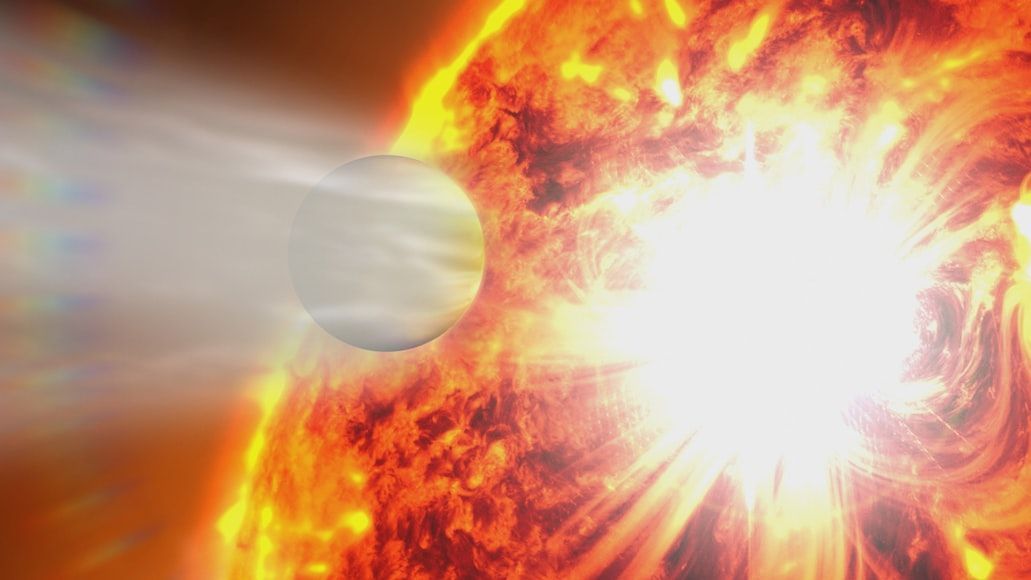
Location: HD 189733b

This exoplanet is bombarded by winds blowing at over 5,400 mph—about seven times faster than the speed of sound.

Fortunately, all of this is happening far from Earth—HD 189733b is a 'hot Jupiter' located 63 light-years away. Its atmosphere endures extreme heat on one side and frigid cold on the other, fueling violent winds that circle the planet.

3

Sulfuric Acid Rain

Image: Planet Volumes

Location: Venus

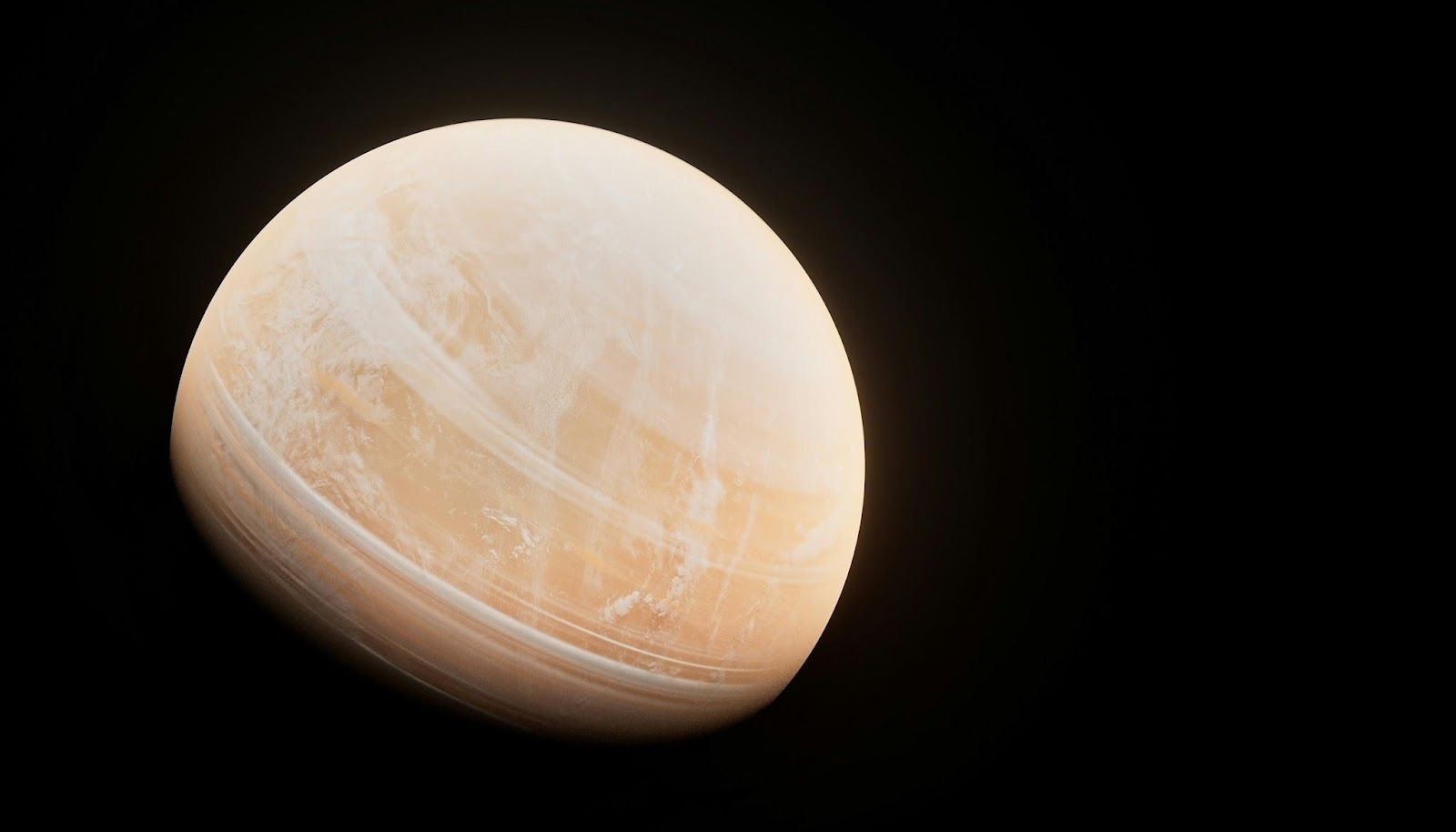
Venus has clouds of sulfuric acid that rain—but the droplets evaporate before they hit the surface.

Temperatures on Venus reach 870°F, hot enough to melt lead. Acid droplets form high in the atmosphere but vaporize at lower altitudes, creating a corrosive "rain cycle."

4

Endless Storm

Image: NASA Hubble Space Telescope

Location: Jupiter

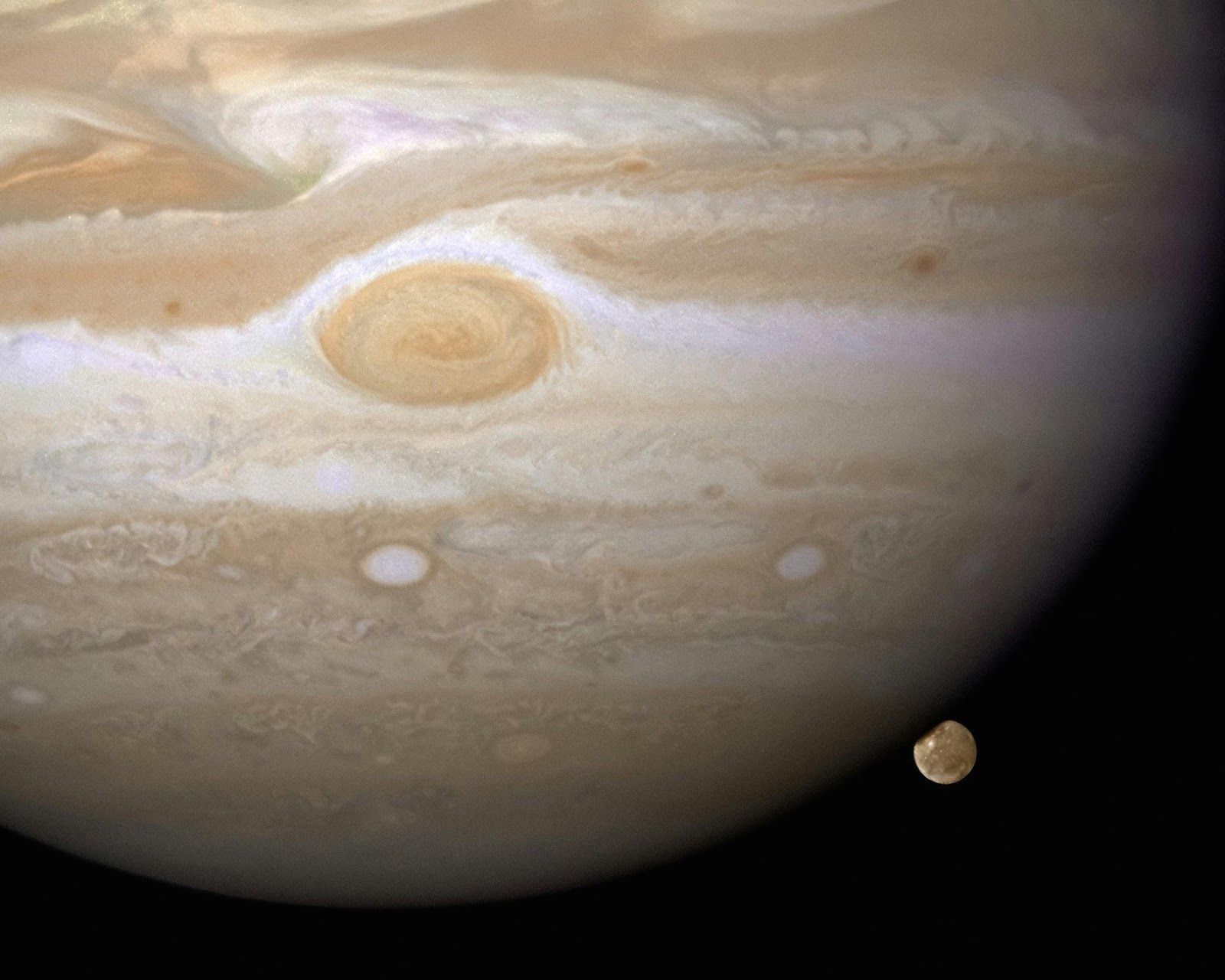
A storm larger than Earth has been raging on Jupiter for over 350 years.

First observed in the 1600s, the Great Red Spot is a massive anticyclone with wind speeds exceeding 400 mph. It’s so large that it could easily swallow our planet whole.

5

Polar Hexagon

Image: Planet Volumes

Location: Saturn

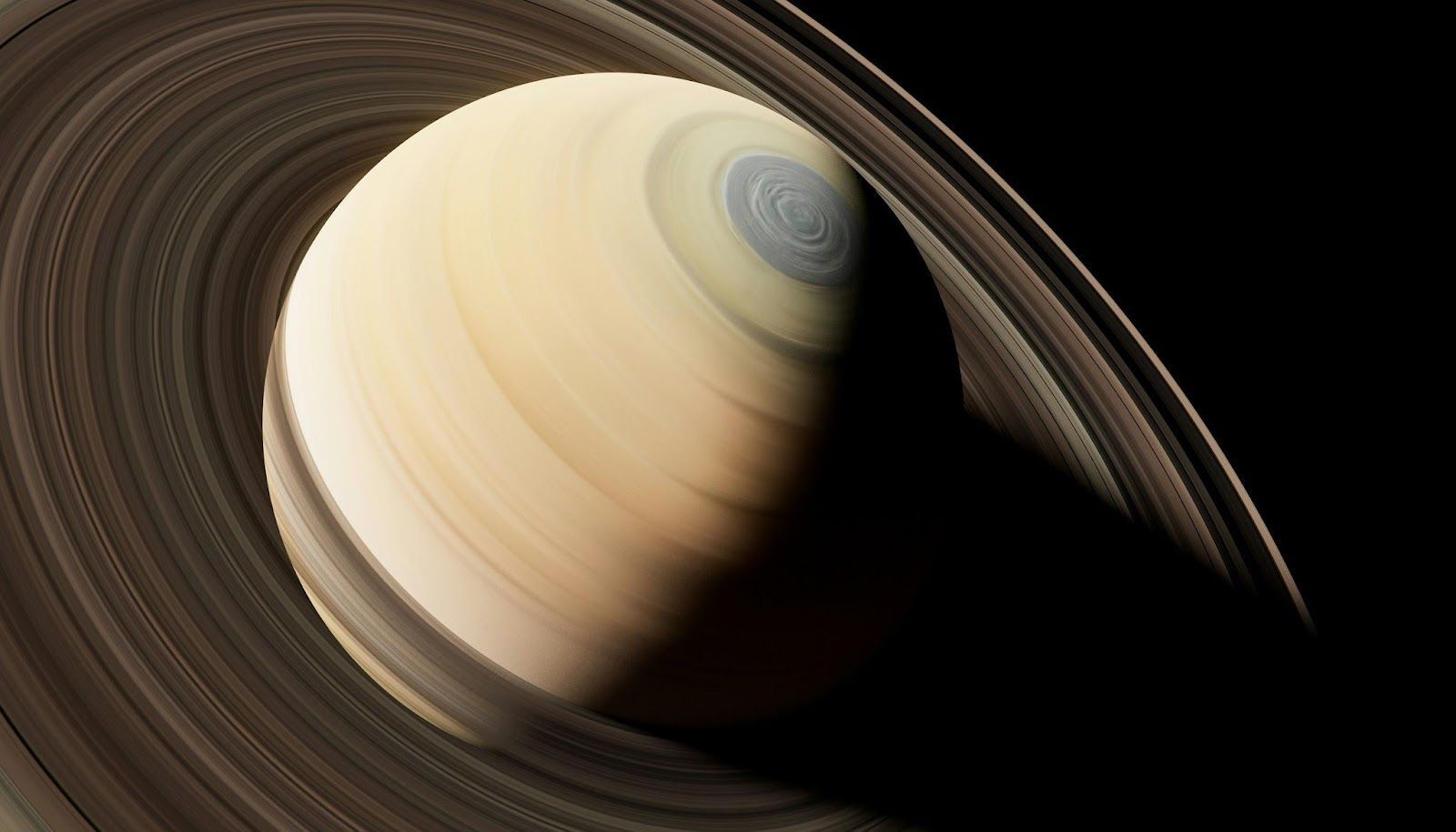
A massive six-sided jet stream spins around Saturn’s north pole. NASA’s Cassini mission captured this bizarre atmospheric pattern, which spans nearly 20,000 miles.

Surprisingly, it's a persistent weather feature—not a surface structure.

6

Planet-Sized Dust Storms

Image: Daniele Colucci

Location: Mars

Mars is famous for its massive, planet-wide dust storms. These weather events can last for weeks and obscure the entire planet from view.

NASA’s Opportunity rover went silent during one of these dust storms in 2018 and never recovered. The catch? Mars doesn’t have enough atmosphere for the winds to be truly dangerous—sorry, The Martian.

7

Coldest Spot

Image: Andy Holmes

Location: Boomerang Nebula

The coldest known natural place in the universe is the outer cloud of a dying star. The Boomerang Nebula, located 5,000 light-years away, reaches temperatures near 1 Kelvin—colder than the cosmic background.

This happens because the star’s gas expands so rapidly that it chills below the temperature of empty space itself.

8

Iron Rain

Image: Morteza Mohammadi

Location: WASP-76b

On this ultra-hot exoplanet, iron vaporizes on the dayside and rains down as molten metal on the nightside.

These extreme temperatures are reached because WASP-76b is tidally locked, with day-side temperatures over 4,000°F.

9

Molecular Tornadoes

Image: Javid Naderi

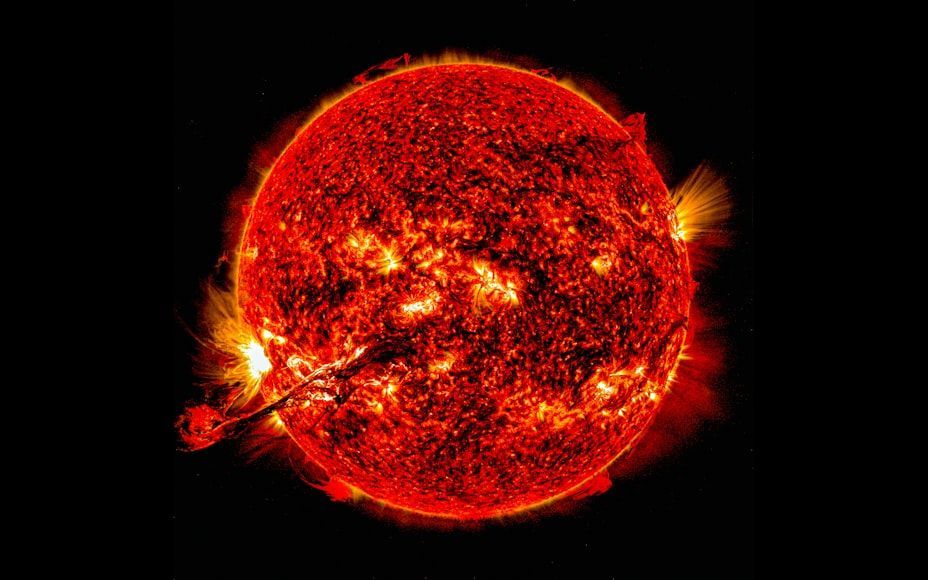
Location: The Sun

The Sun hosts giant tornadoes made of superheated plasma. These solar events can be up to 10,000 miles tall and spin at thousands of miles per hour.

They’re driven by magnetic fields and can feed into solar flares and coronal mass ejections—fiery explosions that can even impact Earth.

10

Electric Snow

Image: NASA

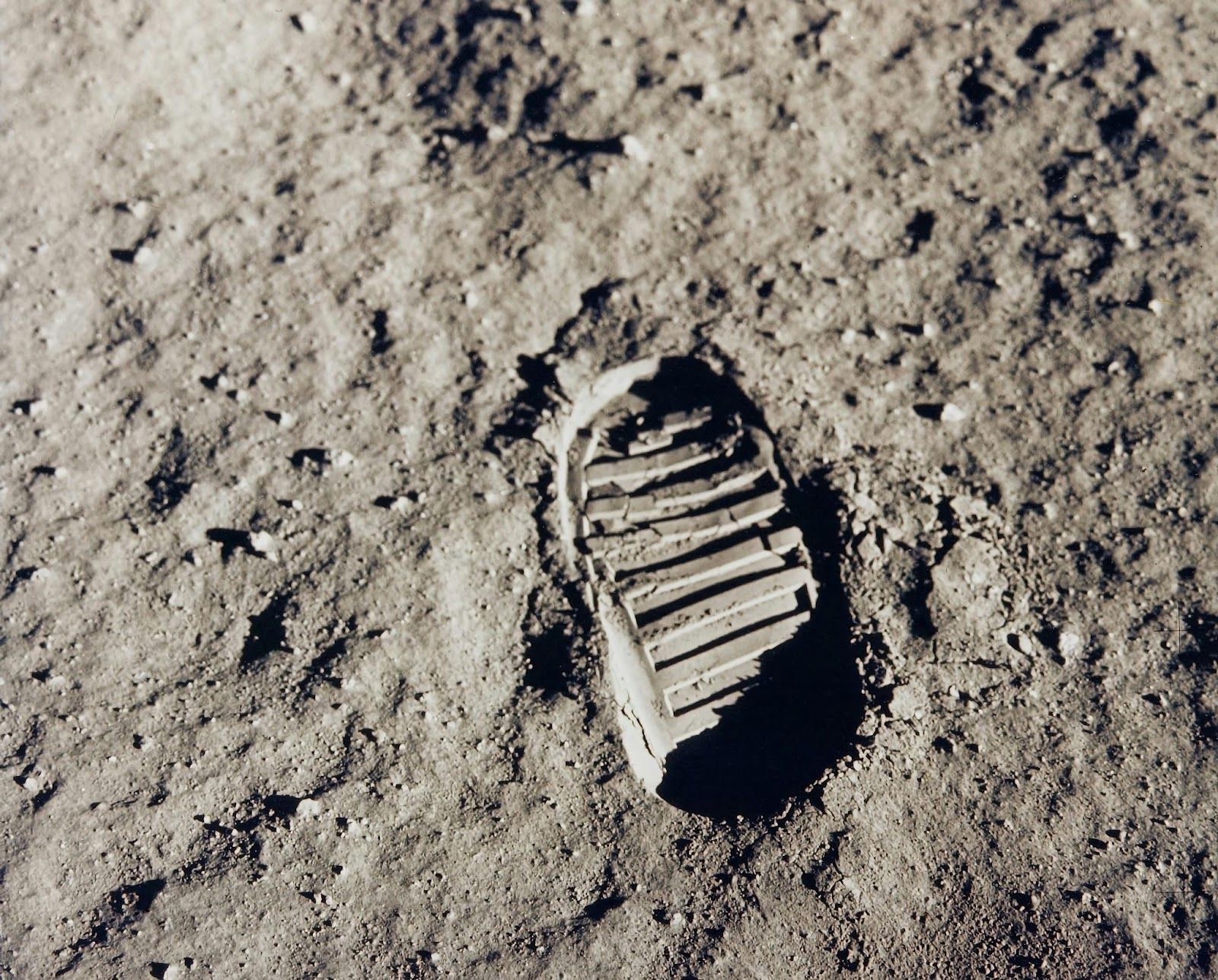
Location: The Moon

The Moon may experience electrostatic dust storms during lunar dawn and dusk. When the Sun hits the lunar surface, it creates an electric field that lifts tiny dust particles off the ground.

This phenomenon was first suspected during the Apollo missions and has been confirmed through recent satellite observations.


HEY! OVER HERE!

SOS! 10 Ways To Cry For Help That Are Worth Knowing


Published on November 29, 2025


Image: nikko macaspac

While we sincerely hope that you never find yourself in a situation where you might need to cry for help, it is essential to know how to do it properly. This knowledge is not only just for oneself but also to recognize a distress signal coming from others. Scroll down to learn the meaning of ten signals, from the world-famous S.O.S. to more specific ways to call for help.

1

S.O.S.

Image: Jp Valery

We will start with the most universally recognized distress signal, typically transmitted via Morse code in a sequence of three dots, followed by three dashes, and then followed by another three dots (· · · − − − · · ·).

Many people believe that S.O.S. stands for "Save Our Souls" or "Save Our Ship", but in reality, these letters don’t stand for anything. The reason for this combination of letters lies in the fact that it is easily recognizable, it can be repeated continually and no other command uses it.

2

Mayday

Image: Pasqualino Capobianco

Another easily recognizable distress signal, thanks in no small part to movies and television, is Mayday. The term was invented in 1923 when England and France needed to agree on a good distress signal that could be easily understood by everyone.

S.O.S. was already in use, but that signal could not be adopted because the letter 'S' was hard to distinguish over the telephone, especially in a chaotic emergency situation. Enter May-day, which is the phonetic equivalent of "M'aidez", the French for "Help me."

3

Pan-Pan

Image: Kent Pilcher

Pan-Pan calls (pronounced "pahn-pahn") are used for urgent situations that are not life-threatening. When someone aboard a boat, ship, aircraft, or other vehicle uses this signal, they are conveying that they need help and that the situation is urgent, but for the time being, does not pose an immediate danger to anyone's life or to the vessel itself.

Radioing "pan-pan" informs potential rescuers that an urgent problem exists, whereas "mayday" calls indicate that all other activities should be dropped to immediately begin a rescue. To declare pan-pan correctly, the caller repeats it three times: "Pan-pan, pan-pan, pan-pan."

4

Sécurité

Image: James Peacock

Not all alert calls are emitted by the person or vessel in need of rescue. Sécurité (often repeated three times, "Sécurité, sécurité, sécurité") is a procedure term used in the maritime radio service that warns the crew that the following message contains important safety information.

This warning is commonly used by coast radio stations before the broadcast of navigational warnings and meteorological information.

5

Mayday Relay

Image: Patrick Tomasso

Yet another example of an alert signal that is not emitted by the vessel in distress, is the Mayday Relay. This call is issued by a third party on behalf of another vessel or aircraft that is unable to do so.

Mayday Relays are typically issued to the Coast Guard or any other authority with jurisdiction over the area, to notify them of the situation taking place.

6

Break, Break, Break

Image: Studio_iris

In radio terminology, "Break, Break, Break" is the expression used when interrupting in the middle of a non-distress communication because you have an emergency.

This expression serves as a way of saying, "Sorry to interrupt your conversation but there is an emergency going on and I need your help".

7

Mayday Relay Relay

Image: Trinity Moss

The communication Mayday Relay Relay is used when relaying a Mayday message to a second vessel or station if the initial relay has not been successful and needs to be re-transmitted.

Sometimes, the distances that need to be reached are too far, or weather conditions complicate the relay. In these situations, a Mayday Relay Relay may be used by a vessel requesting assistance for a third party in distress.

8

International Code Of Distress Flags

Image: Matteo Miliddi

While the use of flags as a means of communication on ships was more common back in the day, when radio communications were not available, some major flag signals still need to be known by those responsible for sailing a vessel.

The most urgent code for help is the "N" flag arranged over the "C" flag, which is used to communicate the International Code Signal of distress.

9

CQD

Image: Chinh Le Duc

A signal that was used before S.O.S. was adopted universally, CQD originated from the signal CQ, which expressed "seeking you," or "all stations." The signal CQ was commonly used among wireless operators as a time-saving means of addressing all stations with a single signal.

The ability of CQ to convey distress was eventually diminished by frequent use. Therefore, in 1904, Guglielmo Marconi's wireless company announced the distress signal CQD would be used, signifying "Seeking you. Distress!".

10

Signal Mirror

Image: Jerzy Gorecki

An ancient device like a signaling mirror has saved innumerable lives and continues to be an invaluable resource in emergencies all over the world.

To use a signaling mirror, hold it in your hand and slowly bring the mirror up to your eye while making sure that the reflective surface is not obscured by your hat or fingers. Then, tilt the mirror up toward the sun, until you see a small bead of light. Once you've found the bead of light, move it toward your intended target (be it a plane or searcher), and keep the bead of light in view as you do this. Move the mirror in such a way that the target understands that you are voluntarily trying to contact them.

Looking for an extra scoop of literary fun?

Learn more with our Word of the day

creative

/kriˈeɪdɪv/