Fun language quirks
English is not normal: 10 incredible eccentricities of our language
Published on July 28, 2026
Did you know English is one of the few languages where the first-person singular pronoun "I" is always capitalized? Or that it contains words that can mean two completely opposite things? Even something as simple as the days of the week reveals a difference: in many other languages, they are always written in lowercase. English is one of the most widely spoken languages in the world, but that doesn’t mean it is easy to explain. In fact, some of its strangest features might surprise even native speakers. From unusual grammar rules to words with surprising pasts, English is filled with quirks that make it unlike any other language. Here are 10 fascinating things that make English unique.
The "-ough"

If you’ve ever talked with someone learning English, you’ve probably heard the same question: How can words like "cough," "dough," and "through" all be spelled almost the same but sound completely different? It’s a fair question, and one that even native speakers sometimes struggle to answer.
English is unusual because the same group of letters can be pronounced in several completely different ways. Few spellings illustrate that better than the ending "-ough." Depending on the word, it can be pronounced nine different ways. Linguists even have a famous mnemonic to demonstrate the chaos: "A rough-coated (uff), dough-faced (oh), thoughtful (aw) ploughman (ow) strode through (oo) the streets of Scarborough (uh); after falling into a lough (ock), he coughed (off) and hiccoughed (up)." No wonder English spelling has a reputation for keeping learners on their toes.
When spelling and pronunciation don't match
Fortunately, there is an explanation for those discrepancies between pronunciation and spelling in English.
Unlike Spanish or Italian, where words are usually spelled the way they sound, English is full of surprises. Through, threw, and thorough all sound different despite looking similar, while words like knife, debt, and receipt contain silent letters. That’s because English borrowed vocabulary from many different languages, and when the printing press helped standardize spelling in the late 1400s, pronunciation was still changing. The Great Vowel Shift (which occurred primarily between the 15th and 17th centuries) transformed the way many words were spoken, but their spellings largely stayed the same. The result is a language where spelling often has to be memorized rather than guessed, making spelling bees a uniquely English challenge.
Singular "They"

You may have noticed people using "they" to refer to a single person and assumed it was a modern invention. Surprisingly, it’s anything but new.
The singular "they" has been part of English for more than 600 years. It appears as early as the 14th century in William and the Werewolf, an anonymous Middle English poem from around 1350, and was later used naturally by some of the greatest writers in the language, including Geoffrey Chaucer, William Shakespeare, and Jane Austen. In fact, Austen used the singular "they" dozens of times in Pride and Prejudice (1813), writing lines such as, "I would have everybody marry if they can do it properly." The controversy came much later. During the 18th and 19th centuries, grammarians who wanted English to follow the rules of Latin argued that writers should use the generic "he" instead. But everyday speakers never completely abandoned the singular "they," which is why it has survived for centuries and remains part of modern English today.
430 distinct definitions for the same word
Many English words have more than one meaning. But two words stand in a league of their own, with so many definitions that they hold a record in the dictionary.
According to the Oxford English Dictionary, the word "set" has one of the longest entries, spanning more than 20 pages and containing over 430 distinct senses. Depending on the context, it can be a verb (to set a book on a table), a noun (a chess set or a television set), or an adjective (the plans are set). And as if that weren’t enough, another everyday word is giving it competition. Recent linguistic research suggests that "run" may now have more than 640 distinct meanings and uses, making it one of the most versatile words in the English language. No wonder even native speakers sometimes have to rely on context to figure out exactly what someone means.
Contronyms

Have you ever noticed that some English words seem to contradict themselves? A single word can sometimes mean two opposite things, depending on the context.
Take "dust," which can mean either to remove dust or to sprinkle something with dust. "Cleave" can mean to hold together or to split apart. "Overlook" can mean to watch over something or to fail to notice it. And "sanction" can mean both to approve an action and to impose a penalty for it. These unusual words are called contronyms, terms that have two opposing meanings that somehow coexist in the same word. While other languages have them too, such as the French hôte ("host" or "guest") and the German aufheben ("to preserve" or "to abolish"), English is especially rich in these linguistic contradictions.
No grammatical future tense

What if we told you that English has no future? It sounds a bit dramatic, but from a grammar viewpoint, it’s actually true.
Unlike languages such as Spanish or French, English has no separate future verb tense. Instead of changing the verb itself, English builds the future with helper words like "will," "shall," or "going to." In other words, English verbs only change with the present and past tenses. We say "walk," "walking," and "walked," but for the future we simply add a helper: "will walk." Many other languages work differently. In Spanish, for example, the verb itself changes in all three time frames: camino (I walk), caminé (I walked), and caminaré (I will walk).
The capitalized "I"
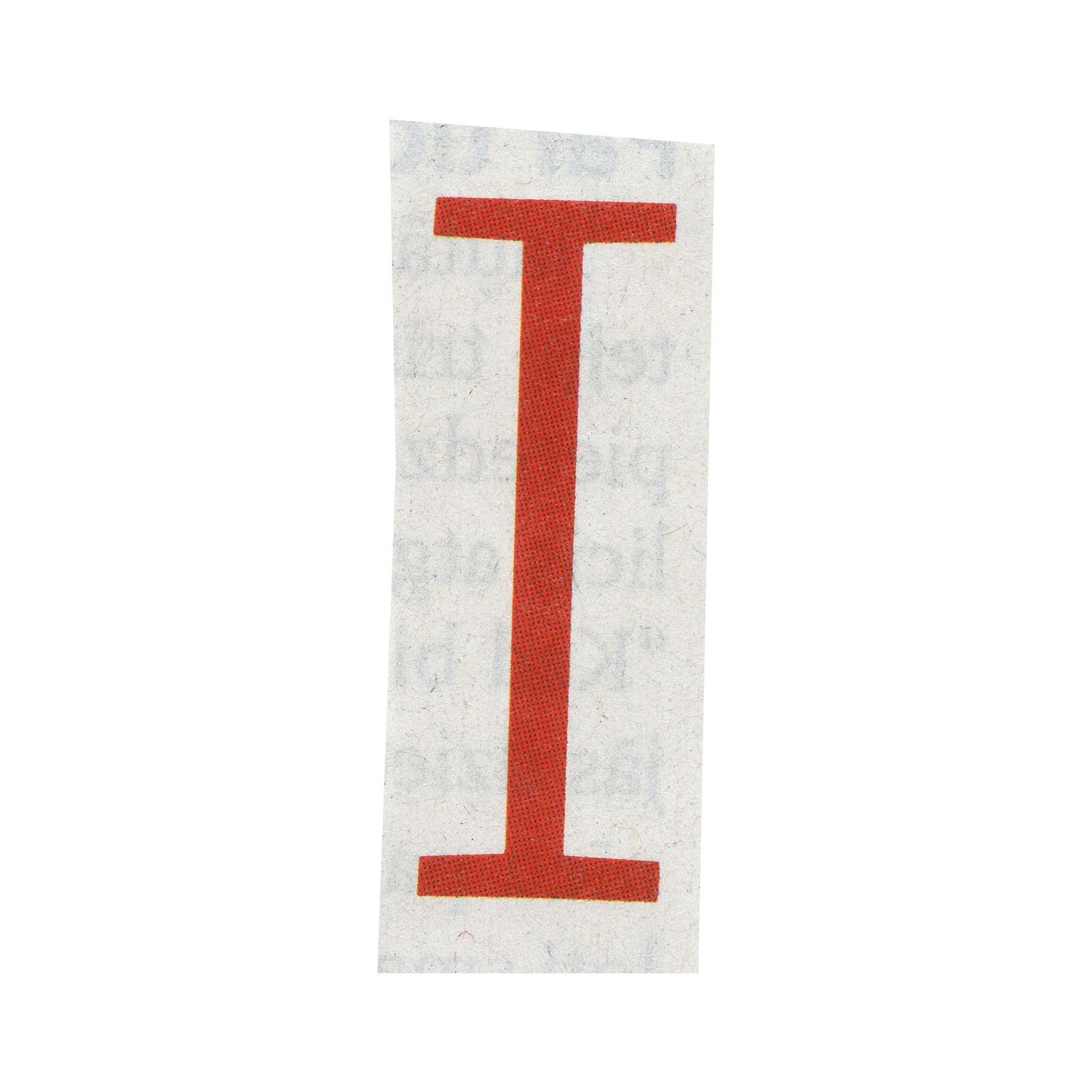
Every time you write about yourself, you follow one of English’s most unusual rules: the first-person singular pronoun "I" is always capitalized.
It feels completely natural to us, but it is surprisingly rare among the world’s major languages. Spanish uses yo, French uses je, Italian says io, Portuguese uses eu, and Dutch says ik, all written in lowercase (unless, of course, they start a sentence). English stands out as the only major language that always gives its first-person pronoun a capital letter, and the reason is more practical than symbolic. In medieval handwritten texts, the single letter "i" was easy to miss among surrounding words. To make it easier to read, scribes gradually began writing it larger, and by the late 15th century, the capital "I" had become the standard form we still use today.
Phrasal verbs

"Sit down," "give up," "look into," "take off," "make up," and "run out of" are expressions English speakers use every day naturally. But for people learning the language, it can feel like a never-ending challenge.
That’s because phrasal verbs rarely follow a predictable pattern. The same verb can take on dozens of completely different meanings just by adding a small word like up, out, on, or off. Other languages have similar constructions. German, for example, has separable verbs such as ankommen ("to arrive"), which literally combines an ("at") and kommen ("to come"). In a sentence, the particle separates and moves to the end: Ich komme morgen an ("I arrive tomorrow"). But while many languages use verb-particle combinations, English stands out for having hundreds of phrasal verbs, making them one of the defining features of everyday conversation and one of the biggest troubles for learners.
Capitalized days

If you’ve ever written in another language, you’ve probably noticed something that feels almost wrong at first: the words for Monday, Tuesday, Wednesday, Thursday, Friday, Saturday, and Sunday lose their capital letters.
In most of the world’s major languages, the days of the week are written like ordinary nouns, with lowercase letters unless they begin a sentence. But English is one of the very few exceptions. We capitalize all seven days every time we write them, and this is surprisingly rare worldwide. In standard German, the days are capitalized too, but only because all nouns are. In English, however, the days are classified as proper nouns (like Tom or New York) rather than common nouns (like house or pencil). That grammatical distinction is why they always begin with a capital letter.
Missing word origins

Believe it or not, some of the most common words in English are complete mysteries. We use them every day, but no one knows where they came from.
Most English words can be traced back through older languages, but a handful have no clear ancestry at all. Historical linguists consider them native English words with unknown origins because they have no identifiable roots and no obvious relatives. One example is the word "dog": for centuries, the common Germanic word for a canine was "hound." Then, sometime in the late Old English period, "dog" suddenly appeared and eventually replaced it. "Boy" first showed up in the 13th century as boie, originally meaning a servant, rogue, or rascal, but its origin remains a mystery. The same is true for "bad," which appeared in Middle English in the late 1200s and gradually displaced older words such as "evil," despite having no known linguistic roots.


