They speak what? Where?

Do you know where the biggest Welsh-speaking community outside Wales is?


Published on February 4, 2026


Image: Towfiqu barbhuiya

Migrations, trade, and other historical events have contributed to the spread of languages to regions far from their origins. But sometimes, we arrive at a new location expecting to hear a particular language, only to be surprised by the use of a language we wouldn’t expect. Here are 10 places in the world where an unsuspected language is spoken daily.

1

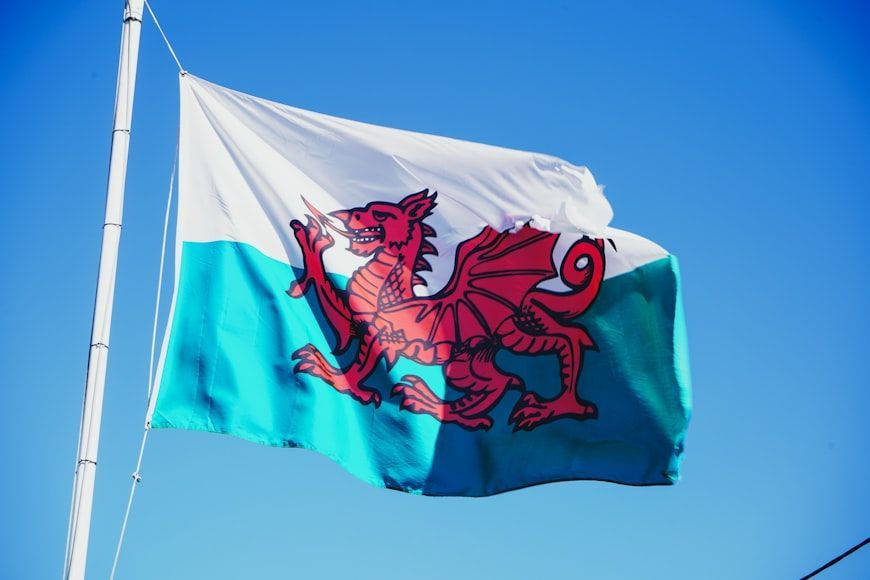
Argentinian Patagonia: Welsh

Image: Catrin Ellis

Welsh is the sort of language one wouldn’t expect to hear outside Wales, so its presence in southern Argentina often comes as a shock. During the 19th century, a group of Welsh people sailed across the Atlantic looking for a place where they could preserve their culture, which was threatened by English colonial rule. They arrived in Patagonia and founded Y Wladfa, or ‘the colony.’ Despite the harsh weather conditions, the colony subsisted and expanded, maintaining the Welsh language and traditions. Today, Argentina has the highest number of Welsh speakers outside Wales.

2

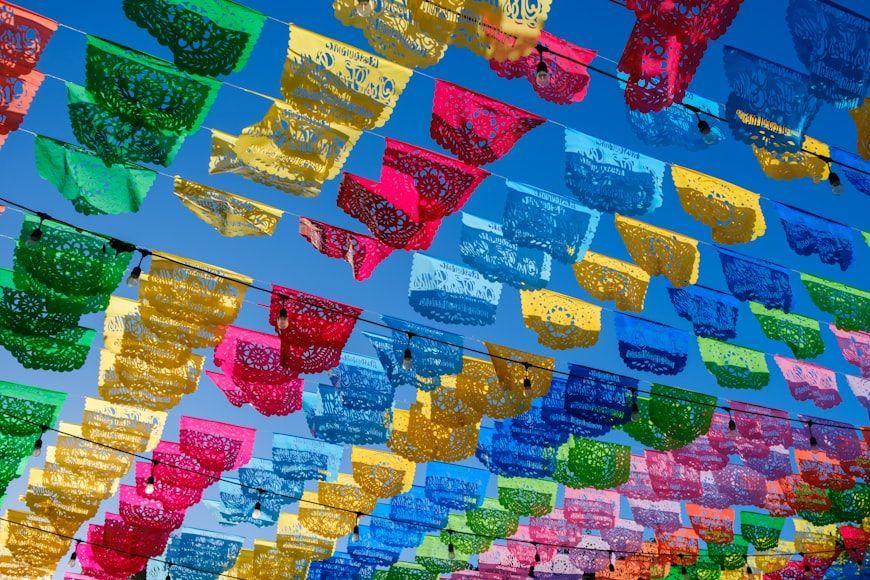
Chipilo, Mexico: Venetian

Image: Miikka Luotio

Italian is the official language of Italy, but most regions have their own distinct languages. Venetian is spoken in the north-east region of Veneto, but also in the Mexican town of Chipilo, a place that received an influx of migrants from a Venetian town called Segusino. These people spoke Venetian rather than Italian, a language that they were able to maintain thanks to Chipilo being somewhat isolated from other towns. Nowadays, Chipileño is a distinct dialect within the Venetian language.

3

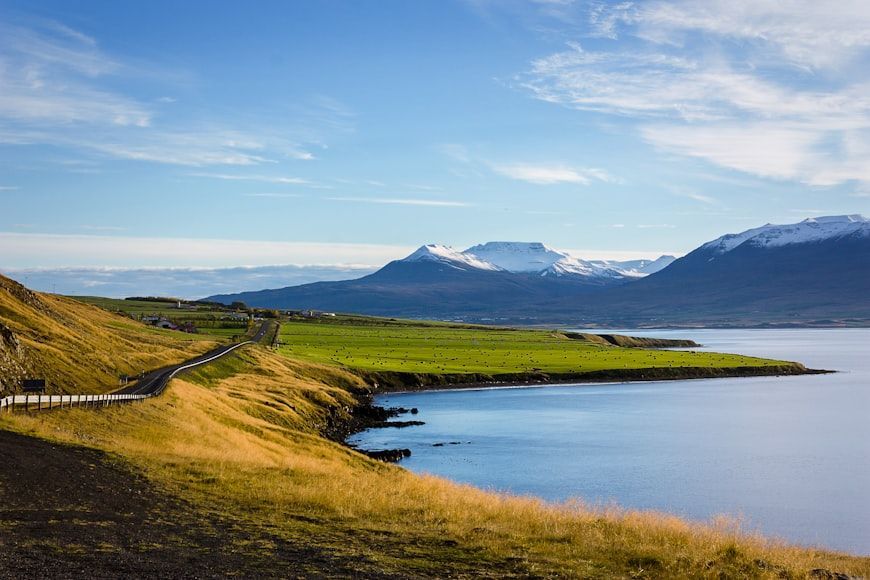
Gimli, Canada: Icelandic

Image: Josh Reid

Gimli, located north of Winnipeg, the capital of the Canadian province of Manitoba, was established by Icelandic settlers. It is the largest Icelandic community outside Iceland, and it has preserved many Icelandic customs and traditions. While the Icelandic language is still used and taught in Gimli, its fluency is sadly declining.

4

Sakhalin, Russia: Korean

Image: ibmoon Kim

The island of Sakhalin is part of the Russian Federation, but its control has changed hands multiple times in history, having been disputed by Russia, China, and Japan. After the Russo-Japanese War, Russia ceded the southern part of the island to Japan, which brought workers from one of its colonies, Korea, to work in the coal mines. When the Soviet Union recovered Sakhalin after WWII, the Korean population was around 50,000 people. Nowadays, only a fraction of their descendants are fluent in Sakhalin Korean, which follows the North Korean standard in writing, but the Seoul dialect in speech.

5

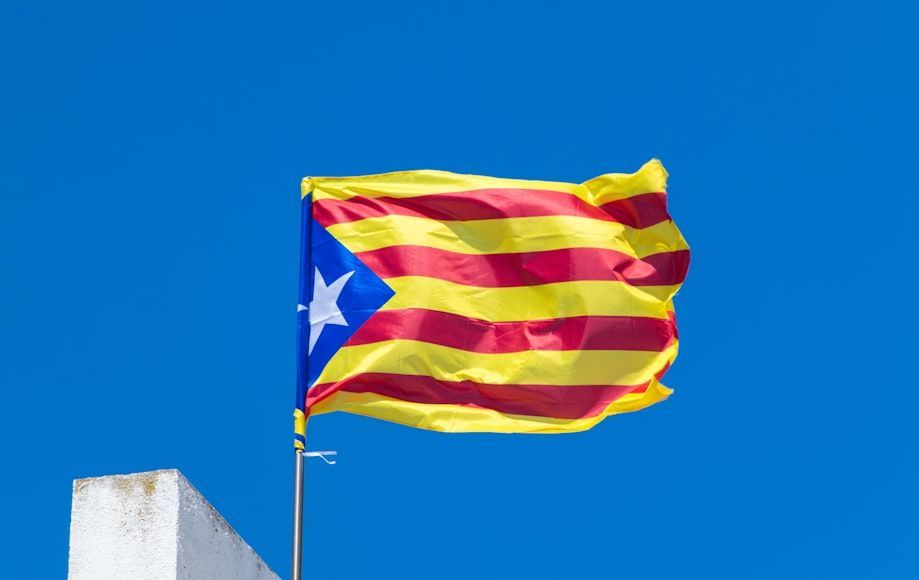
Alghero, Italy: Catalan

Image: Lucas Gallone

Before Italy became a unified country in the 19th century, many of its regions were part of different empires or kingdoms. During the Middle Ages, the island of Sardinia was part of the Kingdom of Aragon, which later became part of the Spanish Empire. Revolts during Aragonese rule led to the arrival of Catalan settlers, and the Catalan language became widespread. Although it was later replaced by other languages in much of Sardinia, it was preserved in the city of Alghero, where it is still spoken today.

6

Boqueron, Paraguay: German

Image: Marie Martin

At the start of the 20th century, Mennonite groups looking for a place where they wouldn’t be forced to abandon their way of life relocated to the Boquerón department in Paraguay. They established several communities and transformed the arid territory into farmland. Though these groups came from different places, most of them spoke Plautdietsch, or Low German, a language that they still use in daily life. The Mennonite population in Paraguay is estimated at around 40,000.

7

Beqaa Valley, Lebanon: Portuguese

Image: Rafaela Biazi

Portuguese is widely spoken in many Asian countries due to colonization, but this is not the case. More than 100,000 Lebanese emigrated to Brazil in the 19th and 20th centuries, where there are now more than 7 million people of Lebanese descent. While many immigrants decided to permanently stay in South America, others returned home, carrying Portuguese with them. Today, around 10,000 people in the Beqaa Valley speak Portuguese daily.

8

Texas, U.S.A: German

Image: Roberta Guillen

Heritage languages in the U.S. tend to disappear after a few generations, but Texas German was once the exception. Spoken by thousands of descendants of German immigrants across Texas, and markedly distinct from Standard German, Texas German was at one point granted official recognition comparable to Spanish. Sadly, as a consequence of the First and Second World Wars, the language was suppressed, and its number of speakers has since declined.

9

São Paulo, Brazil: Japanese

Image: FlyD

The fact that the largest Japanese community outside Japan is in South America may come as a surprise, but it is true. Japanese immigrants settled in several South American countries, but especially in Brazil, where nearly two million people are of Japanese descent. Most of them reside in the state of São Paulo. While not all Brazilian Nikkei are fluent in Japanese, it is estimated that there are between 400,000 to 450,000 speakers.

10

Svalbard, Norway: Thai

Image: Mathieu Ramus

What are the odds of Thai being spoken by 10% of the population of an archipelago in the Arctic? Quite high, if we consider that those kinds of regions are not densely populated. But how did a Southeast Asian language manage to get there? In the 1970s, many Norwegian miners from Svalbard married Thai women, who in turn became the link for other Thais who migrated looking for work. While there are only about 200 Thai speakers, this represents a sizable portion of Svalbard’s population of roughly 2,500.


Dressed in meaning

Mannequins were real people once? The origin of 10 fashion item names


Published on February 4, 2026


Image: Yasamine June

Fédora was a Princess, Cardigan was an Earl. Even though all of these garments have evolved over time, their unusual names remain. Sometimes we can’t even pinpoint the language from which they derive. Have you ever asked yourself why we call bikinis, tuxedos, and galoshes exactly that? Where do the words "denim" and "cashmere" come from? In this article, we uncover the origins of 10 items from the fashion industry.

1

Denim

Image: Suzy Hazelwood

A couple of centuries before Levi Strauss popularized denim jeans, two cities in Europe were already developing the textile that would become an icon of the future.

In the late 17th century, weavers in Nîmes, France set out to design a sturdy cotton fabric similar to the one that was being produced in Genoa, Italy, which had a distinctive diagonal weave. Laborers and sailors would benefit from using strong, durable clothes. The serge fabric they elaborated came to be known as serge de Nimes, a phrase that time shortened to simply "denim."

What happened to the original textile from Genoa? It was an ancestor of the modern denim, too. In France, people would refer to the foreign fabric as coming from Gênes, as they called the city. When English speakers heard about these clothes from "Gênes", they annotated the textiles as "jeans."

2

Fedora

Image: Rasheeque Ahnaf (Piash)

Fedora, the soft-brim hat that was an icon of American culture in the early 20th century, has an unexpected origin: it was the name of a princess.

A fictional princess, at least. Fédora (1882) was a very successful play by French author Victorien Sardou. In it, the protagonist Princess Fédora Romazoff wore an iconic felt hat that soon women in Paris picked up. At first, this center-creased hat became a symbol for the women's rights movement. Eventually, Edward, Prince of Wales, started wearing a similar one in the 1920s, and the fashion spread among men.

In American society, the hat became an accessory for public courtesy and a symbol of status. History went full circle when, again, the garment became an emblem of cultural icons such as Indiana Jones or Michael Jackson.

3

Mannequin

Image: Diana ✨

Did you know that, before the fashion industry developed these real-life-sized dolls, women’s clothing was displayed in young male boys?

The first mannequins originated in the 15th century. But before that, in the Middle Ages, young pages were made to wear female clothes to expose the fit for potential buyers. Eventually, the need for dolls was understood, and when these figures were developed, the Flemish called them manneken, meaning "little men."

When the device arrived in Paris, it was written as "mannequen." It wasn’t until the 19th century that female mannequins were introduced.

4

Bikini

Image: Jess Loiterton

Yes, the modern two-piece swimsuit was named after a beach –but the story is more perplexing than one would imagine.

Louis Réard was the French designer who introduced this disruptive garment in 1946. He dressed a young French dancer in it to debut the invention in a Parisian piscine. When asked about the name of the design, he said it was "Bikini." He didn’t add much. Four days prior to this fashion launch, an event had occurred in the South Pacific grabbing the world’s attention: a nuclear warhead had been tried in a small coral reef from the Marshall Islands, called the "Bikini Atoll."

A theory says that this label was a pun he played at Jacques Heim, a fellow French designer who had shortly before introduced a similar small bathing suit he had called the "Atome."

5

Spandex

Image: Divazus Fabric Store

"Spandex" is the preferred name in the U.S. for the material that in the rest of the world is known as "lycra".

This notably elastic fabric had been developed in 1958 by Joseph Shivers while working for an American company named "DuPont Textiles and Interiors." DuPont decided to launch a sub-brand that would only sell synthetic fiber products. They picked the trade name "Lycra" to market their inventions.

Why "spandex," then? That is the name that was chosen for the fabric without attaching it to any brand. If you pay attention, you’ll notice that "spandex" is an anagram (an alteration of the letter order) of the word "expands."

6

Bandana

Image: Steve Johnson

One of the most versatile pieces of clothing, bandanas have their origin in the Middle East and South Asia.

The word derives from the Hindi and Urdu word bandhana, "a bond," also related to bāndhnū, which means "tie-dyeing" in Hindi. The most traditional pattern used in the cloth was the Paisley, of Persian origin, which looks like a motif made of curved "tear" shapes.

Another word for the accessory is "kerchief," which derives from the Old French couvre-chef, or "cover head."

7

Galoshes

Image: No-longer-here

They are not exactly rain boots, and they are not to be confused with Wellington boots. Galoshes are overshoes, usually made of rubber, meant to protect your actual shoes in muddy or wet weather.

A distant relative of this invention is the calopedes. These were wooden clogs or heals used even before the Middle Ages. The word came from the Greek kalopódion, which roughly meant "feet wood". In French, footwear derived from these devices came to be called galoche, which translated in English to "galosh" or "golosh."

8

Cardigan

Image: Jovan Vasiljević

The knitted jacket that is now associated with a cozy, homely look, had its origin in military apparel. Cardigans were named after the waistcoats used by British officers under the command of James Brudenell, 7th Earl of Cardigan, known by history as Lord Cardigan. He commanded a brigade during the Crimean War in the early 19th century.

Cardigans were sleeveless vests at first, but they evolved over time to include all the versions we know today. Cardigans are characterized by having an open front, as opposed to pullovers which are of similar materials but must be "pulled over" the head of the wearer.

9


Tuxedo

Image: kevin Clonee

Back in the 1880s, when white collars and tailcoats were the norm for extremely formal evening wear, the introduction of jackets without tails was considered rebellious.

Originally known as "dinner jackets," these less formal substitutes were an option picked up in the United Kingdom, and popularized after Edward VII, then Prince of Wales, wore one with matching trousers. In the U.S., the tailless coat was quickly adopted in the New York area of Tuxedo Park. For a few years, "Tuxedo" referred only to the jacket, but then its pairing with trousers also caught on, and the term came to name the whole suit. More recently, the piece also became known as "tux."

10

Cashmere

Image: Skylar Kang

One of the rarest and most expensive fibers in the world, cashmere is made from wool sheared from goats. Kashmir, in the high plateaus of the Himalayas, was the region where the wool was originally produced. The soft and luxurious fabric was first spun as early as the 3rd century BC. Kashmiri weavers became known for their high-quality shawls made from this wool.

"Pashmene" is sometimes used interchangeably, although it is a variant of fiber, sometimes mixed with silk. Pashm means "wool" in Persian, and around the 15th century, this fabric was already a sign of wealth for cultures in India, Pakistan, and Nepal.

Looking for an extra scoop of literary fun?

Learn more with our Word of the day

alter

/ˈɔltər/