Final words

Do you know what is written on Frank Sinatra's tombstone? Take a look!


Published on March 27, 2025


Image: Greg Bulla

Derived from the Greek epitaphios meaning "a funeral oration," epitaphs are quotations or phrases carved on a grave to honor a deceased person. These poignant inscriptions —some written with a great sense of humor— portray the final thoughts and legacy of the departed. From famous writers to rockstars and Wild West outlaws, here's a selection of our 12 favorite celebrity epitaphs!

1

Emily Dickinson

Image: Scott Rodgerson

The epitaph inscribed on Emily Dickinson's tomb reflects her characteristically concise style: "Born Dec.10.1830, Called back May.15.1886". This inscription, simple yet loaded with meaning, captures the essence of her work, marked by an economy of words and emotional depth.

The phrase is taken from what is believed to be her last letter, which simply read: "Little Cousins, Called Back. Emily." In addition, Called Back is the title of a novella by Hugh Conway that the poet was fond of. Dickinson, one of the most important figures in American poetry, lived a life of isolation but left a poetic legacy that continues to resonate with readers even today.

2

Jimi Hendrix

Image: By Steven Pavlov - Own work, CC0

Jimi Hendrix, one of the most influential guitarists in rock and roll history, left a simple but powerful epitaph: "Forever in Our Hearts". This inscription, along with a carved Stratocaster guitar, celebrates his contribution to the world of music and his lasting impact on his fans.

Hendrix, known for his virtuosity and innovative style, remains an iconic figure in the music world despite dying at a young age. Thanks to this epitaph, his memory will live on in the hearts of those who loved him and in future generations.

3

Mel Blanc

Image: Nate Biddle

Mel Blanc, the legendary voice actor known for voicing iconic Looney Tunes characters, left an epitaph featuring his most famous catchphrase: "That's all folks".

This iconic line from the cartoons that entertained generations of viewers pays tribute to his career and his impact on popular culture. Blanc, who lent his voice to characters such as Porky Pig, Bugs Bunny, and Daffy Duck, remains a beloved figure, and his epitaph ensures that the laughs will go on forever.

4

Edgar Allan Poe

Image: By KRichter - probably own picture (see original filename), Public Domain

Edgar Allan Poe was best known for his gothic poetry and short stories. Despite being one of America's most famous writers, his grave remained unmarked after his death. Twenty-five years later, his family managed to raise enough money to install an epitaph honoring his most famous poem, "The Raven."

Edgar Allan Poe's epitaph reads: "Quoth the raven, ‘Nevermore.’" The connection between his resting place and his most celebrated work emphasizes Poe's lasting influence on literature, ensuring that his legacy will continue to fascinate and inspire future generations of readers.

5

Billy Wilder

Image: Marco Rickhoff

Film director Billy Wilder, known for films such as Sunset Boulevard, Sabrina, and The Seven Year Itch, had a keen sense of humor. So it's no wonder he left an epitaph that reflects his knack for satire and his distinctive wit.

"I'm a writer, but then nobody's perfect" is the inscription on the grave of the seven-time Academy Award-winning director, a reference to the iconic final line of his film Some Like It Hot. This epitaph not only pays tribute to his film career but also attests to his ironic and positive perspective on life.

6

Francis Scott Fitzgerald

Image: By JayHenry - Own work, Public Domain

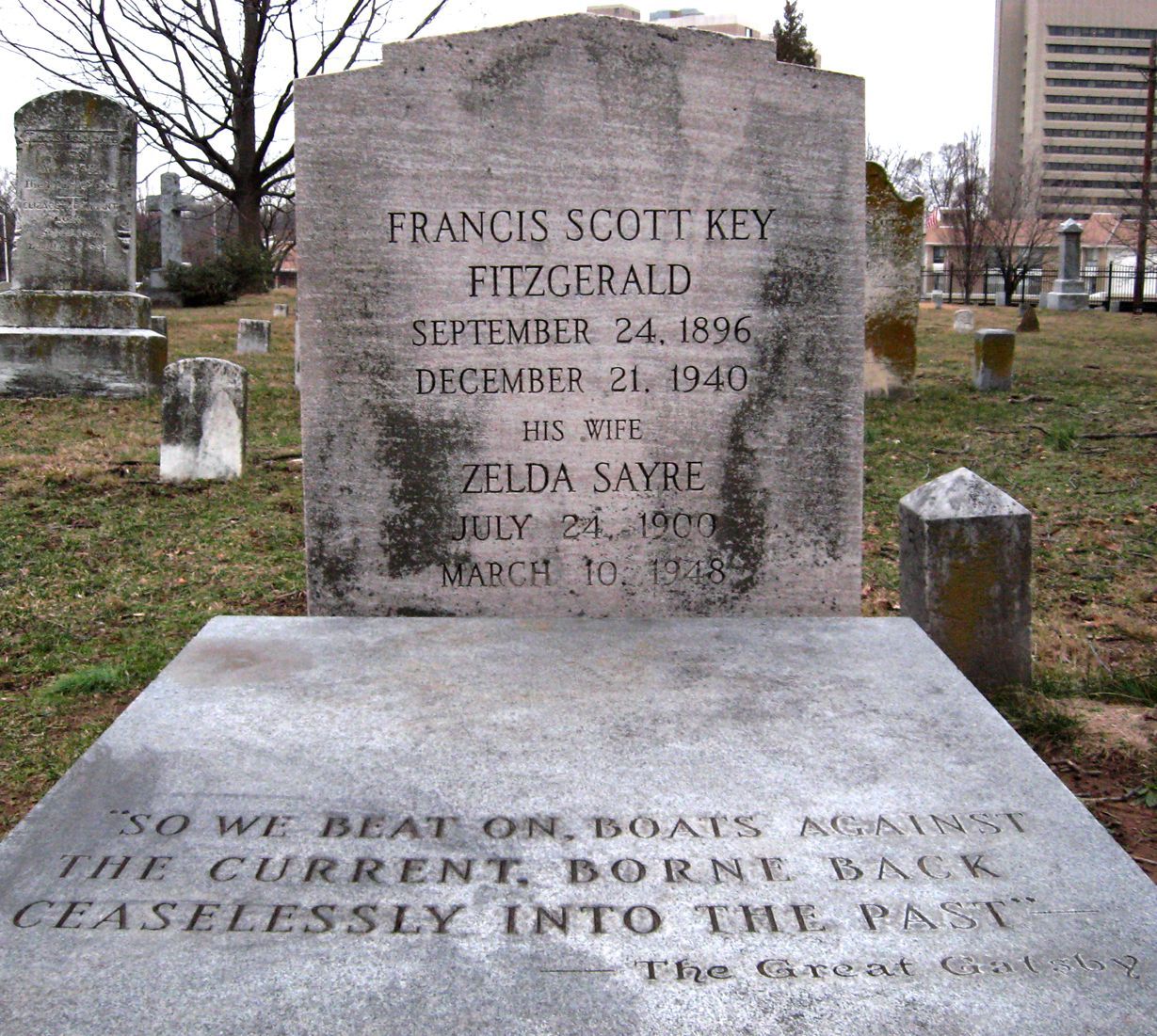
Francis Scott Fitzgerald, one of the best American novelists of the 20th century, is best known for his fabulous portrayal of the 1920s Jazz Age. Fitzgerald lived like his characters, surrounded by glamour, melancholy, and excess. Unfortunately, his career, though successful, was short. He died of a heart attack at the age of 44 and is now buried alongside his wife Zelda at St. Mary's Church Historic Cemetery in Rockville, Maryland.

Written on their gravestone is the last line from his greatest novel, The Great Gatsby: "So we beat on, boats against the current, borne back ceaselessly into the past."

7

Marlene Dietrich

Image: By Don English (1901-1964); Paramount Pictures - Heritage Auctions, Public Domain

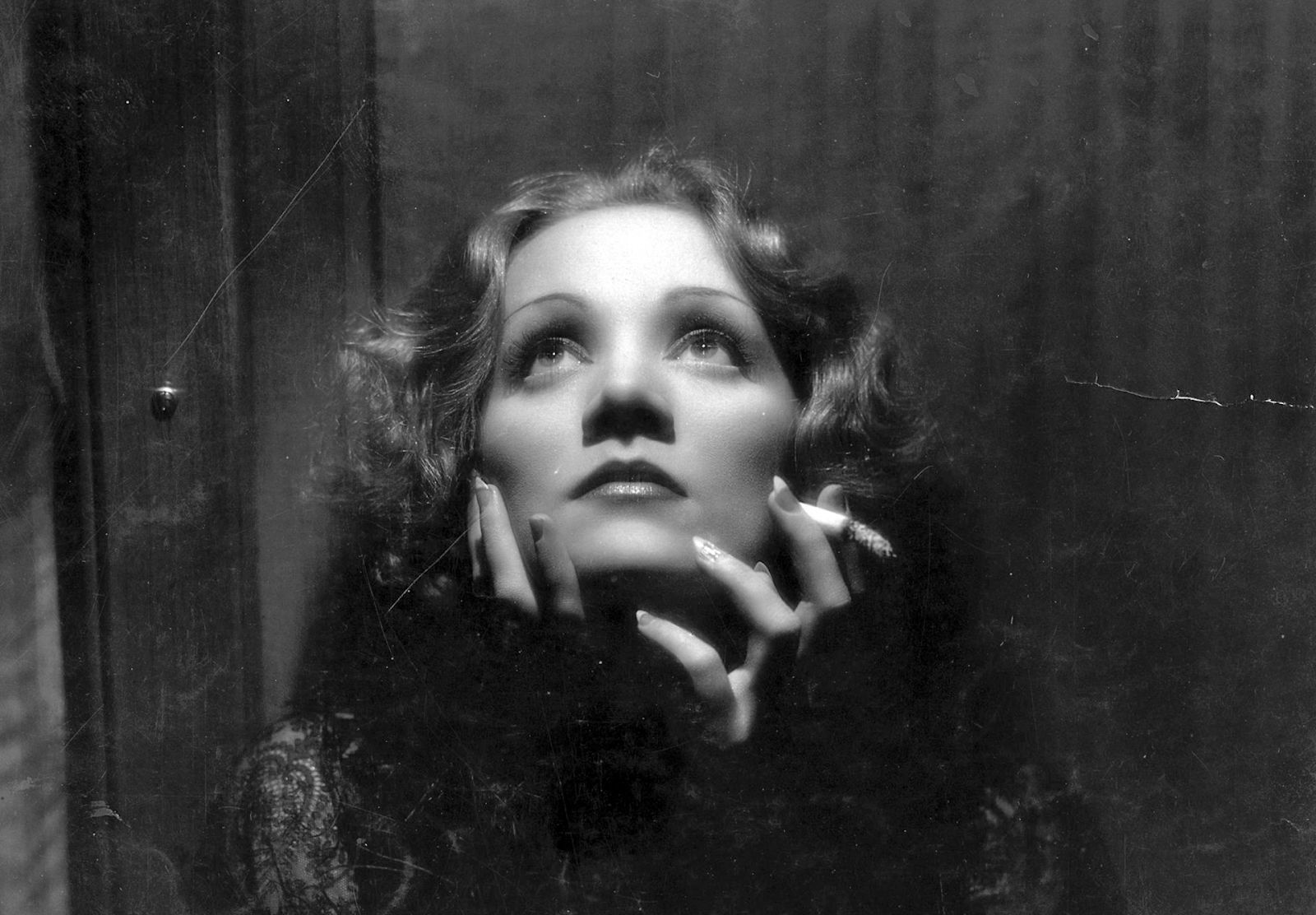
Marlene Dietrich, the iconic German-American actress and singer, left an epitaph that reflects her elegance and poetic sense: "Hier steh ich an den Marken meiner Tage" ("Here I am standing at the border stones of my days").

Dietrich, known for her glamorous persona and exotic looks, was one of the highest-paid actresses of Hollywood's golden age. The phrase on her gravestone in Berlin, though laden with melancholy, is also a tribute to her career in the arts, and her lifelong humanitarian efforts.

8

Jim Morrison

Image: Pierre Antona

Jim Morrison, the charismatic leader of The Doors, left an epitaph that reflects his rebellious spirit and philosophy of life: "Kata ton daimona eaytoy" ("True to his own spirit", in classical Greek).

This inscription is carved on a bronze plaque at his resting place at the Père-Lachaise cemetery in Paris, one of the most visited graves by fans from all over the world. The simple but poignant phrase manages to convey the essence of Morrison as an artist who lived by his own rules. His epitaph, as well as his musical and poetic legacy, continues to inspire those who seek to live authentically.

9

Jesse James

Image: By Missouri State Archives

Jesse James, the famous Wild West outlaw, was treacherously murdered by his friend Robert Ford when he was only 34 years old. His mother, outraged by this heinous act, recorded her grievance on his epitaph: "Murdered by a traitor and coward whose name is not worthy to appear here."

This inscription, loaded with resentment, reflects the controversy and myth surrounding the figure of James. The original grave site is located in the backyard of the James family farm in Kearney, Missouri. The Jesse James Birthplace Museum, open for tours, displays family artifacts and, of course, Jesse's original epitaph.

10

Freddie Mercury

Image: Andrea Piacquadio

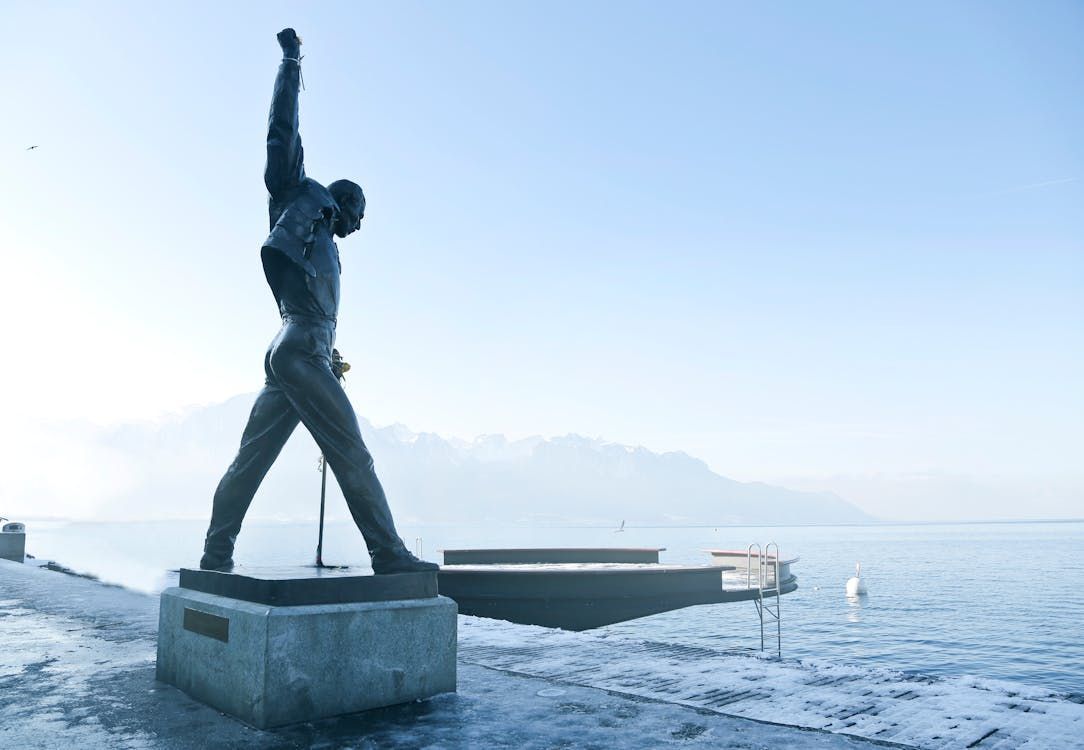
Freddie Mercury, lead singer of the popular British rock group Queen, has one of the most famous epitaphs among rock stars. Freddie died at the young age of 45 and was cremated at West London Crematorium in Kensal Green Cemetery, where there is now a cenotaph in his honor that reads: "Lover of life, singer of songs".

The touching phrase, penned by bandmate Brian May, accurately describes the complex figure of one of the greatest showmen ever. Freddie’s theatrical stage appearances captured the world's attention in the 1970s but he will always be remembered for his incredible voice, flamboyant style, and unparalleled talent.

11

Frank Sinatra

Image: By Diagram Lajard - Own work, Public Domain

Frank Sinatra, legendary singer and actor, left an epitaph that reflects his unwavering optimism: "The best is yet to come". This phrase, which is also the title of one of his most famous songs, embodies a sense of hope and the promise of a better future.

For his fans, Sinatra's epitaph is a reminder of his musical legacy and indomitable spirit. But it is also a testament to his enormous legacy, a wonderful voice that will continue to resonate long after he is gone.

12

John Keats

Image: By Syd Storm - Own work, CC0

John Keats, one of the great British poets of Romanticism, died of tuberculosis in 1821 when he was only 25 years old. Despite his young age, he left us a remarkable body of work that remains among the most popular and analyzed in English literature still to this day.

Knowing himself to be very ill, Keats had only one last wish, to be buried under a tombstone bearing no name or date, only the words, "Here lies One whose Name was writ in Water." Pretty poetic, don’t you think?


WHITE HOUSE PASTIMES

Commanders-In-Quirk! Discover These Ten Presidential Fun Facts & Hobbies!


Published on March 27, 2025


Image: Jéan Béller

Let’s face it: Our "Commanders in Chief" are humans, after all. However significant their leadership was for the growth of our country, we should always keep in mind that they also had likes, dislikes, hobbies, and, above all, quirks just like the rest of us.

We have decided to document ten of our favorite presidential fun facts that celebrate the human side of our heads of state. Can you guess which president absolutely adored jelly beans before reading? It might surprise you!

1

Four score and many hats ago…

Image: Garry T

Even though he is pictured bareheaded in the $5 bill and his memorial, it is kind of hard to separate President Lincoln from his iconic black top hat. And as anyone who had to play Lincoln will attest (which includes both Daniel Day-Lewis and elementary school students on President’s Day), top hats are rather roomy headpieces. This height served no functional purpose unless you were a certain president who had a habit of storing notes and papers on your hat.

According to historians, President Lincoln was incredibly messy during his lawyer years in Illinois. He came up with the solution of storing important documents in his top hat as a way to separate them from the mess in his office and, by the time he became president, this habit was well-known. Some believe Lincoln kept this tradition since it conveyed a powerful message: These ideas were coming straight from the president’s head.

2

Keep those feet warm!

Image: Jonathan Taylor

As far as hobbies go, collecting socks might be one of the most useful ones. After all, doesn’t a huge assortment of colorful, comfy songs to choose from at the start of each day sound like a dream? In any case, we can think of at least one person who shared our passion for socks and that is former president George H.W. Bush.

As President Bush himself said in 2014, "I'm a self-proclaimed sock man. The louder, the brighter, the crazier the pattern - the better." Several pieces of his collections have been pictured over the years: these include the American flag pair he wore when he was awarded the Presidential Medal of Freedom and a pair with his own face worn during a 2013 football game.

3

You can put it on the board!

Image: Feo con Ganas

Most of us are aware of Ronald Reagan’s acting career before turning to politics. He was one of the most prominent actors in the 1950s, appearing in over 50 movies and acting as president of the Screen Actors Guild twice. However, you might be surprised to learn that when young Ronald first arrived in Hollywood in 1937, he had previously pursued a different career path.

President Reagan worked as a sports announcer for five years, covering major league baseball and college football for WHO in Des Moines, Iowa. During his time in the White House, he would continue to show his broadcasting skills while addressing the American public every Saturday on the radio.

4

Nutty for peanuts?

Image: Afif Ramdhasuma

Jimmy Carter’s past as a peanut farmer is very well documented. He was nicknamed "The Peanut Farmer" during his time in the White House, referencing the farm in which Carter grew and sold peanuts since his teenage years. His image is so heavily associated with peanuts that, in 1976, a roadside attraction of a large peanut bearing his enormous smile was built to support his presidential candidacy.

What is less known is President Carter’s love for anything peanut, particularly peanut butter. In a recent interview for his 99th birthday, he states he still enjoys an occasional scoop of peanut butter ice cream. Moreover, a delicious cake known as the "Jimmy Carter cake" includes both peanut butter and roasted peanuts on top of a cream cheese and chocolate layer.

5

President Reagan’s sweet tooth

Image: Patrick Fore

We could fill an entire article with the favorite snacks of U.S. presidents (and maybe we will in the future, who knows?). We could talk endlessly about FDR’s love for grilled cheese sandwiches or the above-mentioned Carter peanut craze. However, President Reagan’s obsession with jelly beans was simply too incredible not to include in this article.

Reagan first became infatuated with jelly beans when he was governor of California. In an effort to quit pipe smoking, he adopted eating these colorful pieces of candy as a stand-in. During his time in the White House, over 700 bags of jelly beans were ordered each month, and distributed among different government buildings. He gifted bags of Jelly Belly beans (his favorite brand) to foreign dignitaries and illustrious Americans, including the astronauts aboard the Challenger Space Shuttle. To commemorate their most famous fan, the Jelly Belly factory has a portrait of President Reagan made entirely of jelly beans.

6

We hold these fries to be self-evident

Image: Nurul Roy Saleh

From authoring the Declaration of Independence to conducting the Louisiana Purchase, Thomas Jefferson’s contributions to this great nation of ours can’t be denied. However, there’s an outstanding accomplishment made by our Third President that sometimes goes unacknowledged by history books: he is credited with bringing the very first recipe of French fries to America.

While serving as American Minister to France, Jefferson collected over 150 of his favorite French recipes to bring back home. Jefferson’s recipe for pommes de terre frites, which were round-shaped instead of sticks, didn’t really catch on until the 1900s but set the base of what would eventually become one of America’s favorite foods.

7

A night to remember

Image: Long Truong

While it is an evening we will probably remember for the rest of our lives, prom nights are not particularly luxurious events. Don’t get us wrong: we have nothing but admiration for the enormous work that goes into turning a high-school gym into the setting of a magical event, but tight budgets sometimes have to cut a few corners. However, if you happened to be in the 1975 class of Holton-Arms School, you might have enjoyed a prom night in a rather unusual place: the White House.

Susan Ford, daughter of President Gerald Ford, petitioned at the behest of her classmates to hold her prom night in the White House. While some conditions had to be arranged (for instance, an assurance that no expense would be covered by the government), the White House administration agreed and Susan’s class was able to enjoy a night to remember at the Executive Mansion.

8

A groovy president!

Image: Maxence Pira

Many presidents have been rather musical. Harry S. Truman and Richard Nixon were talented pianists, and Warren G. Harding even celebrated his nomination in the 1920 Democratic Convention by showing off his tuba-playing skills. However, President Clinton’s prowess with the saxophone is perhaps the most well-known.

Before turning to politics, Clinton briefly considered a music career: he avidly practiced the saxophone as a kid and even became the first chair of Arkansas’ All-State Band. Most famously, Clinton appeared in the Arsenio Hall show during the 1992 election and played a cover of "Heartbreak Hotel" on his trusted saxophone. This performance also proved to be a smart political move since it helped him gain traction with young voters.

9

Boom, Boom, Dynamite!

Image: University of Texas at Arlington Photograph Collection

While not the only cheerleader president (both Reagan and FDR were cheerleaders in their college years), George W. Bush’s cheering days are perhaps the most well-known. He became head cheerleader in his senior year of high school at Philips Academy: some photographs remain from those days on which we can see the future 43rd president electrifying the crowd through a megaphone. From 1964 to 1968, President Bush attended Yale University, where he also became part of the cheerleading squad.

10

Tee up!

Image: Robert Ruggiero

We end this article with one of America’s favorite pastimes. Millions of Americans relax after a long week by hitting the greens. In case you happen to live far away from a golf course, you might seek to escape your worries by practicing on a putting green. That is exactly what President Eisenhower, an avid golfer, sought to recreate when he installed a putting green in the White House: a place on which to momentarily unwind and enjoy himself, before going back to his presidential duties.

The putting green, installed in 1954, was later on dismantled by President Nixon. George H.W. Bush reinstalled it in 1991, and President Clinton moved it back into its original location in 1995. It sits there to this day, a small oasis on which commanders-in-chief can momentarily loosen up.

Looking for an extra scoop of literary fun?

Learn more with our Word of the day

wrinkle

/ˈrɪŋk(ə)l/