Time changes everything

Did you know that a computer used to be a person? Job titles evolve, too


Published on July 23, 2026
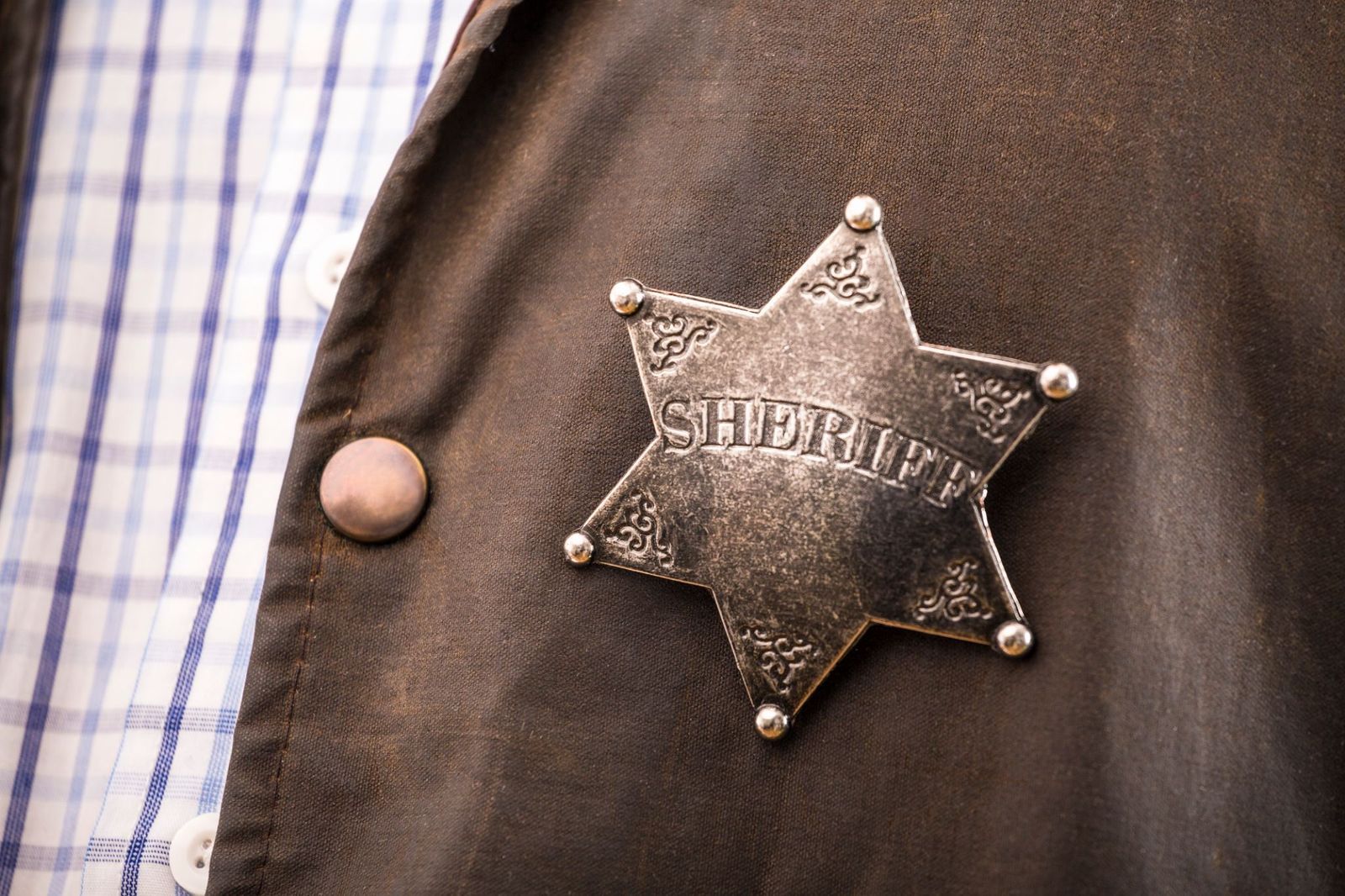

Image: Sopotnicki

Language preserves history in unexpected places. Many job titles that seem ordinary today began with entirely different meanings, reflecting the needs of medieval kingdoms, noble households, religious institutions, and even long-forgotten professions. Although the work behind these titles has changed dramatically over the centuries, the words themselves continue to carry traces of the past wherever they are used.

1

Secretary

Image: Vitaly Gariev

Today, a secretary is usually associated with calendars, correspondence, and office organization. But centuries ago, a secretary was a trusted keeper of confidential information. The word comes from the Latin secretarius, referring to someone entrusted with secrets and private affairs.

In royal courts and governments, secretaries often served as influential advisers rather than clerical workers. The title still carries traces of that earlier status in positions such as Secretary of State, where the role involves high-level decision-making rather than routine paperwork.

2

Clerk

Image: Stokkete

A modern clerk may work in an office, store, courthouse, or government agency. Originally, however, a clerk was a member of the clergy. During the Middle Ages, churches and monasteries were among the few places where people regularly learned to read and write.

Because clergy handled many written records, the word gradually became associated with literacy itself. As education spread beyond religious institutions, the meaning shifted from "churchman" to someone responsible for records, documents, and administrative work.

3

Marshal

Image: Scott Cornell

Today, marshals are often law enforcement officers or senior military officials. The title has surprisingly humble roots. It comes from an old Germanic term meaning something close to "horse servant" or "keeper of horses."

In medieval times, horses were essential for transportation, communication, and warfare. The official responsible for managing them gained increasing authority, and over centuries, the role evolved into one of the most prestigious military and governmental titles in many countries.

4

Sheriff

Image: Sanit Fuangnakhon

Modern Americans know sheriffs as elected county law-enforcement officials. The title dates back more than a thousand years to Anglo-Saxon England, where a sheriff was known as a shire-reeve.

A shire was a county, and a reeve was a royal administrator. Early sheriffs collected taxes, enforced the king’s orders, managed courts, and supervised local government. Fighting crime was only one part of a much broader set of responsibilities.

5

Butler

Image: Jeremy Walter

The butler is often portrayed as the head servant in a grand household. Yet the job originally revolved around something much more specific: wine. Early butlers were responsible for managing wine cellars and serving valuable beverages.

Because wine represented both wealth and status, the position required trust and responsibility. Over time, butlers gained authority over other servants and eventually became the chief managers of large households.

6

Steward

Image: Skytech Aviation

Today, the title steward may be used for airline attendants, ship personnel, or event supervisors. Historically, a steward was a powerful official responsible for managing a noble household, estate, or even an entire territory.

The word comes from Old English terms meaning "household guardian." Medieval stewards oversaw finances, property, staff, and daily operations. Some became influential political figures who effectively governed on behalf of kings and nobles.

7

Doctor

Image: Online Marketing

Most people immediately think of medicine when they hear the word doctor. Originally, however, a doctor was simply a teacher. The word comes from the Latin docere, meaning "to teach."

Medieval universities awarded the title to scholars qualified to instruct others at the highest level. Long before it became closely associated with physicians, doctors could be experts in theology, law, philosophy, and other academic disciplines.

8

Minister

Image: Alexandros Michailidis

A minister today can lead a government department or serve as a religious leader. The word’s original meaning is surprisingly modest. In Latin, minister meant "servant" or "attendant."

The title emphasized service rather than authority. Over time, ministers became trusted representatives of rulers and governments, eventually overseeing major areas of public policy while retaining a word that originally suggested humility and assistance.

9

Engineer

Image: Scott Blake

Modern engineers design everything from skyscrapers to software. The title originally referred to specialists who built or operated military "engines," a term once used for siege machines such as catapults and trebuchets.

These experts combined technical skill with practical problem-solving. As technology expanded during the Industrial Revolution, the meaning broadened dramatically, eventually encompassing the countless engineering fields that exist today.

10

Accountant

Image: Scott Graham

An accountant now manages financial records, audits, taxes, and budgets. Historically, the role was more closely tied to giving an account: that is, explaining how money or resources had been used.

Kings, merchants, and estate owners needed trusted individuals to report on financial matters. As trade and commerce became more complex, accounting evolved into a highly specialized profession recognized around the world today.

11

Computer

Image: Alex Knight

For centuries, a computer was not a machine at all. It was a person whose job involved performing calculations. Governments, observatories, universities, and scientific organizations employed teams of human computers to solve mathematical problems.

Human computers played important roles in astronomy, navigation, engineering, and even early space research. Only in the mid-20th century did electronic machines become so closely associated with the work that they inherited the title themselves.

12

Pilot

Image: Blake Guidry

Today, pilots are most commonly associated with airplanes. Yet the word was guiding vessels long before powered flight existed. Originally, a pilot was an expert navigator who directed ships through difficult harbors, rivers, and coastal waters.

These specialists relied on detailed local knowledge to help vessels avoid hazards and reach their destinations safely. When aviation emerged in the early 1900s, the title naturally transferred to those guiding aircraft through the skies.


HIGH SCORES AND NOSTALGIA

Let's Remember The 10 Best Arcade Games


Published on July 23, 2026


Image: Matt & Chris Pua

While today's virtual recreation options are many and varied, the arrival of arcade games in the early 1970s revolutionized the entertainment world and left a mark on entire generations. It's impossible not to feel a bit nostalgic when thinking of these incredible games. From the revolutionary Pac-Man to other iconic Donkey Kong, we all had our favorites. What was yours?

Today, we have compiled 10 of the best arcade games to bring back the joy and excitement they once gave us. Let's play!

1

Space Invaders

Image: Kvalifik

Outer space and its possibilities were a recurring theme in the 1970s games. You probably already know which one we are talking about now. You guessed it right: it's the unforgettable Space Invaders.

Released by Taito Corporation in 1978, this game was so fun and addictive that it quickly became a hit. With a classic format, players had to shoot a laser at invading ships coming from the top of the screen. Space Invaders was one of the first games to track high scores, which unleashed a competitive fever among players.

Adrenaline, tension, and fun were combined in this great game that defined the idea of "shooting games" and marked the childhood and adolescence of many of us.

2

Asteroids

Image: Senad Palic

Continuing with the space theme, another classic arcade game appeared in 1979, the mythical Asteroids by Atari.

If fighting against various enemies and obstacles was your thing, you've played Asteroids. In this classic, players had a ship that traversed space among asteroids and enemy flying saucers. Avoiding collisions with asteroids and attacking rival ships was a big challenge.

However, the level of difficulty didn't make Asteroids players any less passionate. From the beginning, this game found success, gaining a loyal fan base and becoming one of the best-selling games of its time.

3

Pac-Man

Image: Roger Ce

This list would never be complete without mentioning one of the most popular games of all time: the legendary Pac-Man.

Pac-Man, played around the world by people of all ages, genders, and nationalities, was a revolution in the world of video games.

Released by Namco in 1980, this arcade game was an instant hit, and it elevated its iconic and colorful characters to global fame: the one and only Pac-Man and his "adversaries" Blinky, Pinky, Inky, and Clyde. Do you remember them all?

4

Donkey Kong

Image: Kelly Sikkema

In 1981, Nintendo launched a game that would become an absolute success: Donkey Kong.

In this classic arcade game, a particular character named Jumpman had to overcome stairs and other obstacles to save the damsel Paulina from the formidable Donkey Kong. But do you know who this Jumpman was? That's right! He later became the iconic video game figure known as Mario Bros. While he was not yet called Mario in this game, it marked his debut as the popular character we know today.

Donkey Kong was one of the first arcades to include a series of diverse and challenging levels, and it became one of the best-selling games at the time!

5

Frogger

Image: Ben Neale

In 1981, Sega released a game developed by Konami that quickly conquered gamers. In Frogger, players used the famous joystick to control the little frogs through congested routes and tricky obstacles and get them back home. As the game progressed, the obstacles increased in speed and difficulty, making it not only fun and addictive but also very dynamic!

Due to its simplicity and lack of violence, this game was a hit regardless of the gender and age of the players.

But there is one thing that will instantly bring this game to mind: its iconic music! Do you remember it?

6

Ms. Pac-Man

Image: Isaiah Schultz

Two years after the successful Pac-Man, the arcade witnessed the debut of the iconic Ms. Pac-Man!

That's right, Pac-Man's girlfriend also had her own game, and it had nothing to envy the original. Released by Midway in 1982, Ms. Pac-Man came out as a sequel game and was one of the first video games to have a female protagonist.

This game was very well received by gamers at the time, as it had everything they loved about Pac-Man, plus several improvements. A bit more challenging than the original, Ms. Pac-Man featured the beloved female protagonist and the four ghosts, this time called Blinky, Pinky, Inky, and Sue.

7

Mario Bros.

Image: Justice Thompson

Of course, we can't forget to include a video game celebrity: the one and only Mario Bros.

As we already mentioned, Mario's first appearance in a game didn't even feature his name in the title, and he went by a different name. But his character in Donkey Kong was so well received that Nintendo decided to develop a video game for the beloved Mario.

Mario Bros., released for arcades in 1983, had not only Mario but also his co-star, his funny little brother Luigi, fighting and jumping in each level against obstacles and enemies.

Mario Bros. became a very popular arcade game in its time and was the starting point for the development of the legendary franchise that now bears that name.

8

Street Fighter II

Image: Joey kwok

When it comes to fighting games, Street Fighter II -released in arcades in 1991 by Capcom- gets a special mention among arcade classics.

Unlike Street Fighter I and other games that preceded it, Street Fighter II allowed the players to choose from a diverse group of characters, all fighting to become the best warrior in the world. At the same time, each character had unique abilities and characteristics. If you had the chance to play it, you probably remember some of them, such as Ryu, Ken, or Chun-Li.

In addition to its multiplicity of characters, Street Fighter II presented innovative features like the "combo system" (allowing players to apply several attacks in a row) and the "versus mode" (with which you could challenge a friend to play). Thus, this game marked the path that fighting games would take in the following decades.

9

Mortal Kombat

Image: Carl Raw

But in 1992, we welcomed a game that, for many experts, not only surpassed Street Fighter but also became an emblem of fighting games.

We are talking about the unforgettable Mortal Kombat, with its legendary and fearsome characters that include Scorpion, Sub-Zero, Liu Kang, Raiden, and Sonya, among others. In addition, each character had an interesting backstory that revealed a certain depth in the characters' crafting.

But what really set Mortal Kombat apart was its unusual level of graphical violence, which naturally attracted many gamers. Do you remember the "fatalities"? Did you have a favorite character?

10

NBA Jam

Image: Karsten Winegeart

If sports games were your thing, you probably played NBA Jam. This classic was released in 1993 by Midway Games and was undoubtedly very well received by the public.

Among its best features was the possibility of choosing between real NBA players of that time, making fans get excited every time they could play.

On the other hand, the graphics style and the game speed were some of the most valued features among the players.

Remember the "Boomshakalaka!" and "He's on Fire!" by Tim Kitzrow? What a time!

Looking for an extra scoop of literary fun?

Learn more with our Word of the day

envelop

/ənˈvɛləp/