Don’t go around poking bears

Did you know that these animal facts are not true?


Published on May 9, 2026

Image: Ray Hennessy

Certain animal facts are just a given: Everyone knows that bats are blind, bulls hate the color red, and that touching a toad will give you warts. But are these things really true, or are they just wives' tales that have been passed down through generations? Let’s have a look at some of these myths and see if they have some truth in them, or if they are just a folkloric invention.

1

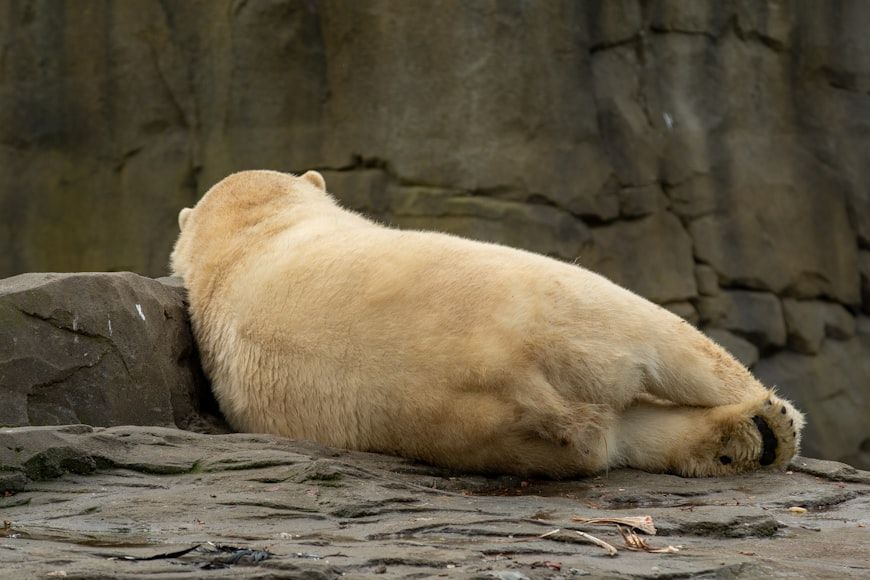
Bears hibernate all Winter

Image: Peter Neumann

The first misconception here is the meaning of ‘hibernation’ —a state where an animal drastically lowers its body temperature, appearing lifeless, and sleeps through the cold season. While most bears are less active through the Winter, they don’t hibernate. They enter a state called ‘torpor’, where they reduce their temperature and drop their heart rate, but they are lethargic, not sleeping. They will react to external stimuli, meaning you can still come across these furry fellows during a winter hike.

2

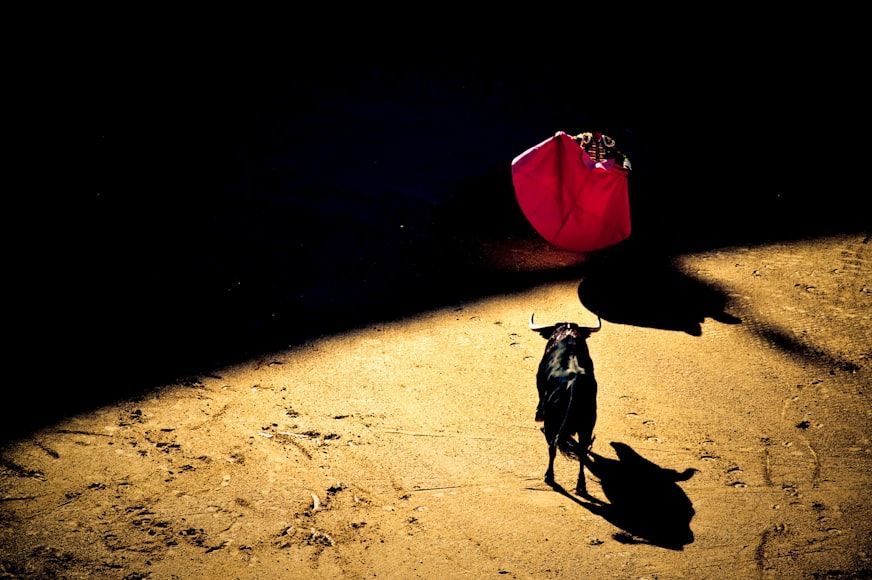
Bulls react to the color red

Image: Giovanni Calia

In popular tradition, the color red is associated with anger, but this has nothing to do with bulls, as they are partially colorblind and, as such, unable to see red. This common misconception stems from bullfighting, where the matador uses a brightly colored—usually red—muleta (a cloth hanging from a stick) to provoke the bull. What angers the bull is the whipping of the muleta, not its color. Why do they use a red cloth? To disguise blood spatters.

3

The cleanliness of your head matters to lice

Image: Tamara Bellis

"If you don’t wash your hair, you will catch lice.": You must have heard this old wives’ tale. Another popular belief claims that lice actually prefer clean heads, as they can move more freely in a clean scalp. As a matter of fact, lice don't care about your personal hygiene, nor about your hair type; they just want a warm scalp and blood to feed on. Your chances of catching pediculosis are tied to close contact with an infested person, nothing else.

4

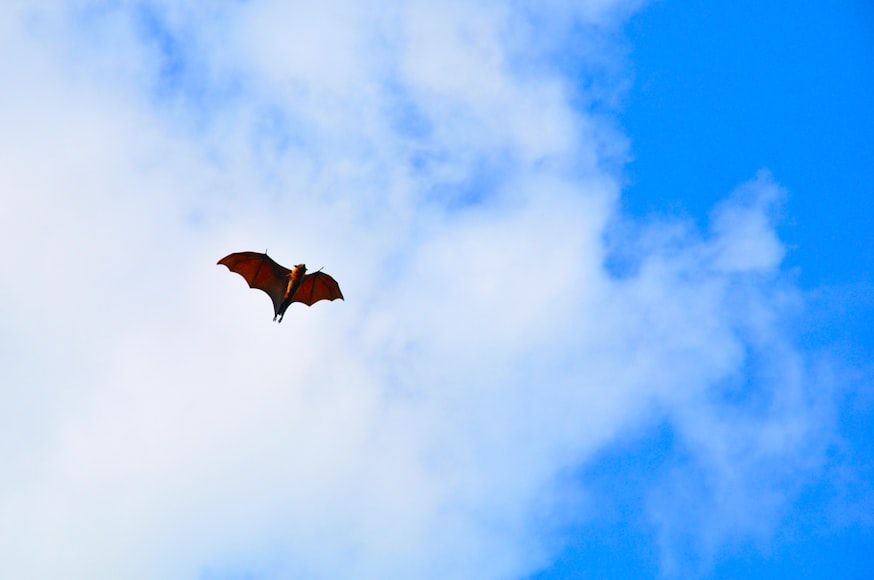
Bats are blind

Image: Georgy Trofimov

Another myth, most likely popularized by the anti-bat lobby. A bat’s vision can vary according to their species, but no bat is 100% blind, though some do better in low-light conditions. Some of them actually have excellent eyesight! The myth of the blind bat comes from their use of echolocation for hunting in the dark, and their sometimes erratic movements when following insects.

5

Dogs are colorblind

Image: Victor G

This one is a partial truth: dogs can’t see the same color spectrum as humans, but this doesn’t mean their world is black and white. While the human eye has three color-detecting cone cells, dogs have only two, which would make them ‘partially colorblind’. They are unable to distinguish shades of red, green, and orange, which they perceive as yellowish-brown or grayish, but they see other colors, such as blue and yellow.

6

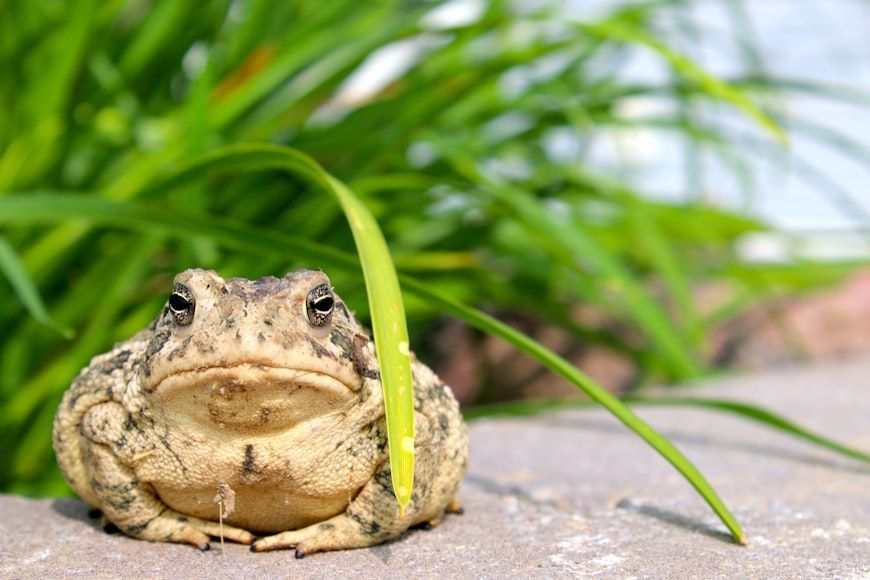
Toads can give you warts

Image: Laura Seaman

Toads might not have the loveliest appearance, but they have nothing to do with any wart you might have. Warts in humans are caused by the human papillomavirus (HPV), which is transmitted from person to person. What looks like warts on a toad’s skin are actually glands, used to secrete a toxin that deters predators. This toxin might irritate human skin, so remember to wash your hands if you touch a toad.

7

Penguins mate for life

Image: Torsten Dederichs

Penguins have the reputation of being one of the most faithful animals in the world, even when their partner dies. While some penguin species have a high fidelity rate compared to other animals, none of them mate for life. Some penguin species are known to form long-term bonds with their mates, while others are serial monogamists, but they can actually change partners if they have an unsuccessful mating season.

8

Ostriches bury their heads in the ground
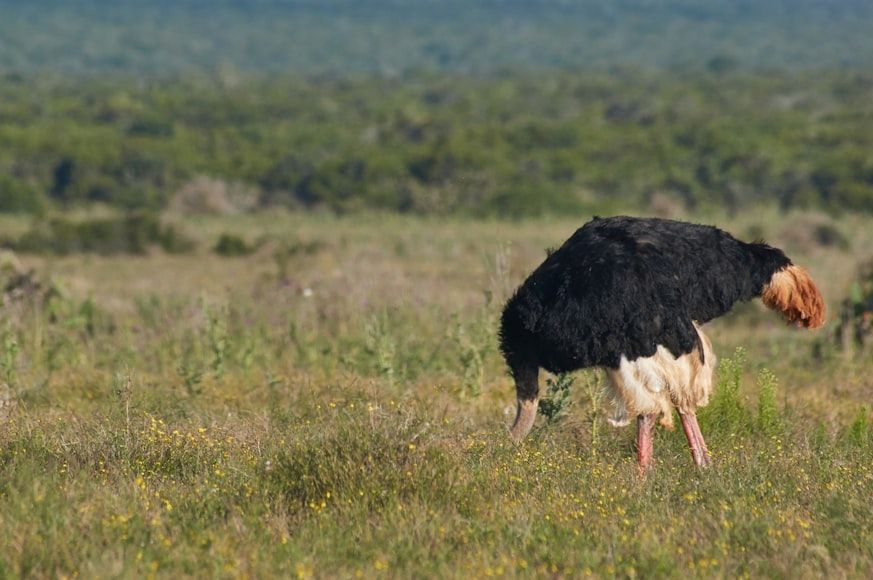
Image: Wolfgang Hasselmann

Ostriches and their alleged head-burying behavior have become a symbol of ignoring one’s problems, but this is based on a myth. This confusion, which some said dates back to Ancient Rome, stems from the ostrich’s shallow nests. When they turn the eggs with their beak, it might look like they are burying their heads in the ground from a distance. When an ostrich feels threatened, they either run away or completely flatten their body to the ground.

9

Baby birds are rejected by their mother if touched
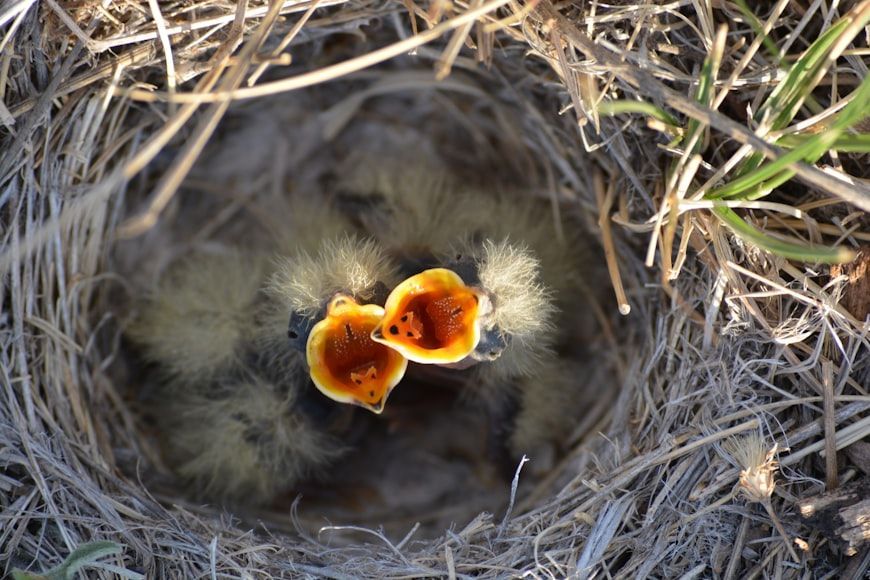
Image: TJ Arnold

Most birds have a weaker sense of smell compared with other animals, so they rely on their vision and hearing to recognize their young. In addition to this, they tend to have strong parental instincts, so human touch and scent are not enough to make them reject their offspring. But, as a rule of thumb, it is always advisable to leave baby birds alone, unless they are injured or in immediate danger.

10

Camels store water in their hump

Image: Wolfgang Hasselmann

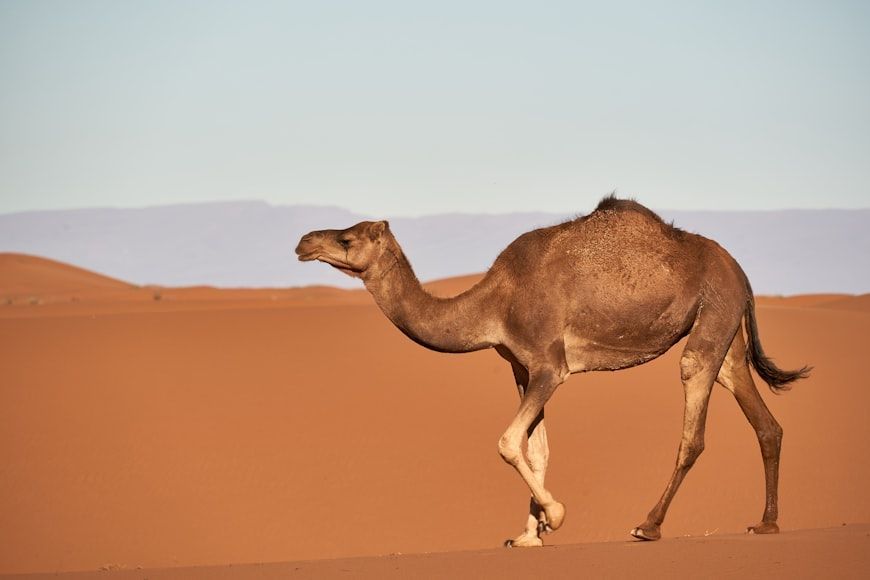
Camels are able to go for weeks without water, and sometimes even months. This has led to the belief that they store water somewhere in their bodies, mainly in their hump, but this is mainly a myth. What they do store in the hump is fat, which works as an energy reserve when food is scarce, and that can, in certain situations, be metabolized into water. Storing fat in their hump instead of in the rest of their bodies also allows them to keep cool in warmer climates.


Time-related expressions to expand your vocabulary

Time flies: Check out these 10 idioms that appear once in a blue moon!


Published on May 9, 2026


Image: Icons8 Team

The creation of new phrases, proverbs, and sayings is one of the most colorful aspects of language development. However, for this to happen, an essential ingredient is key: time. Therefore, through this article, we aim to offer curious readers interesting facts about the origins of figurative expressions related to this specific aspect of life. Continue reading to discover 10 popular idioms about time.

1

In the nick of time

Image: Djim Loic

We use the expression In the nick of time to describe something that happens just in time, right before the critical moment. The origin of the phrase can be traced back to the 1500s, when the word nick meant "the precise moment of an occurrence or an event."

In the 16th century, a tally, or 'nick-stick,' was used to keep track of time, points in sporting events, commercial transactions, and official government bookkeeping records. The first written record of the complete phrase, as we use it today to express relief that something happened before a disaster, dates back to the mid-17th century.

2

May-December romance

Image: LuisSteven

A May-December romance occurs between two people with a wide age difference. Why these months? May is the peak of spring, when the weather is warm and pleasant, and flowers bloom—metaphorically representing youth and femininity. December, on the other hand, marks the beginning of winter and is often associated with decay, thus symbolizing aging men.

The expression first appeared in the 14th century in The Merchant's Tale, one of the Canterbury Tales written by English poet and author Geoffrey Chaucer. In this story, a mature man, Mr. January, is determined to marry a young woman named May in order to leave an heir. Years later, when Britain adopted the Gregorian calendar and January 1st was established as the beginning of the year, the phrase evolved to use December, symbolizing the end of an era—and ultimately, the end of a life.

3

Better late than never

Image: Andy Beales

According to the Cambridge Dictionary, this expression means that "it is better for someone to arrive or do something late than not to arrive or do it at all." You probably didn't need the dictionary definition for this one, as it is one of the most popular and widely used idioms in everyday language.

What you might not know is that it has a very ancient origin and is actually a translation of an old Latin proverb. How did it make its way into English? Well—surprise, surprise!—it was by the hand of Chaucer and his Canterbury Tales. He wrote it, as early as the Middle Ages, as follows: "for bet than never is late." Over time, the wording changed slightly. Today, we know the phrase as "better late than never," though it retains the same metaphorical meaning.

4

Once in a blue moon

Image: VanFulpen

Once in a blue moon is an idiomatic phrase used to describe something that very rarely happens. Although it’s just a theory, the Oxford English Dictionary suggests that the color blue might have been an arbitrary choice. First recorded in the 16th century, saying the moon was blue was a way of indicating that something could not be true.

However, blue moons do occur—though only under extremely rare atmospheric conditions, such as the eruption of a volcano or a forest fire. So, while the color mentioned may have been random in its origin, the phrase as we use it today makes perfect sense.

5

A stitch in time saves nine

Image: Kateryna Shevchenko

Have you ever left an important issue unattended, only for it to get increasingly worse? It happens! That's why this proverb has been popular since at least the 18th century. A stitch in time saves nine means that if you address a problem immediately, it may save a lot of extra work later.

According to the Oxford Dictionary, the number nine here has no particular significance but was chosen because it sounds similar to the word time. Another explanation is that, when a piece of clothing has a tear, it is best to repair it as soon as possible to prevent the tear from getting bigger and requiring more stitches.

6

A movable feast

Image: Towfiqu barbhuiya

For those of us who love punctuality and like to keep an orderly schedule, a movable feast can be a nuisance. As can be inferred, this expression describes an event that can happen at any time or place and may change without notice.

Its origin, however, is related to religious celebrations. In a religious context, a movable feast refers to a holy day—such as Easter—that doesn’t occur on the same calendar date each year.

Over time, it became part of colloquial language, and today, we use it to refer to any event that doesn't have a set time or date. Ernest Hemingway's memoir, A Moveable Feast, likely contributed to the adoption of the phrase into our everyday vocabulary.

7

The witching hour

Image: ulleo

In its literal sense, this expression refers to the popular superstition that witches and other supernatural forces are most active at midnight. Although its traditional use originates in folk tales, one of the earliest written references dates back to the early 17th century and appears in one of William Shakespeare's iconic plays. Prince Hamlet declares: "‘Tis now the very witching time of night, when churchyards yawn and hell itself breathes out contagion to this world."

In modern times, however, this expression has taken on a more colloquial meaning and is used to describe any situation that may be problematic or unpredictable. All those who have raised children are familiar with this particular time of day: whenever a baby starts fussing and crying for no apparent reason, everyone knows that the witching hour—a.k.a. bedtime—has arrived.

8

Don’t give the time of day

Image: Ben_Kerckx

Have you ever felt that someone was ignoring you, not paying the slightest attention, or blatantly disrespecting you? In those cases, the idiom Don't give the time of day comes into play. While it might seem to have a literal meaning—that it refers to someone who can't even take a second to tell you the time—it actually has a twist.

A long time ago, the expression "good time of day" was widely used as a greeting, a way to say hello to someone. In fact, the first written records of this now-outdated form of greeting can be found in some of Shakespeare's plays. Considering this meaning, it makes much more sense that the idiom carries such a negative connotation.

9

A month of Sundays

Image: Kyrie kim

This idiom is used to express that something is going to take a very—very—long time. Note that a month’s worth of Sundays amounts to about 30 or 31 weeks. Nowadays, Sunday marks the end of the weekend, and for many, it is a day full of contradictions. On one hand, it means we can rest; on the other, it signals the start of the workweek and the return to duties.

But decades ago, for most people, Sundays were a very long, seemingly endless period of time. For this reason, it is believed that this expression may refer to the traditionally slow passage of Sundays, often due to religious restrictions on activity or entertainment. Imagine a whole 30 weeks of total boredom and tedium—that’s what this phrase represents!

10

Mad as a March hare

Image: Vincent van Zalinge

Mad as a March hare is an idiomatic English phrase that means to be completely crazy. It is similar to another well-known expression, mad as a hatter, which originated from Lewis Carroll's character, the Mad Hatter, in Alice's Adventures in Wonderland. In this case, the madness derives from the belief that hatters suffered from the effects of mercury poisoning due to the fumes released in the manufacture of felt hats.

The March hare version, however, refers to the way hares leap about during the breeding season in Europe. It is said that the behavior of these animals during the month of March is completely erratic, including boxing other hares and jumping for no particular reason.

Looking for an extra scoop of literary fun?

Learn more with our Word of the day

initiative

/ɪˈnɪʃədɪv/