Slightly to the side

Did you know that Earth's tilt affects the school year?


Published on March 2, 2026
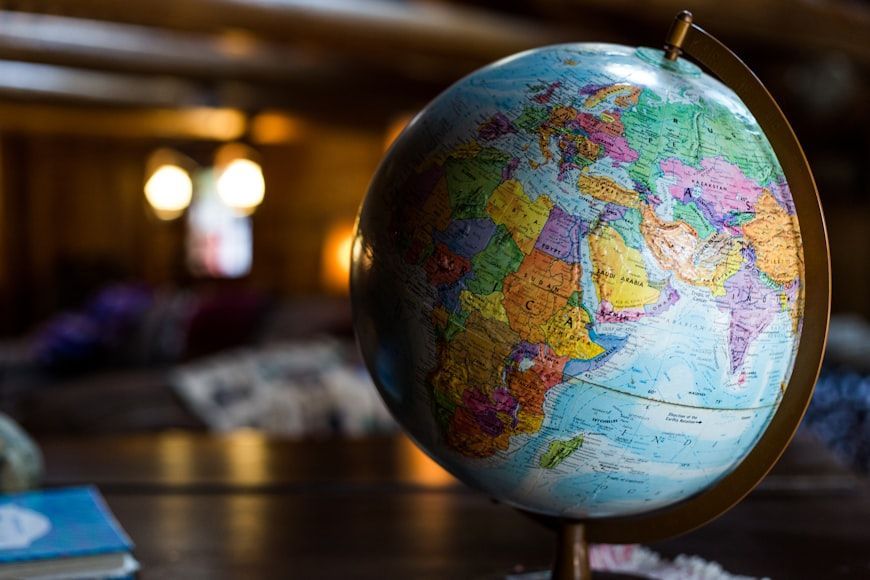

Image: Kyle Glenn

We might refer to Planet Earth as ‘the globe’, but we know it is more like a slightly flattened sphere —experts would say it’s an oblate spheroid— that is also askew. These two details have major consequences for the climate, the night sky, the way we register locations, and even the way schools plan their academic year. How much does the Earth's being at an angle affect us? Let’s find out!

1

The axial tilt

Image: Andrew Neel

Why is Earth’s axis tilted? The most widely accepted theory is that, millions of years ago, a young planet Earth collided with another celestial body and was left permanently askew. Earth’s axis, supposedly straight before, now has a tilt of 23.5 degrees. It is also believed that the Moon is a product of this collision.

2

Will it keep moving?

Image: Ganapathy Kumar

The Earth is permanently tilted, but it’s not static. The degree of the tilt varies slightly across a cycle of thousands of years, which would explain why seasons were harsher or milder across history. But what keeps the Earth from having a more extreme shift? The Moon. All celestial bodies have their own gravity, and they can affect each other. Moon’s gravity has a pull on the equatorial bulge (Earth’s widest part) and prevents it from being affected by other surrounding planets, while also keeping the axial tilt stable.

3

The seasons

Image: Ethan Robertson

The different seasons are the first major consequence of the axial tilt. As the Earth orbits around the Sun, it remains tilted in the same direction, which means that, for half of the orbit, one pole is directly facing the Sun, while the other is directly away. For the next half of the orbit, the positions are reversed. The pole closer to the Sun experiences Summer, while the opposite pole goes through Winter (which means that yes, the Southern hemisphere celebrates Christmas during Summer).

4

North vs. True North

Image: Gaël Gaborel - OrbisTerrae

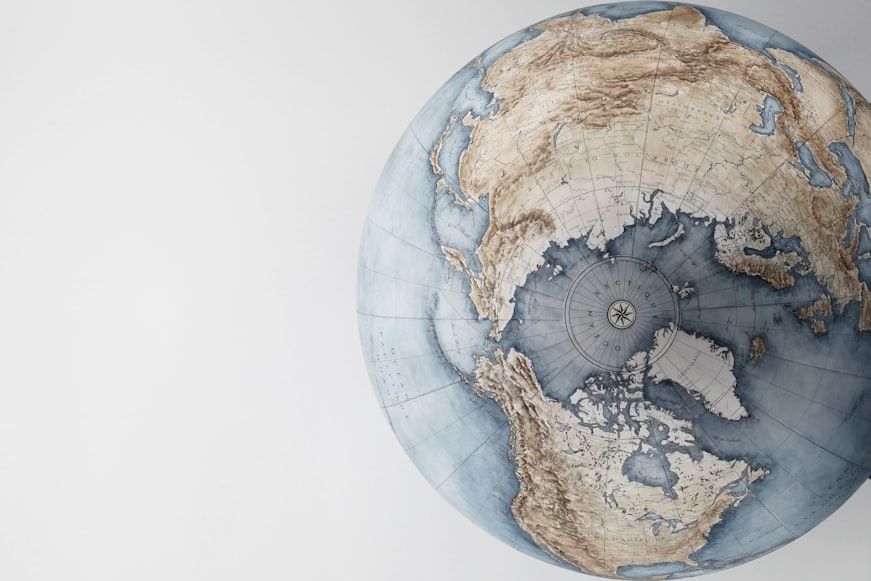
When a compass signals North, what is it pointing towards? Spoiler: not the North Pole. The North Pole (also known as True North, or Geographic North) it is a fixed point in the Arctic Ocean intersected by the rotational axis. Maps and coordinates use this point as a reference for the North. A compass, however, points towards the North of the Earth’s magnetic field, which is constantly shifting. The difference between the two Norths is called declination, and is essential for navigation and map reading.

5

The Mercator projection

Image: Andrew Stutesman

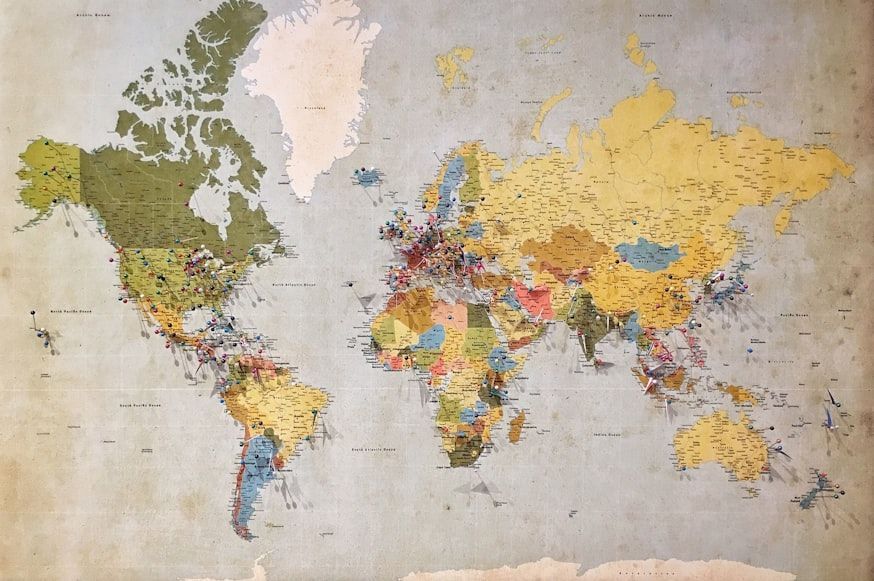
The Earth is a sphere, but most maps are flat. Something is not adding up, and it’s all the fault of a man called Gerardus Mercator, who, in the 16th century, mapped the Earth in a way that represented the meridians and parallels as straight lines. While this was excellent for navigation, it had its negatives: a size distortion. The farthest land masses are from the equator and closest to the poles, the most inflated in size they appear. For example, in the Mercator projection, Greenland appears close in size to the entire African continent, when in reality it is closer in size to the Democratic Republic of Congo.

6

The four hemispheres

Image: The New York Public Library

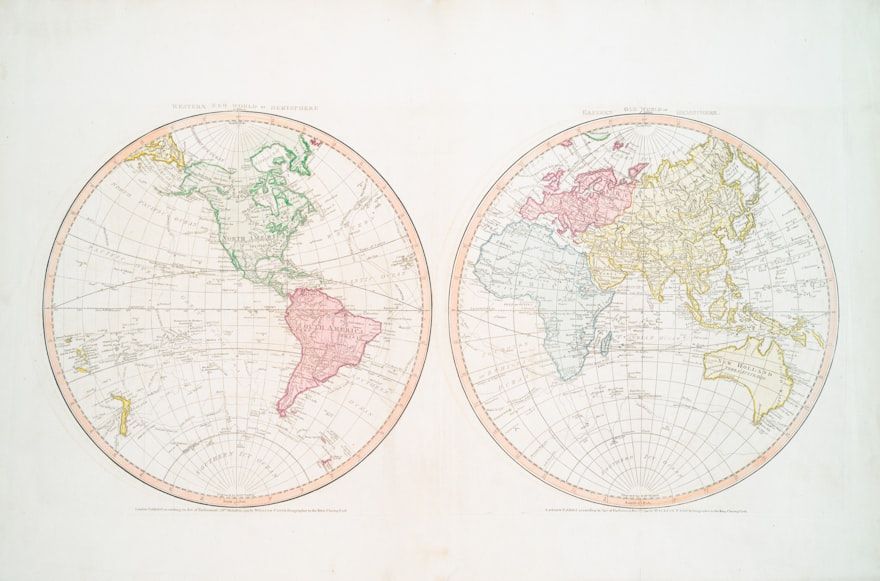
We all know the difference between the Northern and the Southern hemispheres, but did you know the difference between the Eastern and Western ones? Unlike North and South (which are divided by the equator and experience opposite seasons), the Eastern and Western hemispheres are more of a cultural division, even though they are separated by the Prime meridian and antimeridian. The Eastern Hemisphere is commonly associated with "the Old World" (though it includes Australia), and the Western Hemisphere is "the New World".

7

Land vs. Water

Image: Dan Stark

Hemispheres split the world equally in size, but not in content. The Northern Hemisphere contains the majority of the Earth’s land mass (around 68%), while the Southern Hemisphere holds the majority of the water (around 80%). As the Northern side has more land, it also houses the majority of the world’s population, around 90%.

8

Opposite sides

Image: Benjamin Voros

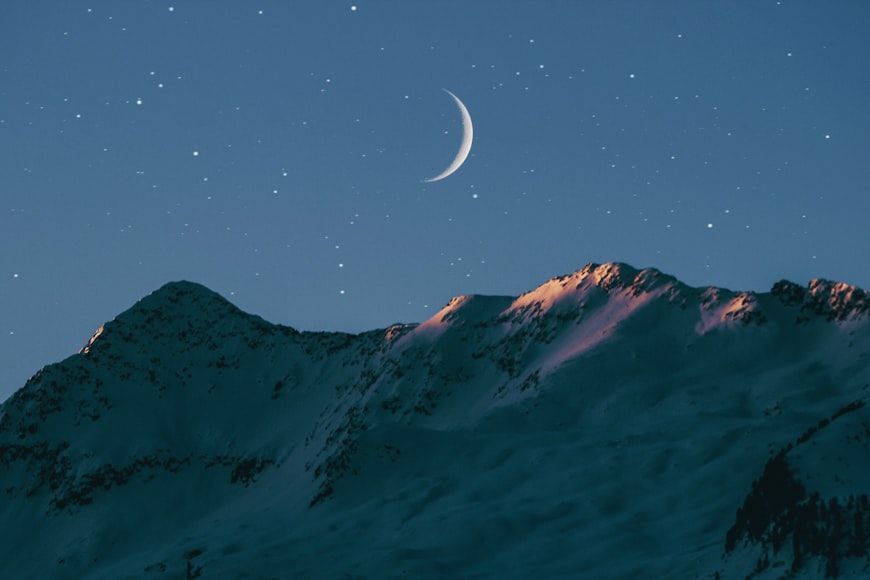
North and South experience opposite seasons, but what else is opposite? Storms and whirlpools spin depending on their location—clockwise in the South, counterclockwise in the North—, and the shape of the crescent moon is perceived inverted —a waxing crescent looks like a D from the North and a C from the South.

9

Different skies

Image: Dns Dgn

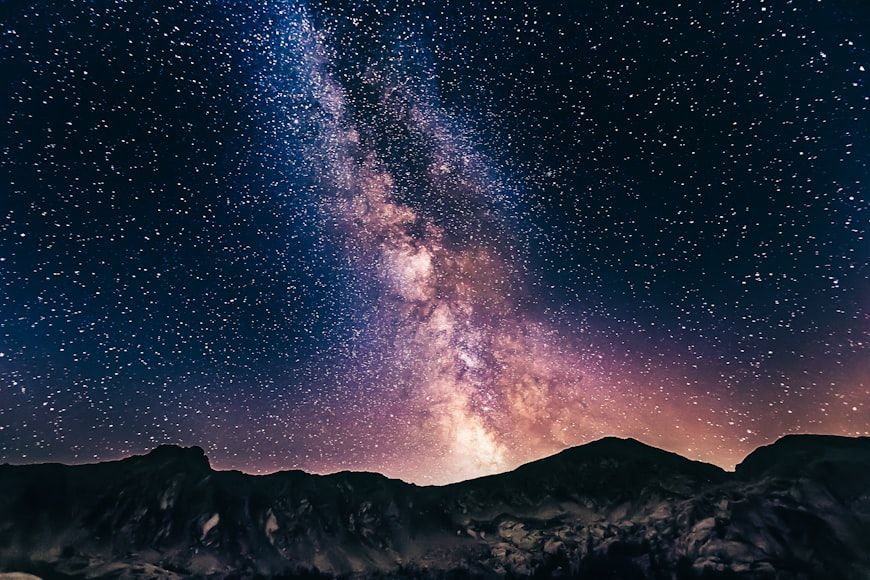
While bigger celestial objects, such as the Sun or Moon, are visible from any point on Earth, some can only be seen depending on your location. Constellations that are located closer to the Poles are only visible from that hemisphere, and have traditionally been used for navigation and orientation. In the Northern hemisphere, the main examples are Polaris (the north star), Ursa Major (a constellation that contains the Big Dipper), Ursa Minor, Cepheus, and Cassiopeia. For the Southern Hemisphere, the main examples are Crux (the Southern Cross), Centaurus, and Carina.

10

Calendar year vs. Academic year

Image: Element5 Digital

Most institutions plan their year around Summer, which means that in the Northern Hemisphere, the Academic year usually starts around September and ends in May or June of the following calendar year, while there’s a Winter break in time for Christmas and New Year. In the Southern Hemisphere, the calendar and academic years are matched: the academic year usually begins in March and ends mid-December, right before the Holidays, while Winter break usually falls in July.


10 Words You Didn't Know Were Coined by Writers


Published on March 2, 2026


Image: Art Lasovsky

Did you know that some of the words we consider "modern" today were actually first coined in the 19th century or earlier? Writers use words as their building blocks to create entire worlds. But certain authors go beyond just storytelling. Some of them have given us not only fascinating stories but also the vocabulary for our daily lives. Today, we're going to reveal 10 words you probably didn't know were first coined by writers!

1

Meme

Image: NordWood Themes

Memes are all over the internet and, with cameras everywhere these days, you have to be careful not to become one.

Today, memes are an inexhaustible source of virtual fun. However, the origin of the word "meme" doesn't come from a comedian but from a scientist. Who would have thought?

The term was coined by the British biologist Richard Dawkins (1941), who derived it from the Greek word mimema, meaning "imitated." In his 1976 book, The Selfish Gene, Dawkins introduced the word to draw a parallel between memes and biological genes, emphasizing the way cultural information spreads and evolves.

2

Nerd

Image: Joe Ciciarelli

Some words are like chameleons, with changing meanings or connotations depending on the context and the way they are used. Back in the day, calling someone "smart" or "intellectual" came with a touch of negativity, giving the word "nerd" some of that tone. Today, however, intelligent people who are enthusiastic about learning are viewed with admiration.

Although the term is now widely used, not many know its origin. The first occurrence of the word "nerd" in print was in the 1950 book If I Ran the Zoo by our beloved Dr. Seuss (1904-1991). That was over 70 years ago! In the story, "nerd" refers to a strange little imaginary animal.

3

Yahoo

Image: Olga Tutunaru

Long before it was a famous internet search engine, the word "Yahoo" appeared in literature as early as the 18th century. If you consult the dictionary, you'll find a negative definition, as the term describes someone rude, boorish, or even unintelligent.

Back in 1726, Jonathan Swift (1667–1745) introduced the term "Yahoo" in his epic Gulliver's Travels. In the book, Yahoos are brutish creatures that resemble humans in looks, but with extremely unpleasant habits.

4

Pandemonium

Image: Chris Barbalis

Maybe this isn't a word you use every day, but once you get to know it better, you’ll surely find the occasion to use it.

The English poet John Milton (1608-1674) created this word by combining the Greek pan-, meaning "all," with the Latin daemonium, meaning "evil spirit." It is the name the author gave to the capital of hell in his 1667 book Paradise Lost.

Today, the word is used to describe a chaotic and disorderly crowd or situation.

5

Hard-boiled

Image: Rasa Kasparaviciene

Most of us have boiled a couple of eggs at some point in our lives. But let's be honest, we've probably messed it up a few times. The experts—or eggsperts—say the ideal boiling time for perfect hard-boiled eggs is about 12 minutes.

But let's pause all this egg talk before your mouth starts watering.

Metaphorically, "hard-boiled" is also employed to characterize tough and uncompromising personalities. While the term may have historical roots, the Merriam-Webster dictionary states that it was the American writer Mark Twain (1835-1910) who first used it in this figurative sense in 1886, describing emotional toughness.

6

Utopia

Image: Colton Duke

Here's a word we use to this day, which has its first written appearance in the 16th century. That's right, more than 500 years ago.

Sir Thomas More (1478 –1535), an English philosopher, lawyer, and statesman, gave us this term in his 1516 work, Utopia. In this text, he describes a society that's practically a wish list of awesome qualities.

Utopia is like a dreamy community where everything is great. The word comes from Ancient Greek, and its literal translation would be "no place," probably a nod to the idea that utopia is so perfect that it's impossible.

7

Cyberspace

Image: Alexander Sinn

As its name implies, cyberspace is the virtual environment where communication occurs via computer networks. Despite its widespread recognition today, the term made its debut in the 1980s.

Credit for coining the word and its meaning goes to the American-Canadian writer William Gibson (1948), who introduced it in a story published in 1982 and reused it in his 1984 novel, Neuromancer. In this science-fiction narrative set in the future, the author creates a world inhabited by artificial intelligence. Not so far from what we’re experiencing today, right?

8

Workaholic

Image: Thought Catalog

Today, a growing number of people are opting to work from home or, in some cases, adopting a lifestyle known as "digital nomadism," working while traveling around the world.

Despite these new options facilitated by technology, our jobs remain a fundamental part of our lives. For that reason, many people consider themselves "workaholics," those addicted to work.

The term is often credited to psychologist Wayne Oates (1917-1999), who employs it in his book Confessions of a Workaholic (1973). However, according to the Oxford English Dictionary, the word was seen as early as 1947 in the Toronto Daily Star in Canada.

9

Freelance

Image: Per Lööv

Also related to the world of work, the term "freelance" explains its origin very well.

Sir Walter Scott (1771-1832) used the word in Ivanhoe, a historical novel of 1820, to characterize a type of medieval warrior whose lance was not pledged to the service of any particular lord.

Although today's "freelancers" don't use lances, they're independent workers who provide their services to different employers.

10

Chortle

Image: Unsplash

Lewis Carroll (1832-1898), the brilliant mind behind Alice's Adventures in Wonderland (1865), was a creative English writer known for coining portmanteaus, innovative words formed by blending existing ones.

An example of this is the term "chortle," which Carroll introduced in his poem "Jabberwocky" (1871) by combining "chuckle" and "snort." As the name implies, the expression describes a brief and noisy laugh.

Looking for an extra scoop of literary fun?

Learn more with our Word of the day

wondrous

/ˈwəndrəs/