Slightly to the side

Did you know that Earth's tilt affects the school year?


Published on March 2, 2026
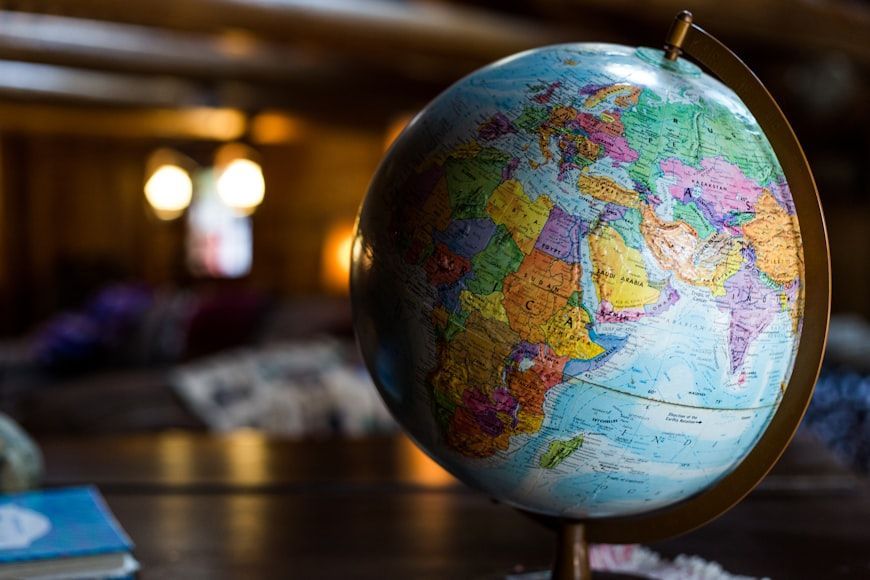

Image: Kyle Glenn

We might refer to Planet Earth as ‘the globe’, but we know it is more like a slightly flattened sphere —experts would say it’s an oblate spheroid— that is also askew. These two details have major consequences for the climate, the night sky, the way we register locations, and even the way schools plan their academic year. How much does the Earth's being at an angle affect us? Let’s find out!

1

The axial tilt

Image: Andrew Neel

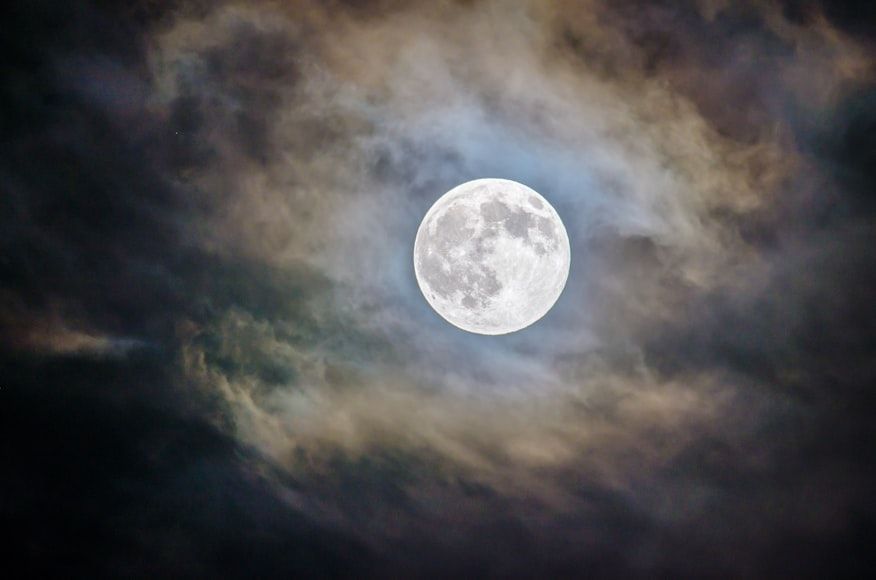
Why is Earth’s axis tilted? The most widely accepted theory is that, millions of years ago, a young planet Earth collided with another celestial body and was left permanently askew. Earth’s axis, supposedly straight before, now has a tilt of 23.5 degrees. It is also believed that the Moon is a product of this collision.

2

Will it keep moving?

Image: Ganapathy Kumar

The Earth is permanently tilted, but it’s not static. The degree of the tilt varies slightly across a cycle of thousands of years, which would explain why seasons were harsher or milder across history. But what keeps the Earth from having a more extreme shift? The Moon. All celestial bodies have their own gravity, and they can affect each other. Moon’s gravity has a pull on the equatorial bulge (Earth’s widest part) and prevents it from being affected by other surrounding planets, while also keeping the axial tilt stable.

3

The seasons

Image: Ethan Robertson

The different seasons are the first major consequence of the axial tilt. As the Earth orbits around the Sun, it remains tilted in the same direction, which means that, for half of the orbit, one pole is directly facing the Sun, while the other is directly away. For the next half of the orbit, the positions are reversed. The pole closer to the Sun experiences Summer, while the opposite pole goes through Winter (which means that yes, the Southern hemisphere celebrates Christmas during Summer).

4

North vs. True North

Image: Gaël Gaborel - OrbisTerrae

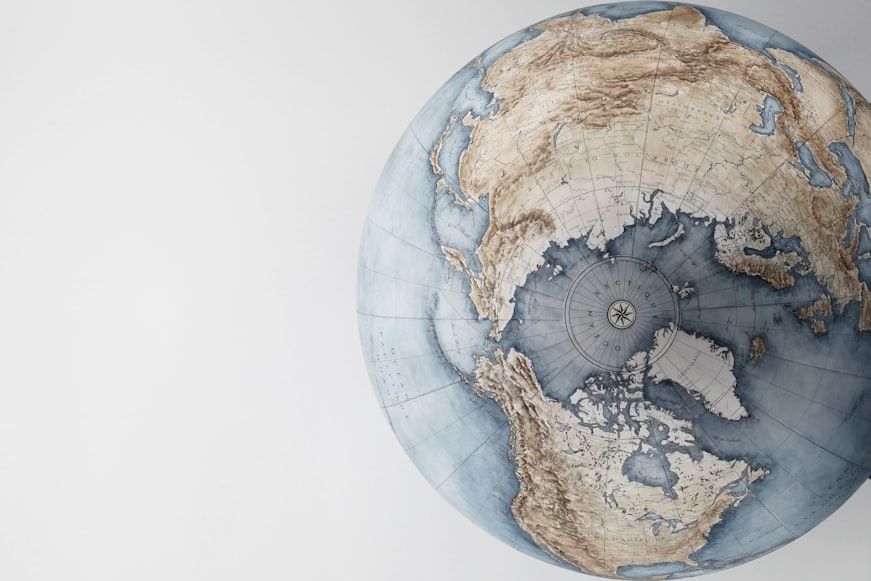
When a compass signals North, what is it pointing towards? Spoiler: not the North Pole. The North Pole (also known as True North, or Geographic North) it is a fixed point in the Arctic Ocean intersected by the rotational axis. Maps and coordinates use this point as a reference for the North. A compass, however, points towards the North of the Earth’s magnetic field, which is constantly shifting. The difference between the two Norths is called declination, and is essential for navigation and map reading.

5

The Mercator projection

Image: Andrew Stutesman

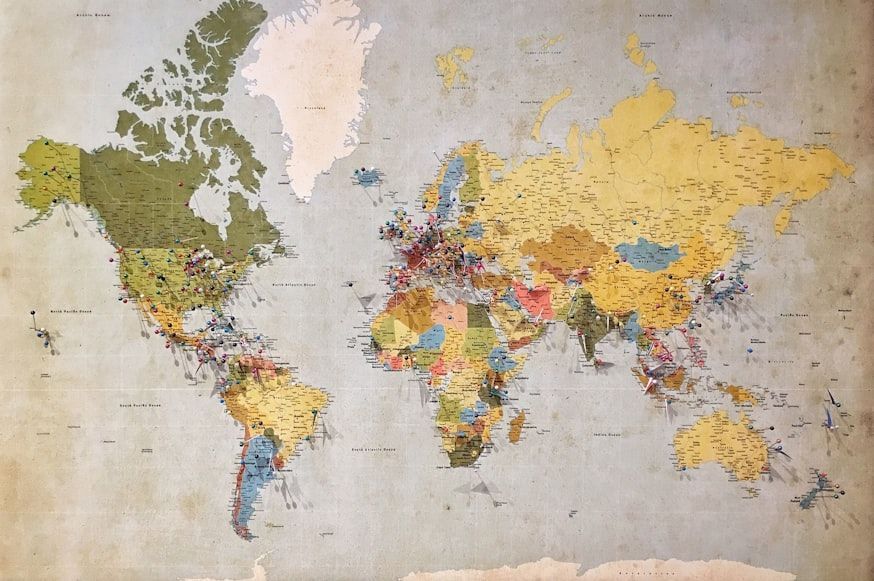
The Earth is a sphere, but most maps are flat. Something is not adding up, and it’s all the fault of a man called Gerardus Mercator, who, in the 16th century, mapped the Earth in a way that represented the meridians and parallels as straight lines. While this was excellent for navigation, it had its negatives: a size distortion. The farthest land masses are from the equator and closest to the poles, the most inflated in size they appear. For example, in the Mercator projection, Greenland appears close in size to the entire African continent, when in reality it is closer in size to the Democratic Republic of Congo.

6

The four hemispheres

Image: The New York Public Library

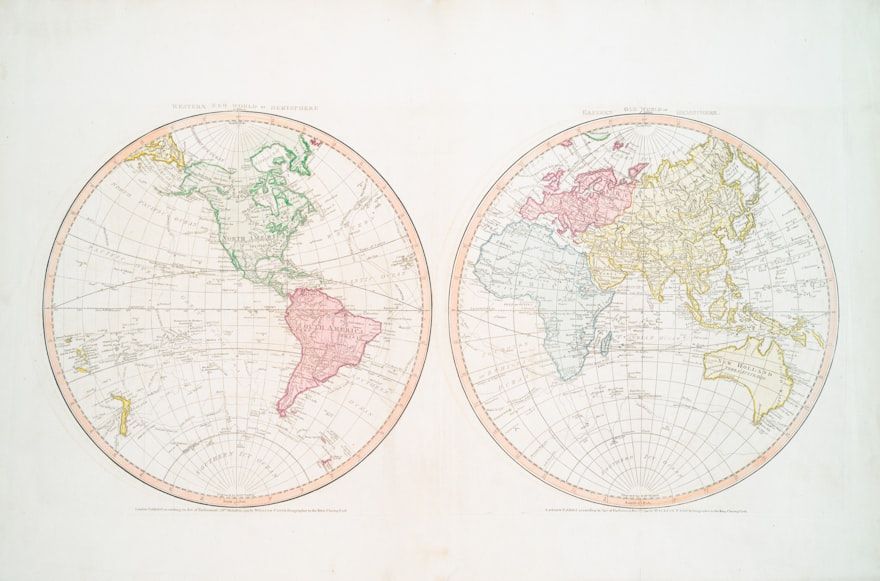
We all know the difference between the Northern and the Southern hemispheres, but did you know the difference between the Eastern and Western ones? Unlike North and South (which are divided by the equator and experience opposite seasons), the Eastern and Western hemispheres are more of a cultural division, even though they are separated by the Prime meridian and antimeridian. The Eastern Hemisphere is commonly associated with "the Old World" (though it includes Australia), and the Western Hemisphere is "the New World".

7

Land vs. Water

Image: Dan Stark

Hemispheres split the world equally in size, but not in content. The Northern Hemisphere contains the majority of the Earth’s land mass (around 68%), while the Southern Hemisphere holds the majority of the water (around 80%). As the Northern side has more land, it also houses the majority of the world’s population, around 90%.

8

Opposite sides

Image: Benjamin Voros

North and South experience opposite seasons, but what else is opposite? Storms and whirlpools spin depending on their location—clockwise in the South, counterclockwise in the North—, and the shape of the crescent moon is perceived inverted —a waxing crescent looks like a D from the North and a C from the South.

9

Different skies

Image: Dns Dgn

While bigger celestial objects, such as the Sun or Moon, are visible from any point on Earth, some can only be seen depending on your location. Constellations that are located closer to the Poles are only visible from that hemisphere, and have traditionally been used for navigation and orientation. In the Northern hemisphere, the main examples are Polaris (the north star), Ursa Major (a constellation that contains the Big Dipper), Ursa Minor, Cepheus, and Cassiopeia. For the Southern Hemisphere, the main examples are Crux (the Southern Cross), Centaurus, and Carina.

10

Calendar year vs. Academic year

Image: Element5 Digital

Most institutions plan their year around Summer, which means that in the Northern Hemisphere, the Academic year usually starts around September and ends in May or June of the following calendar year, while there’s a Winter break in time for Christmas and New Year. In the Southern Hemisphere, the calendar and academic years are matched: the academic year usually begins in March and ends mid-December, right before the Holidays, while Winter break usually falls in July.


ERRONEOUS ORIGINS

Uncover Ten Words That Come From Mistakes And Mistranslations


Published on March 2, 2026


Image: Brett Jordan

We all make mistakes. That’s why pencils have erasers, right? They are part of what makes us human and have been completely intertwined with our culture and identity since the dawn of history. Like other human endeavors, language flourishes with these mistakes, as they continue to provide instances in which new words and phrases can be formed. And for that, we honor these magnificent blunders by showcasing ten words that emerged from mistakes and mistranslations.

1

Apron

Image: bovin wook

A chef’s best friend (or maybe yours, if you are cooking a particularly messy recipe), this piece of cooking gear is a must-have in any modern kitchen. "Apron" comes from the old French word napron, meaning "a small piece of cloth". However, once English speakers adopted this term, the phrase a napron eventually derived into an apron through a process linguists call "rebracketing."

2

Decoy

Image: Jen Theodore

"Decoy" might make us think about spy-thrillers, filled with black cars swerving through busy streets to avoid other inconspicuous black cars, so you might be surprised to learn that this word comes from the world of duck hunting. Decoy comes from a duck-catching structure first developed in the Netherlands in the 13th century. Another case of rebracketing, the English word decoy is derived from the Dutch phrase de Kooi, meaning "the cage". Over time, the word expanded to include several other objects, from fake wooden ducks used by hunters to lure birds, to inflatable or wooden dummy tanks used in WW2.

3

Varsity

Image: Tim Mossholder

In the United States, varsity refers to a school or university’s main athletics team, where the varsity team is composed of the very best athletes an institution can offer. The word itself is a shortening of the word university, and its use can be traced to at least the 19th century: In Arthur Conan Doyle’s "The Adventure of the Missing Three-Quarter", a rugby player refers to himself as part of the "Rugger team of Cambridge 'Varsity.'"

What’s interesting is wondering why this shortening of university didn’t morph into the more intuitive versity. Perhaps a regional accent influenced this misspelling? No one really knows, but now maybe you can see your old letterman jacket in a new and more mysterious way.

4

Nickname

Image: Joshua Hoehne

"Nickname" comes from the 14th-century English word ekename, which literally means "additional name." One century later, a misdivision of the syllables of the phrase an ekename resulted in it morphing into a nekename, an early version of the word nickname. Although its spelling has changed, both the word and the pronunciation of nickname have remained almost the same since the 15th century.

5

Culprit

Image: Volodymyr Hryshchenko

This is the only word from this list derived from an entire phrase. In 17th century France, the phrase culpable, prest d'averrer nostre bille (guilty, ready to prove our case) was used by prosecutors as an answer to a defendant’s not guilty plea. Apparently, an abbreviation for this phrase used in court records (cul.prit) was mistaken by English speakers as an address to the defendant, and so the modern meaning of the word "culprit" (a person guilty of a crime) was born.

6

Umpire

Image: Nathan Shively

Umpires are the silent heroes of many sports. From baseball to tennis, umpires confront angry players, coaches, and fans with stern determination and resolve. They truly have no equal. Which is funny, because the origins of this word showcase their uniqueness. Our third case of rebracketing in this list, umpire comes from the French word noumpere, which can be translated to "one without equal" or "odd number" (as a tie-breaker participant). Eventually, the phrase a noumpere became an oumpere, which eventually evolved into "an umpire."

7

Ingot

Image: Jingming Pan

This one is a bit controversial since there are two possible origins of this word. An ingot is a block of metal, typically oblong in shape, and one of its origins might be traced back to this meaning. According to some linguists, ingot comes from the Old English word geotan, meaning "to pour."Therefore, an ingot would literally refer to the mold on which liquid metal was poured.

However, the second (and frankly, more interesting) possible meaning comes from a mistranslation. The French word for ingot is lingot, derived from the Latin word for "tongue", possibly due to the shape of ingots in Medieval times. Some people believe that English speakers, knowing that the French article le (the) is sometimes contracted to an l’, thought that the word lingot literally meant "the ingot" and decided to remove the L.

8

Scandinavia

Image: Hans M

This Northern Europe territory was named Scandinavia or Skandinovia by Late Latin scholars, adding an extra letter to the Germanic word Scadinavia, which might derive from an Old Norse word meaning "south end of Sweden." We might never know if that N was included by mistake or deliberately, but it’s pretty amazing how a single, additional letter determined how an entire region is named.

9

Dollar

Image: Kenny Eliason

The origins of the mighty dollar can be traced back to 16th century Bohemia, where a nobleman known as the Count of Schlick started mining and issuing silver coins of uniform weight and shape known as Schlicken thaler or joachimsthaler. Over time, this word evolved into the German word taler, and then again into daler. Since this form of currency found its way into international markets, by the 16th century the word daler was added to the English vocabulary, where it eventually morphed into the dollar we know now.

10

Algorithm

Image: Markus Spiske

You might be surprised to learn how old this word is. After all, aren’t algorithms the backbone of all modern electronics and technology? While they certainly are, they also date back to the 9th century. The medieval Latin word algorismus comes from the name of a famous Persian mathematician, Muḥammad ibn Musa al-Khwarizmi. However, the part of his name that evolved into algorithm literally means "from Khwarazm" and refers to the region where he came from. Who would have guessed that a translation mistake would end up naming one of the most repeated terms in the tech world?

Looking for an extra scoop of literary fun?

Learn more with our Word of the day

malign

/məˈlaɪn/