Everybody makes mistakes

Are you “literally” misusing words? Find out in this list of usual errors


Published on February 9, 2025
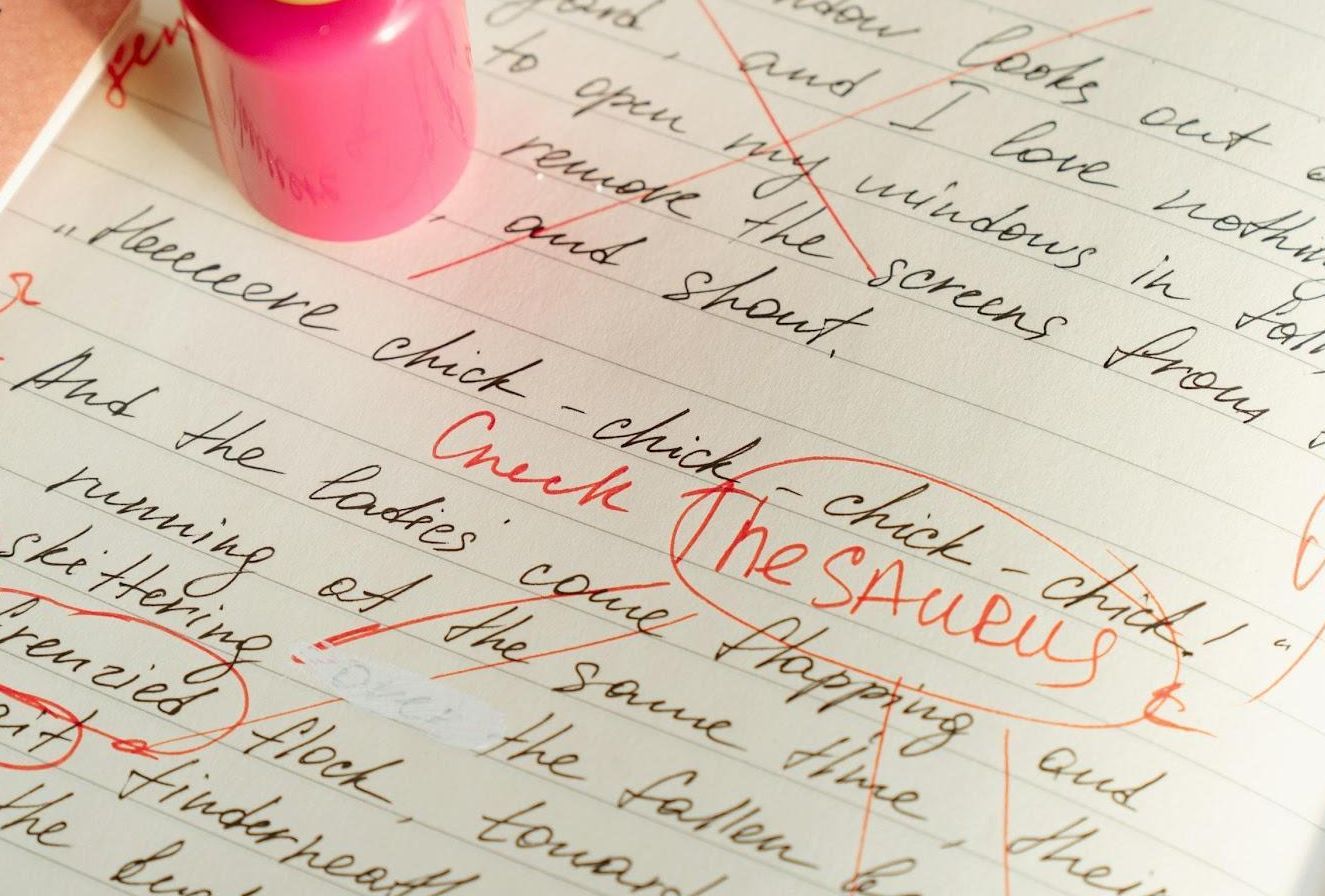

Image: cottonbro studio

Surely, we’ve all made grammatical mistakes that still haunt us. But that doesn’t mean our eyes are safe from twitching when we hear words like "irregardless." A dozen popular mistakes have spread and infiltrated the vocabulary of many, much to the dismay of word lovers. Let’s explore some of these and hope we aren’t among the ones committing them!

1

Using "nauseous" for "nauseated"

Image: Pixabay

Careful: If you say you are nauseous, that means you are causing someone else nausea. You probably don’t mean that you stink, but that you are feeling sick yourself.

When stepping off a rollercoaster, you don’t feel nauseous: You might feel nauseated, which is the correct term.

2

Infamous: Not the fame you want

Image: freestocks

When did people start using "infamous" interchangeably with "famous"? It’s hard to know, but this mistake is heard often. Remember, "infamous" and "notorious" are adjectives that imply the subject has a bad reputation.

Maybe the confusion comes from "famous" being right there in the word, but keep in mind: infamous isn’t the kind of fame you want.

3

Bemused: Confused, not amused

Image: Wilfredo Wesly

If you’re bemused, you’re scratching your head, not laughing. "Bemused" gets thrown around as a fancier way to say "amused," but it actually means "confused" or "bewildered." One often isn’t bemused by a funny meme, but a complex set of instructions could leave you bemused.

4

Decimate: Not total destruction

Image: Miguel Á. Padriñán

People often use "decimate" to mean "destroy entirely," but its original meaning is "reduce by one-tenth." It derives from a Roman practice of punishing armies.

For example, you could announce that a crop was decimated by pests but that some survived. The confusion is likely because "one-tenth" doesn’t sound dramatic enough. Ironically, modern misuse has decimated the word’s original meaning.

5

Peruse: A word with opposite meanings

Image: ethan

"Peruse" is one of those words that has come to mean two nearly opposite things. Traditionally, and still in careful or formal writing, it means to read thoroughly and carefully. You could peruse a contract document before signing it, for example. However, over time, "peruse" has also picked up the opposite sense: to skim or browse casually.

In academic, legal, or professional writing, it's safest to reserve "peruse" for careful, close reading, and avoid using it as a stand-in for "skim" or "glance through."

6

Irregardless: Is it a real word?

Image: Kristian Strand

"Irregardless" gets thrown around, but mostly as the less-preferred form of the word "regardless." Adding "ir-" to it makes it a nonstandard double negative. The word "regard-less" already means "without regard."

Why do people use the wrong form, then? Maybe inventing a prefix feels extra emphatic, but really, it’s like putting a hat on a hat.

7

Use "supposably" with care

Image: Laura Ohlman

"Supposably" is often (and incorrectly) used instead of "supposedly." While the former does exist, it means "as could be imagined or believed". "Supposedly" means "according to what is assumed or believed".

So, which adverb should be used? It depends on whether the reality described is supposed to be true (supposedly) or possible to be true (supposably).

8

Irony: More than a coincidence

Image: Birk Enwald

Irony isn’t just a coincidence or bad luck; it’s when there’s a contradiction between expectation and reality. It would be ironic, for example, that a fire station should burn down.

If you simply ran into someone you know, however, that would not be ironic. It would simply be a funny coincidence.

9

Literally: Not for exaggeration

Image: Randy Tarampi

"Literally" means something is true exactly as is stated. It is often misused for exaggerations to add emphasis.

People have grown used to inserting that word into any hyperbolic sentence, such as "I’m literally dying of laughter". The word does have its correct place in some phrases, though. For example, you could literally trip over your own shoelaces.

10

Jealousy: Not to be confused with envy
Image: Florian Schmetz

You cannot feel jealous of someone who enjoys something that you’ve never had. That’s because, strictly speaking, "jealousy" involves the fear of losing something.

"Envy" would be the correct term for referring to the desire to have what someone else does. For example, envying a gold medal when you only achieved the silver one.

11

Disinterested vs. Uninterested: Impartial vs. Bored

Image: Tony Tran

Sometimes students claim to be failing a class because they are "disinterested" in the subject, which is an incorrect statement. "Disinterested" means "impartial", or "unbiased". What they mean is that they are not interested, or "uninterested".

12

Affect vs. Effect: Influence vs. Cause
Image: Tom Wilson

"Effect" is usually a noun, but it can also work as a verb, where it means "to bring about" or "to cause to happen." For example: "The new manager was able to effect real change in the department" means she caused that change to happen, not that she merely influenced or affected something that already existed. This is different from "affect," which as a verb means "to have an impact on" something.

13

Everyday vs. Every Day: Adjective vs. Frequency
Image: Eric Rothermel

The space between the words (or lack thereof) does affect the meaning! "Everyday" is an adjective meaning ordinary, while "every day" means "each day." Ask yourself carefully which of the two you are using.

Remember, every day we can find everyday words used incorrectly!


GIVE ME TWENTY, SOLDIER!

Attention! Do You Know the Military Origins of These Ten Words & Phrases?


Published on February 9, 2025


Image: Filip Andrejevic

A country’s military tends to be a source of great pride. The brave men and women who serve in the different branches of the military are usually greeted by civilians with great respect and enthusiasm. After all, they don’t only help keep their countries safe, but they also keep alive a tradition that, in some cases, dates back several hundreds of years.

The influence of the military is so exceptional that it even has an effect on the way we talk. From items of clothing to ways of celebrating a good grade on a test, here are ten of our favorite terms derived from the military world.

1

Bikini

Image: Antony

We’ll start with what’s probably the most surprising item on this list. We won’t blame you if you weren’t aware of the rich history of the bikini, but you might be surprised to learn how refreshingly interesting the clothes that millions of women wear for a fun day on the beach are. For starters, did you know that a French automotive engineer invented the bikini, or that it was named after a decisive military test?

In the 1940s, engineer Louis Reard took over his mother’s lingerie business and designed a two-piece swimsuit that exposed the midriff for a better tan. Reard named his design the Atome, and advertised it as "the world’s smallest swimsuit." Later on, the designer chose to rename it "the bikini", to grab some attention from the first atomic bomb test on Bikini Atoll, conducted in 1946.

2

To the bitter end

Image: Megan Menegay

Fighting or working to the bitter end sounds like experiencing a difficult situation until the worst outcome (or the most bitter) occurs. This is definitively not what this idiom means: it describes having the endurance to take on a difficult experience, with the determination to see it through.

While the origins of this idiom are not entirely clear, the most accepted explanation comes from the nautical world. Its first recorded use comes from a 1627 publication called "Seaman’s Grammar", written by fabled explorer and military officer Captain John Smith. In it, Smith described the way rope is wrapped around "the bit", which is basically a post. The captain then defines "the bitter end" as the point at which there is no more rope left to be used.

3

Cup of Joe

Image: Raimond Klavins

We mentioned this idiom in our previous article on slang words, but it was too good to pass. While you probably don’t ask for a "cup of joe" from your local barista, they would know that it means a cup of coffee. What they might not know is that this popular idiom allegedly comes from disgruntled Army sailors.

According to this theory, the origins of the phrase "a cup of joe" references Josephus Daniels, the U.S. Secretary of the Navy during World War 1. Daniels enacted a ban on alcohol consumption on all Navy ships, which obviously infuriated many sailors at the time. Since a cup of black coffee was the strongest drink they had access to, sailors started using the sarcastic expression "a cup of Joe".

4

Taken aback

Image: Andreea Swank

You might be taken aback by a particularly shocking headline in a newspaper, an unpleasant comment heard on the sidewalk, or even the impossibly friendly demeanor of a new coworker. In any case, what’s defining about this phrase is the disconcerting surprise with which you are suddenly hit. This seems only fitting since this phrase has its origins in how suddenly a gust of wind would hit a ship at the sea.

The word "aback", which has now fallen into disuse, means to go backward. If an unexpected and particularly strong wind suddenly blew into the sails of a ship, they would be blown flat against the mast, which would make the ship be "taken aback", and suddenly stop.

5

With flying colors

Image: Gigi

Let’s step back in time, and try to picture a time in your childhood when you passed a test with flying colors. Did you also picture something resembling Superman’s cape whenever you heard this phrase? Maybe it was just us but, in any case, this idiom is one heavily associated with the joyous feeling of doing something exceptionally well.

While it might not be directly related to a superhero, this phrase does come from a colored piece of cloth fluttering in the air. In the ancient days of sailing, ships would return to port either showing or hiding their flags (known as "colors"). Raising a flag would communicate victory or success; therefore, colors "flying" in the wind would be considered very good news.

6

Murphy’s Law

Image: Randy Laybourne

Need something onto which to blame that toast that fell jelly-side down, that car splashing you on a rainy day, or that bus that shows up at the exact same second you light a cigarette? Well, you might find solace in blaming Murphy’s Law: Anything that can go wrong will go wrong. Having said that, you might be wondering who the eponymous Murphy was, and why his name is associated with this now-infamous maxim.

The origins of this phrase are still disputed, but we do know that the law itself was coined by American army engineer Edward A. Murphy Jr., who was involved in high-speed rocket sled experiments during the 1940s. Murphy wrote his law after a series of mishaps with his experiments and was later popularized by a press conference of the department’s head.

7

Loose cannon

Image: Berry Hafkin

An old trope in 80s buddy cop movies is one of those iconic scenes in which the police chief suspends the two protagonists and makes them submit their badges and guns. After being called a couple of "loose cannons" by their superior officers, these two cops decide to step up their game and work together to solve this crime. You might be tricked into thinking that they were called "loose cannons" over something related to their guns, but this idiom actually comes from old sea warfare.

From the 17th to the 19th century, cannons were the main weapon used by warships at sea, which were mounted on wheels and secured with rope. An unbarred (or loose) cannon moved by the sea would obviously be a danger for sailors.

8

Scuttlebutt

Image: Ben White

Let’s say that the wonderful chit-chat you and your favorite coworker have by the water cooler happened on a Navy ship. First things first: Congratulations, you are now a sailor! But, most importantly, you might be delighted to learn that this exchanged gossip now has a wonderfully strange name: scuttlebutt.

This word is a slang term for gossip, usually spread by sailors aboard a ship. The name comes from the water fountain from which sailors drank, on which most rumors were exchanged. Originally, sailships would provide water from casks (also known as butts), on which a hole would be "scuttled" for drinking.

9

Pea Coat

Image: Kirill Suntsov

Another clothing item with origins in the military world, a pea coat is a type of coat generally made from wool. While short, pea coats usually have large lapels and double-breasted fronts and are a great option for cold winter days.

This protection against the cold was the main reason why they were issued to sailors in the American navy, as well as by the navies of some European countries. American sailors referred to these coats as "p-coats", a shortening for "pilot coat."

10

Feeling blue

Image: Aleksandra Sapozhnikova

Sadness is a part of being human. We have all felt blue at one point or another, and there’s absolutely nothing wrong with it. Nonetheless, have you ever wondered why the color blue is associated with sadness? And while we can’t offer you a definitive answer, most people agree that this idiom comes from sailing ships.

This theory states that in the 1700s, whenever a ship lost its captain or an officer while at sea, the crew would fly a blue flag when returning to port. Therefore, the sadness of losing a crewmate would be intrinsically connected with this blue flag waving in the wind.

Looking for an extra scoop of literary fun?

Learn more with our Word of the day

pollute

/pəˈlut/