Everybody makes mistakes

Is “irregardless” a word? Terms often used incorrectly


Published on February 9, 2025
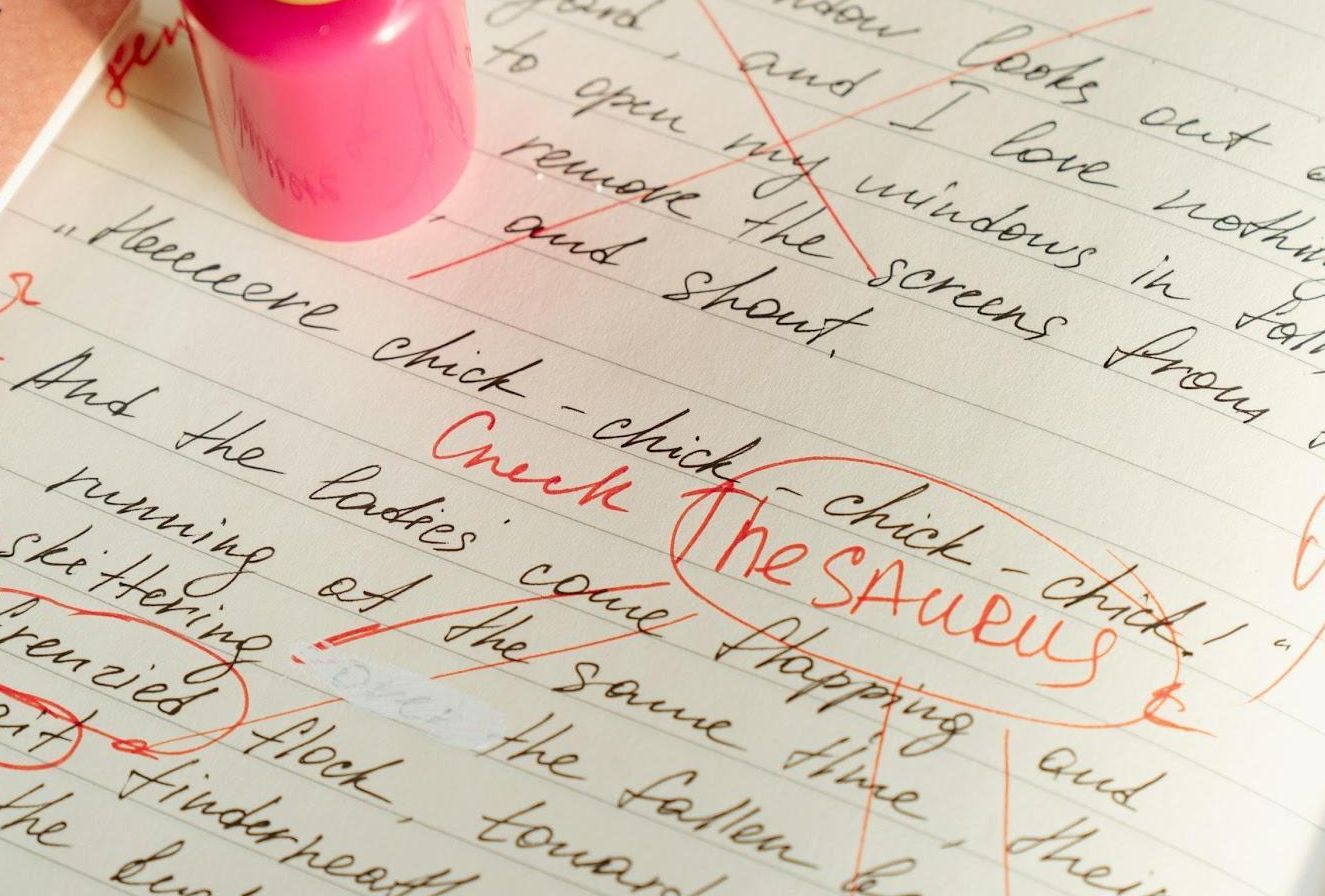

Image: cottonbro studio

Surely, we’ve all made grammatical mistakes that still haunt us. But that doesn’t mean our eyes are safe from twitching when we hear words like "irregardless." A dozen popular mistakes have spread and infiltrated the vocabulary of many, much to the dismay of word lovers. Let’s explore some of these and hope we aren’t among the ones committing them!

1

Using "nauseous" for "nauseated"

Image: Pixabay

Careful: If you say you are nauseous, that means you are causing someone else nausea. You probably don’t mean that you stink, but that you are feeling sick yourself.

When stepping off a rollercoaster, you don’t feel nauseous: You might feel nauseated, which is the correct term.

2

Infamous: Not the fame you want

Image: freestocks

When did people start using "infamous" interchangeably with "famous"? It’s hard to know, but this mistake is heard often. Remember, "infamous" and "notorious" are adjectives that imply the subject has a bad reputation.

Maybe the confusion comes from "famous" being right there in the word, but keep in mind: infamous isn’t the kind of fame you want.

3

Bemused: Confused, not amused

Image: Wilfredo Wesly

If you’re bemused, you’re scratching your head, not laughing. "Bemused" gets thrown around as a fancier way to say "amused," but it actually means "confused" or "bewildered." One often isn’t bemused by a funny meme, but a complex set of instructions could leave you bemused.

4

Decimate: Not total destruction

Image: Miguel Á. Padriñán

People often use "decimate" to mean "destroy entirely," but its original meaning is "reduce by one-tenth." It derives from a Roman practice of punishing armies.

For example, you could announce that a crop was decimated by pests but that some survived. The confusion is likely because "one-tenth" doesn’t sound dramatic enough. Ironically, modern misuse has decimated the word’s original meaning.

5

Peruse: Read deeply, not skim

Image: ethan

Some people wrongly state that they have perused a magazine when what they did was flip through it lightly. To "peruse" means to read thoroughly and carefully.

You could peruse a contract document before signing it, for example. Remember, the verb shouldn’t be used as a fancy synonym for "skim."

6

Irregardless: Is it a real word?

Image: Kristian Strand

"Irregardless" gets thrown around, but mostly as the less-preferred form of the word "regardless." Adding "ir-" to it makes it a nonstandard double negative. The word "regard-less" already means "without regard."

Why do people use the wrong form, then? Maybe inventing a prefix feels extra emphatic, but really, it’s like putting a hat on a hat.

7

Use "supposably" with care

Image: Laura Ohlman

"Supposably" is often (and incorrectly) used instead of "supposedly." While the former does exist, it means "as could be imagined or believed". "Supposedly" means "according to what is assumed or believed".

So, which adverb should be used? It depends on whether the reality described is supposed to be true (supposedly) or possible to be true (supposably).

8

Irony: More than a coincidence

Image: Birk Enwald

Irony isn’t just a coincidence or bad luck; it’s when there’s a contradiction between expectation and reality. It would be ironic, for example, that a fire station should burn down.

If you simply ran into someone you know, however, that would not be ironic. It would simply be a funny coincidence.

9

Literally: Not for exaggeration

Image: Randy Tarampi

"Literally" means something is true exactly as is stated. It is often misused for exaggerations to add emphasis.

People have grown used to inserting that word into any hyperbolic sentence, such as "I’m literally dying of laughter". The word does have its correct place in some phrases, though. For example, you could literally trip over your own shoelaces.

10

Jealousy: Not to be confused with envy

Image: Florian Schmetz

You cannot feel jealous of someone who enjoys something that you’ve never had. That’s because, strictly speaking, "jealousy" involves the fear of losing something.

"Envy" would be the correct term for referring to the desire to have what someone else does. For example, envying a gold medal when you only achieved the silver one.

11

Disinterested vs. Uninterested: Impartial vs. Bored

Image: Tony Tran

Sometimes students claim to be failing a class because they are "disinterested" in the subject, which is an incorrect statement. "Disinterested" means "impartial", or "unbiased". What they mean is that they are not interested, or "uninterested".

12

Affect vs. Effect: Action vs. Outcome

Image: Tom Wilson

"Affect" is a verb, meaning "to influence," while "effect" is a noun, meaning "a result." These two are spotted in the wrong sentence way too often. A speech can have an effect on an audience, but it cannot "effect" the audience. It can only "affect" it.

13

Everyday vs. Every Day: Adjective vs. Frequency

Image: Eric Rothermel

The space between the words (or lack thereof) does affect the meaning! "Everyday" is an adjective meaning ordinary, while "every day" means "each day." Ask yourself carefully which of the two you are using.

Remember, every day we can find everyday words used incorrectly!


THE LANGUAGE OF POWER

White House Lingo: 10 Essential Political Terms Decoded


Published on February 9, 2025


Image: Harold Mendoza

Politics can sometimes feel like a maze of jargon and buzzwords (almost as if it were designed to obfuscate newcomers). The truth is that even seasoned journalists and experts can get confused sometimes, so feeling lost in this linguistic mess is nothing to be ashamed of!

To help navigate this complex landscape, we've decoded 10 essential political terms that will help you engage more meaningfully with the complex world of politics.

1

Caucus

Image: History in HD

A caucus is a meeting of members of a political party or movement to discuss and deliberate on issues, select candidates, and determine policy positions. While the exact etymology of the word is not known, it is speculated that it could have been derived from the Algonquian word for "counsel."

Unlike primaries, caucuses involve open discussions and multiple rounds of voting, making them a more interactive and participatory form of democratic decision-making. In some special cases, voters aren’t even required to register with a political party to take part in the caucus.

2

Donkeys and Elephants

Image: Kelly Sikkema

Donkeys and elephants have been iconic symbols of the Democratic and Republican parties, respectively, at least since the 19th century.

The donkey was first associated with the Democrats during the presidency of Andrew Jackson, while the elephant became linked to the Republicans thanks to a political cartoon by Thomas Nast. Today, these two symbols are widely recognized and used to represent the two major political parties in the United States.

3

Gerrymandering

Image: Clay Banks

Gerrymandering is the controversial practice of manipulating the boundaries of electoral districts to favor one party over another. By strategically redrawing district lines, politicians can dilute the voting power of certain communities or consolidate their own support base.

The term is a portmanteau of the word salamander and Elbridge Gerry, a politician who - during his tenure as governor of Massachusetts in 1812 - signed a bill that created a partisan district in the Boston area, at the time compared to the shape of a salamander.

4

Filibuster

Image: Marco Oriolesi

Another highly controversial figure, the filibuster is a tactic used in legislative bodies to delay or block a vote on a proposed bill. It involves a member of the assembly speaking for an extended period, often on unrelated topics, to prevent the bill from reaching a vote.

The stalling practice is as old as democracy, and one of its first recorded practitioners was the Roman senator Cato the Younger. Extensively used in the United States Senate, the only current way to effectively end a filibuster is a procedure called "cloture," though a minimum of 16 senators must sign the petition.

5

Lobbying

Image: Daniel Huizinga, CC BY 2.0

Lobbying refers to the efforts of individuals or groups to influence government decisions, typically by advocating for specific policies or legislation. Lobbyists often work on behalf of corporations, interest groups, or nonprofits to sway lawmakers in their favor.

There are even professional lobbyists, hired by various organizations to aid their cause. Though the practice of lobbying is not illegal per se, it is often considered controversial as it can lead to elected officials failing to serve the public interest in favor of special interest groups.

6

Bipartisanship

Image: Cytonn Photography

Bipartisanship is the cooperation or agreement between two opposing political parties. It often involves compromise and negotiation to achieve mutually beneficial outcomes, even in the face of ideological differences.

As a phenomenon, it mostly applies to countries with a strong two-party system, such as the United States, though it can rarely be applied to different political scenarios.

7

Grassroots

Image: Heather Mount

Grassroots movements are organized efforts by ordinary citizens to promote social or political change from the bottom up. These movements often mobilize local communities to advocate for specific causes or influence public policy.

Though the origins of the word are obscure, an early reference to the term was used by Senator Albert Jeremiah Beveridge of Indiana in 1912, who said of the Progressive Party that "(it) has come from the grass roots. It has grown from the soil of people's hard necessities."

8

Checks and Balances

Image: Jonathan Simcoe

Checks and balances refer to the system of separate powers within a government that ensures one branch doesn't become too powerful. This principle, integral to many democracies, helps maintain accountability and prevent abuses of power.

The French philosopher Montesquieu is often attributed with one of the first proposals for the separation of powers through a tripartite system that provided mechanisms to fight the centralization of power in one branch of government.

9

Soft Power

Image: Christian Lue

Soft power is the ability of a country to influence others through cultural, economic, or diplomatic means, rather than through coercion or force. It's about winning hearts and minds, fostering goodwill, and shaping global perceptions.

Political scientist Joseph Nye was the first to popularize the concept of "soft power" in the late 80s, arguing that - in contrast with "hard" or coercive power - it aims to get others to want the same outcomes one is looking for.

10

Bellwether State

Image: Arnaud Jaegers

A bellwether state is one that can purportedly predict the outcome of a presidential election through its electoral results. This might happen due to its electorate closely matching the patterns of larger areas, for various demographic reasons.

These states are often seen as indicators of national trends and can play a pivotal role in predicting the outcome of elections. Ohio is often cited as a bellwether state due to its historical tendency to vote for the winning presidential candidate.

Looking for an extra scoop of literary fun?

Learn more with our Word of the day

defiant

/dəˈfaɪənt/