Stock up on short words

"Cwm" is not a typo: Three-letter words you didn't know existed


Published on February 18, 2026


Image: Freysteinn G. Jonsson

Need a few tricks up your sleeve for playing Scrabble? It’s not always the long words that will impress the other players: Sometimes it’s the surprisingly short combination of letters that none of them knew. Have you ever heard of unassuming three-letter words like "cwm" or "zax"? Those aren’t typos! Let’s explore some of the most obscure –yet perfectly valid– three-letter words.

1

Cwm

Image: shezan sharif

Before you ask: it’s pronounced "koom". If you run out of vowels in your Scrabble set, this might save you. It refers to a deep, steep-walled valley, often carved by glaciers.

The term comes from Welsh, where it simply means "valley." Many places in Wales proudly bear the name, such as Cwmbran, a town in South Wales, or Cwmtwrch, a village with a name that translates to "Valley of the Wild Boar."

2

Zax

Image: Vlada Karpovich

A "zax" is a tool used for cutting or trimming roof slates with precision. The word shares linguistic roots with seax, an Old English word for a short sword or knife.

Plus, in Scrabble, the mighty "Z" (10 points!) paired with "A" (1 point) and "X" (8 points) makes this one of the highest-scoring three-letter words you can play!

3

Voe

Image: Remedy

No, it’s not a mythical sea creature. "Voe" refers to a small bay or narrow creek that extends inland from the sea. These sheltered inlets are particularly found in Scotland, where they provided safe harbor for fishermen and sailors for centuries.

Some of these sailors were Vikings who once ruled the territory, and who called these bays with the Old Norse word vágr (bay or inlet.)

4

Yob

Image: engin akyurt

If you ever see a rowdy, loudmouthed troublemaker being kicked out of a bar in Britain, you might hear someone call them a "yob."

Here’s the funny part: There’s no Old English etymology involved. It’s just "boy" spelled backwards (a bit of Cockney slang trickery).

5

Pyx

Image: Jay Kettle-Williams

A very specific noun, but a valid one. A "pyx" is the container used in churches to hold consecrated bread.

The term comes from Latin pyxis, meaning "small box," which in turn derives from the Greek pyxos, a type of boxwood tree. Those three letters combined would earn you at least 15 points!

6

Vug

Image: Content Pixie

Have you ever seen the interior of a rock lined with dazzling, beautiful crystals? You might have been looking at a vug.

It’s a small cavity inside a rock that often exposes these pockets of hidden treasures, like quartz, amethyst, or more exotic gems. The word vug comes from the Cornish language, where vooga meant "cave" or "hollow."

7

Oka

Image: Alexander Maasch

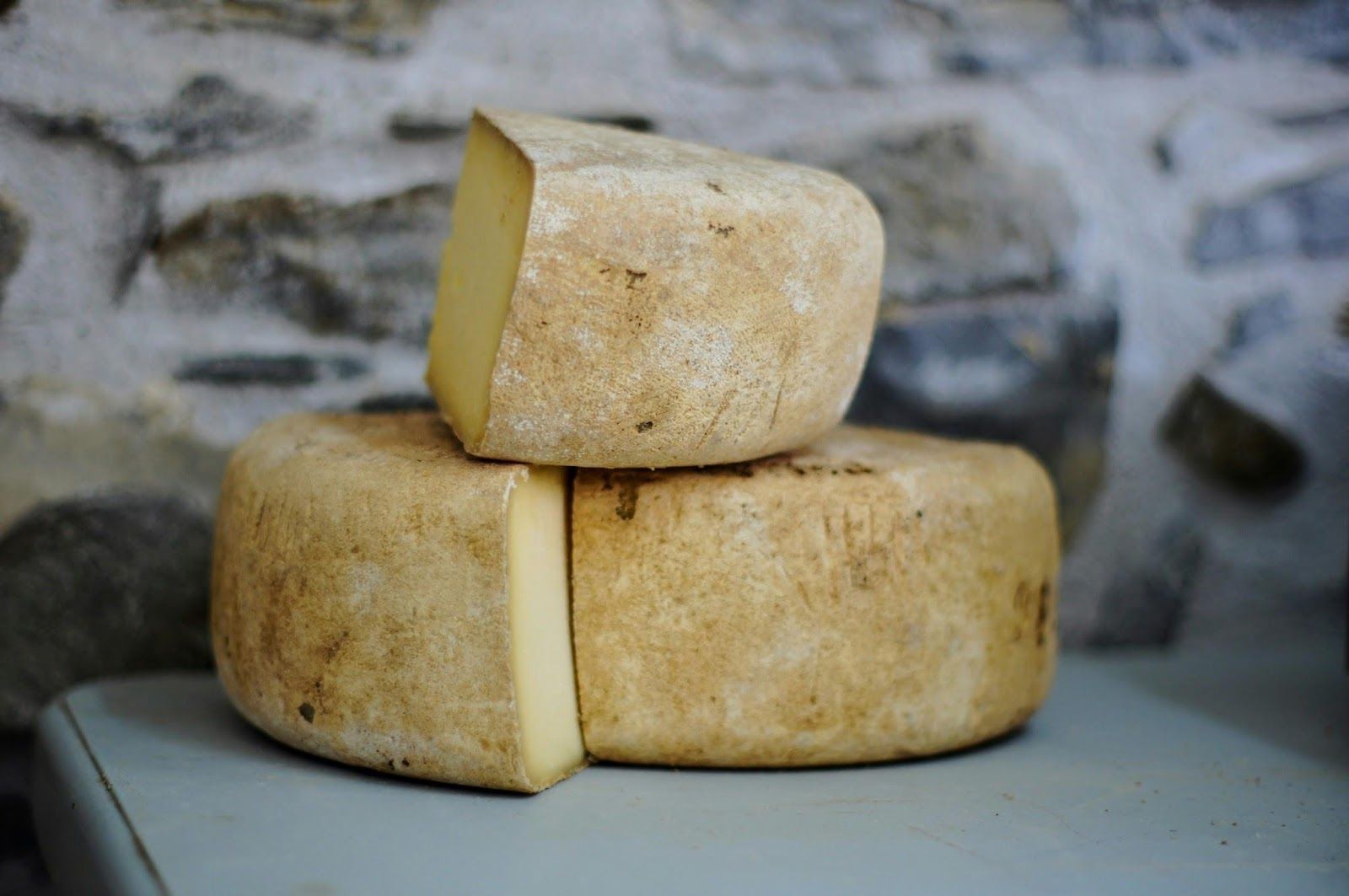
Sure, playing "OK" is useful, but have you tried "Oka"? It’s a type of cheese from Canada, and also a historical unit of weight used in Turkey.

The cheese is named after the village of Oka in Quebec, where Trappist monks started making it in the late 19th century.

8

Gox

Image: Denes Kozma

Gox might sound like the name of some sci-fi character. But it’s just a short abbreviation to refer to "gaseous oxygen."

"O₂" is the more common way to represent it, but "gox" is sometimes used by those in scientific and industrial contexts.

9

Xis

Image: Felipe Pérez Lamana

To be fair, you could pluralize any two-letter word by adding an S. "Xis" (the plural of the 14th Greek letter Ξ ξ) is no exception.

Just so you know, "xi" is not the translation of our "X," as you might think. What we call an "X," the Greek would call a "chi."

10

Ait

Image: Lawrence Hookham

"Ait" is mostly used in Britain to describe little landmasses that pop up in waterways, like those dotting the Thames.

The word (sometimes spelled eyot) comes from Old English iegoth, meaning "small island." Though it’s not common in everyday speech, you’ll still find it in place names and historical writings.

11

Eft

Image: Patti Black

Before they fully mature, newts crawl on land: this is when we call them efts. These tiny, bright-colored amphibians can be found around damp forests, looking like pocket-sized dragons.

The word eft has been around for centuries, coming from Old English efeta, which evolved to ewt, and ultimately to newt.

12

Gnu

Image: Maurits Bausenhart

The gnu (pronounced "new" or "guh-noo") is better known as the wildebeest, that sturdy African antelope famous for its dramatic migrations across the Serengeti.

The word gnu comes from the Khoisan languages of southern Africa and was first recorded by European explorers in the 18th century. The alternative name wildebeest is the Dutch word for "wild beast," of course.

13

Nix

Image: Michael Dziedzic

"Nix" means to reject, cancel, or put an end to something. The word comes from the German nichts, meaning "nothing."

It entered American English in the 19th century, likely through German immigrants. Over time, it became a snappy, no-nonsense way to say "no."

14

Ulu

Image: Visit Greenland

An "ulu" is a traditional Inuit knife with a characteristic curved blade, perfect for chopping, skinning, or even cutting a child's hair (yes, really).

The name comes from the Inuktitut word ᐅᓗ (ulu), which roughly translates to "woman’s knife"

because it was traditionally used by Inuit women for household and hunting tasks.

This is not pig Latin

Et tu, English? 12 Latin phrases we use regularly


Published on February 18, 2026


Image: Patrick Schneider

English might be a Germanic language, but it is greatly influenced by Latin—not only in the huge number of words derived from Latin roots, but also in the many Latin phrases English speakers use on a daily basis. Here are some of the most commonly used ones!

1

Et cetera

Image: iam_os

Literal translation: and all the rest/other things.

This is one of the most commonly used Latin phrases, but the abbreviation etc. is so widespread that people often fail to realize its Latin origins. We also write it as one word, etcetera, but the original phrase has two words: et (and) and cetera (the rest, other things that are similar).

2

Pro bono

Image: Jorgen Hendriksen

Literal translation: for the good.

The original phrase was pro bono publico ("for the public good"), dating back to ancient Rome, where wealthy and respected men provided legal advice for free—‘for the public good.’ The phrase was shortened, but its meaning remains unchanged.

3

Status quo

Image: Nika Benedictova

Literal translation: the state in which

Here we have another case of a longer phrase that was shortened. The original was in statu quo res erant ante bellum ("in the state in which things were before the war"), a phrase commonly used in treaties. Nowadays, its use has shifted to mean "the current state of things."

4

Verbatim

Image: Nika Benedictova

Literal translation: word for word.

Verbatim ac litteratim means "word for word and letter for letter." This Latin expression comes from verbum (word) and can be used both as an adverb ("he said it verbatim") and as an adjective ("a verbatim report").

5

Vice versa

Image: Nika Benedictova

Literal translation: with the positions turned.

The meaning and use have remained consistent over time: vice versa is used to express that something is true when the order is reversed.

6

Ad nauseam

Image: Mia Mackenzie

Literal translation: to the point of nausea/sickness.

Have you ever had to listen to a discussion so long that you felt nauseated by it? If so, you know exactly what ad nauseam means. The nausea is most often a figure of speech, but there have certainly been cases of real sickness.

7

Alibi

Image: Christoph Schmid

Literal translation: elsewhere.

Alibi was originally used as an adverb of place. Its current legal meaning—someone’s claim to have been "elsewhere" when a crime was committed—was first recorded in the 17th century. Nowadays, it’s a key term not only for lawyers and police officers but also for all true crime aficionados.

8

Alma mater

Image: Aleksander Stypczynski

Literal translation: generous mother.

What do generous mothers have to do with colleges and universities? We have to think figuratively. Alma means generous or kind, but combined with mater, it takes on the sense of a mother who nourishes her children. The first medieval university, the University of Bologna, adopted this idea as a motto: Alma Mater Studiorum, or "nourishing mother of studies."

9

Premium

Image: Federico Scarionati

Literal translation: prize, reward, profit.

In Latin, praemium was always used to refer to something gained. The added meaning of premium as "top quality" is of much later origin, as is the meaning of premium as "an extra fee or payment."

10

Bona fide

Image: Luismi Sánchez

Literal translation: in good faith.

We mostly associate this phrase with its legal meaning—that is, the absence of deceit or fraud. While its original use was similar, it was not necessarily limited to legal contexts and could be applied to a multitude of situations. Bona fide is generally used as an adjective, but it also has a noun form: bona fides.

11

Consensus

Image: Jonathan Skule

Literal translation: agreement.

This word comes from the Latin consentire, meaning "to be in agreement" or "to join in feeling." From the verb, the word shifted into the noun consensus (agreement), which became the standard term for a unanimous or general agreement.

12

Ad lib

Image: Tamara Malaniy

Literal translation: to one’s pleasure.

This is a shortened version of the original Latin phrase ad libitum, which originally meant "to one’s pleasure" or "as much as one likes." The shortened version comes from music, where ad lib indicated that the musician could interpret the piece according to their taste. From there, ad lib evolved to its current meaning: to improvise or deliver spontaneously.

Looking for an extra scoop of literary fun?

Learn more with our Word of the day

loot

/lut/