Which title is better?

Can you guess these classic movies from their adapted titles?


Published on November 27, 2025


Image: Lucas Pezeta

Movie titles don’t always travel well. They may sound cool or mysterious in English, or rely on clever puns, but those nuances are often lost in translation and leave us with retitled movies that even the most illustrious cinephile would have trouble decoding. Do you think you can identify these famous films by their adapted titles? Try for yourself!

1

A Very Powerful Whale Runs to Heaven

Image: Adam Ernster

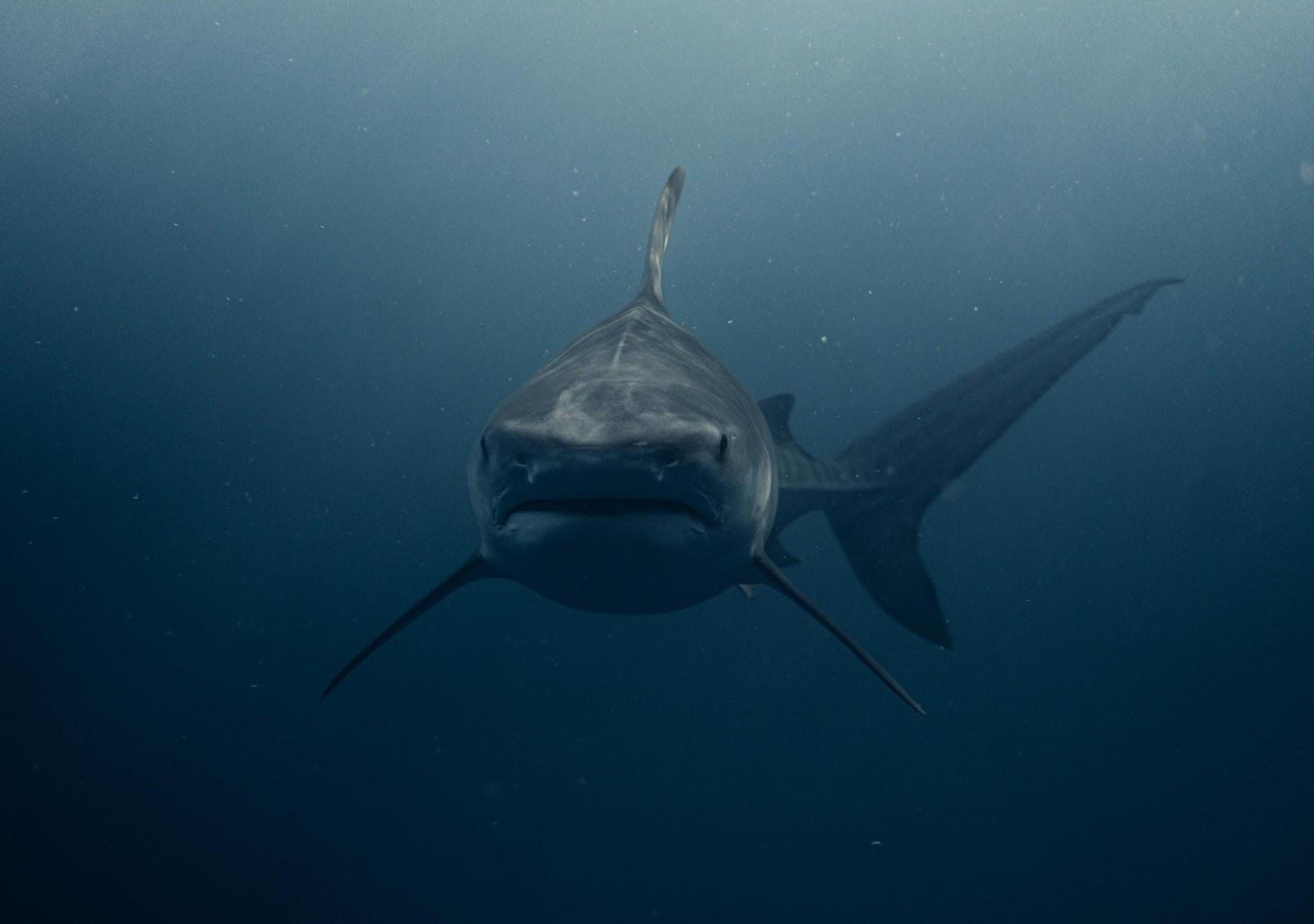
That’s the dramatic title that marketing experts chose for Free Willy in China.

The original film tells the story of a boy who befriends an orca and helps it return to the ocean—not necessarily Heaven! The Chinese title, however, gave the tale a twist with unexpectedly tragic overtones.

2

The Boy Drowned in the Chocolate Sauce

Image: Vie Studio

Can you guess what movie this is? If you said Charlie and the Chocolate Factory, you’re correct!

In Denmark, this film, based on Roald Dahl’s beloved classic, zeroed in on the darker moment when Augustus Gloop falls into the chocolate river, turning a silly, fantastical story into something almost sinister. (Don’t worry — the kid didn’t actually drown in the book!)

3

The Condemned

Image: Tim Hüfner

In Taiwan, The Shawshank Redemption was translated as Exciting 1995, while in some other markets it appeared under titles like The Condemned.

That simplified translation strips away the nuance of "redemption," which is central to the classic film about life in prison. In Spanish-speaking countries, the title became Sueños de libertad_—_Dreams of Freedom.

4

What Happened Yesterday?

Image: Pixabay

In Spanish-speaking markets, The Hangover was released as _¿Qué pasó ayer?_—which translates to "What Happened Yesterday?"

The hit comedy set in Las Vegas follows a group of friends piecing together the chaos of a bachelor party gone wrong. In France, the film was retitled Very Bad Trip.

5

He’s a Ghost!

Image: Santiago Avila Caro

With an unforgivable disregard for spoilers, Chinese markets released The Sixth Sense under the title He’s a Ghost! Fortunately, at least they didn’t specify which character they meant—though the translation likely spoiled the twist for most observant viewers.

6

Violent Times

Image: Artem Labunsky

Quentin Tarantino’s Pulp Fiction was retitled Violent Times in some international markets—a fitting name! However, one could argue that it misses the essence of the original title, which references the pulp magazines and inexpensive paperback novels that inspired Tarantino’s storytelling style.

7

Vaseline

Image: JUNHYUNG PARK

In Argentina, the hit musical Grease was released as _Vaselina_—literally "Vaseline." The English title refers to the 1950s youth subculture of "greasers," known for their slicked-back, oily hairstyles, but that nuance was lost in translation. Still, the new name became a memorable part of Latin American pop culture.

8

A Twin Seldom Comes Alone

Image: Pixabay

In Germany, Disney’s The Parent Trap was released as Ein Zwilling kommt selten allein, which translates to "A Twin Seldom Comes Alone."

The original English title references the identical sisters’ scheme to reunite their divorced parents, while the German version sounds more like a proverb—charming, but far from literal.

9

The Teeth of the Sea

Image: Daniel Torobekov

Steven Spielberg’s Jaws was released in France as Les Dents de la mer, literally "The Teeth of the Sea."

The original English title was short and sharp, perfect for the blockbuster it became. But even with its more poetic French name, the film made an enormous impact in France, just as it did everywhere else.

10

Fantastic Emotional Turmoil

Image: Dean Gibbons

In China, Pixar’s Inside Out, which follows the personified emotions of a teenage girl, was released under the title Fantastic Emotional Turmoil. Other international adaptations played with puns on expressions such as "Vice Versa," "Intensely," or "Funnily."

11

Mom, I Missed the Plane

Image: Liubomyr Vovchak

You could probably identify this classic Christmas movie by that line alone… even though it doesn’t actually appear in the film! Of course, it’s an alternative title for Home Alone, the beloved comedy starring Macaulay Culkin as the mischievous Kevin McCallister. The French release used the retitled Maman, j’ai raté l’avion!


Naming the expert

What would you call an expert in fruits? Let's see if you can guess!


Published on November 27, 2025


Image: Romain Vignes

We all know what a biologist or a historian studies —those are easy. But what about a pomologist or a speleologist? Some areas of expertise have names that sound nothing like what they actually mean. In this article, you'll see the name of a field first —then try to figure out what it really means before reading the answer. Some might be simple, but others will surprise you. Ready to test your knowledge? Let’s begin!

1

Oology

Image: Marina Vitale

Simply looking at the word "oology" reminds one of something circular, doesn’t it? You can’t be blamed for thinking this is the study of eyes. It does remind one of the verb "ogle."

You might also have thought of oolong tea— perhaps oologists are connoisseurs of rare brews? Or maybe they are scientists studying oolite rocks?

A clue: Oologists probably roll their eyes a lot during Easter hunts.

2

Definition of oology

Image: Landon Martin

Did you guess it? Oology is a branch of ornithology —the study of birds— that focuses on eggs! A person who studies or collects eggs inspecting their size, color, and shape, and observing the nesting and breeding behavior of their parents, is an oologist.

The term comes from the Greek oion, meaning egg. So if you thought of oolite before, you weren’t too wrong: Oolite rocks are also called "egg stones" because of their composition, which are spherical grains cemented together. Both words share the common Greek root.

3

Campanology

Image: Leon Contreras

Surely, campanology isn’t the study of camping. Or could it be? It can remind one of the word "hippocampus," but that could refer to either the part of the brain or sea horses. Another likely guess: Maybe it is the title for people who study campaigns, like marketers or publicists?

A clue: Don’t you think the word has a familiar ring?

4

Definition of campanology

Image: Matt Artz

Campanology is actually the study of bells —how they are made, rung, and tuned. The word comes from the Late Latin campana (bell), and the term has been in use since at least the 18th century.

Now you know: campanologists analyze the acoustics of bells, the techniques of change ringing (a complex system of bell sequences), and the history of bell towers worldwide.

5

Hippology

Image: Bob Coyne

Two options jump to mind right away: Hippos and hippies. The cultural movements of the 60s were important enough that some historians might have specialized in their study.

Hippos are important, too: The two remaining classes of hippos are classified as vulnerable and endangered. Surely, looking after their population requires experts. Is that something that hippologists do?

A clue: Hippos are a closer guess than hippies.

6

Definition of hippology

Image: Helena Lopes

Horses! Alright, equestrian fanatics probably guessed this one easily. A hippologist is an expert in the veterinary and management of horses. They are responsible for answering all questions horses’ owners might have about anatomy, reproduction, health, dressage, driving, and more.

This word also derives from Greek, where hippos means "horse". That term is at the root of the scientific names for sea horses and hippos, too.

7

Pomology

Image: Mae Mu

Is this about pomodoro sauce? Many know that pasta al pomodoro is a dish prepared with fresh tomatoes and olive oil. Fewer people know that pomodoro is simply the Italian word for tomato.

In fact, pomodoro is the result of adding pomo (apple) + d’oro (of gold). No, pomology doesn’t study tomatoes, but that might give you a clue about what it actually does.

A clue: Do you know what pomme means in French?

8

Definition of pomology

Image: Jo Sonn

Pomology is actually the study of multiple fruits —not just the "apple of gold" tomato (which, whether you like it or not, is a fruit, according to botanists).

A pomologist works in the branch of botany investigating fruits and their plants of origin, researching to enhance their cultivation and use. The name derives from the Latin pomum, which means "fruit."

9

Speleology

Image: Suzy Hazelwood

You are probably thinking that this word couldn’t have anything to do with "spelling," because it would be written with two Ls. And you’d be correct: The role of speleologists is very distant to that of linguists.

But it feels like you’ve read the word before, doesn’t it? Did it have something to do with the outdoors, or with outer space, maybe?

A clue: You would likely need a flashlight to be a speleologist.

10

Definition of speleology

Image: Viviana Camacho

In reality, speleology is the scientific study of caves: Their formation, structure, and ecosystems. The word comes from the Greek spēlaion (cave).

Speleologists explore underground tunnels, study stalactites and stalagmites, and even analyze the creatures that live in caves. To be a good speleologist you’d need to know a bit about biology, chemistry, geology, and cartography, to name a few… And to not be claustrophobic!

11

Myrmecology

Image: Leo_65

You wouldn’t be the first person to think about myrrh when reading this word. Nor the first to think about mermaids.

A more down-to-earth guess would be to assume that this has something to do with memories, or the ability to form and retain them. But that is also incorrect.

A clue: Have you ever seen a formicarium?

12

Definition of myrmecology

Image: Prabir Kashyap

The correct answer is ants! Myrmecology is the scientific study of ants because myrmex is the Greek word for the insect.

Myrmecologists study their complex colonies and examine how these tiny creatures communicate and cooperate. A formicarium, which we mentioned, is another name for an "ant farm," often built to observe ant behaviors like engineering and teamwork.

How many areas of expertise did you guess correctly? If none, we hope you learned a few new words!

Looking for an extra scoop of literary fun?

Learn more with our Word of the day

loot

/lut/