Don’t believe everything you see

Busted! 12 Hollywood myths that are totally fake


Published on September 6, 2025


Image: Jake Blucker

Yes, we know it’s hard to believe, but sometimes movies are a little less than truthful. Jokes aside, Hollywood often bends the facts—or completely makes them up—to create the magic we see on the screen. Over time, however, these movie tricks have shaped our perceptions of the world, sometimes without us even realizing it. From cars exploding on impact to silent guns, join us as we set the record straight on some of the most pervasive Hollywood myths.

1

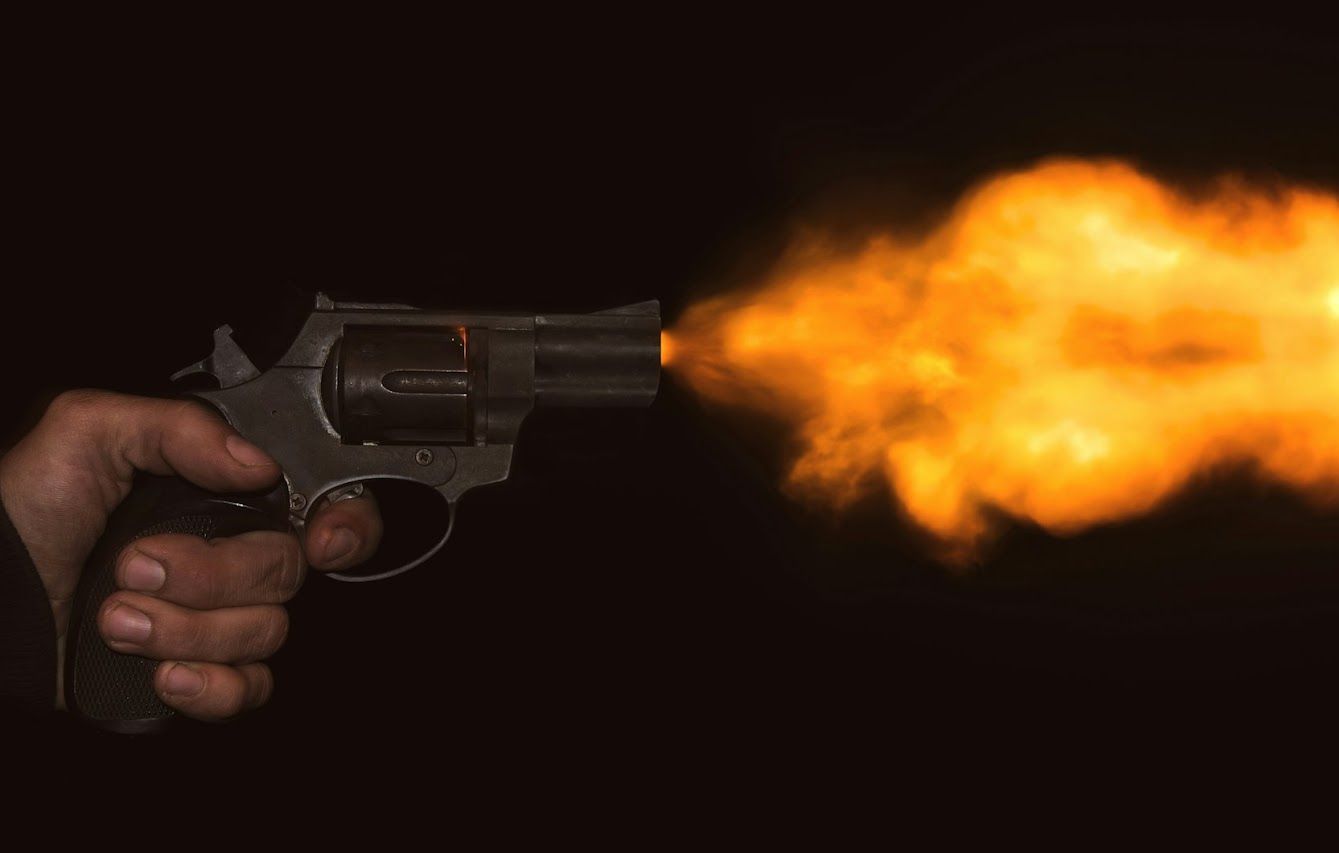
Silencers are silent

Image: Dominik Sostmann

Hollywood silencers reduce gunfire to a whisper, but real suppressors only lower the volume by about 20–35 decibels—still as loud as a jackhammer! Even the most advanced modern suppressors can’t make a gun silent.

2

Exploding cars

Image: Marek Studzinski

Cars in movies erupt into massive fireballs, but in reality, car explosions are extremely rare, even in violent crashes. Gasoline burns rather than detonates, meaning it needs very specific conditions to create an explosion.

3

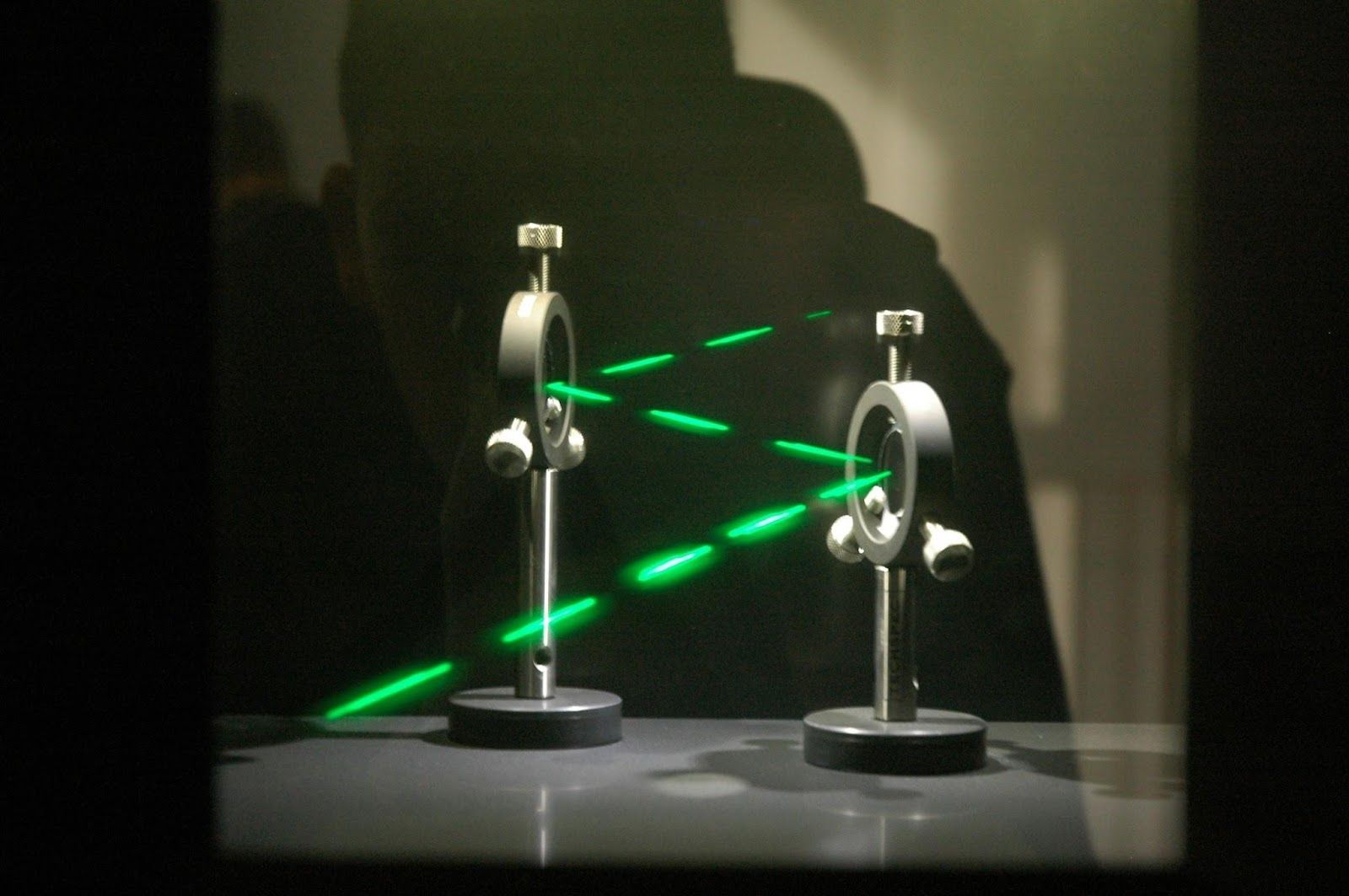
Laser beams are visible

Image: M.M.

Sci-fi films show laser beams cutting through the air, but real lasers are invisible unless particles scatter the light—as when there is dust, fog, or smoke in the atmosphere.

4

Quicksand sucks you under

Image: Chua Bing Quan

Movies depict quicksand as a bottomless death trap, but it’s not nearly that dangerous. Real quicksand is a mix of sand, water, and clay that becomes unstable under pressure. While people can sink up to their waists, the human body is too buoyant to be fully submerged.

5

Defibrillators restart hearts

Image: César Badilla Miranda

In movies, defibrillators bring people back to life, but this is not the case in real life. Defibrillators correct irregular heart rhythms like ventricular fibrillation, not cardiac arrest.

6

Picking locks in seconds

Image: Ariel

Movies show characters picking locks effortlessly, but real lockpicking is much harder and takes time. Even skilled locksmiths require specialized tools and patience.

7

Chloroform knocks you out instantly

Image: Christin Hume

In movies, chloroform knocks victims unconscious in seconds, but in reality, it takes several minutes. Even then, the person may wake up quickly. It’s not a foolproof knockout drug, and improper use can be fatal.

8

Jumping through windows safely

Image: Eyasu Etsub

Action heroes crash through glass unharmed, but real glass shards cause serious injuries. Movie glass, called "sugar glass," is designed to break easily. Real tempered or laminated glass can cause deep cuts and is much harder to break without tools.

9

Hacking in seconds

Image: Towfiqu barbhuiya

Hollywood hackers break into systems instantly, but real hacking takes time and skill. Movie portrayals of rapid keystrokes and instant access are wildly unrealistic, as real hacking involves a ton of research, coding, and persistence.

10

Guns knock people back

Image: Tsvetoslav Hristov

Characters in movies fly backward when shot, but real gunfire doesn’t generate that force. Newton’s Third Law states that for every action, there’s an equal and opposite reaction. If bullets knocked people down, the shooter would be thrown back with equal force.

11

One-punch knockouts

Image: Dan Burton

Movies show characters dropping unconscious from a single punch, but real fights don’t work that way. A single punch may stun someone, but it’s unlikely to cause instant unconsciousness unless it hits a critical nerve or causes a concussion.

12

Vent crawling is easy

Image: Drew Beamer

Action heroes crawl through air vents with ease, but real vents aren’t built for that. Most air ducts can’t support a person’s weight. They’re made from thin metal and are too small for comfortable movement.


WE HOPE YOU HAVE THE TIME

Go The Distance: Unravel These Ten Laughably Long English Words!


Published on September 6, 2025


Image: Diana Polekhina

English can sometimes be a daunting language. Think about the challenges a non-native speaker must face in order to learn that "buy", "by", and "bye" are spelled differently but sound the same, or that the word "bear" can both mean "a large mammal" and "to support the weight of something". However, we believe that this difficulty is a large part of what makes the English language so beautiful, filled with unique words and spellings that completely amaze us.

We have compiled a list of ten long words that would both terrify a Spelling Bee contestant and make the mouth of a Scrabble player water. These words range from "a few letters too long" to "ridiculously lengthy". Enjoy!

1

Connecticutensian

Image: Rusty Watson

We’ll begin this list with one of the longest American demonyms we could find. While the official designations for the good people living in "The Constitution State" are "Connecticuter" and "Connecticutian", the unofficial demonym "Connecticutensian" can also be used.

Interestingly, none of these above-mentioned denominations is as regularly used as the colloquial nickname "nutmeggers". This comes with the unofficial nickname of Connecticut, known as "The Nutmeg State".

2

Pulchritudinous

Image: Caroline Veronez

Looking for new ways to tell your partner they are beautiful, but the words "pretty" or "handsome" seem to be overused? Don’t worry, we got you covered. Next time you are enjoying a candle-lit dinner, try looking into their eyes and saying, "Darling, you look absolutely pulchritudinous tonight."

Well, maybe this is not the most romantic of words, but it is still pretty interesting. It is derived from the word pulchritude, an out-of-style noun that means "beauty". In turn, this word comes from the Latin word pulcher, which translates to "beautiful".

3

Floccinaucinihilipilification

Image: Gary Chan

Try saying this three times fast. As quirky as this word sounds, its meaning is not as fun. "Floccinaucinihilipilification" is a word that describes the act of considering something completely worthless or unimportant.

However, don’t be too discouraged by this word’s meaning: chances are it was never used in casual conversation. In fact, it is mostly quoted as an example of a ridiculously long word, and not as an actual measure of importance.

4

Tergiversation

Image: Pawel Czerwinski

While the verb "tergiversate" isn’t exactly synonymous with lying, they are both cut from the same cloth. Its noun form, "tergiversation", describes the act of producing different statements, often twisting and turning facts to protect self-interest.

However, tergiversate has an accidental ring to it that lying usually doesn’t, since someone caught in tergiversation is found after stating contradictory facts that evidence his or her deceitful ways.

5

Antidisestablishmentarianism

Image: Akira Hojo

Just like "floccinaucinihilipilification", the word "antidisestablishmentarianism" is considered one of the longest non-scientific words in the English language. However, the main difference between them is that antidisestablishmentarianism was for a while present in everyday vocabulary, albeit in 19th-century England.

This word describes a movement that advocated for the Church of England to continue to receive government patronage. In fact, it was created as a response to another movement also blessed with an extremely lengthy name called "disestablishmentarianism", which called for the separation between church and state.

6

Uncopyrightable

Image: Umberto

While this word is definitively a mouthful, it is also rather straightforward. "Uncopyrightable" describes cultural products such as books, films, or photographs that can’t be claimed or protected under copyright laws.

The characteristics that might make something uncopyrightable are various: If the author is unknown, for instance, or if a certain item belongs to the public, like a legal code or constitution. Sometimes the matter of who is the author of a certain cultural item is disputed, and therefore no individual can truly claim ownership, so the work is deemed uncopyrightable.

7

Incomprehensibleness

Image: Sander Sammy

It is rather ironic that we try to explain the meaning of such a bewildering word as "incomprehensibleness" when it literally defines a state in which something is particularly or downright impossible to understand.

While its synonym "incomprehensibility" is far more regularly used, we must take our hats to "incomprehensibleness", a noun that took a word with an already difficult spelling and added a few extra letters just for the sake of being extra confusing.

8

Consanguineous

Image: Liv Bruce

Just like with "Pulchritudinous", we believe there are warmer ways to refer to your family, but let’s explore this word on the off chance you want to show your affection at the next Thanksgiving in a more formal, slightly offputting way.

"Consanguineous" is an adjective for people related by blood and, while it is mostly used in matters related to ancestry, it is perfectly suitable to describe your immediate family. The main root of this word comes from the Latin word sanguin, which means "blood".

9

Supercalifragilisticexpialidocious

Image: Andreas Praefcke

We know what you are thinking: This one feels a little bit like cheating. After all, this word was first said by the legendary Julie Andrews in the timeless Disney film "Mary Poppins", and it was written as an extremely long adjective, meant to sound silly for comedic effect.

However, you might be surprised to learn that this word has been included in several renowned dictionaries: Cambridge Dictionary defines "supercalifragilisticexpialidocious" as "extremely good". And while its use will forever be associated with our favorite British nanny, this wacky word has truly transcended its medium.

10

Hippopotomonstrosesquipedaliophobia

Image: Brett Jordan

We’ll end this article with a bit of an ironic twist. Besides being the longest word we could find, "hippopotomonstrosesquipedaliophobia" describes an irrational fear, as all words ending in "phobia" do. However, this noun holds the dubious distinction of describing an unreasonable fear to itself, since someone suffering from this phobia is terrified of long words.

To make matters worse, some people spell this word with an extra P ("hippopotomonstrosesquippedaliophobia"), which some believe is a humorous misspelling in order to make the word even longer.

Looking for an extra scoop of literary fun?

Learn more with our Word of the day

crabbed

/ˈkræbəd/