words origins and their changes
Born by accident: 10 English words that started as mistakes
Published on May 30, 2026

There are many words we use today that actually came from small "mistakes," like "shamefaced", "penthouse", or the verb "edit." Back then, as words moved between languages and writing wasn’t as common, changes in spelling, pronunciation, or transcription were usual. Sometimes these shifts were unintentional, and other times they were adjusted to sound more familiar with what people thought the word meant. Let’s see these 10 words you probably didn’t know were born as accidents.
Shamefaced

The word "shamefaced" looks like it's referring to your face turning red with embarrassment, but that's not actually its first meaning. The original word was shamefast, and that second part, fast, used to mean "held firmly in place." So it wasn't about your face showing how ashamed you were; it was about being held back, or frozen, by shame. Around the 16th and 17th centuries, English people stopped recognizing the old meaning of "fast" and replaced it with "face," which sounded more accurate, but the meaning remained the same.
Penthouse

It may be hard to believe, but the meaning of "penthouse" was originally associated with a small attached structure rather than with luxury apartments. It comes from the French apentis, which referred to a simple construction against a wall, usually with a sloped roof. In the Middle Ages, it was adopted by the English and appeared in forms such as pentis or pentice, already altered in sound.
Time went through, and speakers reshaped it into "penthouse," connecting it to the familiar word "house," even though that link wasn’t originally there. As the form changed, the meaning shifted too. Instead of a modest attached structure, it came to describe a top-floor space, and eventually a high-end apartment at the top of a building.
To edit

The verb "edit" didn’t exist as it does now. English already had the noun editor, which came from Latin and meant someone who prepares text for publication. By the late 1700s and early 1800s, English speakers began assuming that if there was an "editor," there should also be a verb "to edit". So they removed what they thought was the "-or" ending and formed a new verb: edit. This is an example of back-formation, where a shorter word is created from a longer one by mistake. Even though "edit" wasn’t the original form, it quickly became standard, and we actually use it more frequently than its original noun.
Adder

The Old English word for the snake was nædre. People would say it with the article, like "a nædre." At some point, listeners got confused about where the word actually began and started hearing it as "an adder." So the "n" shifted from the noun to the article, and eventually disappeared from the word itself.
So, it went from "a nædre" to "an adder," and finally to just "adder." This happened in past centuries when language was heard more than written, and people naturally reinterpreted where one word ended, and the next began.
Biceps

A singular–plural mistake happened with the word "biceps." From Latin, where bi- means "two" and -ceps means "headed". The word is already singular, referring to a muscle with two points of attachment. When it was adopted into English, however, "biceps" was mistaken for a plural form, and "bicep" emerged as a new singular. This is another example of back-formation, when a shorter form is created by removing what people think is a plural ending.
Orange

This is a case of misdivision. The fruit has its roots in Asia, and its name travels from Sanskrit, to Persian, to the Arabic naranj. In Spanish, it stayed almost the same; it is called naranja. But in French, naranj came to be norange, and people often said it with the article "une norange". Time passed, and people started to say une orange. When English borrowed the word from French, it adopted this "mistaken version" and has remained orange until today.
Cherry
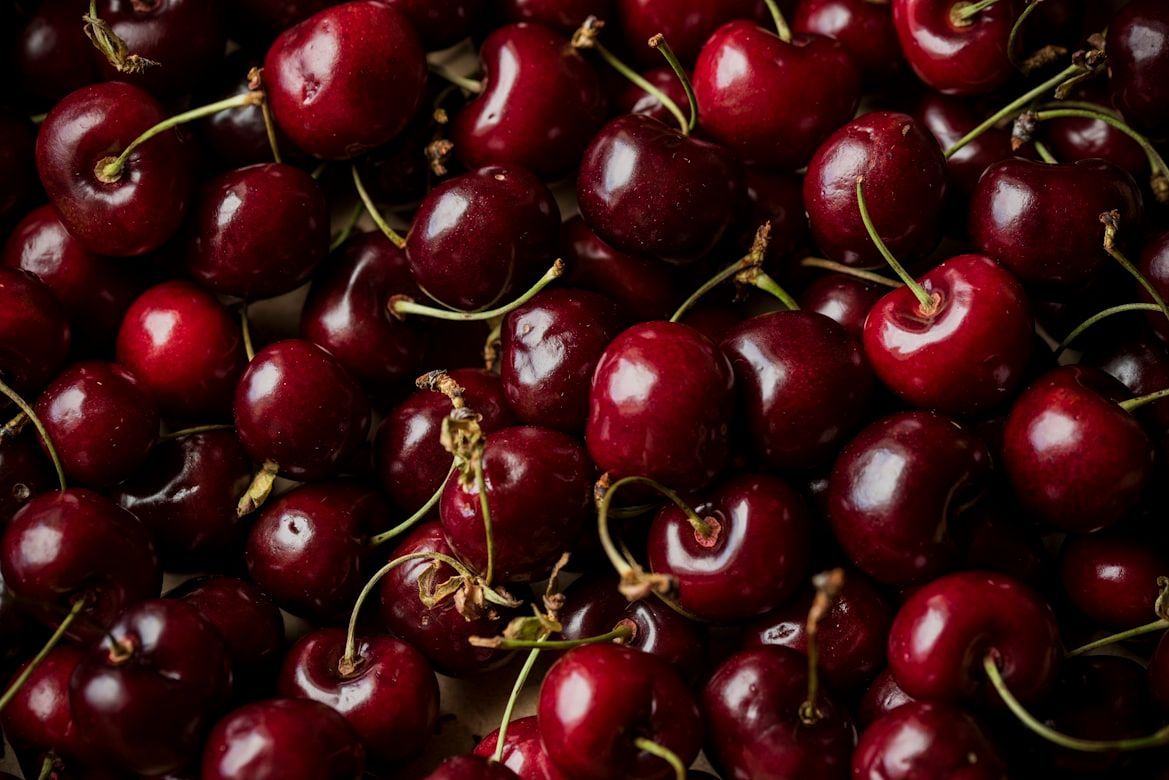
After the Norman conquest of 1066, when William the Conqueror of Normandy invaded England and brought French influence to the English language, the English adopted the word cherise from the French (a variant of what today is called in French cerise). As it sounded like the word ended in "s", English thought it was plural and invented the "cherry" as its singular form.
Island

The word "island" didn’t always have an "s" in it. In Old English, it was written as igland or yland, meaning "land surrounded by water." By the 1500s, the spelling started to change. Writers added an "s" because they thought the word was related to "isle," from the word "insula" in French. The "land" part was also kept to make the meaning clearer and avoid confusion with other similar words for water. With time, the spelling "island" became standard. Even though the "s" was added by mistake, it stayed in the word; that’s why we still write it, but never pronounce it.
Sneeze

In early English, sneeze was written as fnese, along with forms like fneosung (sneezing) and fnora (a sneeze). So what happened? In medieval handwriting, there was a long "s" that looked a lot like the letter "f." Because of that, people often misread the word and begin writing it with an "s" instead. That reading mistake stuck and became the standard spelling. Even though the word echoes the sound of a sneeze, its modern form actually comes from writing confusion.
Gravy

Gravy comes from a French word, grané, which means "spiced". This word was also misread due to medieval handwriting and the similarities between the letters"n" and "u". So, the word came to be misspelled as graue. Today, we use either "u" or "v" depending on the sound they represent, although in medieval times these letters varied according to their position in the whole word. If it was at the beginning of it, the "v" was used, and the "u" if it was in the middle of it. It didn’t matter how it sounded. Because of these changes, grané evolved into gravy as we know it today.


