Debunked science

Before science got it right: 10 wild misconceptions that misled everyone


Published on April 10, 2026


Image: Philippe BONTEMPS

Before modern science lifted the veil on some of nature’s most baffling phenomena, people relied on what they knew—and when that failed, they invented explanations that now seem spectacularly bizarre. But even if these early ideas now seem strange or even foolish, they helped pave the way for modern science. Each flawed theory pushed curious minds to investigate further and refine how we understand the world. From spontaneous generation to the theory of miasma, here are 10 examples of what people believed not so long ago.

1

Flat Earth

Image: Glenn Carstens-Peters

For centuries, people believed the Earth was a flat disc floating on water. Ancient maps depicted oceans surrounding a flat plane, and falling objects supposedly plummeted straight down to the abyss.

While Aristotle was among the first to argue for Earth’s true shape—observing ships vanishing hull-first over the horizon and the round shadow cast during lunar eclipses—and Eratosthenes later refined these intuitions to calculate the planet’s circumference with remarkable accuracy, the flat-Earth concept still persisted well into the Middle Ages.

2

Spontaneous generation

Image: Adrian Lange

During the Middle Ages, and for long before, it was believed that maggots, mice, and other creatures could arise spontaneously from mud, rotting meat, or grain.

It wasn’t until the 17th century that Francesco Redi’s experiments disproved this idea: maggots appeared only when flies had access to lay their eggs. Later, Pasteur confirmed that microbes also do not arise spontaneously.

3

The Moon’s "breath"

Image: Ganapathy Kumar

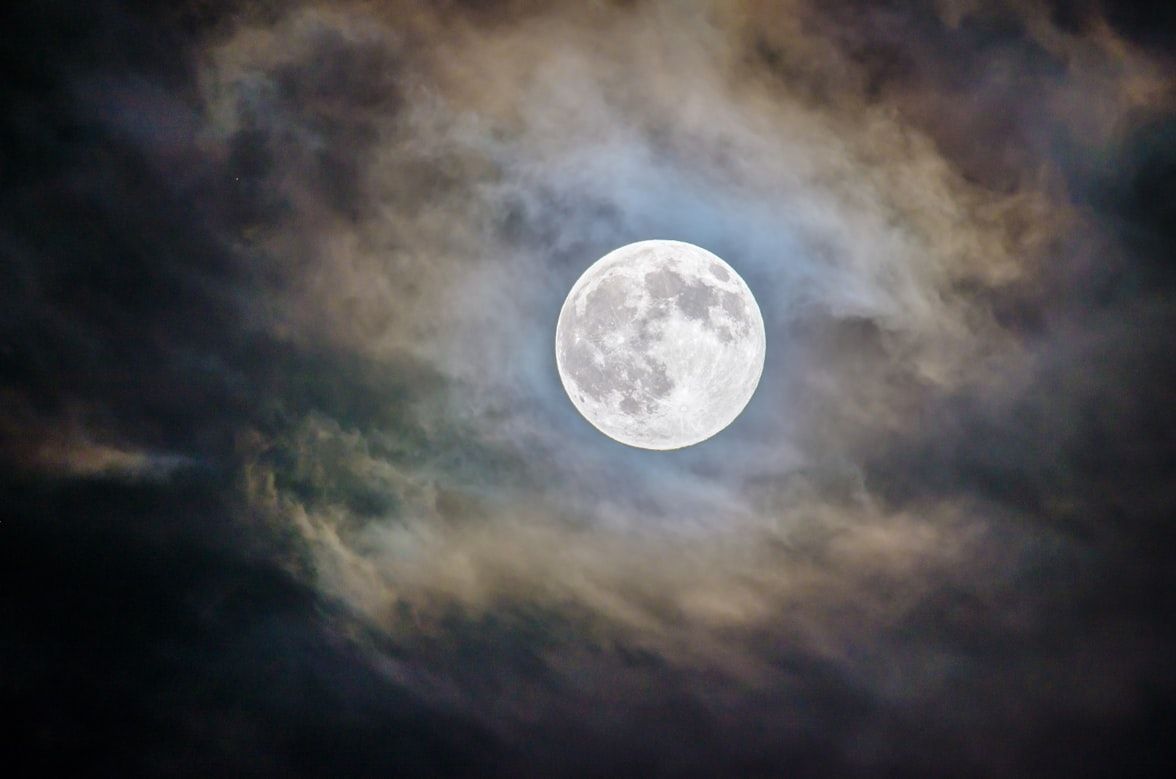
Early natural philosophers suspected the tides followed the Moon’s cycle, but without a concept of gravity, they proposed more imaginative mechanisms. One widely repeated idea described the Moon as "breathing" or exhaling a kind of pneumatic force that pulled the seas upward, much like winds or vapors moving through the air.

It wasn’t until Newton’s work in the 17th century that a clear physical explanation emerged, showing that the tides are driven by the gravitational pull of the Moon and Sun acting on Earth’s oceans.

4

Giant worms cause earthquakes

Image: Karl Callwood

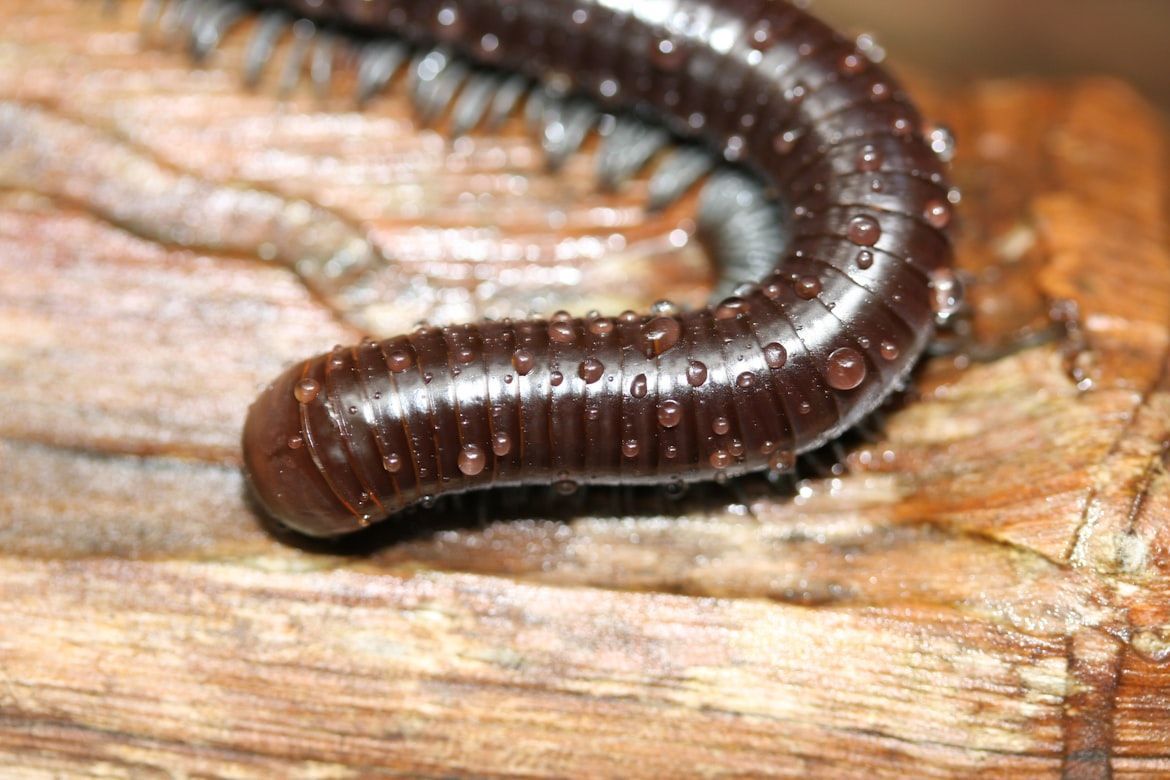
Some early natural philosophers suggested earthquakes were caused by giant underground worms or serpent-like creatures shifting through the Earth. The analogy came from observing how smaller burrowing animals disturbed soil and assuming larger unseen versions could shake the ground itself.

As geological science progressed, however, these notions gave way to evidence showing that earthquakes result from the movement and fracturing of Earth’s crust along fault lines.

5

Flaming gas in the skies

Image: Lightscape

Early explanations for the northern lights often described them as fires or glowing vapors igniting high in the atmosphere. Some natural philosophers proposed that luminous gases rose from Earth’s surface and caught fire in the upper air, while others compared the lights to reflections from vast, distant flames.

With improved observations, scientists showed that auroras are caused by charged particles from the solar wind interacting with Earth’s magnetic field and energizing atmospheric gases.

6

Sunspots as planets crossing the Sun

Image: Javier Miranda

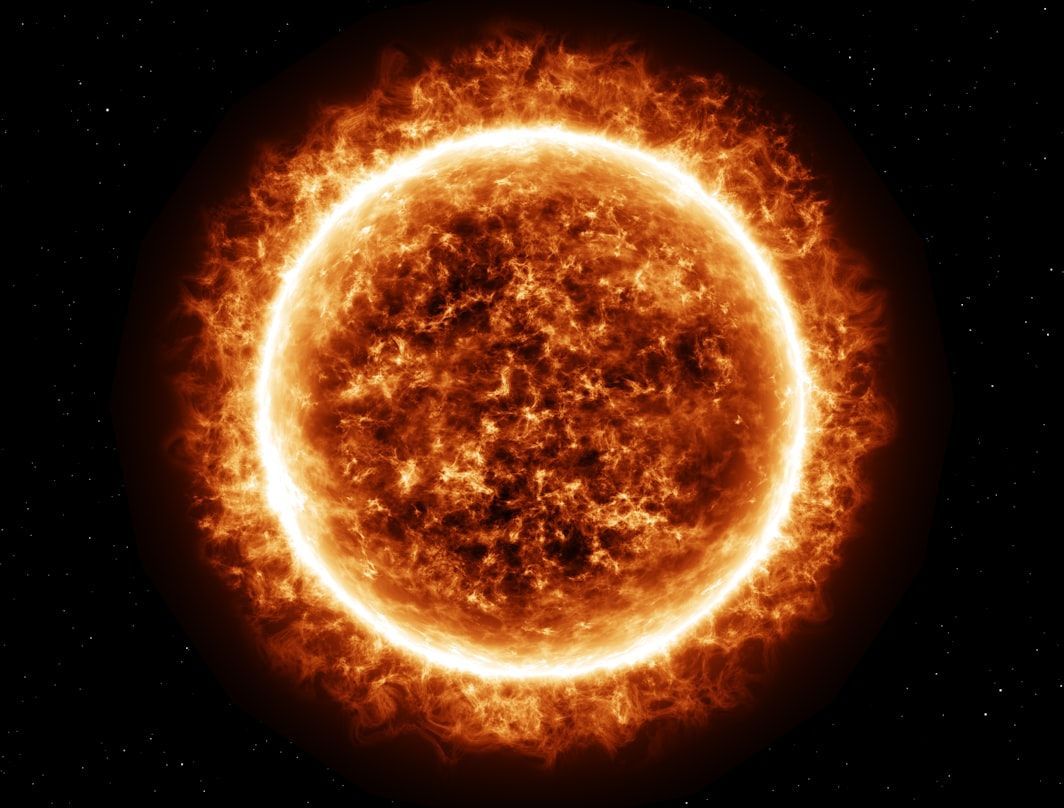
Some early astronomers—including Jesuit priest Christoph Scheiner—argued that sunspots were actually small planets or satellites orbiting the Sun, preserving the idea of a "perfect" Sun untouched by blemishes.

Galileo, however, tracked their shapes and motions and noticed they transformed and changed irregularly, which meant they were on or very close to the Sun’s surface—so they couldn’t be planets.

7

Bad air causes disease

Image: Ruvim Noga

People once believed diseases like cholera, plague, and malaria spread through "miasma," or poisonous bad air rising from decaying matter. The theory shaped public health for centuries and even informed major sanitation reforms in the 19th century.

It wasn’t until the work of Snow, Pasteur, and Koch that germ theory replaced miasma, showing that infectious diseases are caused by specific microorganisms—not foul-smelling air.

8

Underground rivers

Image: Kubo Mičuch

Early hydrologists often believed springs were fed by vast underground rivers flowing through hollow channels in the Earth. The idea came from observing surface rivers disappearing into caves and reappearing elsewhere, leading to the assumption that similar large waterways existed everywhere below ground.

Modern hydrogeology shows that most groundwater doesn’t travel in rivers but moves slowly through porous soil and rock, driven by pressure and permeability rather than hidden subterranean channels.

9

Comets as atmospheric phenomena

Image: Forsaken Films

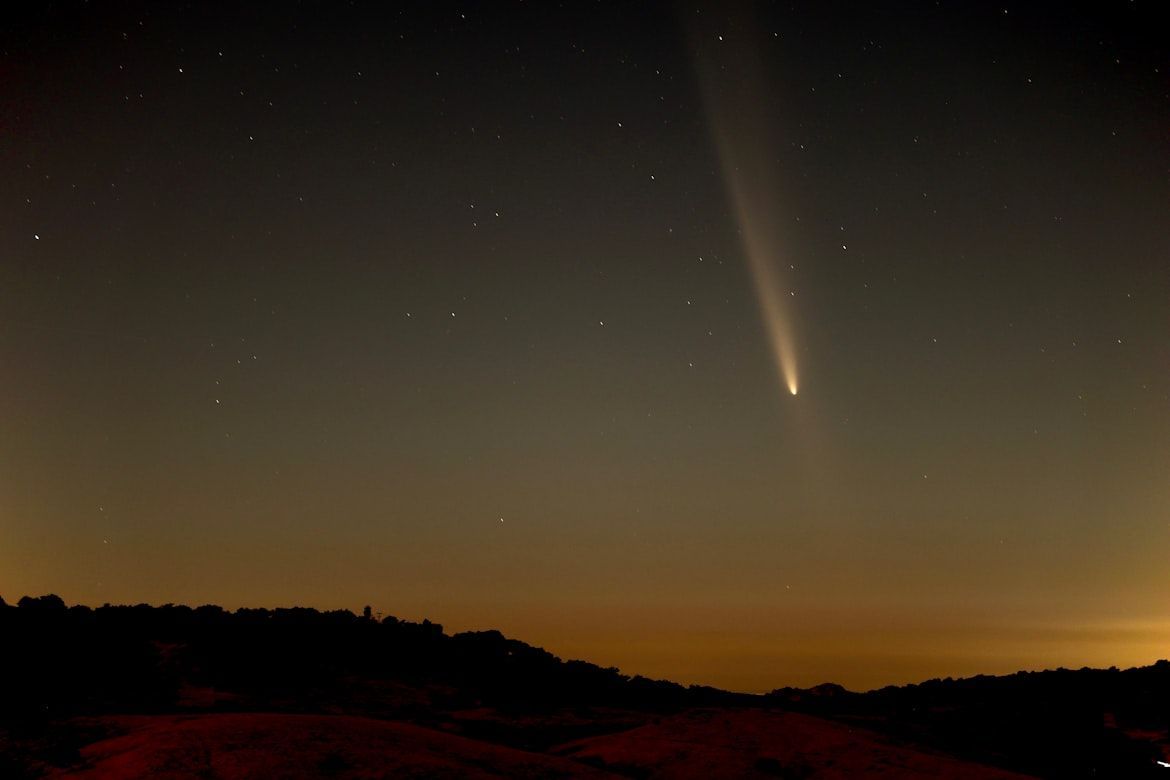
For centuries, comets were thought to be atmospheric phenomena—fiery vapors or clouds igniting high in the sky. Even Aristotle’s model placed them in the upper atmosphere, and this view persisted well into the Renaissance.

Until Tycho Brahe’s observations in the 1570s showed that comets had no measurable parallax, it hadn’t been realized that they were actually far beyond the Moon. This helped establish comets as true celestial bodies orbiting the Sun.

10

Magnetism from living "souls"

Image: Chris Nagahama

Early explanations for magnetism often invoked a "living force" within lodestones, suggesting they possessed a kind of spirit or soul that allowed them to attract iron. Others claimed magnets emitted invisible _effluvia_—mysterious vapors that pulled metals toward them.

William Gilbert’s De Magnete (1600) replaced these ideas with a physical model, showing that magnetism was a natural property of matter and that Earth itself acted like a giant magnet.


Portents of doom

Black cats and broken mirrors: 10 bad omens throughout history


Published on April 10, 2026


Image: Kasturi Roy

Human societies have always been fascinated by what the future might hold—and with this yearning to glimpse what lies beyond the horizon came a host of very strange ideas. From the twitch of a cat's tail to the flight of birds, cultures around the world have interpreted various natural events as imbued with prophetic significance. And many of these foreboding signs were believed to predict misfortune or disaster, often helping people make sense of the unexpected. Join us as we explore 10 of the most notorious bad omens that have instilled fear and superstition throughout the ages.

1

Black Cats Crossing

Image: Kristin O Karlsen

In many cultures, and particularly in Western folklore, a black cat crossing your path is seen as a bad omen. This belief likely stems from the association of black cats with witchcraft during the Middle Ages, when they were often believed to be witches' familiars. However, in some instances, black cats could be considered symbols of good luck, and sailors were known for favoring black cats for company aboard their ships.

While many people today keep black cats as pets and no longer associate them with any superstition, the myths surrounding these felines remain well-known and frequently appear in fiction.

2

Broken Mirrors

Image: Mick Haupt

Breaking a mirror is said to bring seven years of bad luck, a belief that originated in ancient Rome, where mirrors were seen as portals to the soul. The idea was that damaging one's reflection could harm the spirit or even anger the gods, who were also believed to spy on mortals through mirrors.

To be fair, in antiquity mirrors were difficult to manufacture and considered prized possessions, so it's understandable that various social fears and taboos arose around breaking one. But why seven years of bad luck specifically? Romans believed the body renewed itself every seven years, meaning technically no curse could last longer than that.

3

Friday the 13th

Image: Waldemar

The combination of Friday and the number 13 has long been considered particularly unlucky in Western culture, with roots in both Norse mythology and Christian tradition. In Christianity, the Last Supper featured thirteen attendees, with Judas Iscariot's betrayal occurring on a Friday, cementing the date as one of ill fortune.

Similarly, in Norse mythology, twelve gods were feasting in Valhalla when the uninvited trickster god Loki arrived as the thirteenth guest. His presence caused chaos, ultimately leading to the death of Balder, the god of joy. The extent of the myth surrounding the number 13 is such that, even today, some buildings skip the 13th floor entirely, and in the United States alone, nearly 20 million people are estimated to avoid traveling or following their normal routines on this date.

4

Crows and Ravens

Image: Steve Smith

Crows and ravens have long been associated with various myths and legends throughout the ages. The ancient Romans believed that a crow’s call foretold impending doom, while Celtic traditions linked these birds to battle and death. In the Norse pantheon, Odin was often accompanied by a pair of ravens, who were considered messengers —or sometimes spies—of the gods.

For Native Americans, ravens were often seen as tricksters, much like coyotes, playing pranks on unsuspecting mortals or following their own mysterious designs. These superstitions deserve some credit, as corvids are known to be among the most intelligent species on the planet, with cognitive abilities comparable to those of great apes, according to some scientists.

5

The Howling of Dogs

Image: Lilian Jeane Schiffer

We have co-evolved with dogs to the point where we are highly attuned to their barks, howls, and tail wags—signals that our furry friends use to greet us or even alert us to unseen dangers. However, dogs weren’t always the friendly companions we know today, and there was a time when the howling of wolves in the dark could only mean imminent danger.

So, it should come as no surprise that howling wolves were often interpreted as portentous by ancient cultures. For example, Virgil noted that howling wolves were among the many omens that foretold the assassination of Julius Caesar and the onset of civil strife.

6

Spilled Salt

Image: Jason Tuinstra

Spilling salt has been seen as an ill omen for centuries, and even today, some people can’t help but flinch at the sight of a fallen salt shaker. The belief, however, might be rooted in practicality. In ancient times, salt was so valuable that it was often used as payment—hence the origins of words like "salary" or "soldier."

To counteract the bad luck associated with an accidental spill, some believe that tossing a pinch of the spilled salt over the left shoulder can ward off evil spirits. However, the most practical remedy might simply be to gather up as much of the spilled salt as possible and return it to the container.

7

The Unlucky Number 4

Image: iridial

In various East Asian cultures, the number 4 is considered highly unlucky because it sounds similar to the word for "death." This aversion has led to buildings skipping the fourth floor and even changing phone numbers to avoid the ominous digit.

While the aversion to the number 4 may seem akin to the fear of 13 in Western cultures, the phobia associated with 4 far surpasses its Western counterpart. It is so deeply ingrained in the culture that even the business world takes significant precautions to avoid the number in any context.

8

Whistling Indoors

Image: Mandy Ferrer

In Slavic cultures, whistling indoors is often seen as a bad omen, believed to invite misfortune or bad luck into the house. Whistling outdoors, however, is generally considered acceptable. This superstition may have originated from the belief that whistling could summon spirits or disrupt harmony within the home.

Among sailors, whistling aboard a ship was thought to encourage the wind to pick up, which could be either beneficial or detrimental depending on the weather—you might accidentally end up whistling up a storm.

9

Strange Behavior of Animals

Image: joel herzog

For millennia, strange animal behavior has been seen as an omen of impending misfortune. Interestingly, this superstition may have roots in actual truth, as the phenomenon of animals fleeing or behaving restlessly before natural disasters has been observed repeatedly. And there is ample historical evidence to support this belief.

The Greek historian Thucydides reported in 373 BC that rats, dogs, snakes, and weasels deserted the city of Helice in the days leading up to a catastrophic earthquake, and throughout history animals have been known to predict disasters such as floods, earthquakes, and even volcanic eruptions with remarkable precision. Some scientists even suggest that many animals can instinctively detect minute electromagnetic changes in the atmosphere, which might often precede impending earthquakes and other natural disasters.

10

The Appearance of Comets

Image: Steve Busch

Comets have historically been viewed as bad omens, often seen as harbingers of disaster or significant change. Their bright trails frequently incited panic and hysteria among the public, and recurring comets like Halley's Comet were even linked to the death of kings and other calamities.

More recently, during Halley's Comet's passage in 1910, spectroscopic analysis revealed the presence of the toxic gas cyanogen in the comet’s tail. This led to sensational newspaper reports claiming that the gas would contaminate the atmosphere and potentially extinguish all life on Earth. Despite reassurances from scientists that the gas posed no threat, mass hysteria ensued, leading people to buy gas masks and even "anti-comet pills."

Looking for an extra scoop of literary fun?

Learn more with our Word of the day

destitute

/ˈdɛstəˌtut/