Crossed meanings

Be careful! These 12 words with double meaning might get you in trouble


Published on April 6, 2026

Image: Margarida Afonso

English is full of surprises, especially the kind that makes you read twice. You’ve probably said or read a word one way your whole life, only to find out it’s got a sneaky second meaning (or even a totally different pronunciation). These words, called homographs, look the same on paper but have two or more meanings. Some even change how they are pronounced depending on what they’re doing in a sentence. Here are 12 classic examples that are sure to amuse, confuse, and maybe even make you question everything you thought you knew.

1

Lead the way… or poison the water?

Image: Zachary Lancaster

Here’s one that trips people up in both speech and spelling. "Lead" (rhyming with "reed") means to guide someone or something, like when you lead a group on a walk. But spelled the same, "lead" (rhyming with "red") is a heavy metal once used in pipes and paint.

Same letters, completely different use. One makes you feel like a confident icon, the other is banned from gas and drinking water.

2

Tear up your paper… or from emotion

Image: Nikolay Hristov

Have you ever cried watching an old movie and then torn up a tissue in frustration? Then, you touched on both of these homographs.

"Tear" (like "tare") means to rip something apart, which is pretty straightforward. But "tear" (like "teer") is also what falls from your eyes when emotions run high. The two meanings couldn’t be more different; one is physical destruction, the other is an emotional outpouring.

3

Bass: catch of the day or booming sound
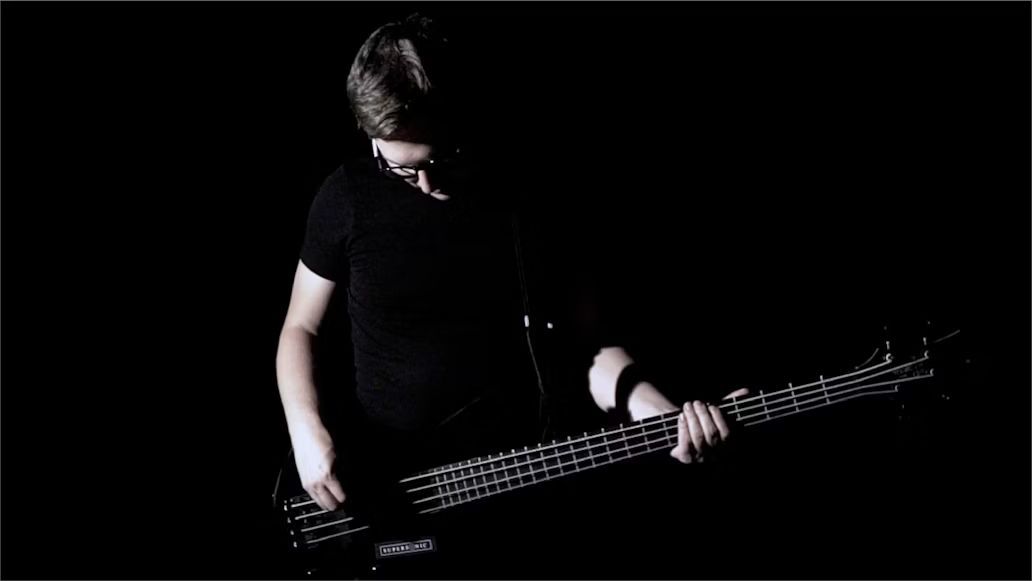
Image: Matt Roskovec

Picture this: you’re fishing and catch a bass, then head home and crank up the bass on your stereo. Same word, wildly different scenes.

One refers to a popular fish, often fried and served with hushpuppies. The other is all about that low-end thump in music that rattles your windows. Oddly enough, they’re pronounced completely differently: "base" for the sound, "bass" (like "class") for the fish.

4

Wind in your hair, or winding up a toy

Image: Joshua Reddekopp

English really takes a turn with "wind." When you feel the wind blowing through your hair, it’s that breezy force of nature. But when you wind your old alarm clock or a jack-in-the-box, you’re giving it a spin.

In this case, the pronunciation changes, and so does the meaning, but only one gets leaves stuck in your teeth.

5

Bow for the queen, or tie it in your hair

Image: Jess Bailey

Few words are as fashionably confusing as "bow." Take a bow on stage after a performance, or tie a bow on a birthday present. In one case, you’re bending forward graciously; in the other, you’re accessorizing.

It’s worth noting there's a third "bow," as in the curved weapon that shoots arrows, just to keep you on your toes.

6

Row your boat… Or cause a row

Image: Evan Smogor

In America, "row" often brings up images of gently paddling down a stream, singing songs, and enjoying nature. In Britain, however, a "row" (rhymes with "cow") is a noisy argument, like the kind couples have in rom-coms. Add to that the line of chairs in a movie theater or a "row" of houses, and now you’ve got three meanings from one tidy little word. How’s that for polysemy?

7

A minute to spare, or a minute crack

Image: Rachael Crowe

Talk about small surprises: "minute" (as in time) is what you watch tick away. But "minute" (rhyming with "my newt") means something tiny, like a minute crack in your favorite mug.

You’d never guess they’re related, but both come from Latin roots about measurement.

8

Desert the desert? We could never

Image: Olga Angelucci

You wouldn't want to desert your friend in the desert, but English seems fine with doing just that. "Desert" (DEH-zurt) is a dry, sandy place full of cacti and tumbleweeds. But "desert" (dih-ZURT) means to abandon someone.

It’s a real twist when the same word covers both literal emptiness and emotional betrayal. It also explains why spellcheck can’t always save you.

9

Refuse to touch the refuse? Smart call
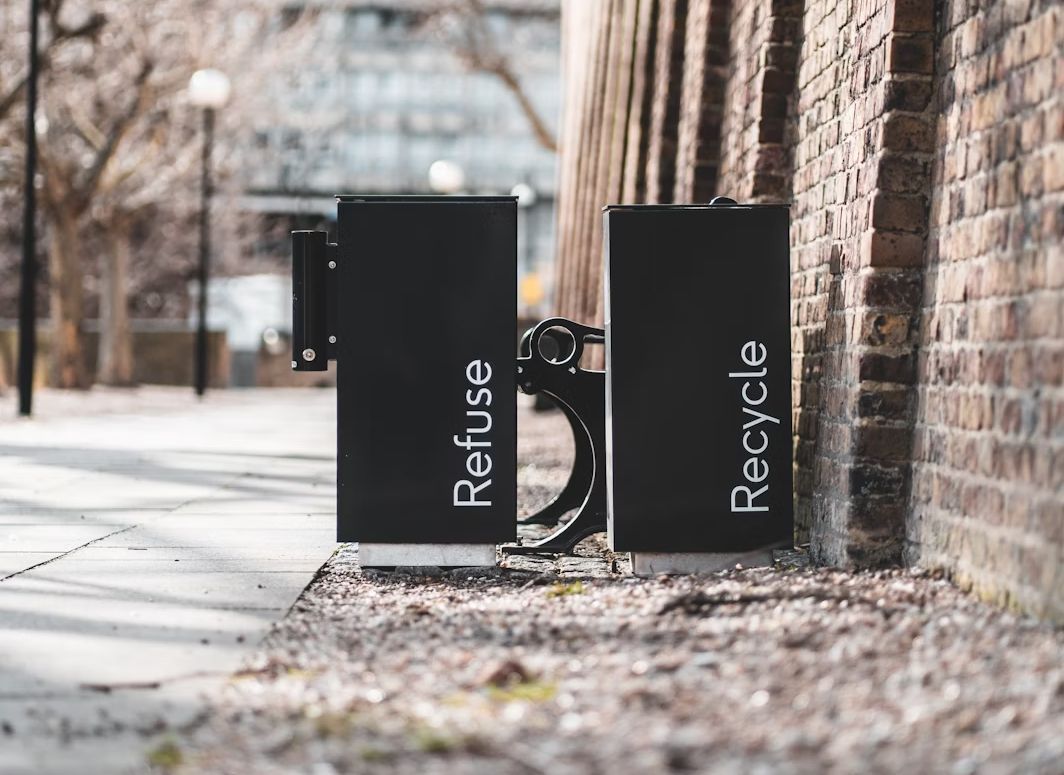
Image: Joshua Lawrence

You might refuse to take out the refuse, and honestly, who can blame you? "Refuse" (reh-FYOOZ) means to decline something, like offers of leftovers or unsolicited advice. "Refuse" (REH-fyoos) is the garbage you’re probably avoiding.

It’s the kind of word pair that hides in plain sight; in any case, both might lead to stinky situations.

10

Present a present and look impressive

Image: Edgar Almeida

There’s something magical about a word that can give a gift and deliver a speech. "Present" as a noun is something you give wrapped with a bow and possibly a gift receipt. "Present" as a verb, and with the accent on the last syllable, means to introduce or showcase something, like an award or a slideshow.

The meanings actually share a root: both involve offering something. But one gets applause, the other gets unwrapped.

11

Produce some produce, please

Image: Shelley Pauls

A grocery-store homograph; when you produce something, you’re creating that thing. But when you shop for produce (accent on the first syllable), you’re looking for fresh fruits and veggies.

Both meanings involve growth, but one is from a creative mind, the other from soil and sunshine.

12

Contract confusion: Sign it or catch it?

Image: Amina Atar

Be careful with this one: you can sign a CON-tract… or con-TRACT the flu. The first one, a noun, is a legal document you agree to. The second one, a verb, means to shrink or to catch something unpleasant, like having a virus or a muscle cramp. Again, pronunciation changes, but spelling is the same. So whether you’re dealing with paperwork or pathogens, just know this word has range. And maybe wash your hands either way.


THINGS TO COME

Retrofuturistic Predictions: 10 Vintage Ideas That Eventually Came True


Published on April 6, 2026


Image: Museums Victoria

Humans love to predict the future. The ability to imagine other possible worlds is probably what makes us human. None of the things we have been able to create throughout history, from pyramids to airplanes, would have been possible without first imagining them. During the 20th century, as the turn of the millennium approached, scientists, writers, and illustrators imagined technological innovations that, if they seemed outlandish at the time, were proven right years later. In this article, we have compiled 10 scientific prophecies that have come true.

1

Artificial satellites

Image: SpaceX

British writer and scientist Arthur C. Clarke not only fascinated the world with his science fiction stories but also anticipated with remarkable accuracy some of the most relevant technological advances in history. In October 1945, Clarke published an article exploring the possibility of using artificial satellites as communication stations.

Clarke predicted that one day communications would be carried by a network of three satellites placed at fixed intervals around the Earth's equator. Two decades later, NASA launched one of the first such satellites. Syncom 3 was used to relay images of the 1964 Olympic Games from Tokyo to the United States, providing the first television transmission across the Pacific Ocean.

2

The Internet

Image: JJ Ying

Today we couldn’t conceive our lives without the Internet. It allows us to communicate with our loved ones over long distances, learn the news as soon as it happens, and it provide us with entertainment at all hours. Many have claimed to have predicted this invention, however, the one who came closest to describing what we know today as the Internet was Serbian American engineer and inventor Nikola Tesla.

In a 1909 interview with The New York Times, he described it almost perfectly. Although the Internet would not be invented until a few decades later, Tesla told the newspaper that in the future people would be able to listen, broadcast, and share speeches, songs, and images to the most remote parts of the planet through inexpensive devices operated from a single station. Pretty accurate, don’t you think?

3

Smartwatches

Image: Luke Chesser

The first smartwatch, as we know it today, was launched in 2004, and it wasn't until 2015 that Apple CEO Tim Cook introduced the Apple Watch. However, this device already existed in the minds of people who imagined an interconnected future as early as the 1940s.

In January 1946, the popular comic strip about police detective Dick Tracy first featured the Two-Way Wrist Radio. The newspaper comic series featured Tracy talking through his watch, a concept that was totally revolutionary at the time. The device became an icon of the comic strip and is said it later inspired American engineer Martin Cooper in the development of the mobile phone.

4

Video Calls

Image: Vanessa Garcia

Between 1899 and 1910, a series of French postcards called "In the year 2000" —generally attributed to an artist named Jean-Marc Côté— attempted to portray what he imagined life might be like in the 21st century.

One of the most accurate predictions was the Cinéma-Phono-Télégraphique, a device very similar to what we know today as video calls. In this illustration, we see the image of a woman projected on a screen while the caller speaks to a receiver.

Throughout the rest of the century, there were several attempts to develop this technology. For example, in 1957, the Hughes company announced the Tonotron, which allowed calls to be made through a sort of television set. In the end, the Tonotron was not commercialized, yet retrofuturism was right in predicting systems such as FaceTime which are now essential to our daily lives.

5

Flying Mail

Image: Goh Rhy Yan

Many of the predictions portrayed in the French postcard series depict various forms of air transportation, most likely influenced by the technological developments that were taking place in the early 20th century. From flying policemen and firemen to air tennis and air hunting, many of these inventions have yet to become a reality, but what is close to happening is flying mail.

Well, to be fair, we're not going to see mailmen delivering letters while mounted on some sort of personal flying saddle reminiscent of the Wright Brothers' early airbikes. However, even though today handwritten letters are almost a thing of the past, we are already starting to see the first autonomous drones delivering packages right up to our doorsteps.

6

Automatic Brooms

Image: Onur Binay

Like flying vehicles, automation is a cornerstone of futurism. Today we have robots that vacuum and scrub our homes and it seems like the most normal thing in the world. But, back in the early 1900s, some masterminds had already envisioned that before the end of the century, we would see electric and almost automatic brooms. These cleaning devices, however, would still depend on a person to give them directions and tell them where they had to clean.

Luckily, technology has surpassed the wildest fantasies of these retro-futurists, and now we can let our trusty vacuum robots do the dirty work while we go out for a walk. Though to be honest, it wouldn't be a bad thing to have a Rosie the Robot who not only cleaned but also talked to us in a Brooklyn accent!

7

Virtual Reality Headsets

Image: Michelangelo Buonarroti

In 1989, Back to the Future (Part II) showed the world an amazingly accurate version of a VR headset, worn by none other than Marty McFly. Today, virtual reality glasses are becoming increasingly popular and are here to stay. But did you know that different authors had already conceived of this idea in the early 20th century?

For example, Pygmalion's Spectacles is a science fiction short story by American author Stanley G. Weinbaum published in 1935. In it, a professor invents a pair of goggles that display a film that can be seen, heard, smelled, touched, and tasted. Not only that, the user becomes part of the story and is no longer a mere spectator. It may not sound like it, but this is not something for a promotional video of Mark Zuckerberg's Metaverse; it is a tale imagined 90 years ago.

8

Remote Education

Image: Gabriel Benois

In December 1960, Arthur Radebaugh, a famous American futurist illustrator, published his vision of what the classrooms of the future would look like. Teachers would no longer have to attend schools and would impart classes to several groups at the same time from a distant location. Each student would have a device with a camera, screen, and keyboard available to participate and ask questions.

Sixty-five years ago these predictions might have sounded far-fetched; however, remote classes through applications such as Zoom have become a reality, especially after the COVID-19 pandemic. Today this is a key resource that allows students to receive education even if they are in distant and remote parts of the world.

9

Solar Homes

Image: Daniele La Rosa Messina

"Don't be surprised if many of tomorrow's homes are built on turntables. They would slowly pivot all day long to receive maximum benefit from health-giving sun rays and ensure heat in winter," reads another Radebaugh illustration published in 1959 in Toronto's The Star Weekly.

While the prediction of rotating houses has not come true, the cartoonist correctly anticipated the idea that homes would begin to harvest solar energy. Today many houses have solar panels installed on the roof providing electricity in a more sustainable way.

10

Personal TV

Image: Matoo.Studio

In 1938, a few years before the first television broadcast, the British company Gramophone Co. announced its "Television Monocle", an individual device that would allow personal, uninterrupted television viewing. The device projected a 1.5 x 1-inch image from a cathode ray tube, which the viewer could see thanks to two mirrors placed inside at 45 degrees.

Although this invention did not prosper, we can consider it an ancestor of one of the many uses we nowadays give to our smartphones. Who hasn't streamed a film or a video on their phone to kill time during a long trip? We have retro-futurists to thank!

Looking for an extra scoop of literary fun?

Learn more with our Word of the day

wondrous

/ˈwəndrəs/