Stories of deceit
"Bah, Humbug!" 10 sneaky words for fakes, frauds, and flimflammers
Published on November 22, 2026

Long before artificial intelligence could put words in a stranger's mouth and call it a "deepfake," humans were deceiving others the old-fashioned way. For example, tricking passersby with fake gold rings or selling rattlesnake oil and other sham medicines. A list that traces terms for scammers is fascinating because they all come from outrageous stories of deception. Read on to explore 10 old terms for old tricks.
Snake oil

"Snake oil" is the classic shorthand for a fake cure, a product sold with grand medical claims but no real value. Originally, snake oil did actually work, though. Chinese immigrants building the transcontinental railroad brought to the U.S. genuine snake oil, made from Chinese water snakes, as a real remedy anti-inflammatory for joint pain and arthritis. American tricksters who had no water snakes at hand saw a business opportunity: selling rattlesnake oil, which delivered none of the benefits.
The reputation collapsed thanks to one man: Clark Stanley, "The Rattlesnake King," who butchered live rattlesnakes onstage at the 1893 Chicago World's Fair, leading to investigators discovering that his liniment was made with mineral oil, beef fat, chili pepper, and turpentine, but not a trace of snake oil.
Humbug

A "humbug" is another term for a misleading pretense. That’s what Ebenezer Scrooge snarled incessantly in Dickens's A Christmas Carol (1843), preceded by an exclamation: "Bah! Humbug!"
Here's the mystery, though: it’s unclear where the word comes from. It exploded onto the scene as student slang at Oxford and Cambridge in 1751, and caught on fast. That same year, a magazine grumbled that young people used it constantly despite not truly granting it a meaning, not unlike expressions that emerge online today among youngsters.
Phony

This may have become a household word for being Holden Caulfield's favorite insult in J.D. Salinger’s The Catcher in the Rye (1951). In the American novel, the hero used it to express his disgust towards the fakery of adult life. Today, we understand it to refer to something counterfeit or insincere.
But its origin goes back centuries. In 18th-century Britain, con artists ran a swindle called the "fawney rig," from the Irish word fáinne (ring). A swindler would drop a cheap gilded brass ring on the ground, "discover" it in front of a target, and convince them it was solid gold, worth splitting. The victim would pay real money for the worthless trinket. The word crossed the Atlantic, and the spelling shifted from "fawney" to "phony."
Con Man

A con man is a swindler who steals not through force but through trust, talking his way into a victim's confidence. The term can be traced to the criminal strategy of one specific man: William Thompson, who worked the streets of 1840s New York, approaching well-dressed strangers, striking up a friendly conversation, then asking the simple question that made him famous: "Have you confidence in me to trust me with your watch until tomorrow?"
His targets, assuming he must be a forgotten acquaintance, frequently handed it right over. Thompson vanished with dozens of watches before his arrest in 1849, when the New York Herald dubbed him "The Confidence Man" in a headline. The phrase was shortened to "con man," and novelist Herman Melville immortalized it eight years later in his novel of the same name.
Deepfake

A deepfake is a video, image, or audio clip manipulated by artificial intelligence to convincingly show someone saying or doing something that never actually happened. It’s often done by swapping one person's face or voice onto another's body.
Unlike every other word on this list, this one has a birth certificate: it was coined in late 2017 by an anonymous Reddit user who went by the username "deepfakes," combining "deep learning," the machine-learning technique behind the technology, with the plain old word "fake." That user built a tool to swap celebrities' faces into videos using open-source AI, and the technique spread fast enough that journalists were writing about it within months.
Charlatan
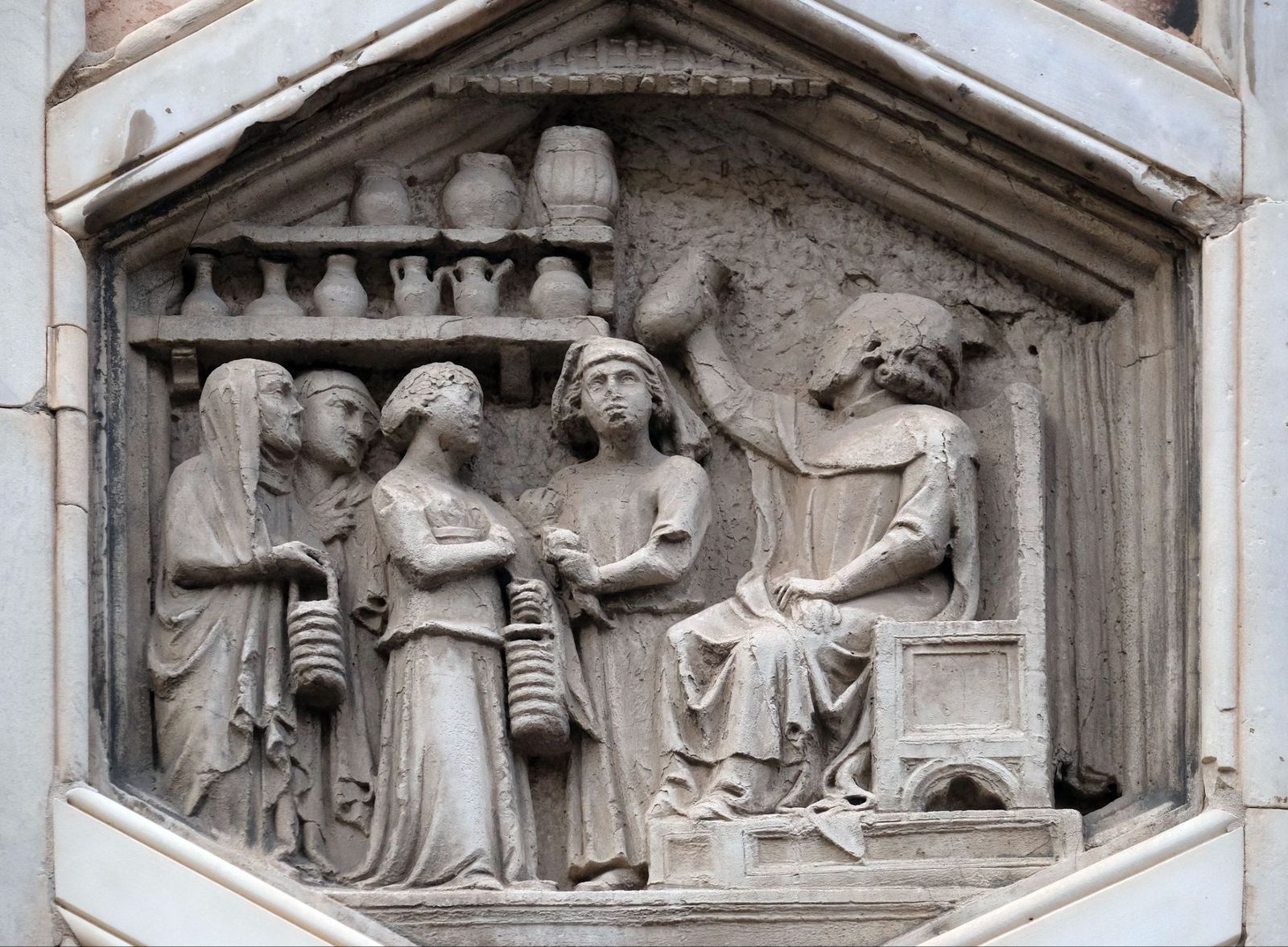
A charlatan is someone making showy, false claims of knowledge or skill they don't actually have. There’s an entire Italian village to blame for the word. In the early 1500s, wandering peddlers claiming medical expertise roamed Italy selling worthless remedies, and many of them hailed from a town called Cerreto.
They were dubbed cerretano, and the word became synonymous with any medical fraud. Locals also noticed these people shared a nonstop, chattering speech to reel in customers. That habit collided with the Italian verb ciarlare ("to chatter"), reshaping the word into ciarlatano. English speakers anglicized it to "charlatan" by the early 1600s.
Hoax
A hoax is a deliberate deception dressed up as truth. It can be elaborate, theatrical, and usually designed to make a fool of the believer. The word likely descends from "hocus pocus," the nonsense incantation 17th-century stage magicians used to distract audiences while performing hand movements. By the late 1700s, "hocus" had shortened further into "hoax."
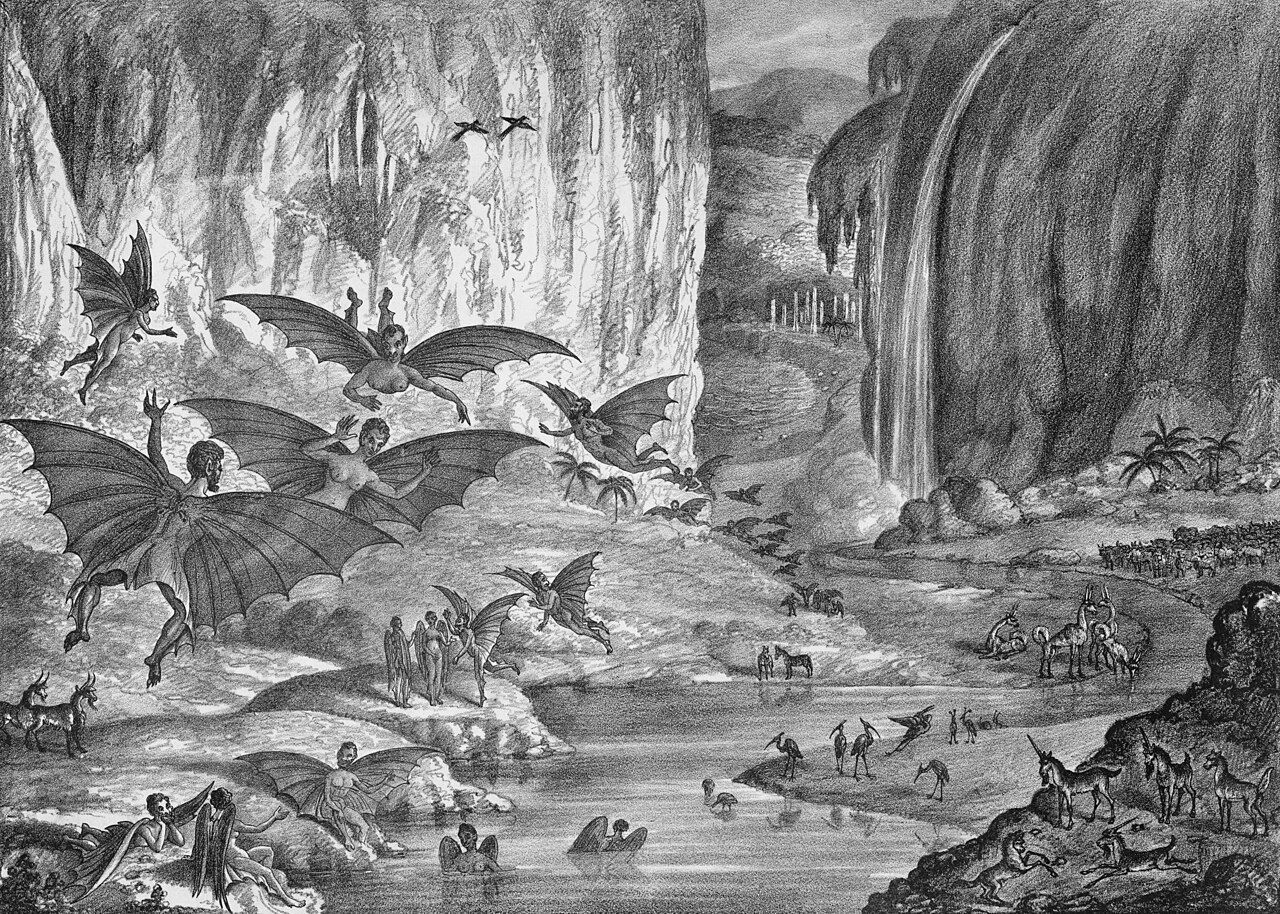
An example of a legendary hoax came in 1835, when the New York Sun ran a series of articles, complete with an illustration, claiming an astronomer had found bat-winged humanoids and blue unicorns living on the moon. This was called the "Great Moon Hoax." Even a delegation of Yale scientists traveled to New York demanding the original scientific journal, not realizing until later that they were chasing a fake story.
Sham

Most etymologists believe "sham" is simply a Northern English dialect pronunciation of "shame," or what a con artist ought to feel but rarely does. It entered English around the 1600s, describing a trick or hoax, and then grew into an adjective for anything false or pretended.
In 1721, it was incorporated to name "pillow-shams," decorative fabric covers meant to disguise ordinary pillows as something fancier, like an innocent domestic deception. Today, we still use "sham" mainly to refer to fraudulent people or schemes.
Mounterbank

A mountebank is a fast-talking fraud who offers fake cures or empty promises, usually with a showman's flair. The word comes straight from the Italian command monta in banco, meaning "mount the bench," because that's exactly what these medicine peddlers did: climbing onto a bench or platform to tower over the crowd, project their voice, and make spectacular sales pitches.
The word crossed into English in the late 1500s and stuck to anyone selling miracle cures with showmanship. Many mountebanks traveled with a hired clown as a warm-up act to draw a crowd before the pitch began. Even "bank," the financial institution, descends from that same word for bench, once used by money-changers.
Fabulist

A fabulist is a storyteller of a very particular kind: someone who spins untrue tales. The word traces back to the Latin fabula, meaning story or tale, itself rooted in fari, which simply means "to speak." It entered English in the 1590s to describe writers of fables, moral animal stories in the tradition of Aesop.
In 1998, rising star reporter Stephen Glass was exposed for fabricating dozens of articles at The New Republic, complete with fake notes, faxes, and even a fake website to fool his editors. He later wrote a novel about a lying journalist, titled The Fabulist.