Trimming our vocabulary

Americans say 'soccer' instead of 'football' for this reason


Published on June 7, 2026

Image: Megan Watson

Have you ever wondered why we say ‘fab’ for fabulous, or ‘uni’ for university? A natural characteristic of most languages is that speakers, even if they don't realize it, try to say the most amount of things with the least amount of words possible. This can be done in many ways, including by shortening the word to its smallest form. While in some cases the short and the long versions are used at the same time, many terms that we don’t think twice about actually have a longer version. Keep on reading to discover the original form of these everyday words.

1

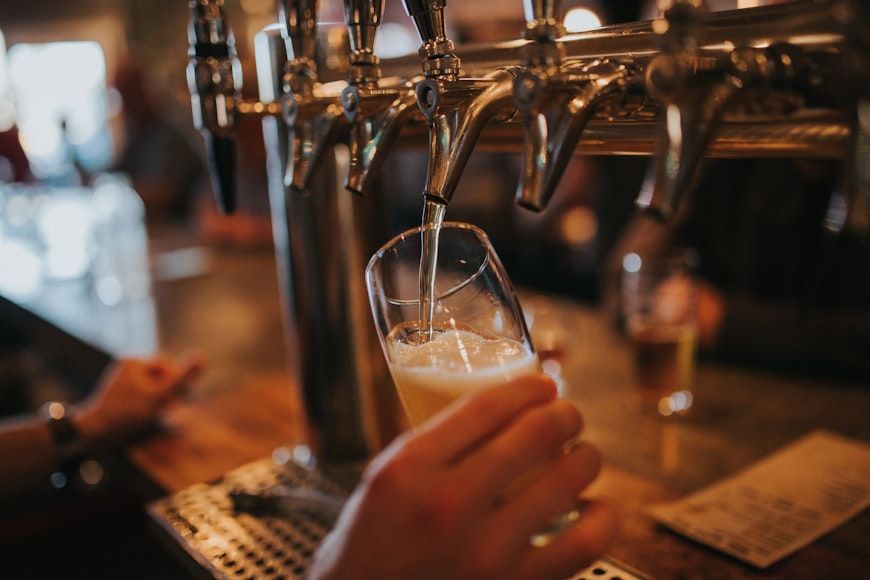
Pub

Image: Amie Johnson

Public establishments dedicated to selling alcohol are as old as time and have gone by several names over the centuries. In English, taverns, alehouses, and inns existed way before the word ‘pub’ was in use. Where did it come from, then? In the 17th century, the term ‘public house’ began to be used to distinguish these establishments from private houses and residences, and the shortened version of ‘pub’ was registered for the first time in 1859.

2

Bus

Image: CHUTTERSNAP

Buses weren't always machines. The first recorded bus dates back to 1823 in Nantes, France, where a horse-drawn carriage service transported passengers to the public baths. The service was called Omnes Omnibus, Latin for ‘everything for everyone’. The omnibus part remained and was adopted into English to refer to public transport, later shortened to ‘bus’.

3

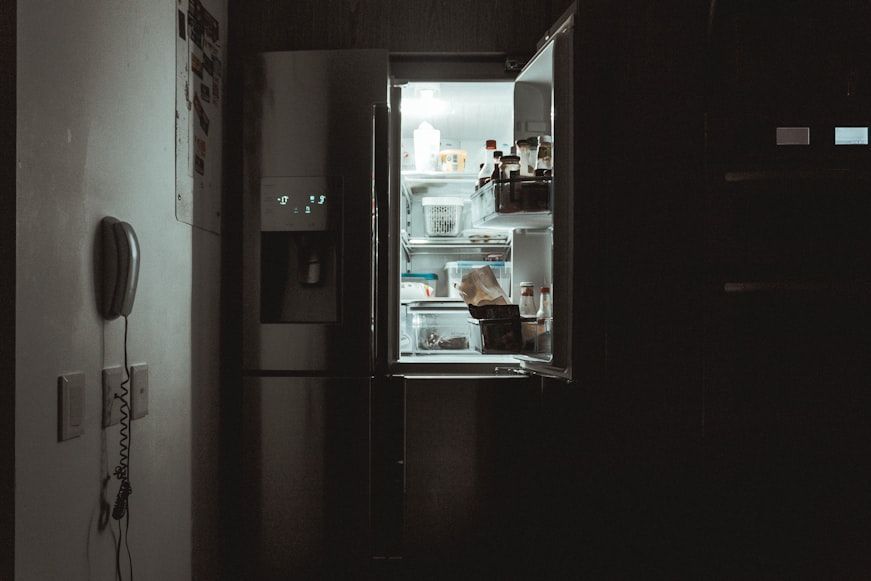
Fridge

Image: nrd

While we still use the full word ‘refrigerator’ in English, ‘fridge’ is now a word in its own right. But how did it get to that form? As modern refrigerators became increasingly more common in the 20th century, people started shortening their name to ‘frig’, but this form sounded harsher than the original. To capture the sound of the g in ‘refrigerator’, writers started writing the word as ‘fridge’, mirroring the spelling of words like ‘bridge’ or ‘lodge’.

4

Soccer

Image: Emilio Garcia

Many think that Americans use the term soccer because a sport named football was already popular in the U.S., and they are only half right. Originally, there were several sports named football: Rugby football (now, just rugby), Association football (soccer), and Gridiron football (football). In the late 19th century, English students started shortening Association football to ‘assoc’ and then to ‘soccer’, a name that became popular and coexisted with the term ‘football’ for a long time. While ultimately ‘football’ became the more widespread term for the sport, in America, due to the popularity of Gridiron football, the name ‘soccer’ remained.

5

Perk

Image: Markus Winkler

The word ‘perk’ has many meanings, but not all are a shortened version of another word. The word ‘perquisite’ comes from the Latin perquisitum, meaning ‘something carefully sought or acquired’. In the 19th century, it was shortened to ‘perk’, which has now evolved to mean a benefit or an extra, usually related to a job or salary.

6

Miss

Image: Christopher Campbell

While ‘mistress’ often has a negative connotation in modern English, this was not always the case. Originally, ‘mistress’ was the feminine version of ‘master’, as in ‘the head of a household’. Around the 1600s, it was shortened to ‘miss’, and both ‘mistress’ and ‘miss’ were used for the lady of the house. Eventually, ‘miss’ came to be used for young, unmarried ladies, while ‘mistress’ evolved into ‘Mrs’ (pronounced missus).

7

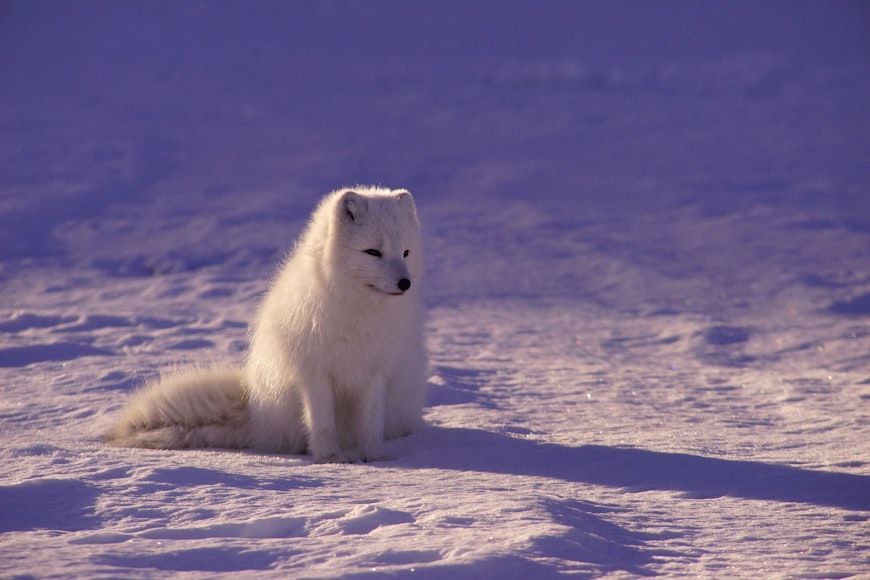
Cute

Image: Jonatan Pie

Have you ever heard the word ‘acute’ used to describe a sharp pain or a sharp-witted person? Believe it or not, it is related to the word we use to talk about charming and pretty things and people. While acute —and its shortened version, ‘cute’— originally meant ‘perceptive’ or ‘sharp’, it became a slang word for clever, fetching, or pretty things in the 19th century. Eventually, the meaning broadened to include physical appearances.

8

Girl

Image: Leo Rivas

Middle English had many gender neutral terms to refer to people —think ‘child’ or ‘sibling’, for example— and ‘girl’ was one of these terms. Originally gyrle or girle, it was used to describe any small child, regardless of their sex, and adjectives were added to specify if it was male or female. Around the 15th and 16th centuries, the meaning shifted to refer to young females, while also becoming an affectionate term for women of all ages.

9

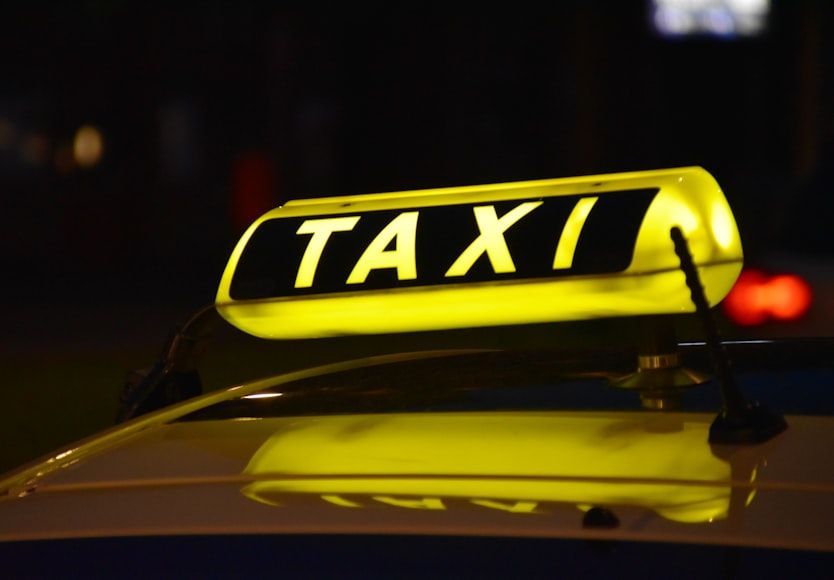
Taxi and Cab

Image: Waldemar Brandt

‘Taxi’ and ‘cab’ are used interchangeably for a vehicle with a hired driver, and many people have at least once heard the term ‘taxicab’, now practically obsolete. But what if we tell you that taxicab is not the original term either? A taximeter (a mix of taxa, ‘charge’, and metron, ‘measure’) was an instrument used to measure and determine a fare, while a cabriolet was a light, horse-drawn carriage. The first automatic taximeter was invented in Germany in 1891, and attached to horse carriages and later to automobiles. These vehicles were initially called taximeter cabs, then taxicabs, and ultimately just taxis or cabs.

10

Prom

Image: Shayna Douglas

Ask any high school student, and most of them will agree that prom is a major rite of passage of adolescence. This tradition is derived from high society formal dances that gave young people the opportunity to practice their social skills and make acquaintances. But what does ‘prom’ mean? The original term is ‘promenade’, a word you may recognize in relation to walkways and avenues, a French term used for a leisurely walk or stroll. In high society events, ‘promenade’ was used for the initial formal parade of the guests, which gave them the chance to show off their attire. Eventually, it came to refer to the event itself.


SPACE ODDITIES

10 Bizarre Objects Humans Sent Into Space


Published on June 7, 2026


Image: NASA

Space exploration has propelled humanity into the cosmos, but along the way, we've also flung a bunch of bizarre objects at high velocity into the cold void of space.

From cultural artifacts to scientific experiments gone wrong, here are 10 weird things we've launched beyond Earth's atmosphere.

1

Pizza

Image: Alan Hardman

In 2001, Pizza Hut made history by becoming the first company to deliver pizza to space. They sent a vacuum-sealed pizza to the International Space Station (ISS) aboard a resupply mission, allowing astronauts to enjoy a taste of home among the stars.

As NASA has a restrictive policy regarding advertising and product endorsement, Pizza Hut had to turn to Roscosmos, paying the Russian agency $1 million to display their logo on the side of their rocket and deliver a shrink-wrapped salami pizza to cosmonaut Yuri Usachov.

2

Tardigrades

Image: Schokraie E, Warnken U, Hotz-Wagenblatt A, Grohme MA, Hengherr S, et al. (2012), CC BY 2.5

These microscopic creatures, also known as water bears, are incredibly resilient and can survive extreme conditions, including the unforgiving vacuum of space. Since 2007, tardigrades have been sent into space onboard various scientific missions, and in November 2011, an Israeli lunar lander accidentally crashed on the Moon’s surface, potentially spilling around thousands of tardigrades in a cryptobiotic state that were part of the mission’s payload.

Whether these tough little beings have survived the impact is anyone’s guess, but if there’s a terrestrial species capable of withstanding the harshest environments, it’s them.

3

Buzz Lightyear

Image: Brian McGowan

In 2008, Disney and NASA collaborated to send a toy replica of Buzz Lightyear, the fictional space ranger from the movie "Toy Story," to the ISS. The toy spent 15 months aboard the station as part of an educational outreach program before returning to Earth.

And after returning to Earth, Buzz Lightyear got to meet its legendary namesake, Buzz Aldrin, who "coached" it for future space missions. The spacefaring toy was eventually donated to the Smithsonian Institution, where it now resides.

4

LEGO Figurines

Image: Daniel K Cheung

People seem to love sending LEGO figurines on the craziest adventures, whether it’s strapping them to weather balloons, miniature submarines, or even on a mission to Jupiter! A partnership between NASA and LEGO in 2011 resulted in the creation of a very special set specifically designed for space travel. Three figurines representing statues of Galileo Galilei and the Roman gods Jupiter and Juno were sent onboard NASA’s Juno Mission towards the gas giant.

5

Tesla Roadster

Image: Vlad Tchompalov

In 2018, SpaceX made headlines when they launched Elon Musk's personal Tesla Roadster into space aboard the company’s Falcon Heavy rocket. The car was piloted by a mannequin dubbed "Starman," and it served as a dummy payload to test the rocket's capabilities without endangering a real (and potentially more costly) payload.

Named after a David Bowie song, the mannequin and its shiny convertible will remain in a heliocentric orbit for millions of years, an enduring testimony to humanity’s ingenuity and sense of humor.

6

Dinosaur Fossils

Image: Jesper Aggergaard

Surprisingly, not even dinosaurs are safe from being sent into space! In 1985, fossil bits from Maiasaura peeblesorum, a duck-billed dinosaur, visited the Mir space station onboard the shuttle Endeavor. And in 2014, a Tyrannosaurus fossil was launched into space as part of NASA’s Orion spacecraft test flights. More recently, Jeff Bezos' spaceflight company Blue Origin sent hundreds of 70 million years old Dromaeosaurus fossil fragments on a suborbital trajectory, as part of its "Club for the Future'' initiative.

7

A Literal Block of Cheese

Image: Alexander Maasch

It seems like SpaceX might send just about anything to space, as in 2010 it launched a wheel of cheese as part of a secret payload onboard the company’s Dragon space capsule. The only reason it was kept secret is because SpaceX’s CEO Elon Musk didn’t want to overshadow the success of the test flight.

The wheel of cheese is a - although debatable - reference to a classic skit from the British comedy show Monty Python's Flying Circus where John Cleese tries to order cheese from a "cheeseless cheese shop." While the joke might not have landed as well as in Elon’s head, the wheel of cheese certainly did, safely returning to Earth along with the company’s space capsule.

8

Luke Skywalker's Lightsaber

Image: superneox lightsaber

Of course, a real lightsaber should be rigorously space-tested, or at least that’s what anyone who has seen Star Wars would expect. As part of an educational program, in 2007, NASA carried one of the actual Luke Skywalker lightsaber props used in the movies aboard the Discovery space shuttle. The "elegant weapon for a more civilized age" spent a total of 14 days in orbit before successfully returning to Earth - and to George Lucas’s hands.

9

Space Whisky

Image: Vinicius amnx Amano

Who'd have thought there was room for whisky research in space? In 2011, a Scotch distillery named Ardbeg sent samples of its whisky to learn how microgravity would affect the maturation process of their spirit, with the goal of improving whisky production back on Earth. Interestingly, after spending nearly three years in space, Ardbeg’s director of distilling claimed that the samples tasted noticeably different from their terrestrial counterparts, likely due to how microgravity affects the process of oak flavoring that is essential for making scotch.

10

A Nuclear-propelled Manhole Cover

Image: Mick Haupt

Yes, you read that right. According to some sources, the first object sent into space - even before Sputnik - was in all likelihood a manhole cover that was accidentally launched at turbocharged speed during Operation Plumbbob, one of the earliest nuclear tests conducted by the U.S. government in the 1950s.

Robert Brownlee, one of the scientists who worked on Operation Plumbbob, maintains that the accidental spacecraft was propelled at five times the escape velocity of the Earth (around 125,000 miles per hour) during the nuclear blast, seriously dwarfing the speed of any intentional spacecraft made by humanity so far. In fact, it was going so fast that it wouldn't have time to burn up in the atmosphere, and some argue that it carried enough momentum to actually leave the Solar system entirely.

Looking for an extra scoop of literary fun?

Learn more with our Word of the day

wiseacre

/ˈwaɪzˌeɪkər/