No, Atlantis is not on this list

A country named after a drowned dog? 10 countries’ names explained


Published on October 19, 2025
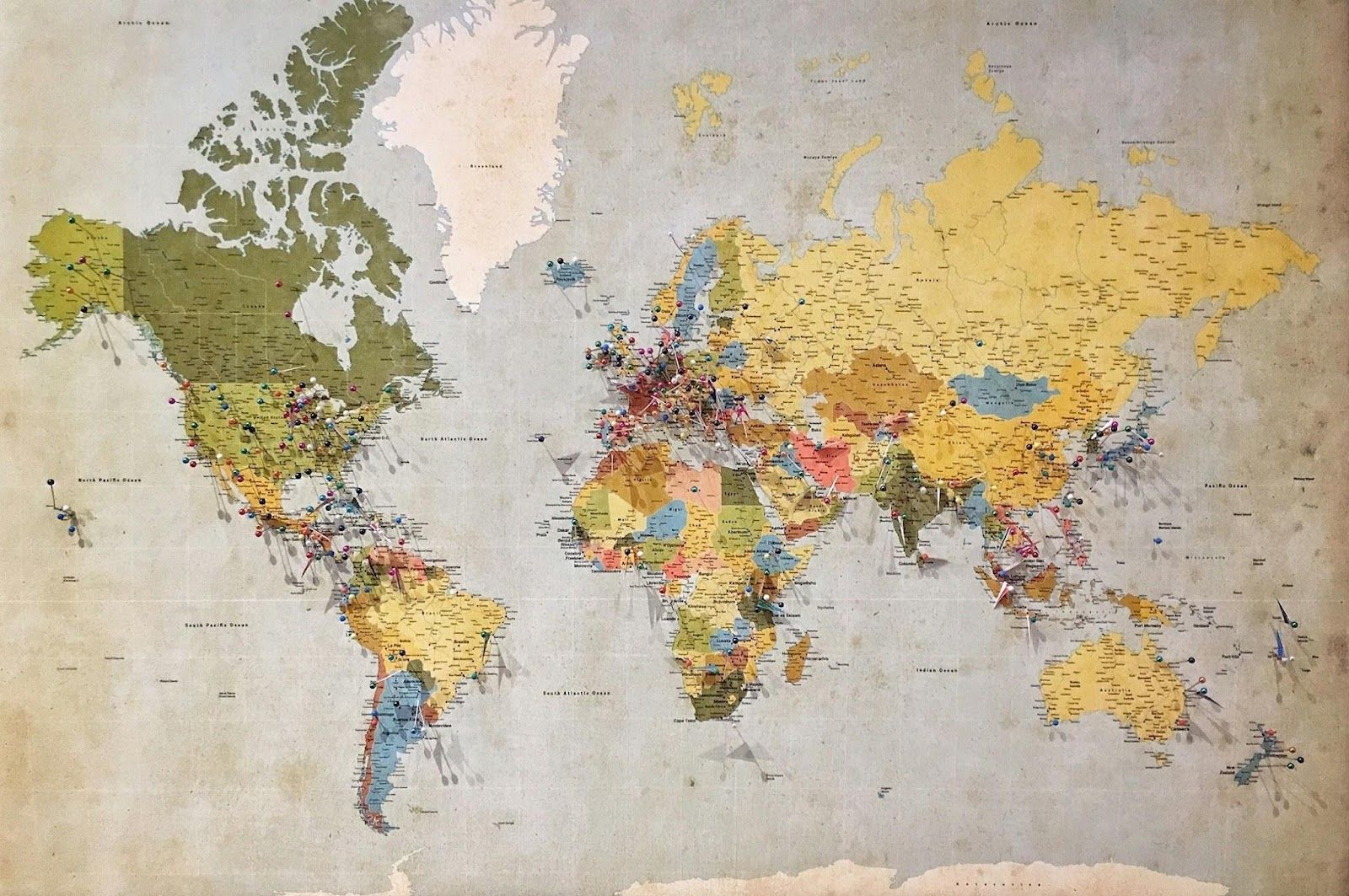

Image: Andrew Stutesman

Some things are never questioned simply because they’ve always been that way. But even countries have origins—and so do their names. Some names are quite straightforward from the beginning: The United States of America is exactly that—a union of states in America. But others, like Brazil or India, are not quite as simple. Scroll on to learn about the origin of ten countries’ names. You might just pick up a cool little fact to share with your friends.

1

Canada

Image: Xavier von Erlach

It might seem curious that a country so vast is named after a small settlement—but it is. The name Canada likely comes from the Huron-Iroquois word kanata, meaning "village" or "settlement." The first official use of Canada as a name came in 1791, when the Province of Quebec was divided into the colonies of Upper Canada and Lower Canada. In 1841, the two colonies were united under a single name: the Province of Canada.

Then, on July 1, 1867, the provinces of Canada, Nova Scotia, and New Brunswick joined to form "one Dominion under the name of Canada."

2

Argentina

Image: Scottsdale Mint

This South American country’s name first appeared on a Venetian map in 1536. Argentina means "(made) of silver" or "silver-colored" in Italian, derived from the Latin argentum, meaning silver. The name was originally associated with the legend of the "Silver Mountains," which was widespread among the first European explorers of the La Plata Basin.

In 1860, a presidential decree officially established the country’s name as the Argentine Republic, and that year’s constitutional amendment recognized all names used since 1810 as legally valid.

3

Spain

Image: Fidel Fernando

A close connection with rabbits is probably not the first thing that comes to mind when you hear the word Spain. But that connection plays a role in the origin of the country’s name. The earliest version, Hispania, is believed to have come from the Phoenician word i-spn-ya, which the Romans interpreted as "land of rabbits" or "region rich in rabbits."

Other theories suggest that Hispania may derive from a Punic word meaning "land of metals" or from an Iberian or Basque root referring to the region's geography, but rabbits is the widely popular theory.

4

Norway

Image: Vincent Guth

Norway’s name origin makes sense—it comes from the Old English word Norþweg, first mentioned around 880, meaning "northern way" or "way leading to the north." This is how the Anglo-Saxons referred to the Atlantic coast of what is now Norway. The same idea aligns with the leading theory about the origin of the country’s name in the Norwegian language.

5

India

Image: Nathan Anderson

The name India is derived from a corruption of the word Sindhu, the ancient name of the Indus River. Neighboring peoples, particularly the Persians, pronounced the "s" as "h" and referred to the land as Hindu. The Greeks later adapted this to Indos, which led to the Latin India.

The name India was known in Old English, but under French influence, it was sometimes replaced by Ynde or Inde. The form Indie appears in the first edition of the King James Bible and the works of William Shakespeare, both from the late phase of Early Modern English.

6

Australia

Image: Bob Walker

Quite fittingly, the name Australia is derived from the Latin australis, meaning "southern," and specifically from the hypothetical _Terra Australis_—a "southern land" postulated in pre-modern geography.

The name was popularized by the explorer Matthew Flinders in 1804, and it has been in official use since 1817, replacing New Holland, an English translation of the Dutch name first given in 1643 to the continent.

7

Cameroon

Image: note thanun

The name of this Central African republic comes from the name given by the Portuguese to the Wouri River, which they called Rio dos Camarões, meaning "river of shrimps" or "shrimp river," in reference to the once-abundant Cameroon ghost shrimp. Today, the country’s name in Portuguese remains Camarões.

8

Brazil

Image: niko photos

This beautiful country takes its name from the pau-brasil tree, which was once plentiful in its coastal forests. Pau is a colloquial Portuguese word for "wood" or "tree," and brasil comes from brasa, meaning "ember"—a reference to the tree’s reddish sap, once used for dyeing cloth. Today, the wood of the pau-brasil is prized for making cello and violin bows.

9

Greenland

Image: Jeremy Cai

Someone who has never seen a picture of Greenland could be forgiven for thinking the country is covered in green, lush pastures—after all, the name implies just that. So how did this ice-covered island come to be called Greenland? It got its name from the Norwegian adventurer Erik Thorvaldsson, better known as Erik the Red, in 985 A.D.

The popular explanation is that the name was a kind of public relations strategy to encourage settlement. However, ice core and mollusk shell data indicate that between 800 and 1300 A.D., the island’s temperatures were considerably warmer than they are today—so perhaps Erik was simply reacting to a greener landscape that has long since vanished.

10

Moldova

Image: Ariana Prestes

Moldavia was a historic principality along the Danube River, ruled successively by the Ottomans, the Russians, and the Romanians before becoming the Moldavian Soviet Socialist Republic after World War II. After the dissolution of the Soviet Union in 1991, it adopted the name Moldova, after the Moldova River.

Local lore attributes the name to a Transylvanian prince whose favorite hunting dog, Molda, drowned in the river. While this makes for a charming origin story, the name more likely derives from a Proto-Indo-European root, melh, meaning "dark," or from the Gothic word mulda, meaning "dust."


Clear your calendar and learn a few fun facts

How did the months get their names? An ancient Roman legacy


Published on October 19, 2025


Image: Kyrie kim

A calendar is a system of time measurement based primarily on the seasons of the year. The one we use today is called the Gregorian calendar and is the result of a long process of evolution that began with ancient civilizations. So, when and by whom were the months of the year named? Here’s a hint: The Romans are largely responsible for how we organize time, so it’s not surprising that the current names of the months have much to do with their culture. Join us as we explore the origins of the names of the 12 months of the year!

1

January

Image: Glen Carrie

January owes its name to Janus (Ianuarius in Latin), the Roman god of doorways, changes, beginnings, and endings. Janus was depicted with two faces—one looking to the past and the other to the future—making him the perfect deity to mark the start of the year.

Janus symbolized not only the passage of time but also transformation and transitions. His association with doors and portals reflected the idea of opening new paths and closing old cycles. In Roman tradition, January was a month dedicated to reflection and preparation for the challenges of the year ahead, a concept that endures to this day.

2

February

Image: Boris Pavlikovsky

February, the second month of the year, traces its roots to the purification rituals of ancient Rome. During this month, the Romans observed the _Februa_—ceremonies meant to cleanse the city of evil spirits and prepare the community for the new annual cycle. As a result, February’s name comes from the Latin februare, meaning "to purify."

The Romans regarded this month as a time to resolve conflicts, settle debts, and restore order. Thus, the origin of the name February is closely tied to the concepts of healing and renewal.

3

March

Image: Polina Kovaleva

You probably already know this one—the third month of the year is named after Mars, the Roman god of war. In ancient Rome, March marked the start of the military campaign season when legions prepared to conquer new territories. The name of this month reflects Mars’ significance in Roman culture—not only as the god of war but also as a protector of agriculture and fertility.

Additionally, Mars was associated with spring and the rebirth of nature. March symbolized the return of life after winter, a time of renewal and vitality. As a result, the meaning of March is linked to both war and rebirth.

4

April

Image: Bich Tran

The origin of April's name is less clear. However, it is widely believed to come from the Latin aperire, meaning "to open," in reference to the blooming of plants and flowers during this month. Others suggest it derives from Aphrodite, the Greek equivalent of Venus, the Roman goddess of love and fertility.

In any case, April is a month long associated with beauty, spring, rebirth, and fertility. During this time, the Romans held rituals and festivals in honor of Venus to ensure good harvests and prosperity. April’s connection to fertility and the awakening of nature has remained deeply rooted in popular culture ever since.

5

May

Image: Tara Winstead

May’s origin is uncertain, but it is widely believed to come from the name of Maia, a Roman earth goddess. Maia, one of the Pleiades—the daughters of Atlas—was associated with the flowering of nature and the beginning of the agricultural season.

However, the fifth month of the year is also linked to the elderly, as the Latin word maiores means "ancestors" or "elders." In Roman tradition, May was a time to honor older generations and recognize their wisdom and experience. This dual significance—as a month of fertility and reverence for elders—reflects the cultural and symbolic richness of the Roman calendar.

6

June

Image: Boris Pavlikovsky

June, the sixth month of the year, is dedicated to Juno, the Roman goddess of marriage and childbirth. Her name is believed to derive from the Latin iuniores, meaning "young," highlighting her influence over both marriage and the younger generation.

Festivities in Juno’s honor during this time of year often included marriage ceremonies and protective rituals for women. Because she was believed to bless marital unions, June was considered an especially auspicious month for weddings. June's association with youth and marriage has left a lasting impression on Western culture, and it is still a popular month for weddings and engagements.

7

July

Image: Glen Carrie

The Gregorian calendar was not only influenced by mythology but also by key historical figures. For example, July is named after Julius Caesar, one of the most significant political and military leaders of ancient Rome.

July symbolizes Caesar’s power and authority, as he was responsible for implementing the Julian calendar—a system that provided a more accurate solar cycle than its predecessor. This reform was crucial for maintaining a stable calendar and laid the foundation for the later adoption of the Gregorian calendar we use today.

8

August

Image: Glen Carrie

August was named after another Roman emperor, Augustus Caesar. Originally called Sextilis, this month was renamed in honor of Augustus to recognize his achievements and his role in consolidating the Roman Empire. Under his rule, Rome reached its greatest expansion and prosperity, which justified its inclusion in the calendar.

However, August was not always as we know it today. Originally consisting of 30 days, an extra day was later added to match the length of July, ensuring that both months named after Roman leaders had equal days.

9

September

Image: SHVETS production

The months from September to December reflect their positions in the original 10-month Roman calendar. For example, September comes from the Latin septem, meaning "seven."

Today, in the Northern Hemisphere, September marks the beginning of autumn and the return to school. However, in ancient Rome, it was a 29-day month dedicated to the Ludi Romani, the "Roman Games." Over time, some sought to rename it. To give you an idea, Emperor Caligula wanted to rename September Germanicus after his father, a general and politician, although his idea never prospered.

10

October

Image: Monstera Production

October gets its name from the Latin octo, meaning "eight," because it was the eighth month in the original Roman calendar. Like today, October had 31 days and marked the end of military campaigns that had begun in March. It was also a month under the protection of the god Mars.

As with September, several Roman politicians sought to change October’s name. Wanting to follow in the footsteps of his predecessors, Augustus and Julius Caesar, Emperor Domitian didn’t want to be left out. Late in the first century AD, he renamed October Domitianus. Unfortunately, this moniker didn’t survive his death. After several attempts to change it, October’s name finally stuck.

11

November

Image: Rahul Pandit

You probably know the drill by now. Since November was the ninth month of the old Roman calendar, its name comes from the Latin term novem, meaning "nine."

But did you know what this month was called in Old English? It was named Blōtmōnað, or "blood month," because it was the time when animals were sacrificed and stored for food before winter.

12

December

Image: Boris Pavlikovsky

Ah, December—the last month of the year, the beginning of winter, and the close of the holiday season. But in Roman times, it was the tenth month of the calendar, and thus named after the Latin word for "ten," decem.

Are you curious about what it was called in Old English? The early Germanic people referred to this period as yuletide, alluding to the ancient pagan holiday they celebrated around the winter solstice, which became an ancestor to Christmas.

Looking for an extra scoop of literary fun?

Learn more with our Word of the day

loot

/lut/