Well, actually…

Make a double check, your favorite quote might be a fake


Published on October 29, 2025
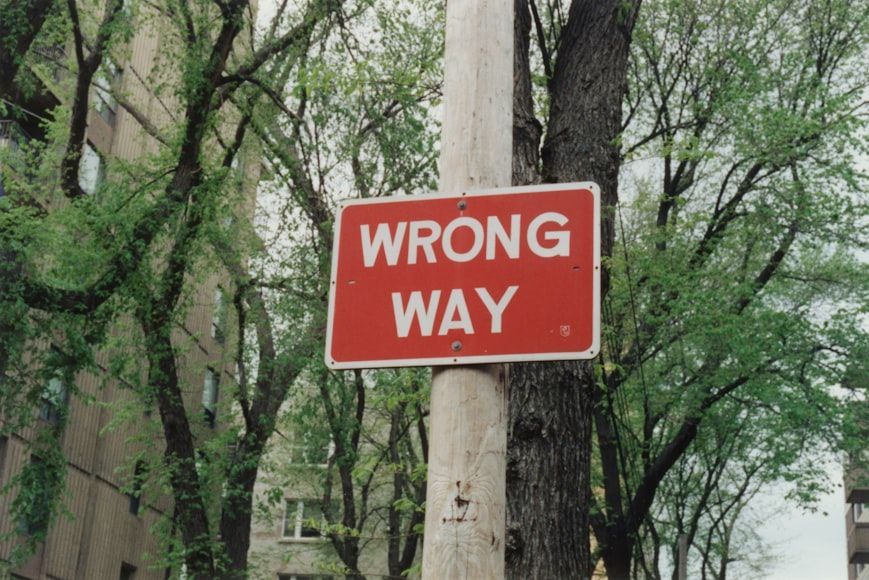

Image: Randy Laybourne

Popular quotes are a good way to condense the ideas of a famous figure or to quickly make a reference to our favorite film or book. But we might not realize that many phrases embedded in society’s collective memory are actually misquotes or wrongly attributed to someone else. These are 12 examples of popular misquotes.

1

Let them eat cake

Image: Armand Khoury

If you were to ask who said this phrase, most people would answer Marie Antoinette. However, that would be incorrect. The original phrase—_"Qu'ils mangent de la brioche,"_ or _"Let them eat brioche"_—was attributed by Jean-Jacques Rousseau in his Confessions to an unnamed princess. How do we know it wasn’t Marie Antoinette? She was only nine years old at the time and still living in Austria.

2

Luke, I am your father

Image: Piotr Makowski

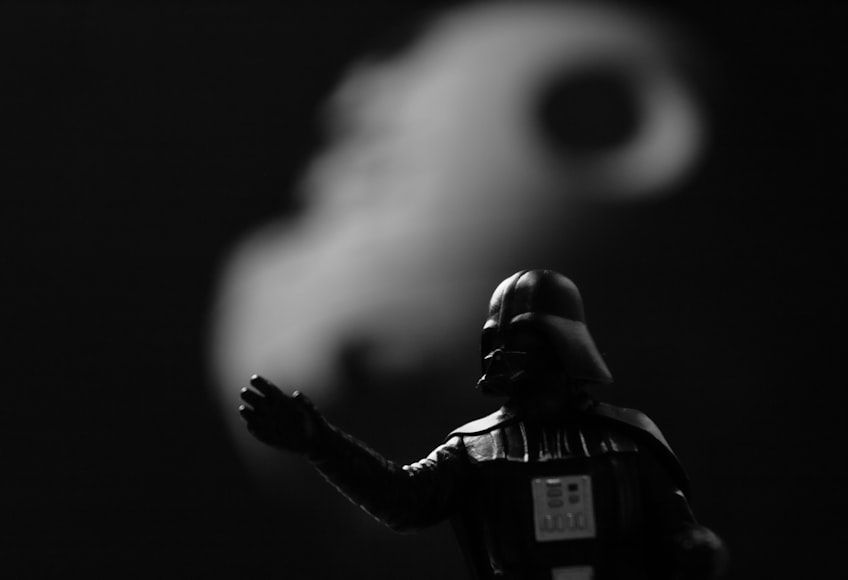
Darth Vader’s most quoted line never existed in that form. In The Empire Strikes Back, Luke accuses Darth Vader of murdering his father, based on what Obi-Wan Kenobi told him. Darth Vader’s actual response—_"No, I am your father"_—has since lived on as a misquote in the collective memory.

3

Et tu, Brute?

Image: tommao wang

Historians disagree about the last words spoken by Julius Caesar. Some say he remained silent after an initial cry of surprise, while others report that he spoke in Greek to his friend Brutus, saying Καὶ σύ, τέκνον ("You too, child"). The famous _"Et tu, Brute?"_—which can be translated as "And you?" or "You too, Brutus?"—first appeared in Caesar Interfectus by Richard Edes, but was later popularized by William Shakespeare’s Julius Caesar.

4

The ends justify the means

Image: Marius Teodorescu

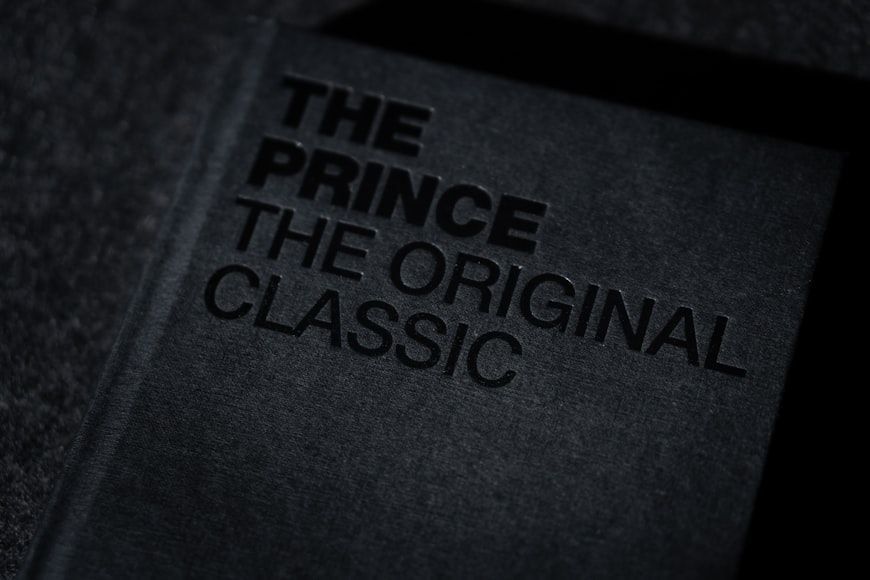
While this phrase is often associated with Niccolò Machiavelli’s ideology, he never actually said it. In his works, Machiavelli argued that rulers might sometimes need to resort to questionable means to ensure the greater good. He emphasized that one can never fully know a person’s intentions, so it is better to judge them by the results of their actions.

5

And yet it moves!

Image: Matthew Ansley

According to legend, while on trial for teaching heliocentrism—at the time not scientifically proven and considered contrary to biblical teaching—Galileo Galilei famously declared "E pur si muove!" ("And yet it moves!"), meaning that the universe does not bend to belief. Although the phrase is attributed to Galileo, it was first recorded at least a century after his death, with no evidence of it being veridical.

6

Play it again, Sam

Image: Hans-Jürgen Weinhardt

Casablanca is one of the undisputed classics of cinematic history, and it has frequently been quoted and used as inspiration. However, one of its most famous phrases—"Play it again, Sam"—is actually a misquote. Ingrid Bergman’s character says both "Play it once, Sam, for old times’ sake" and "Play it, Sam. Play ‘As Time Goes By’" but the misquote became popular after Woody Allen’s play, later adapted into the film Play It Again, Sam.

7

Be the change you wish to see in the world
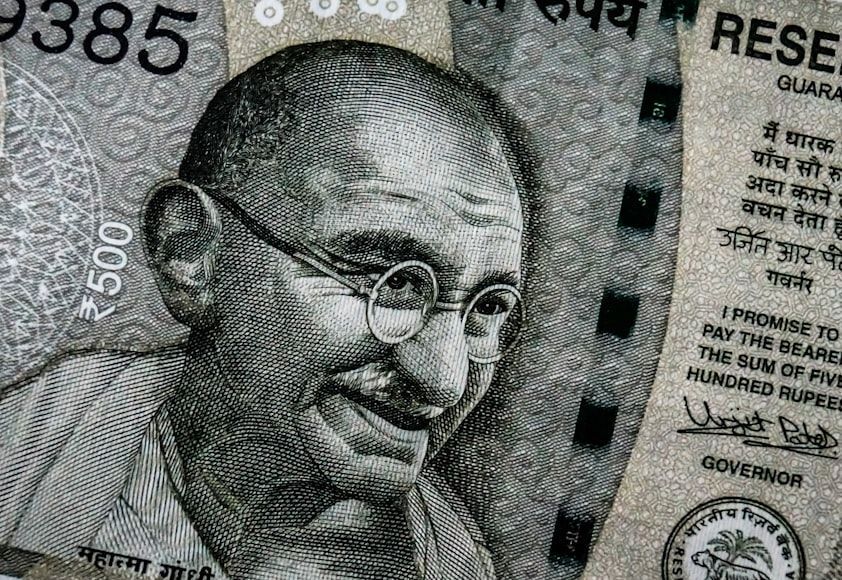
Image: Ishant Mishra

This lovely quote, often attributed to Mahatma Gandhi, is another example of a phrase mistakenly linked to a famous figure. Gandhi expressed a similar sentiment in his writings—the idea that change must begin with oneself—but the exact wording is not his. The phrase is more accurately attributed to Arleen Lorrance, a 1970s educator.

8

I disapprove of what you say, but I will defend to the death your right to say it.

Image: Chris Lawton

In the early 20th century, Evelyn Beatrice Hall published The Friends of Voltaire, a biography of the French philosopher. In it, as a way to illustrate Voltaire’s beliefs on freedom of speech, she penned the phrase: "I disapprove of what you say, but I will defend to the death your right to say it." The maxim was such a good synopsis of Voltairian ideals that most people came to believe it was a direct quote from him.

9

Houston, we have a problem.

Image: NASA

On April 13, 1970, the Apollo 13 spacecraft had to abort its mission due to the explosion of an oxygen tank. Astronaut Jack Swigert first reported the issue with the words: "Okay, Houston, we’ve had a problem here." Jim Lovell later repeated, "Houston, we’ve had a problem." How did the misquote become so popular? In the 1995 film Apollo 13, the screenwriter thought the past tense was not dramatic enough, and he changed it to "we have a problem."

10

Elementary, my dear Watson

Image: JUNHYUNG PARK

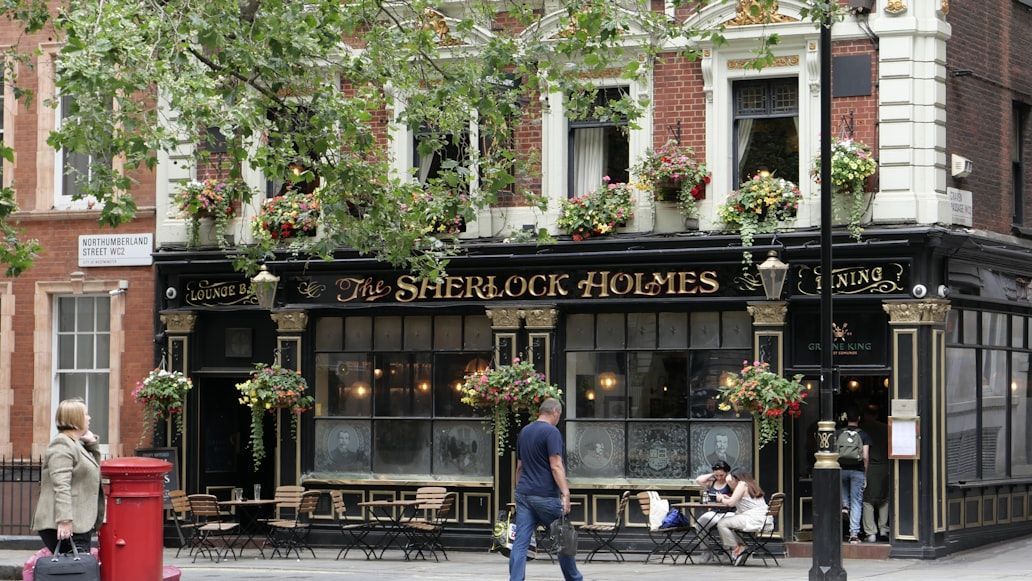
One could argue that this phrase is one of the quintessential Sherlock Holmes sayings. But did you know it wasn’t written by Arthur Conan Doyle? Sherlock Holmes does call his companion "my dear Watson," and he uses the word "elementary" when describing his deductions, but the full phrase —"Elementary, my dear Watson"— first appeared in a 1899 stage play and was later popularized by Basil Rathbone’s film adaptations.

11

Beam me up, Scotty

Image: Stefan Cosma

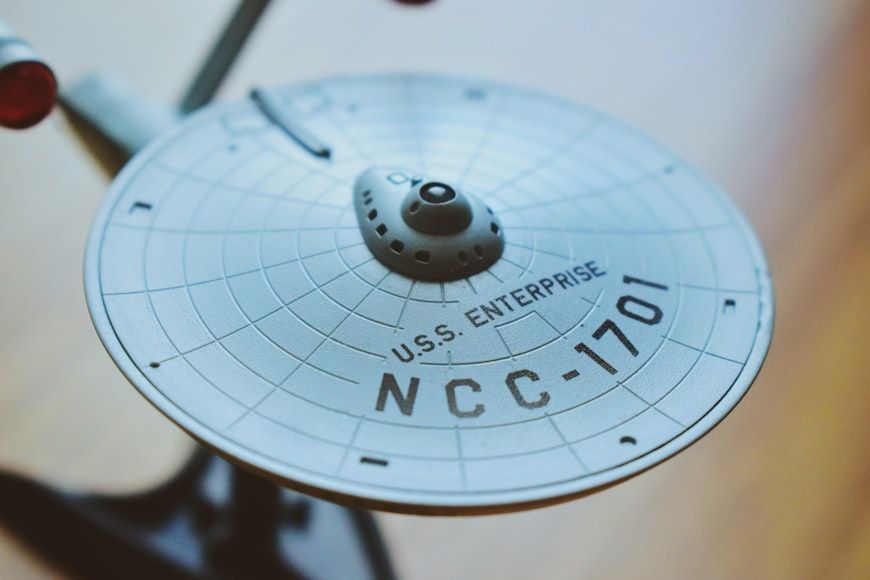
Real Trekkies know that this phrase, though popular, was never actually spoken by Captain Kirk in the original Star Trek series. He did say similar lines, such as "Mr. Scott, beam us up," and other variants. The misquote became so popular that it entered popular culture as a saying of its own.

12

Money is the root of all evil

Image: Rod Long

Some could argue that the Bible is the most misquoted book of all time. This particular phrase, often cited from Paul’s first letter to Timothy, is used to criticize money, but most people don’t realize that it is only a partial quote. The full passage—"For the love of money is the root of all evil"—warns against the dangers of loving money excessively.


SERENDIPITOUS SCIENCE

10 Amazing Scientific Discoveries Made by Accident


Published on October 29, 2025


Image: Hal Gatewood

Most of the time, science is a painstakingly slow process where hypotheses are tested again and again through experiments, often without conclusive results. Yet, some of the most groundbreaking discoveries have come about not through careful planning, but by sheer serendipity.

Here are 10 instances where accidental findings changed the course of science and history.

1

Penicillin

Image: CDC

In 1928, Alexander Fleming returned to his laboratory after a long holiday, only to find a strange mold contaminating his Petri dishes of Staphylococcus bacteria. Surprised, he noticed that the mold was somehow preventing the bacteria from growing around it, as if it produced some kind of chemical that killed the bacteria. This chance encounter led to the discovery of penicillin, the world's first antibiotic, revolutionizing medicine and saving millions of lives.

2

Microwave Oven

Image: Vlad Zaytsev

During World War II, engineer Percy Spencer noticed a chocolate bar melting in his pocket while working with radar equipment. Known for being a curious individual, he tried the same thing with other foods, discovering that the electromagnetic waves were quickly cooking anything that was put too close to the source. Soon, his colleagues were sampling the first microwave-cooked meals, and this eventually led to the development of the microwave oven.

3

X-rays

Image: Jonathan Borba

In 1895, Wilhelm Roentgen was experimenting with cathode rays when he noticed that a platinocyanide screen (a material that happens to glow fluorescent in the presence of gamma and x-rays) almost nine feet away from the source started glowing. His curiosity was sparked, and after a few more experiments, he concluded that this type of radiation could pass through most substances, including soft body tissues. The unexpected phenomenon, later dubbed X-rays by Roentgen himself, eventually revolutionized medical imaging and diagnostics.

4

Teflon

Image: Rob Wicks

In 1938, chemist Roy Plunkett accidentally discovered Teflon while working on refrigerants, when a batch of coolant gas polymerized overnight into a mysterious slippery substance. After a few tests, he discovered that the new material was non-reactive to most chemicals, leading to the creation of the most versatile non-stick material.

5

Vulcanized Rubber

Image: Goh Rhy Yan

In 1839, Charles Goodyear accidentally dropped a mixture of rubber and sulfur onto a hot stove. The resulting hardened material, known as vulcanized rubber, revolutionized industries from transportation to footwear. Although the world-shaking discovery was accidental, Goodyear had spent many years trying to create a stable form of rubber, a finding that changed his life and the lives of millions forever.

6

Radioactivity

Image: Dan Meyers

While the term was coined by Marie Curie and her husband Pierre, it was Henri Becquerel who actually discovered radioactivity. In 1896, he was researching the properties of the recently discovered X-rays, when he found out that a sample of uranium could emit energy without an external source. His momentous discovery eventually led to our modern understanding of atomic physics and the development of nuclear energy.

7

Velcro

Image: Danielle-Claude Bélanger

While taking his dog out for walks in the woods in 1941, Swiss engineer George de Mestral noticed how burrs would easily stick to the fur of the animal and his clothes. Intrigued, he examined them under a microscope, giving him the idea of creating a simple fastener with a similar principle. He patented his idea in 1955, and gave it a name: Velcro, a portmanteau of the French words for velvet and hook.

8

Post-it Notes

Image: Daria Nepriakhina

In 1968, a 3M scientist called Spencer Silver was attempting to develop a strong adhesive but "failed," instead creating a weak one. He still tried to put it to some use, but no one could think of any practical application for it. Years later, Art Fry - one of his colleagues at 3M - found it was very useful to keep bookmarks in place, and this eventually led to the manufacturing of the ubiquitous Post-it Notes.

9

Saccharin

Image: Towfiqu barbhuiya

In 1879, Russian chemist Constantin Fahlberg was working with a coal tar derivative when he noticed it left a sweet taste in his hand. Realizing this particular compound was the culprit, he named it saccharin and began commercializing it as a food additive. The product was almost banned right away by concerned chemists, but after a few hiccups, the first artificial sweetener was born.

10

The Big Bang Theory

Image: Guillermo Ferla

In 1965, radio engineers Arno Penzias and Robert Wilson stumbled upon cosmic microwave background radiation while testing a sensitive antenna. At first, they thought the strange heat being picked up was the fault of a family of pigeons that settled inside their antenna, but after removing them, the anomaly persisted. This accidental discovery provided compelling evidence for the Big Bang theory -predicted almost 20 years before by theoretical physicists- and shaped our modern understanding of the universe's origins.

Looking for an extra scoop of literary fun?

Learn more with our Word of the day

destitute

/ˈdɛstəˌtut/