A what?

11 common objects that are never called by their proper names


Published on May 12, 2026

Image: Joshua Hoehne

While we typically go about life describing the end of our shoelaces as ‘the end of the shoelace’ or the whites of the egg as ‘egg whites’, these things, and many more, have names of their own, even if they are not always widely known or used. Let’s have a look at 11 common things that have proper names, even if no one uses them.

1

The tip of the shoelace

Image: Emilie

The little plastic or metal tip at the end of shoelaces or drawstrings is there to prevent the fibres from fraying, and to make it easier to pass the lace or drawstring through a hole. Its proper name is ‘aglet’, from the French aguillette, meaning ‘needle’, a reference to its use in helping to thread the string through the hole.

2

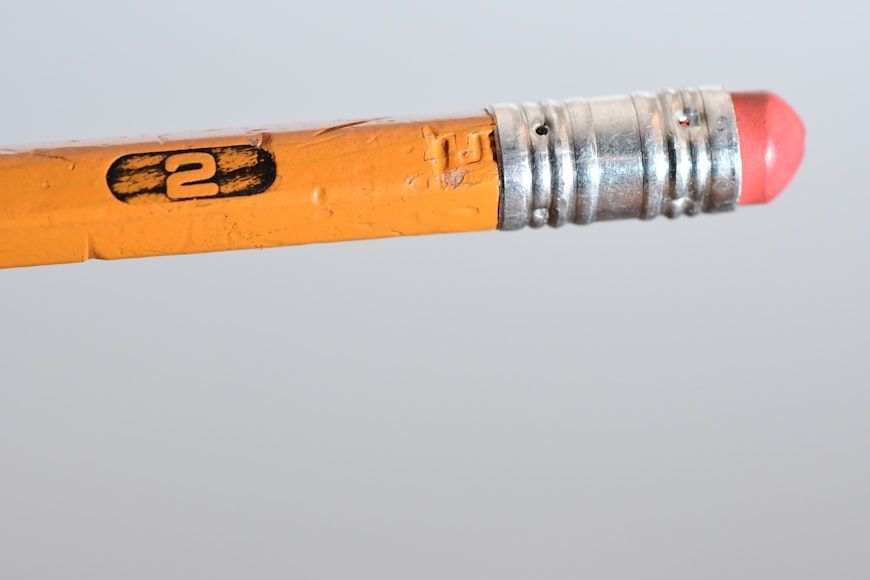
The metal band on the end of a pencil

Image: Kim Leary

Erasers at the end of wooden pencils are not usually glued together, but they are instead held together by a little metal band. This band is called a ‘ferrule’—from Medieval Latin viriola or ‘little bracelet’—and the term can be used for any metal band that strengthens or fastens a joint, such as those used in handles, to hold brush bristles, or to secure a connection between two cables.

3

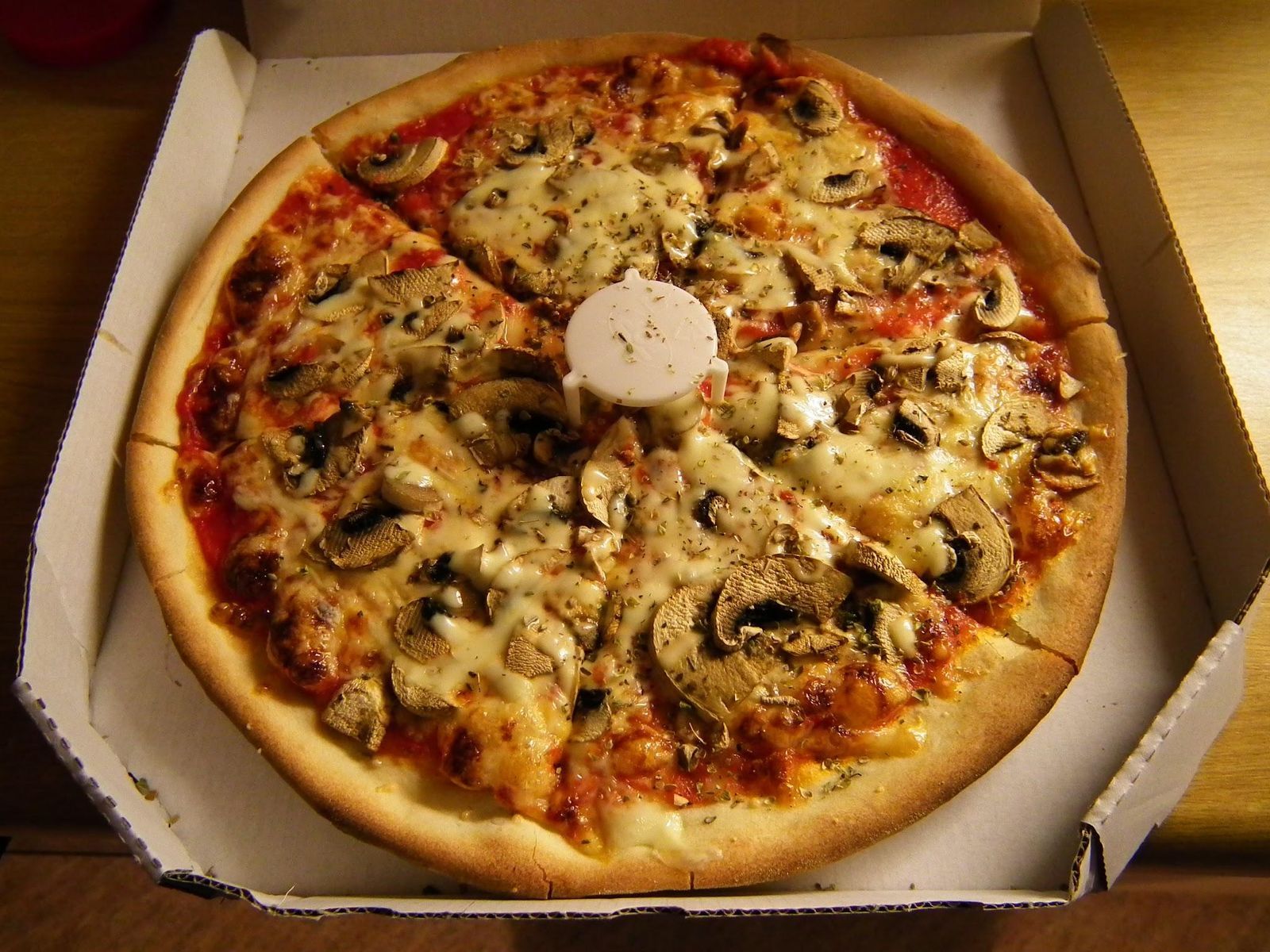
The little plastic table on the pizza

Image: 4028mdk09, CC BY-SA 3.0, via Wikimedia Commons

The ‘little plastic table on the pizza’ is quite a long name for something aptly named ‘pizza saver’, but no one seems to really care. It was invented in 1974 by an Argentine pizza maker, who named it SEPI or separador de pizza (‘pizza separator’). In America, it was patented as a ‘package saver’ in 1985, though it was later renamed ‘pizza saver’.

4

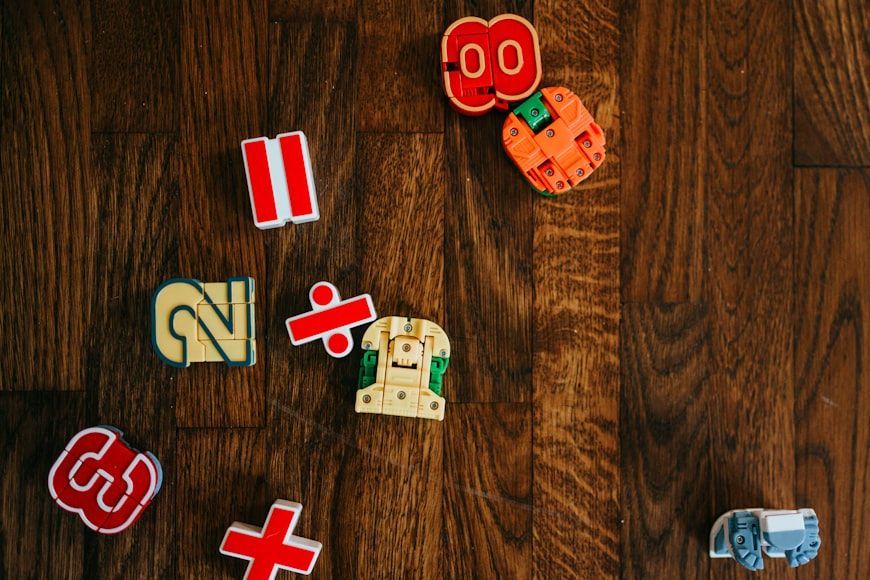
The division sign

Image: Nathan Dumlao

Most mathematical symbols have proper names that are not regularly used, and the division sign is no exception. It was officially introduced into mathematics as a symbol of division in 1659 by the Swiss mathematician Johann Rahn in his influential work Teutsche Algebra. This sign is called an ‘obelus’, from the Greek obelos, meaning ‘sharpened stick’ or ‘skewer’, as it was initially used as a pointer for questionable passages in a text.

5

The coffee cardboard sleeve

Image: Truong Tuyet Ly

Paper cups and their corresponding cardboard sleeves to protect our hands from the heat or the cold are relatively new, but their proper names are not—at least, the name for the cardboard sleeve. This holder is called a ‘zarf’, an Arabic (zuruuf) and Turkish (zarflar) word used for ornamented cup holders, usually made from metal. The materials and the details of the zarf have changed, but the purpose still remains.

6

The armhole in clothes

Image: Liana S

Do we need a more technical term than ‘armhole’ for a hole meant for an arm to go through? Maybe not, but the technical term still exists. An ‘armscye’ (pronounced arm-sigh) is the proper term used in sewing and patterns to describe the opening on a garment where the sleeve is attached. The word is a compound of ‘arm’ + scye, a Scots word meaning ‘opening’. So, in the end, ‘armscye’ just means ‘armhole’.

7

The railing and pillars on a staircase

Image: Serhat Beyazkaya

We often use the words ‘railing’ or ‘handrail’ when talking about a staircase, but these terms only describe the top portion of it, not the pillars that support the handrail. The pillars and the rail altogether are called a ‘banister’, a corruption of the word baluster, derived from the Italian balaustro. The term originally was used for the pillars, but eventually came to mean the entire structure.

8

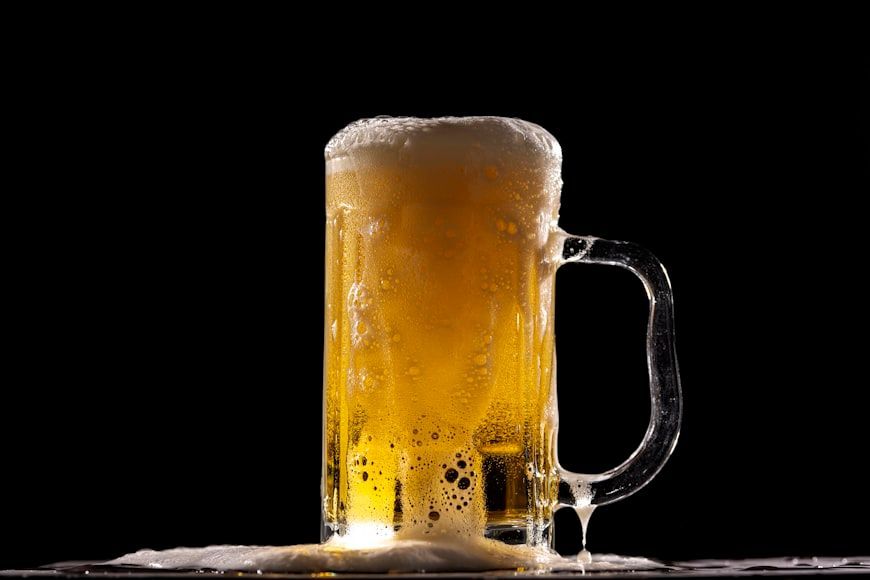
The foam on alcoholic beverages

Image: engin akyurt

Not all beverage foams are equal. The foam on top of alcoholic beverages, in particular, is called ‘barm’, a term derived from Old English beorma, meaning ‘yeast’ or ‘leaven’, and it's mainly used for the effervescence of fermented liquors such as beer, ale, or wine.

9

The whites of the egg

Image: sanjoy saha

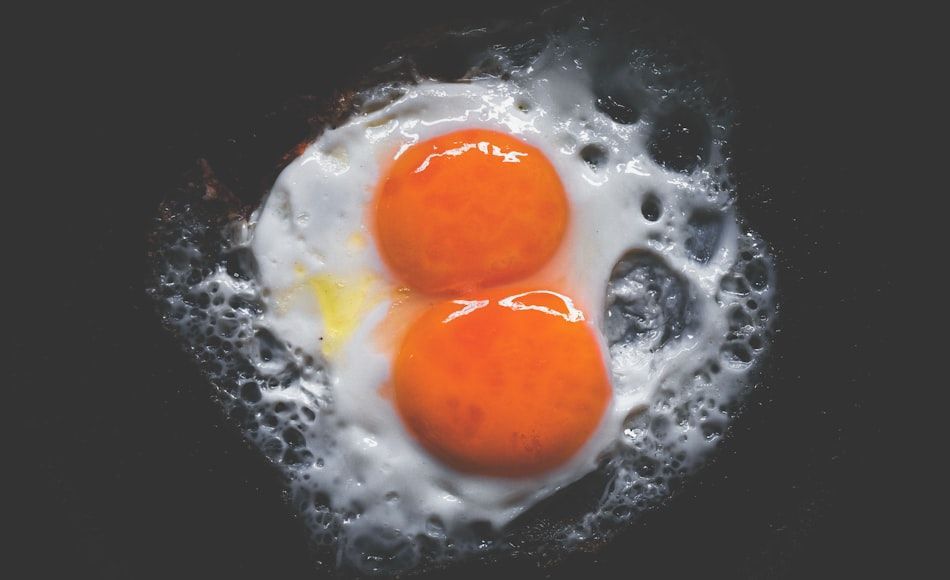
Did you know that the white (or clear) part of the egg is called the ‘albumen’? The term entered English as a loan from Latin, where _albumen_—from albus, ‘white’—was used in the same way. Though it is not widely used in everyday life, it’s still the correct term for that part of the egg.

10

The dot on the j and the i

Image: Marcel Eberle

As a rule of thumb, you should always assume that all marks, symbols, and strokes in calligraphy have a proper name, even if it's not often used. When it comes to the lowercase letters ‘j’ and ‘i ’, the little dot on top is not a dot, but a ‘tittle’. This name comes from the Latin _titulus_—meaning ‘title’, ‘inscription’, or ‘small mark’—and was initially used by scribes to distinguish these letters in their cramped writing.

11

The ‘you are here’ pointer on a map

Image: Fallon Michael

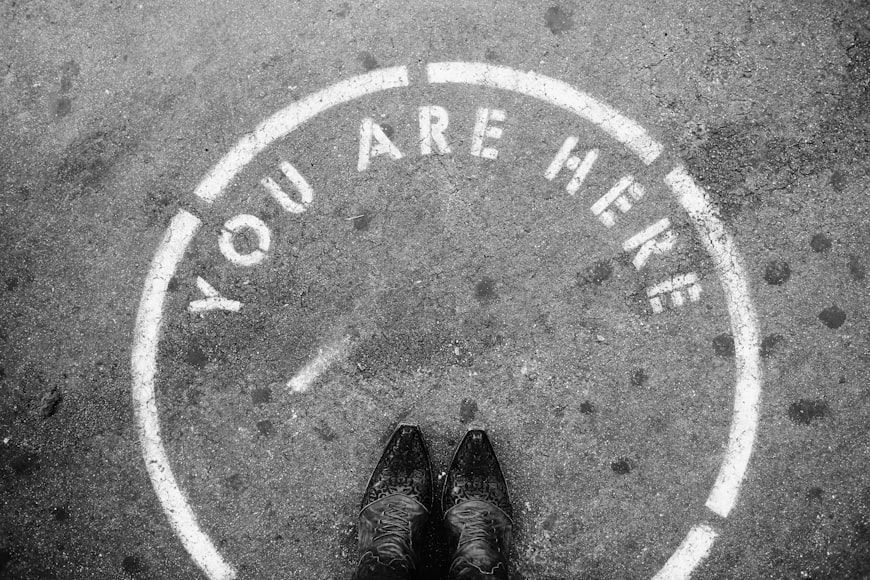
If you ever got lost in the mall or the museum, you must have come across a map that marked your location using an arrow or a pointer, usually accompanied by the phrase ‘you are here’. Well, that pointer is called an ‘ideolocator’, a combination of the Greek idea, a ‘mental image, concept, or visual representation’ (in this case, the pointer), and the Latin locatus, meaning ‘to place’ (the specific location on the map). For the sake of convenience, we will keep calling it the ‘you are here’ sign.


WORD ORIGINS

Did You Know The Etymological Roots Of These Ten Everyday Words?


Published on May 12, 2026


Image: Dmitry Ratushny

Etymology, the scientific study in charge of researching the origin and history of words, is a discipline that definitively doesn’t receive enough credit. Sure, it might not seem to be the most interesting of subjects, but we can guarantee that just scratching the surface of the fascinating origins of our vocabulary can make the least enthusiastic person into an absolute fan of etymology.

Still not convinced? Don’t worry, we got you covered. We have selected ten words with some of the most fascinating, hilarious, and downright mindblowing origins that might turn you into an etymology aficionado. Enjoy!

1

Vaccine

Image: Mufid Majnun

What do vaccines and cows have in common? You might be surprised to learn that the English word for vaccine comes from the Latin word for cow, vacca. As to the reason why our bovine friends are behind the name of vaccines, it dates back to a milestone in medicine that took place in 19th century England.

British physician Edward Jenner is credited as a pioneer in the field of vaccination, who invented the world’s first vaccine in 1796. Jenner’s hypothesis stated that milkmaids who had contracted cowpox showed some resistance to the smallpox virus, so he inoculated a small boy to protect him from smallpox. The process was successful, and the concept for the first vaccine was born. The word was derived from the scientific name of the cowpox virus, variolae vaccinae.

2

Clue

Image: Mediamodifier

We’ll start with one that any amateur detective should know. Looking for clues has been the "go-to" activity for any investigator worth his or her salt, from Sherlock Holmes to the Scooby-Doo gang. Still, it would take the brainiest of detectives to actually figure out the origins behind the word "clue" or at the very least, one interested in Ancient Greece.

The modern spelling of clue comes from clew, a word from Ancient English that means "a ball of thread or yarn". Interestingly, the origins of the word go even further, to the Greek myth of Theseus and the Minotaur. In this myth, the Greek hero ventures into the labyrinth on which the fabled monster resides, and is guided by a trail of thread provided by the Cretan princess Ariadne.

3

Nightlife

Image: Frida Aguilar Estrada

The busy and exciting nightlife of a city is an aspect deeply appreciated by tourists and locals alike: The bright lights and lively scenes attract thousands of people every night with the promise of an unforgettable night. The term "nightlife" tends to describe every fun activity that happens at night, including restaurants, bars, and theaters.

What’s fascinating about this seemingly simple word comes from the fact that its first known use comes from a book by literary giant Herman Melville. In his 1852 novel "Pierre; or, The Ambiguities", the author narrates how a character observes "all the garish night-life of a vast thoroughfare" while waiting for a cab late at night.

4

Whiskey

Image: Thomas Park

A quote often attributed to American author Mark Twain says "Too much of anything is bad, but too much good whiskey is barely enough". It stands to reason that a well-read man like Twain was at least aware of the etymology of his favorite drink. After all, the meaning behind this word’s origin is almost poetical and truly beautiful.

Ireland has been associated with producing delicious whiskey for hundreds of years now, and with good reason. The English word whiskey is derived from the Gaelic word uisge beatha, which means "water of life". Nowadays, the Irish word for whiskey is fuisce, but the old Gaelic term uisce beatha is still used.

5

Checkmate

Image: Felix Mittermeier

Chess is one of the oldest board games in history, dating to at least the 7th century, and while it has evolved up to the point of becoming an internationally recognized sport, its rules have remained mostly unchanged in its thousands of years of history. Naturally, the origins of the word "checkmate" are almost as old as chess itself, and can be traced back to the Persian Empire.

A common misconception is that the word checkmate comes from the Arabic phrase al-shāh māta, which means "the king has died". However, since the losing King notably doesn’t die at the end of a game, chess aficionados believe that a more appropriate candidate could be the Persian term shāh-māt, which roughly translates to "the King is left (without a way to escape)". This better reflects how a King is cornered into a checkmate, but ultimately not captured.

6

Astronaut

Image: NASA

Like many space-related words, it might come as no surprise to learn that "astronaut" comes from the world of science fiction. It seems only natural: after all, this literary genre has helped humanity dream of a fantastic future, in which mind blowing technology allows us to travel across the stars.

The word astronaut is derived from the Ancient Greek word astron and nautes, which translate to "stars" and "sailor" respectively. The very first use of the word comes from the 1880 novel "Across the Zodiac" by English author Percy Greg, although it was used to describe a spaceship. In 1927, writer Joseph Henri Honoré Boex coined the French term astronautique specifically for a space explorer.

7

Orangutan

Image: Dan Dennis

We could fill this article with nothing but fascinating facts about orangutans. Who knows? Perhaps one day we will. However, for now, we’ll just focus on the topic at hand because the history behind this word is a clear tribute to the outstanding intelligence of these great apes.

"Orangutan" comes from the Malay words orang, which means "person", and hutan, which means "forest". Therefore, this word can be understood as "person from the forest". When we consider the orangutan’s remarkable communication and tool-handling skills, the name seems entirely appropriate.

8

Saxophone

Image: EAVONE Jazzman

This one is rather well-known, but we felt it was too good to ignore. Few instruments can replicate the dulcet and smooth sounds of the saxophone, considered one of the quintessential instruments in jazz music. Should you ever feel the need to thank the inventor of the instrument that provided us with the overwhelming music of players like Charlie Parker or John Coltrane, then you might want to pay tribute to Belgian inventor and musician Adolphe Sax.

In the 1840s, Sax designed the first prototype of the saxophone, seeking to create an instrument with the projection of a brass instrument with the nimbleness of a woodwind. Accordingly, the resulting saxophone was named after its inventor, who also created and named other instruments like the saxotromba, saxhorn, and saxtuba.

9

Shampoo

Image: Lindsay Cash

Have you ever wondered how the word "shampoo" became synonymous with cleaning hair? The origins of this word might shed some light on this, and it might particularly explain the circular motions that come with washing your hair.

"Shampoo" evolved from the Hindi verb campna or champna, which translates to "to press or knead muscles". The word was brought over by English explorers and merchants who described a vigorous massage (which included hair washing) as "being shampooed". Eventually, the English language adopted this word, but only kept the hair-washing aspect of its meaning.

10

Plumber

Image: Unseen Histories

We’ll end this article with what we consider the most obscure etymology on this list. Nowadays, a plumber is anyone who specializes in water systems, whether it is installing or repairing them. However, this wasn’t always the case, since the origins of this name describe anyone who works with a specific material.

The word "plumber" directly references the scientific name of lead, which is the Latin word plumbum. Furthermore, if you take a look at the periodic table, you’ll see that the chemical symbol for lead is Pb, two of the letters featured in the word "plumber".

Looking for an extra scoop of literary fun?

Learn more with our Word of the day

disparity

/dəˈspɛrədi/