Quirks of English

10 words that sound the same but mean different things


Published on September 27, 2026


Image: Triff

English is beautiful. It has borrowed words, sounds, and grammar from more than 350 other languages, which gives us an amazingly vast vocabulary (hundreds of thousands of words, though we only use 20,000 to 35,000 in everyday life). But this rich history comes with a catch: some words sound exactly like other words even though their spellings and meanings are completely different: think of "flour" and "flower," or "right" and "write." These are called "homophones," and here are 10 of them you may or may not have noticed before.

1

Flower — flour

Image: sergey kolesnikov

One is used to cook, and the other to decorate. One grows naturally on a plant and is associated with beauty and gardens, and the other is a powder made by grinding grains and is normally used in the kitchen. In standard American English, both "flower" and "flour" are pronounced /ˈ_flaʊər_/. We have to rely on context to tell them apart: you might plant a flower and bake with flour.

2

Right — write

Image: Marina Demeshko

This could be a confusing one for someone just starting to learn English, as "right" can mean "correct," as in "you got the answer right," or refer to the direction opposite of left. But "write" specifically refers to the act of writing: forming words or symbols using a pen, keyboard, etc. But in standard American English, both are pronounced /raɪt/. This means you can "write the right answer."

3

Sea — see

Image: Altug Galip

What does a large body of salt water have in common with the act of perceiving something with your eyes? Well, nothing really, just that both are pronounced /siː/. These two don’t even belong to the same parts of speech; "sea" is a noun whereas "see" is a verb, with "saw" and "seen" as its past-tense forms. And yes, you can "see the sea."

4

Son — sun

Image: Zoteva

Both pronounced /sʌn/, "sun" and "son" are two nouns that, again, mean two different things. One is a male child in relation to his parents, a person; while the other refers to the star at the center of our solar system, responsible for providing light and heat to the Earth. You could say, metaphorically, that your "son is your sun." Or that the neighbor's "son is playing in the sun."

5

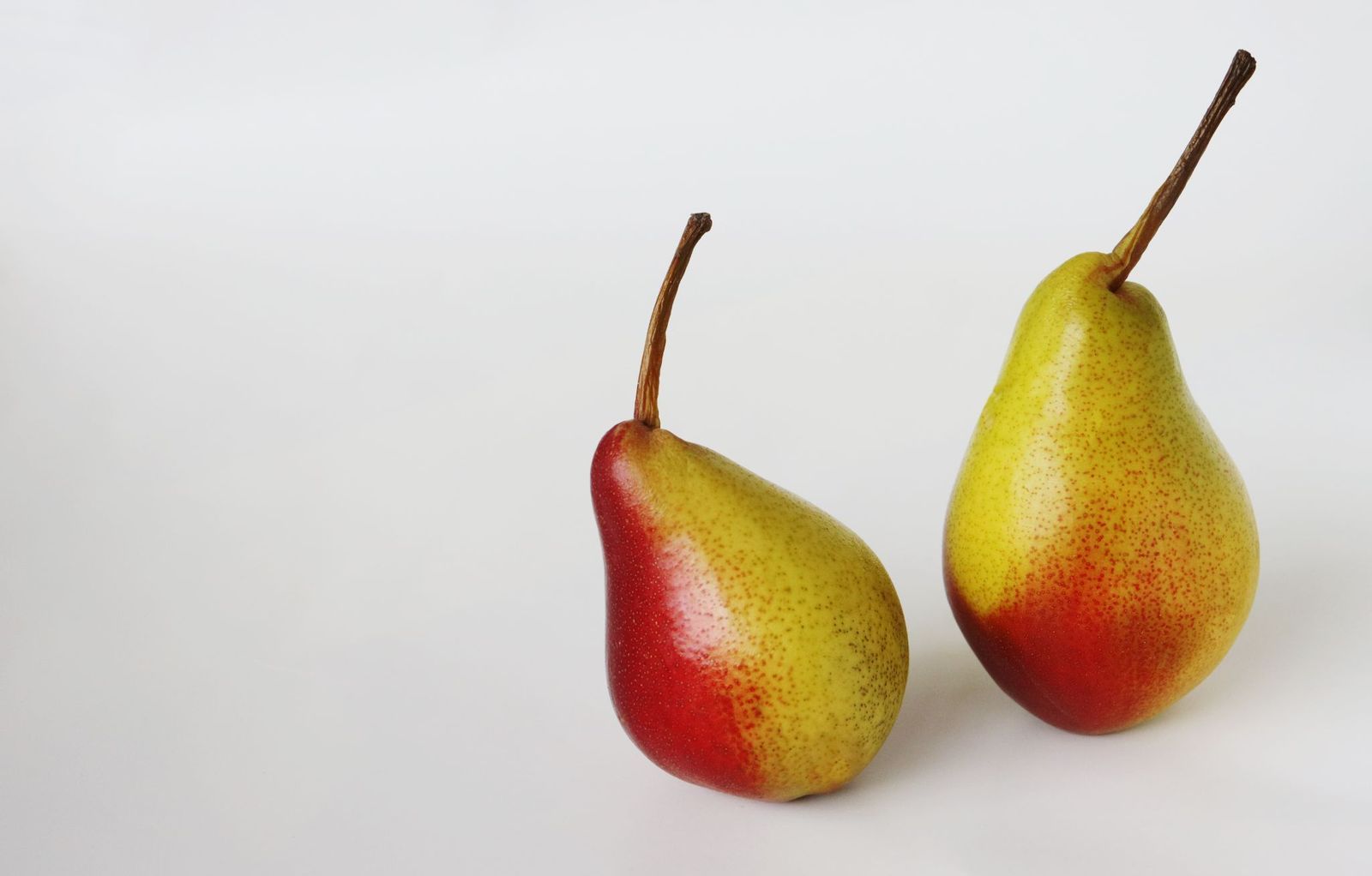
Pair — pear

Image: gelog67

Again, we have a case of a verb and a noun with no relation to each other, and yet both are pronounced the same, /per/. "Pair" can actually be both a noun and a verb; as a noun, it refers to two things that belong together, such as a pair of shoes, and as a verb, it means to put two things or people together. A "pear" is a bell-shaped fruit that everyone knows. In this case, you could say you have a "pair of pears."

6

Knight — night

Image: Shutterstock AI

Although these two words can be associated with nighttime/fantasy imagery in old books and stories, the meanings of "knight" and "night" are completely different, even though both are pronounced /naɪt/. One refers to a king’s faithful mounted warriors wearing armour in medieval Europe, and the other simply means the period of darkness between sunset and sunrise: "The knight left the castle at night."

7

Peace — piece

Image: faithie

"Peace" is an idea or state. You can use it to mean "world peace," like an ideal state of freedom and happiness, or simply say "I need some peace" to express a need to feel calmer or more relaxed. And a piece is a part or a portion of something, like a piece of cake or a piece of paper. Both are pronounced /piːs/, and you could totally say that you "want to have a piece of cake in peace."

8

Mail — male

Image: AntonSAN

We use "mail" as a noun for items that are delivered through the postal system, but also as a verb that means "to send something through the mail." And even though the noun "male" is also pronounced /meɪl/, it refers to a man or a male animal as opposed to female; it describes sex or gender. It is perfectly valid to say "I sent mail to my male friend."

9

Buy — by — bye

Image: BongkarnGraphic

This is a funny triad. Three words, three different meanings but the same sound: /baɪ/. "To buy" is to purchase something; "bye" is a casual way to say goodbye; and "by" is quite a versatile word English speakers use to indicate everything from location and proximity to method or even the person responsible for an action: "I sat by the window" or "a book by Mark Twain."

And you can combine the three into one brief sentence and say, "Buy a book by an author, then say bye." Confusing? I don’t think so.

10

Week — weak

Image: infuture

"Week" and "weak" both sound /wiːk/. A "week" is what we call a period of seven days, usually counted from Sunday to Saturday, i.e., a period of time. And "weak" can mean a lack of strength or power, both mentally and physically: "I feel weak." Though it can also mean that something is not as effective as it should be: "That’s a weak argument". The two can coexist in the same sentence: "You can feel weak after a long week."


WHAT IS A MEME, ANYWAY?

Catfishing & Beyond: 10 everyday words with different meanings online


Published on September 27, 2026


Image: Onur Binay

Each niche of human culture and experience creates its own lingo, with unique expressions to describe the interactions and objects that define its universe. But, being a realm populated mostly by the younger generations, the internet has been brave and unceremonious enough to borrow its slang from various sources. In the online world, a sandbox is not a cube full of sand for the children to play in, and a troll is not a mythical creature to be afraid of. So, scroll on, and discover 10 of these borrowed words that mean different things in the real world and the land of the internet.

1

Bump

Image: Armin Babakhani

While, in the real world, a bump is an obstacle of some sort, in the online world, the term "bump" refers to the action of moving an online post or thread to the top of the list by adding a new comment or post to the thread.

This is done to make that post or thread more visible and readily available for everyone.

2

Block

Image: Dillon Winspear

A word with a similar meaning to bump in the real world, but a very different meaning online, is "block". When we block something or someone in the real world, we are placing an obstacle in the middle of a road or passage, to prevent people or things from passing through.

But when we are referring to the action of blocking someone online, we're talking about preventing someone from contacting you on a social network like Facebook, or from viewing your profile. So, in this case, not quite the same but similar.

3

Catfish

Image: Will Turner

The bottom-dwelling freshwater or marine fish with whisker-like barbels around the mouth, commonly known as a catfish, has no idea that humans call it that way. And even less so, does it know that his name has a completely different meaning on the internet?


In the online world, a "catfish" is a person who sets up a false personal profile on a social networking site for fraudulent or deceptive purposes.

4

Cloud

Image: Emmanuel Appiah

In case somebody needs a reminder, a cloud is a visible mass of condensed vapor particles (such as water or ice) suspended in a planet's atmosphere. It is, without exaggeration, as famous as the sun.


However, in the internet world, a "cloud" is something entirely different, even if there is a poetic resemblance between the two things. The digital version of a cloud is any of several parts of the internet that allow online processing and storage of documents and data as well as electronic access to software and other resources.

5

Friend

Image: Matheus Ferrero

Perhaps one of the most beautiful words in the English language, friend symbolizes a bond between two people who are connected to one another by affection or esteem.

But in the realm of the internet, "friend" is an action that involves adding a person to one’s list of contacts on a social networking site. Again, not entirely dissimilar, but not quite the same thing.

6

Follow

Image: Sarah Kilian

This one might not be so different after all. In the real world, the act of following means going, coming after, or behind someone or something.

And, in the internet world, to "follow" someone means subscribing to their updates on social media. Therefore, it could be argued that following someone isn't all that different in both instances.

7

Meme

Image: Crystal Mapes

Even though a meme was never a wildly popular concept in the real world, pre-internet, it was still a real idea. A meme is an idea, behavior, style, or usage that spreads from person to person within a culture.

However, in the realm of the internet, a "meme" is a cultural item in the form of an image, video, phrase, etc., that spreads online and is often altered creatively or humorously. In both cases, a meme is a concept that is replicated because of its popularity.

8

Sandbox

Image: Ostap Senyuk

Most of us have played in a sandbox as kids. It is, as the name implies, a low box filled with sand that children can play in.

But, in the modern world of internet programming, a "sandbox" is an environment in which software developers or editors can create and test new content, separate from the rest of the project.

9

Troll

Image: Jirka Konietzny

Maybe not in the real world per se, but at least in Scandinavian folklore, a troll is a dwarf or a giant who inhabits caves or hills.

The word "troll" is used within the internet world to define a person who sows discord online by starting arguments or upsetting people. Both definitions describe a mischievous creature, but that is as far as the similarities go.

10

Viral

Image: CDC

Something that is referred to as "viral" is anything that is related to or caused by a virus, spreading like an infection to everything around it.

In the internet sense of the word, something "viral" describes content that becomes very popular by circulating quickly from person to person, online. As we can see, both definitions share a common theme of rapid spread, though the contexts differ.

Looking for an extra scoop of literary fun?

Learn more with our Word of the day

diligent

/ˈdɪlədʒənt/