BRIGHT FACTS

What are the 10 craziest facts about the Sun?


Published on January 14, 2025
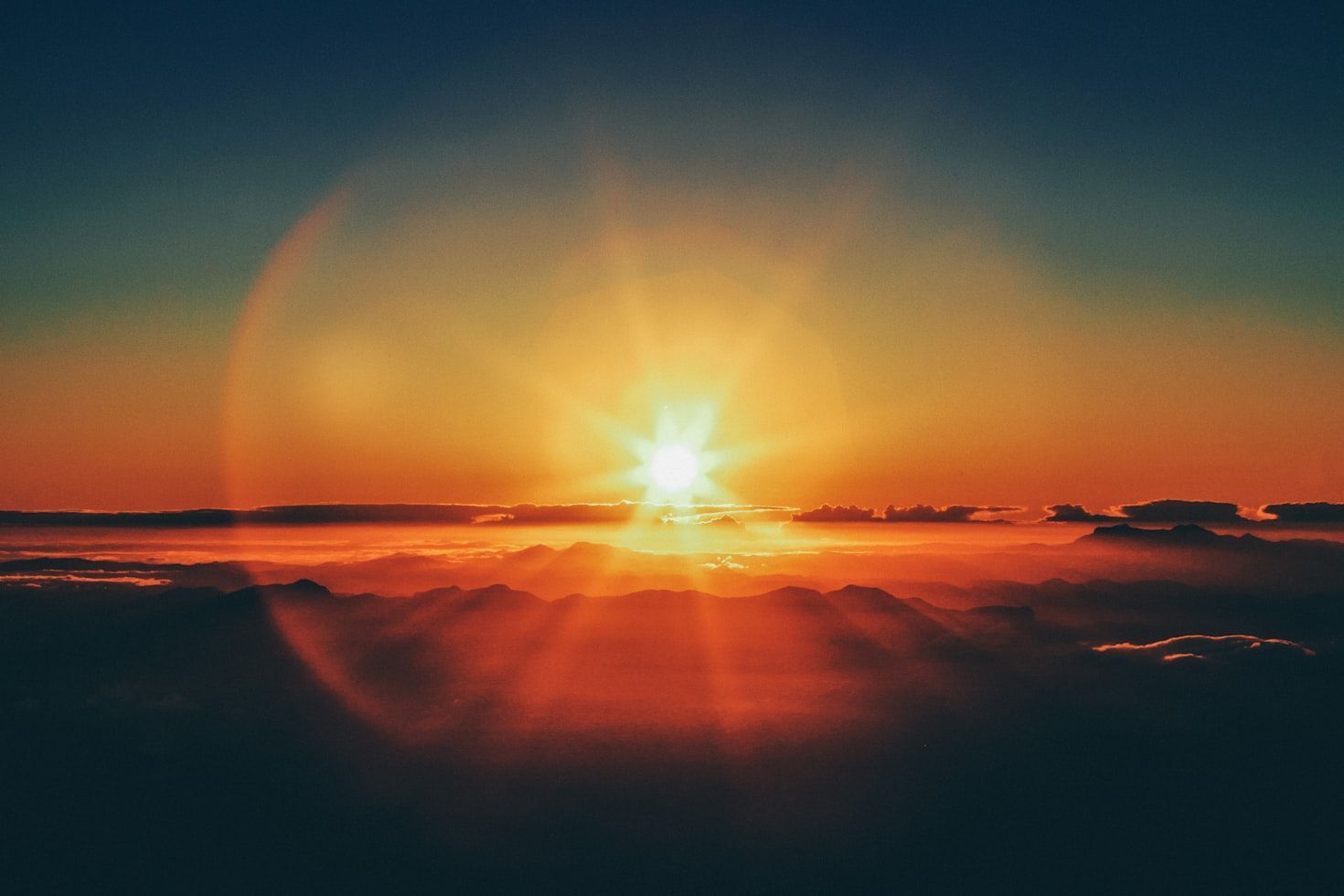

Image: Jonathan Borba

The Sun, our closest star, is crucial to our existence. Without it, life could not thrive in the freezing cold of space. Its unique characteristics make it truly remarkable, and there's more to it than meets the eye!

As we delve deeper into a better understanding of our closest star, we uncover all sorts of fascinating quirks and unusual phenomena. If you've ever been curious about the inner workings of our Sun, here are 10 incredible facts that highlight its awe-inspiring nature.

1

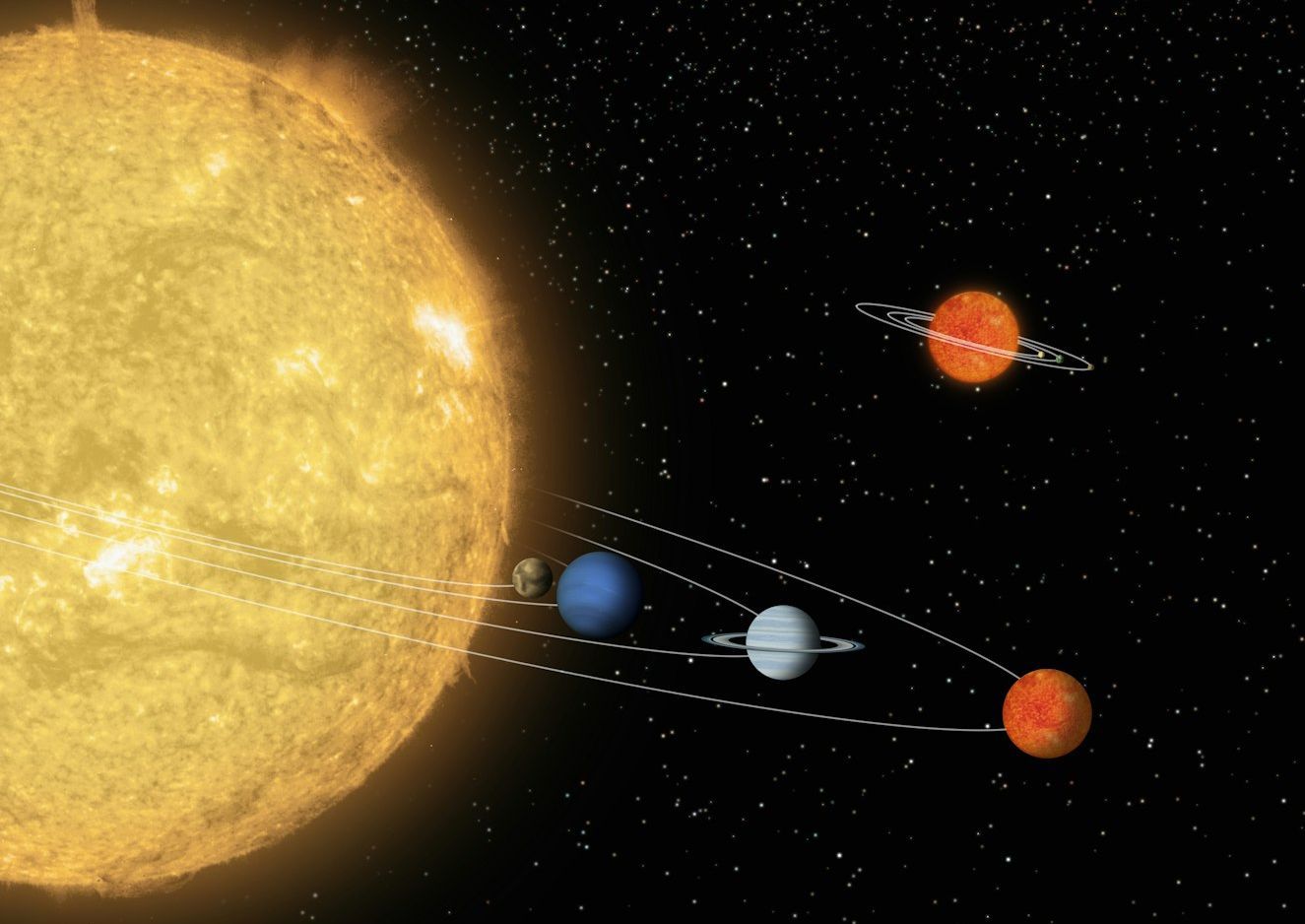
Incomprehensible Size

Image: NASA Hubble Space Telescope

The Sun's staggering mass equals about 330,000 times that of Earth. To put this into perspective, just know that it contains over 99% of the entire solar system's mass, encompassing planets, moons, asteroids, and even comets.

This immense gravitational pull generated by the Sun ensures the stability of our solar system, keeping all celestial bodies in orbit around it.

2

Nuclear Fusion

Image: Hal Gatewood

Believe it or not, the Sun's immense energy comes from nuclear fusion reactions in its core, where hydrogen atoms fuse to form helium, releasing vast amounts of energy in the process. This continuous fusion process has been ongoing for billions of years and will continue for billions more, fueling the Sun's radiance.

In essence, we live under an open-air nuclear reactor, which is a good reminder to use sunscreen!

3

Lightning Fast Rotation

Image: Chris Barbalis

Due to its gaseous nature, the Sun’s equator actually spins faster than its poles. This phenomenon is known as differential rotation, and our star completes a full rotation at the equator approximately once every 25 days, whereas near the poles, it can take up to 35 days.

This intriguing variation also contributes to the complexity of the Sun’s magnetic field, adding to the quirky and almost unpredictable dynamics of our star.

4

The Sun Has Cycles

Image: Justin Dickey

The Sun exhibits various cycles, most notably the 11-year solar cycle, characterized by fluctuations in sunspot activity, solar flares, and the solar magnetic field. These cycles have significant implications for space weather, affecting communications, satellites, and even Earth's climate over longer timescales.

Continuous monitoring of the Sun through various observatories and space missions provides valuable data to enhance our knowledge of these solar phenomena.

5

Our Sun Is a Dwarf Star

Image: Todd Rhines

Our Sun belongs to the category of stars known as G-type main-sequence stars, commonly referred to as yellow dwarfs. But despite being classified as a dwarf star, it's actually larger and hotter than most stars in the universe.

In the distant future, as hydrogen fusion in its core diminishes, the Sun will lose hydrostatic equilibrium. This will lead to increased density and temperature in the core, causing its outer layers to expand and transforming it into a red giant.

6

Show Your True Colors

Image: Thomas Vimare

While the Sun emits light primarily in the form of white light, which is a combination of all visible colors of the spectrum, its peak emission actually falls within the teal range.

So, while the Sun emits light across the entire visible spectrum, the dominant frequency is in the teal visible light spectrum. So, yes, the Sun is technically teal. Bet you didn't expect that, eh?

7

There Is No Running Away

Image: Andrey Grinkevich

Surprisingly, the Sun's corona, its outermost atmosphere, is significantly hotter than its visible surface.

While the photosphere (what we often call the surface) averages around 5,600 degrees Celsius, the corona can sometimes reach temperatures of millions of degrees Celsius. The exact mechanism behind this extreme heating remains a subject of ongoing research.

8

Space Weather Is No Joke

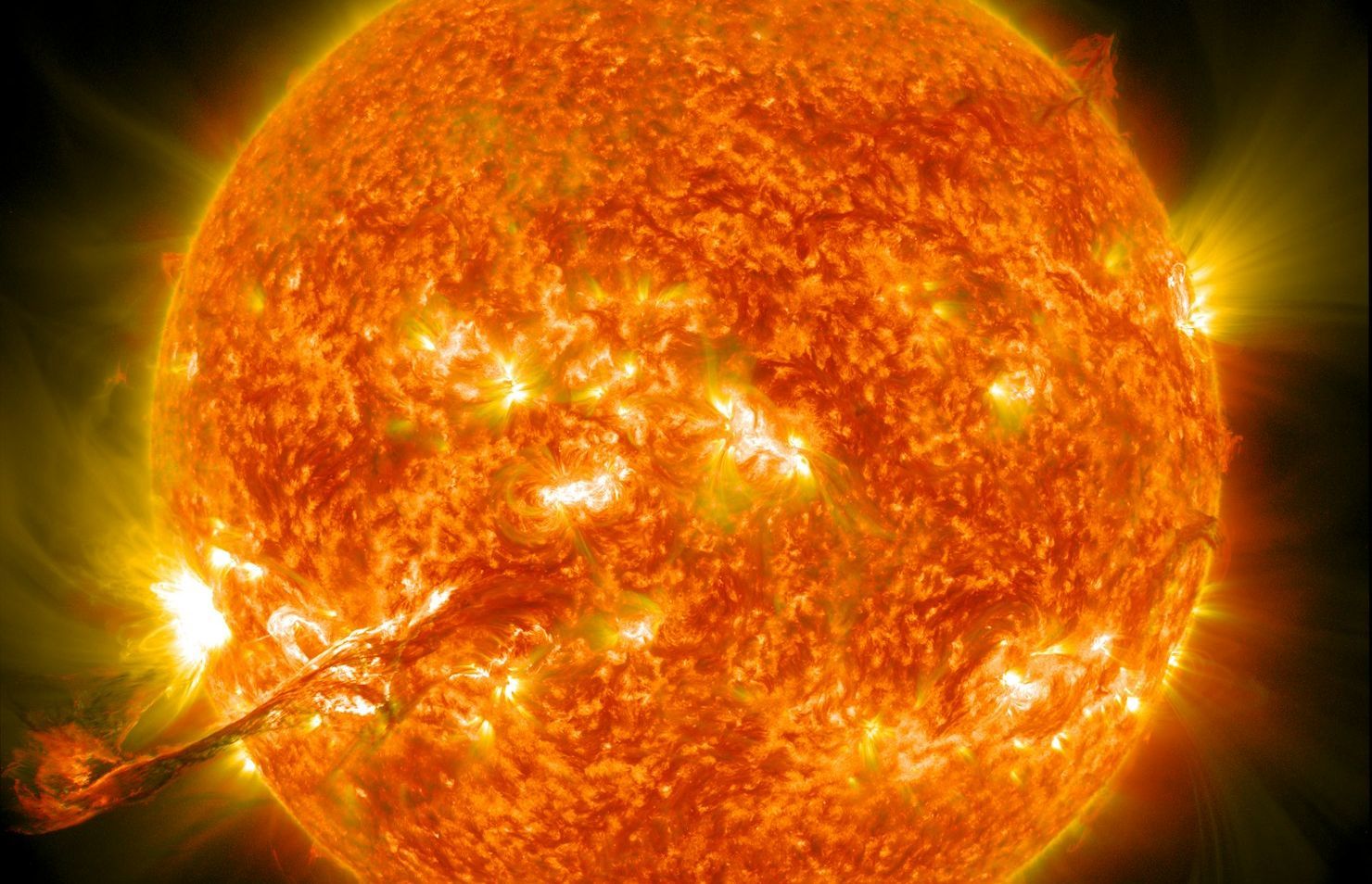
Image: NASA

Solar flares are colossal eruptions of energy on the Sun's surface, releasing as much energy as millions of 100-megaton atomic bombs. These explosions can heat plasma to temperatures exceeding 10 million degrees Celsius, generating intense bursts of radiation and magnetic fields that can impact Earth's atmosphere and technology.

In particular, solar storms, caused by intense solar flares and coronal mass ejections (CMEs), can disrupt satellites, power grids, and communication systems on Earth. The most powerful solar storm on record, the 1859 Carrington Event, caused widespread auroras and telegraph system failures.

9

Cooler Areas on the Sun's Surface

Image: Javier Miranda

Sunspots are temporary phenomena on the Sun's photosphere caused by intense magnetic activity. Despite appearing dark, these spots are obviously still extremely hot compared to terrestrial standards.

Typically, they are only around 3,500 degrees Celsius cooler than their surroundings (which are around 5,600 degrees Celsius, in case you didn’t know). Interestingly, these spots wax and wane in an 11-year cycle, influencing solar activity and space weather.

10

It Is Only 20.5 Years Old (in Galactic Years)
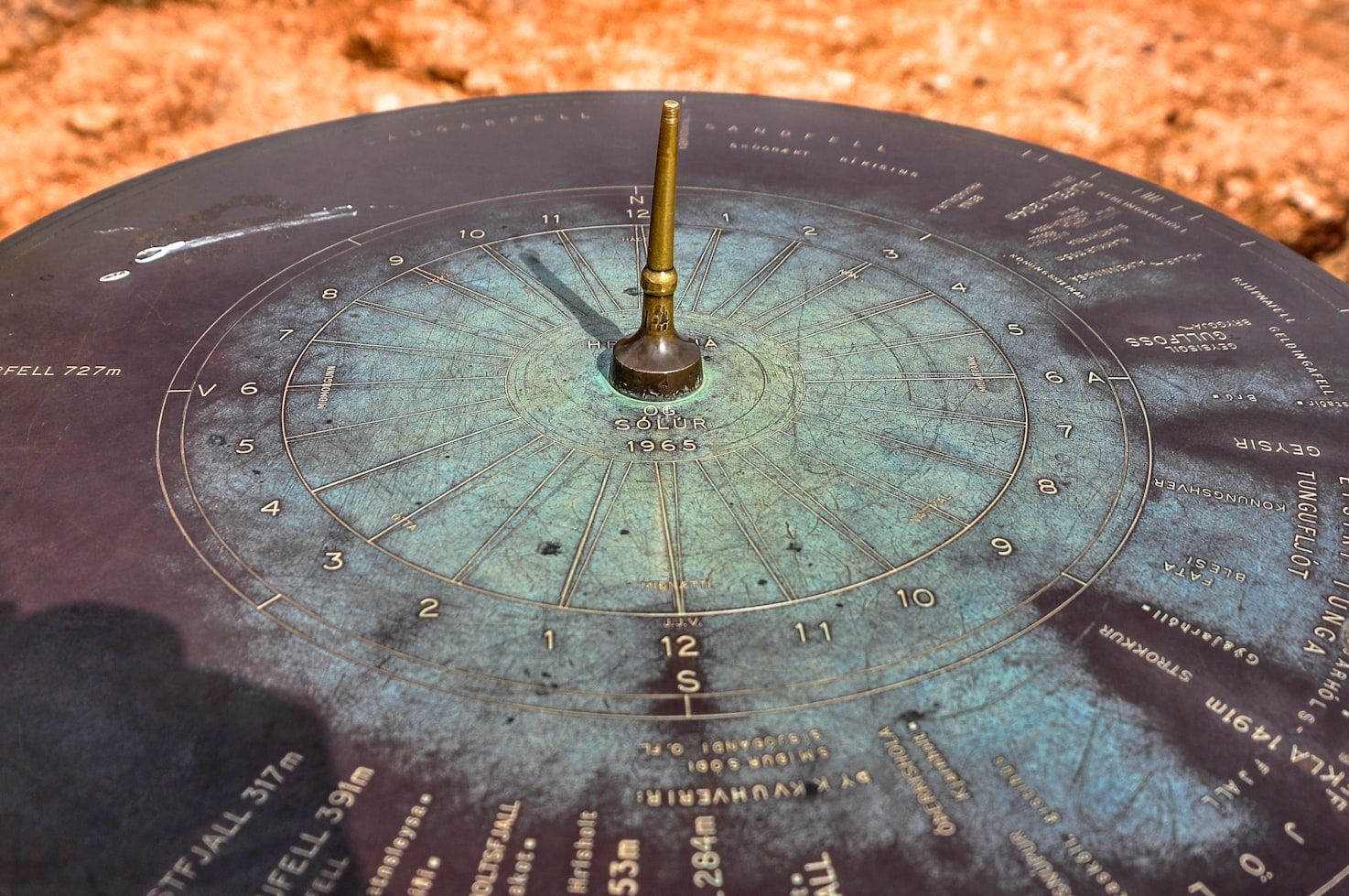
Image: yue su

In Earth years, our Sun is 4.6 billion years old, a tad older than Earth itself. But in terms of galactic years, which measure the Sun's orbit around the center of the Milky Way galaxy, our Sun is only approximately 20.5 galactic years old.

Yeah, you got us, we cheated a bit there! But isn't it fascinating to look at it this way? Who would have thought our Sun was still in its early twenties?


TREATS FROM MOTHER NATURE

Ever Heard About Blood Falls? Read About 10 Unusual Natural Phenomena!


Published on January 14, 2025


Image: Kalen Emsley

Mother nature is a constant and endless surprise. Around the world, one can find the most extraordinary spots or the most unusual natural wonders. If you had the chance to travel, you probably came across some breathtaking views, amazing waterfalls, pristine waters, or the snowiest mountains. Beautiful as these places might be, some spots are a whole new level of gorgeous.

From blood waterfalls (You read that right!) to pink waters, we’ve gathered ten places that will make you gasp in awe!

1

Blood Falls - Antarctica

Image: Matt Palmer

Antarctica is both the biggest desert in the world and one of the most mysterious places. Considering the harsh weather and the slippery ice covering the area, it is only logical that a small part of it has been investigated. Imagine how surprising it must have been for explorers who, in 1911, saw a stream of blood coming down a glacier into a river.

That’s when they discovered the Blood Falls and the mystery behind its origin was only solved in 2017: This bloodstream is only oxidized iron in brine saltwater.Creepy, yet fascinating, isn’t it?

2

Frozen Bubbles - Canada

Image: Tom Keldenich

Extreme weather conditions usually lead to extreme yet beautiful views and Canada is not the exception here. During the winter, in Abrahan Lake in Alberta, a curious thing happens: Underwater, methane gas bubbles get trapped forming frozen bubbles.

The view is otherworldly yet highly dangerous and another consequence of the greenhouse effect. Because of the risk of inflammation, only a match near the bubbles could cause a massive explosion.

Other than that, one can only enjoy the view and wait for the onset of spring to see the bubbles burst naturally.

3

Pink Lake Hiller - Australia

Image: Urlaubstracker

If you enjoy sitting by the water with a good book by your side and fresh juice poured into your cup, this place might make it to your bucket list. But you won’t find blue water here. No, blue water is just too normal.

In Lake Hiller, Australia, the water is pink, simple as that! Due to the presence of some unique microalgae, which produce a pink pigment, the water in this lake is this pretty color.

Contrary to what one may think, you can swim and everything in this lake. Although we don’t recommend you drink it since it is quite salty!

4

Sky Mirror - Malaysia

Image: Alexey Marchenko

We all enjoy pristine waters, right? There is a certain magic to dipping your toes in the water and seeing them perfectly. But the waters of Sasaran Beach take this experience to the next level.

Specifically during the new moon and the full moon periods, the water in the beach turns into a mirror, and the sky and water become one.

This phenomenon takes place because, during that time, the tides are at their lowest and the sand is as smooth as it can be. It is known as "Mirror of the Sky" and it is a true wonder.

5

Rolling Stones - United States

Image: Jasper van der Meij

Don’t worry, we won’t be painting anything black here. True enough, Rolling Stones is an iconic band, but what you probably didn’t know is that it is a natural phenomenon in the U.S. to visit too.

Both visible in the Death Valley National Park and at Little Bonnie Claire Playa, this geological phenomenon involves rocks rolling down a valley as they leave distinct trails. They can be quite heavy and their movement is the result of ice breaking in winter pods triggered by sunny days. When the ice melts, the rocks are driven by the wind and roll down.

6

Fairy Circles - Namibia

Image: Keith Hardy

Deserts are intimidating and intriguing, but they can also raise feelings of calmness and peace. Now, the Namib Desert is different than the rest. How? Well, all scattered around the desert**, you can find** circular patches called fairy circles.

This phenomenon is the result of two things: a lack of water and vegetation in the desert and the action of termites. The few plants that try to make it fight for water and eventually disappear leaving this eerie trail behind. That is when the termites come into play, as they take over the patches. If you think this is unique, wait and see what’s ahead in this list!

7

Light Pillars

Image: Adithya Holehonnur

You probably heard and even saw the aurora borealis in the north, right? Well, these are not auroras, but the process by which this phenomenon takes place is similar and the result is even creepier.

Similar to those spaceship abductions sci-fi movies have shown us, light pillars are beams of light that extend from the sky to the ground in places where temperatures drop way below zero degrees.

This phenomenon is actually an illusion, the result of cold air turning the moisture in the air into crystals. Magic does happen, doesn’t it?

8

Hidden Beach - Mexico

Image: Roberto Carlos Román Don

If this wasn’t real and easy to witness, no one would ever believe it. As it turns out, back in the 1900s the Mexican military used the Marieta Islands for target practice. Little did they know blasting bombs over and over again in the area would create Hidden Beach.

Even if it is not so hidden nowadays, the beach is only a few miles away from the west coast of Mexico and it is accessible by boat. It is almost invisible to the unaware eye, but, from the air, one can see a crater with bright blue waters within. A perfect spot for a romantic escapade, don’t you think?

9

Lake Baikal - Russia

Image: Ekaterina Sazonova

This spot in Russia is a true marvel of nature. Lake Baikal holds the collective titles of the oldest, deepest, clearest, and largest freshwater lake in the world.

Now, aside from its titles, what makes it so unique? During the harsh winters, when the temperatures plummet well below freezing, the pristine waters of the lake become stunning ice formations. The turquoise color in them sparkles under the sunlight and creates the illusion of diamonds or gems.

10

Dirty Thunderstorms

Image: NOAA

It’s very common to be afraid of thunderstorms. It is also pretty common to be scared of volcanos. Now, put those things together, and "fear" takes on a new meaning.

Volcanic thunderstorms, or dirty thunderstorms, take place in the clouds formed by volcanic and plinian eruptions. By this crazy occurrence, volcanos can actually produce lightning and they usually appear between 5 and 10 seconds after the explosion.

We don’t recommend being near an erupting volcano, but to witness the phenom from afar can be quite striking! No pun intended there!

Looking for an extra scoop of literary fun?

Learn more with our Word of the day

contented

/kənˈtɛn(t)əd/