BRIGHT FACTS

10 mind-blowing facts about the Sun


Published on January 14, 2025


Image: Jonathan Borba

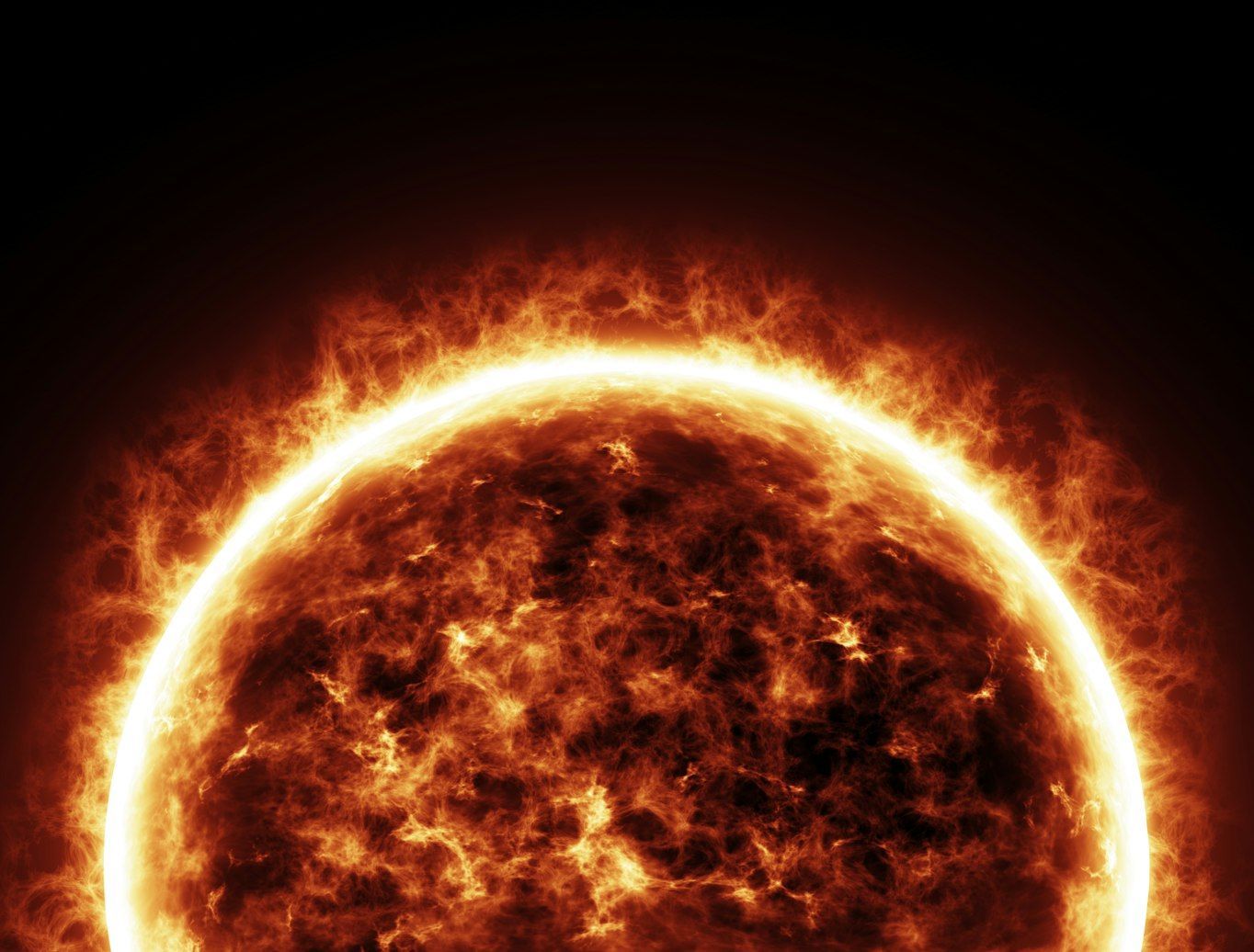
The Sun, our closest star, is crucial to our existence. Without it, life could not thrive in the freezing cold of space. Its unique characteristics make it truly remarkable, and there's more to it than meets the eye!

As we delve deeper into a better understanding of our closest star, we uncover all sorts of fascinating quirks and unusual phenomena. If you've ever been curious about the inner workings of our Sun, here are 10 incredible facts that highlight its awe-inspiring nature.

1

Incomprehensible Size

Image: NASA Hubble Space Telescope

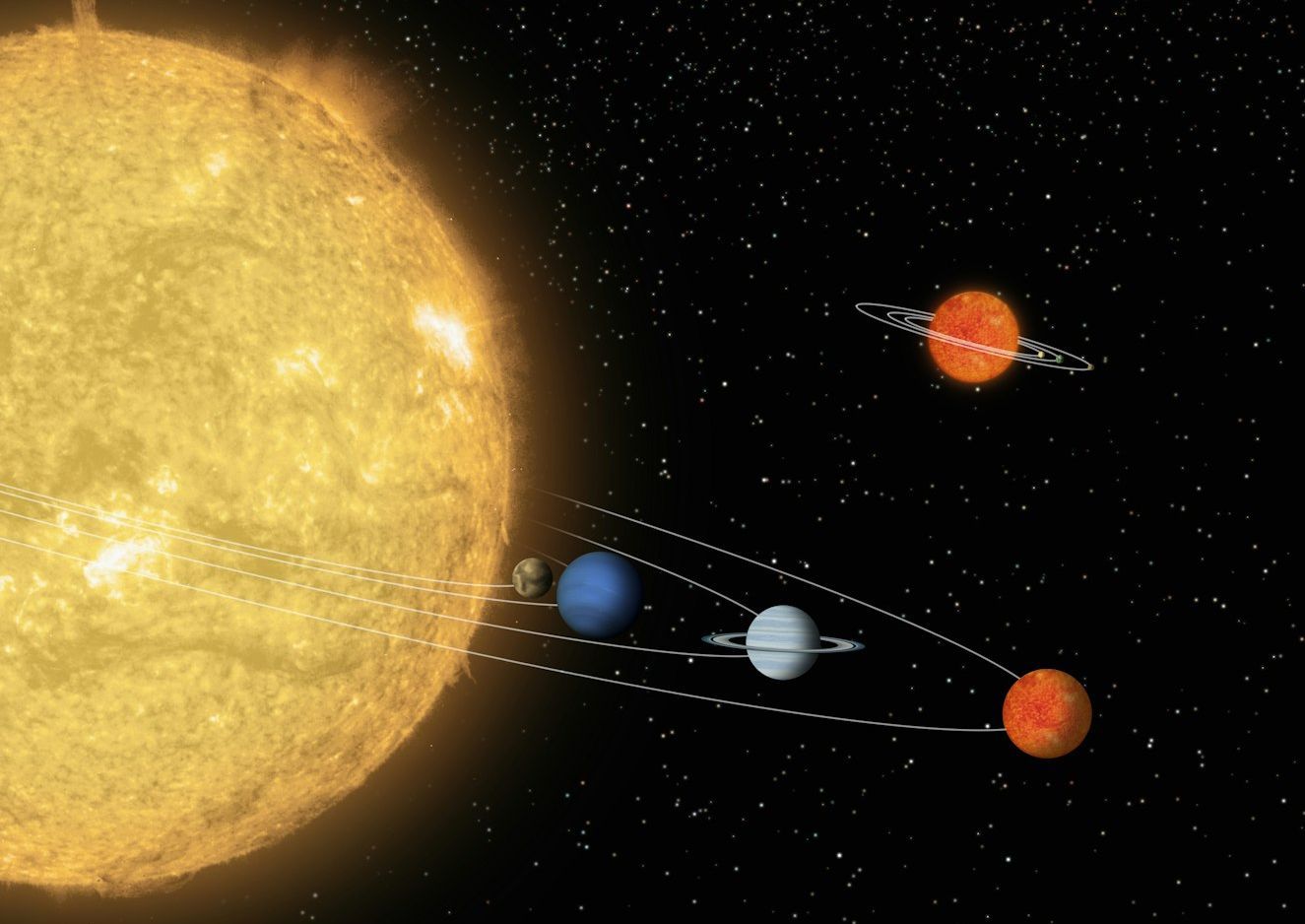
The Sun's staggering mass equals about 330,000 times that of Earth. To put this into perspective, just know that it contains over 99% of the entire solar system's mass, encompassing planets, moons, asteroids, and even comets.

This immense gravitational pull generated by the Sun ensures the stability of our solar system, keeping all celestial bodies in orbit around it.

2

Nuclear Fusion

Image: Hal Gatewood

Believe it or not, the Sun's immense energy comes from nuclear fusion reactions in its core, where hydrogen atoms fuse to form helium, releasing vast amounts of energy in the process. This continuous fusion process has been ongoing for billions of years and will continue for billions more, fueling the Sun's radiance.

In essence, we live under an open-air nuclear reactor, which is a good reminder to use sunscreen!

3

Lightning Fast Rotation

Image: Chris Barbalis

Due to its gaseous nature, the Sun’s equator actually spins faster than its poles. This phenomenon is known as differential rotation, and our star completes a full rotation at the equator approximately once every 25 days, whereas near the poles, it can take up to 35 days.

This intriguing variation also contributes to the complexity of the Sun’s magnetic field, adding to the quirky and almost unpredictable dynamics of our star.

4

The Sun Has Cycles

Image: Justin Dickey

The Sun exhibits various cycles, most notably the 11-year solar cycle, characterized by fluctuations in sunspot activity, solar flares, and the solar magnetic field. These cycles have significant implications for space weather, affecting communications, satellites, and even Earth's climate over longer timescales.

Continuous monitoring of the Sun through various observatories and space missions provides valuable data to enhance our knowledge of these solar phenomena.

5

Our Sun Is a Dwarf Star

Image: Todd Rhines

Our Sun belongs to the category of stars known as G-type main-sequence stars, commonly referred to as yellow dwarfs. But despite being classified as a dwarf star, it's actually larger and hotter than most stars in the universe.

In the distant future, as hydrogen fusion in its core diminishes, the Sun will lose hydrostatic equilibrium. This will lead to increased density and temperature in the core, causing its outer layers to expand and transforming it into a red giant.

6

Show Your True Colors

Image: Thomas Vimare

While the Sun emits light primarily in the form of white light, which is a combination of all visible colors of the spectrum, its peak emission actually falls within the teal range.

So, while the Sun emits light across the entire visible spectrum, the dominant frequency is in the teal visible light spectrum. So, yes, the Sun is technically teal. Bet you didn't expect that, eh?

7

There Is No Running Away

Image: Andrey Grinkevich

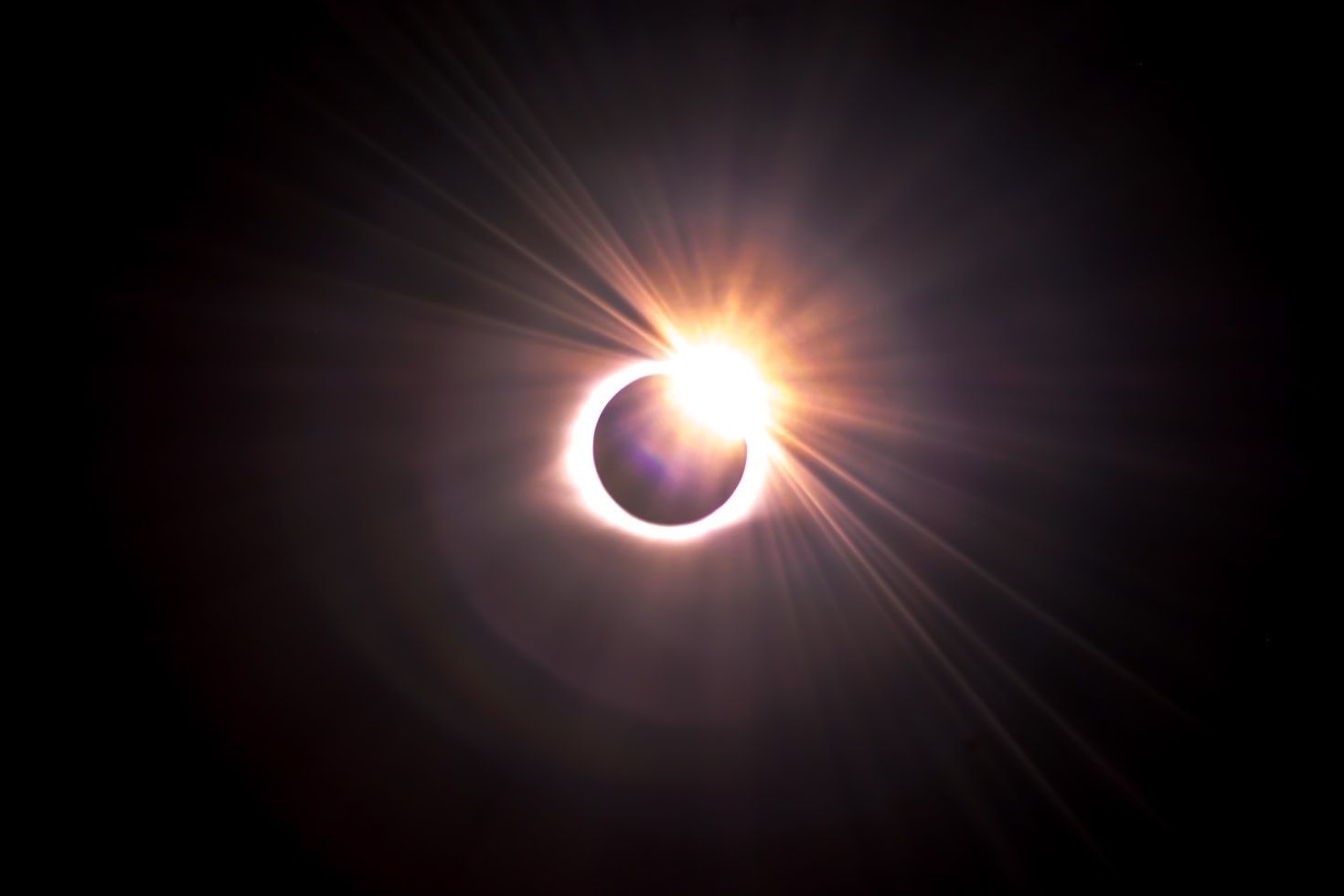
Surprisingly, the Sun's corona, its outermost atmosphere, is significantly hotter than its visible surface.

While the photosphere (what we often call the surface) averages around 5,600 degrees Celsius, the corona can sometimes reach temperatures of millions of degrees Celsius. The exact mechanism behind this extreme heating remains a subject of ongoing research.

8

Space Weather Is No Joke

Image: NASA

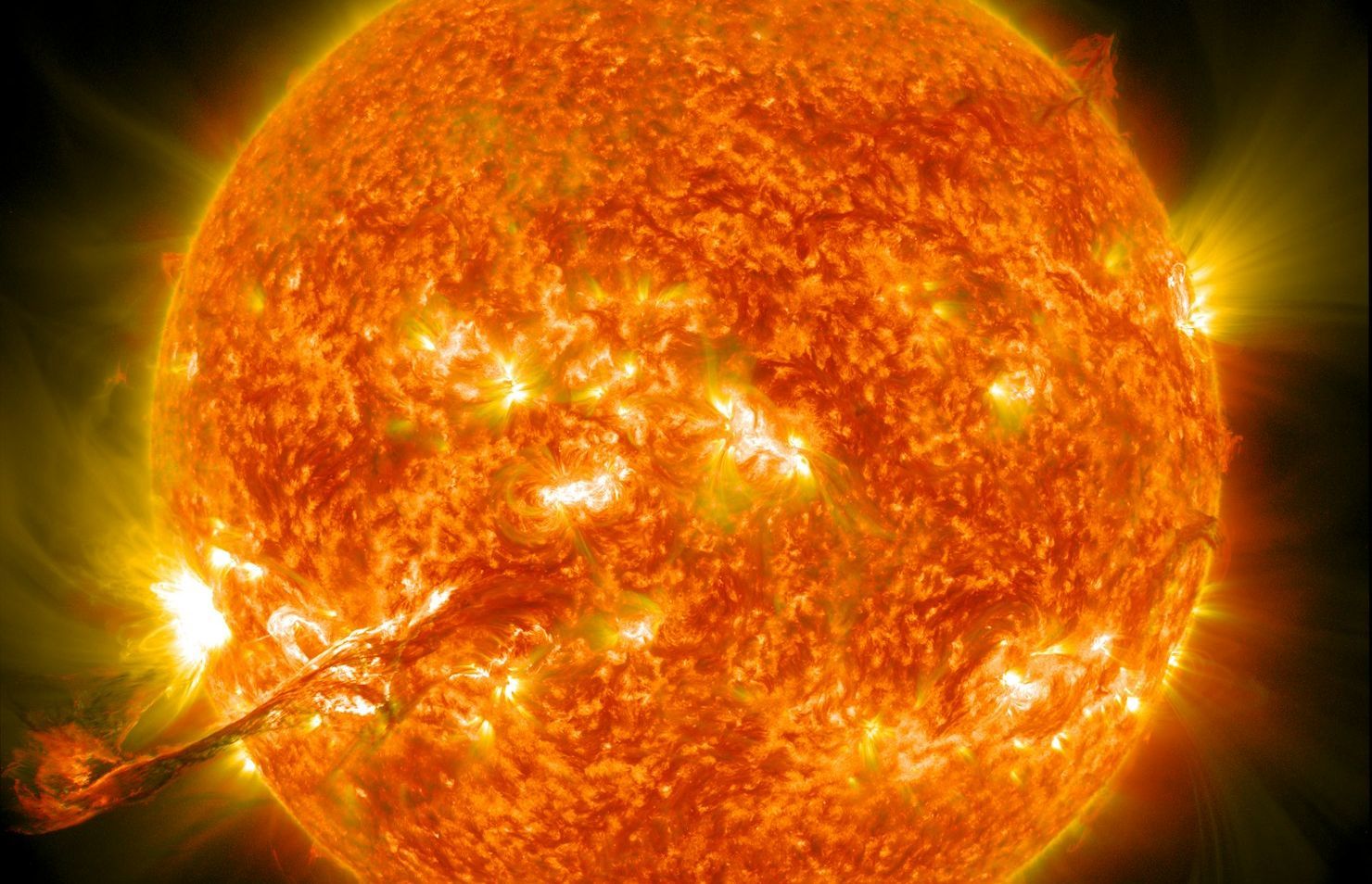
Solar flares are colossal eruptions of energy on the Sun's surface, releasing as much energy as millions of 100-megaton atomic bombs. These explosions can heat plasma to temperatures exceeding 10 million degrees Celsius, generating intense bursts of radiation and magnetic fields that can impact Earth's atmosphere and technology.

In particular, solar storms, caused by intense solar flares and coronal mass ejections (CMEs), can disrupt satellites, power grids, and communication systems on Earth. The most powerful solar storm on record, the 1859 Carrington Event, caused widespread auroras and telegraph system failures.

9

Cooler Areas on the Sun's Surface

Image: Javier Miranda

Sunspots are temporary phenomena on the Sun's photosphere caused by intense magnetic activity. Despite appearing dark, these spots are obviously still extremely hot compared to terrestrial standards.

Typically, they are only around 3,500 degrees Celsius cooler than their surroundings (which are around 5,600 degrees Celsius, in case you didn’t know). Interestingly, these spots wax and wane in an 11-year cycle, influencing solar activity and space weather.

10

It Is Only 20.5 Years Old (in Galactic Years)
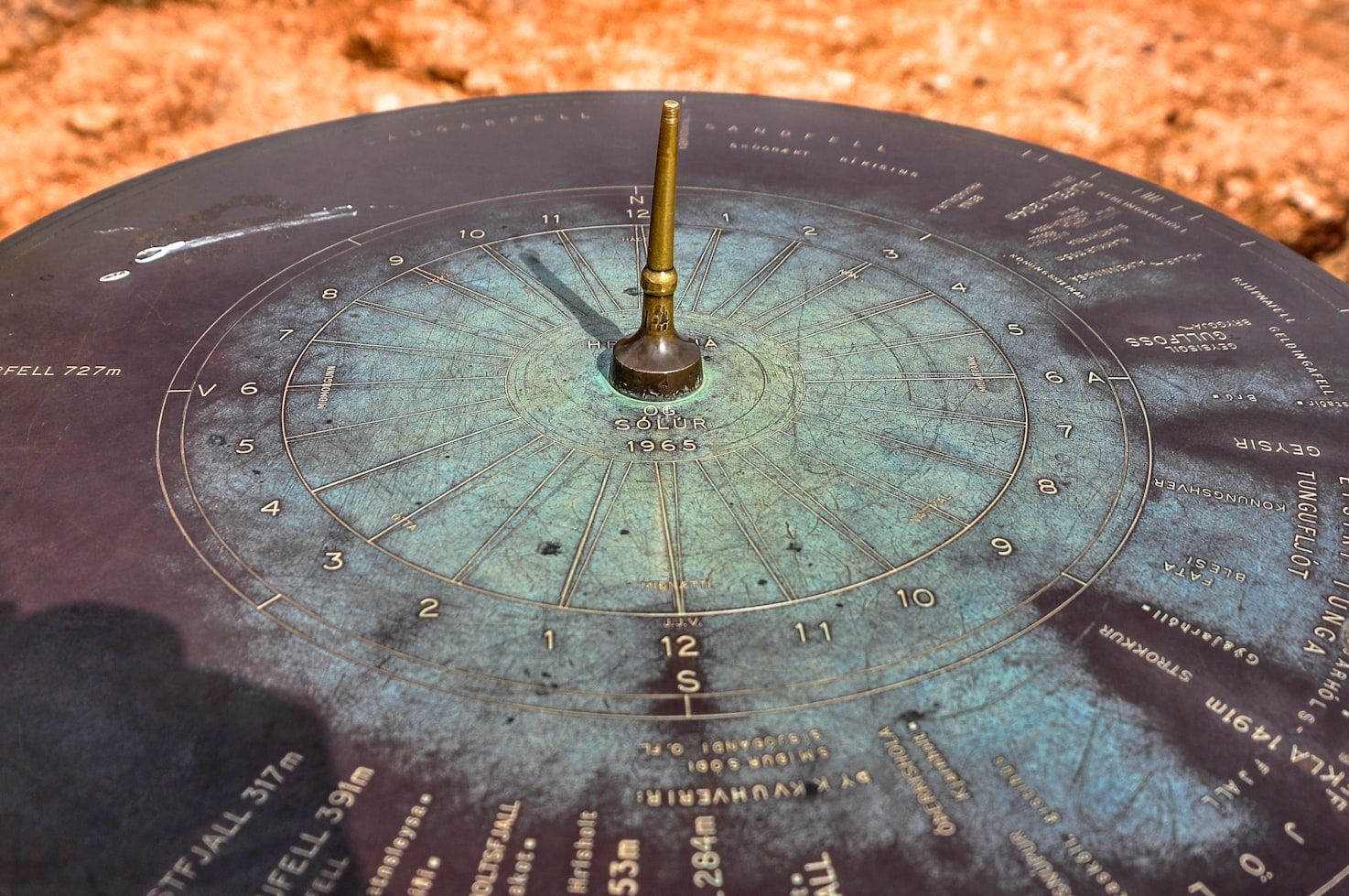
Image: yue su

In Earth years, our Sun is 4.6 billion years old, a tad older than Earth itself. But in terms of galactic years, which measure the Sun's orbit around the center of the Milky Way galaxy, our Sun is only approximately 20.5 galactic years old.

Yeah, you got us, we cheated a bit there! But isn't it fascinating to look at it this way? Who would have thought our Sun was still in its early twenties?


LANGUAGE TIME MACHINE

You Won't Believe What These 10 Words Meant in The Past


Published on January 14, 2025


Image: Glen Carrie

We all know something for sure: change is inevitable. Not only do people, landscapes, and habits change, but words and their definitions also change**.** What if we told you that "girl" once meant "boy" too? That's right, some of the words you might use every day have had completely different meanings in the past! Words like "girl," "villain," "garbage," and "cheater" are just a few examples of terms with surprising histories and evolving identities.

If you're curious, join us as we explore the fascinating evolution of these 10 English terms that used to have different meanings than they do today!

1

Silly

Image: Katrina Berban

Some say that a little silliness might actually be linked to happiness; what do you think? Well, the origin of the word "silly" seems to support this idea.

This funny word, often used affectionately or as a joke to those we love, has an interesting history. Sources suggest that "silly" originally comes from the Old English sǣlig, which meant "happy" or "blessed." Over time, its meaning gradually shifted towards "innocence," possibly due to an association with a common childhood trait.

But the evolution of its meaning didn't stop there. By the Middle Ages, "silly" had transitioned from "innocence" to "harmlessness," then to "simplicity," and eventually to "foolishness." Quite a journey for a single word!

Image: Toa Heftiba

2

Cheater

Whether you've been caught cheating or you've stumbled upon a cheater, this word has caused chaos - in one way or another - in almost everyone's life. But things were quite different a few centuries ago.

In the 14th century, the Old French term escheater referred to a specific job: the person responsible for managing the King's escheats. This role became crucial when the King had no heirs, as the escheater would oversee the transfer of property and goods. Due to the nature of this task, people often suspected the escheater's integrity.

Later shortened to "cheater," the word evolved with the centuries, and the meaning was metaphorically extended to label anyone dishonest or deceitful. But here's an interesting twist: the "infidelity" undertones we now link with the term were not introduced until the 20th century!

3

Bully

Image: Jeffrey Hamilton

What do you call your loved one? "Honey," "darling," "sweetheart"? What about "bully"? If that last option surprises you, just wait until you hear that term's history!

It is believed that "bully" originated from the Dutch boel, meaning "lover" or "brother." Back in the 16th century, it was an endearing term in English, similar to "sweetheart" or "fine fellow." However, as the century drew to a close, its sense had changed to a more negative one.

Some sources suggest that this shift in meaning may have stemmed from the term "bully-ruffian," which designated a protector or bodyguard who often used force or threats. This association gradually transformed "bully" into a term connoting someone who harasses or intimidates others, leading to its modern negative meaning.

4

Pretty

Image: Vinicius Wiesehofer

Although some people have tried to separate beauty from intellect, the word "pretty" has brought these two qualities together throughout its evolution.

Many sources trace the origins of this widely used term to the late Old English word prættig, associated with qualities like cunning and cleverness. By the 15th century, "pretty" had come to mean "clever" or "skillful" and used to define both people and meticulously crafted objects.

By the 16th century, "pretty" had begun to resemble its modern meaning, as it was used to represent charming women and children. Its current link to physical beauty was already strong by the 18th century.

5

Awful

Image: Nik

Language evolution can be quite a spectacle, with some changes being more drastic and noticeable than others.

That is the case with "awful." This word's journey began with the Old English egefull, a mix of "ege" (meaning "dread" or "fear") and "full." Originally, it described things that inspired both fear and awe or reverence. Just imagine saying "awful" when you're in the presence of something truly awe-inspiring!

During the Middle Ages, the term was linked with the dread of divine punishment, which dominated the beliefs of the time. Starting to solidify in the 18th century, the negative connotation stuck, though its meaning shifted over the years. By the 19th century, the word was already associated with unpleasantness, much like we use it today.

6

Garbage

Image: Pawel Czerwinski

Despite being a common and ordinary word, "garbage" has a rich history you may not have heard about. Its origins are not entirely clear, but it is believed to come from the Anglo-French word garbage, which referred to the waste parts of poultry. While the word has always had some relation to waste, its original meaning was much more specific (and, let's face it, a bit more gross). First recorded in the 15th century, Middle English _garbage (_or gabage) referred to the discarded parts of any type of animal left over after food preparation.

Over time, its definition broadened. By the 16th century, the word encompassed other kinds of kitchen residues. Finally, by the 19th century, "garbage" was already being used to designate any type of household waste, whether from food preparation or not.

7

Girl

Image: Simon Maage

Would you believe us if we told you that, in the past, "girl" could mean "boy" too? Yes, it's true! While it might feel like "Hey, girl!" has been around forever, the word has a fascinating history with a twist you probably didn't see coming.

It likely originated from the Anglo-Saxon word gerle (also girle or gurle). Back in the 1200s to 1330s, "girl" was used to refer to any child or very young person, regardless of gender. However, it wasn't until the late 14th century that "girl" started to become more specifically associated with female children.

By the 15th century, the term "girl" had started to include young adult women, particularly those who were unmarried. As usually happens with language, this evolution has continued to the present day.

8

Flirt

Image: Edward Cisneros

If you're hoping to spark someone's interest, here's a fun fact that can add an exciting touch to your flirting game: the word "flirt" has been around longer than you might think.

Its roots can be traced back to the Old French fleureter, which meant "to say sweet nonsense" or "to touch something in passing." In the 16th century, the English "flirt" was used to mean "to throw with a sudden movement" or "to move in short and quick flights." Both the Old French and 16th-century English meanings suggest something done quickly and subtly, much like throwing a playful joke at the person you like.

By the 18th century, "flirt" was used to describe a person who behaves in a playful way towards others, already very close to the present meaning.

9

Villain

Image: Patrick Collins

It's true that bad guys inhabit both the fictional and real worlds, but what could villains and farmers have in common?

Believe it or not, "villain" has roots in the Latin word villanus, which referred to a villager or farm worker. This connection derives from the Latin villam, meaning farm. In the Middle Ages, the term evolved under French influence into vilain, specifically denoting those who worked the land.

Like many words, this was not immune to the influence of economic and social factors. The economically dominant class started using the term in a certain pejorative sense, associating it with what they perceived as less refined manners. Over time, this pejorative sense of the word intensified, and by the Renaissance, "villain" had evolved to denote "bad behavior," regardless of the person's class or occupation. This gradual shift culminated in the meaning we recognize today, synonymous with the iconic Joker or the dreaded Cruella de Vil!

10

Secretary

Image: Jean-Louis Paulin

Today, the role of a secretary often involves handling busy schedules, managing paperwork, and interacting with employees and clients. However, its historical roots indicate a more literal significance.

"Secretary" originates from the Latin secretarius, meaning "confidant." Thus, in ancient Rome, a secretarius was someone tasked with keeping secrets or handling confidential information, a role that also resonates with the duties of modern secretaries!

By the Middle Ages, the term "secretary" in English had already evolved to refer to someone concerned with managing records or correspondence. However, it wasn't until the 18th century that its definition expanded to encompass different types of administrative work.

Looking for an extra scoop of literary fun?

Learn more with our Word of the day

loot

/lut/