10 famous sayings from around the world (and what they really mean)


Published on July 30, 2026


Image: Formatoriginal

From samurai battlefields to modern-day America, these sayings carry hidden meanings you’ve never noticed. "You can’t make an omelet without breaking eggs" and "Spill the beans" mean much more than you think. Let’s uncover the truth behind these expressions and why they’ve lasted for centuries.

1

"Spill the beans" (United States)

Image: BlitzDaix03

You can usually tell when a friend has major news to share, and when you can’t handle the intrigue anymore, you need to use this great American saying: "Spill the beans".

It’s believed to come from a voting method in ancient Greece, where people dropped colored beans into a jar. Spilling the beans meant knocking the jar ahead of time to show the votes, and that’s precisely why it refers to revealing a secret.

2

"Break the ice" (United States)

Image: Gayleen Froese

Sometimes, maybe at a job interview, a distant family member's birthday, or a run-in with an old friend, things can get awkward fast. That’s when we need to think on our feet and find something to say that will kick off the conversation.

And that’s exactly what Americans describe as ‘breaking the ice’, a phrase that originally comes from sailing, back when big trade ships would get stuck in frozen rivers and harbors, and small sturdy boats called ‘icebreakers’ would be sent to smash open the waterways so trade could continue.

3

"When pigs fly" (United Kingdom)

Image: izzuanroslan

Wishful thinking can get you far, but some things are outright impossible, so when someone makes an unrealistic claim or promise, we need to turn to this classic expression, originally from Scotland: "When pigs fly".

This saying is an "adynton": a figure of speech so extreme it highlights the impossibility of a situation. It has been widely used, even in classic literature, including Lewis Carroll’s 1865 "Alice in Wonderland".

4

"Not my circus, not my monkeys" (Poland)

Image: cfg1978

You’ve probably experienced the feeling that someone wants you to solve a problem you have nothing to do with. At that moment, look them in the eye and say, "Not my circus, not my monkeys".

This is a Polish proverb that means something is not your responsibility; the perfect way to set boundaries when you feel another person is "clowning around."

5

"To carry coals to Newcastle" (England)

Image: rangizzz

From the moment we wake up until we go to bed, the list of things we do is endless, and the time we have to do it all is limited. That’s why every minute counts and it's so important not "to carry coals to Newcastle".

This English proverb describes doing something pointless, since Newcastle was the heart of the country’s coal mining industry; so taking coal there was completely useless.

6

"Even monkeys fall from trees" (Japan)

Image: Sompao

Have you ever made a mistake while doing "that" thing you are supposed to do be great at? Or that someone you idolized made a mistake, too? This Japanese idiom sums it perfectly: just like monkeys who are amazing at climbing trees can fall, even experts can make errors.

Records show it was used as early as the medieval period, especially during the Edo era (1603-1868). This saying reminds us to stay humble and also not to feel ashamed when we fail.

7

"A single arrow is easily broken, but not ten in a bundle" (Japan)

Image: Roman Samborskyi

There are moments when you might feel alone or unsure about how to solve a problem. This is where the Japanese remind us that "strength is in unity"; in other words, just like a bundle of arrows, a group of people working together is much harder to defeat than a person on their own.

This proverb is often linked to a powerful samurai warlord named Mori Motonari, who, on his deathbed, explained to his sons that if they stayed united, like bundled arrows, they would be unbreakable.

8

"You can’t make an omelet without breaking eggs" (France)

Image: Sheila Fitzgerald

This isn’t just about cooking; it came from a moment of real violence. The proverb was reportedly said by the Royalist leader François de Charette during the French Revolution (1796), meaning that winning the war would require heavy casualties.

Today you can use it to explain that to achieve a great goal or make progress, you have to be willing to accept that things can get messy and sacrifices are often necessary.

9

"He who fears suffering is already suffering" (France)

Image: Shakirov Albert

Which of us hasn’t spent a night unable to fall asleep because of a worry we can’t get out of our minds? When that happens, we should remember this French insight: worrying about something creates the same distress as it actually happening, so by fearing something you may suffer twice: before it happens and again if it does.

10

"God writes straight with crooked lines" (Portugal/Brazil)

Image: JIMBO EKAPAT

You know when you are trying your best and no matter what you do everything seems to go wrong? This is where the Portuguese and Brazilians have the answer: although we are human and can make mistakes, a greater power or destiny will weave things into a perfect outcome.

In other words, don’t stop trying and trust the process.


Stories of names

Who was Harvard named after? Origin of university names


Published on July 30, 2026


Image: Czapp Árpád

Who were the men named Harvard, Rice, or Duke? Only true visionaries would donate half of their estate to sculpting the minds of the future. From the heartfelt tribute behind Stanford’s name to the post-revolutionary rebranding of Columbia, these stories are monuments to history and culture. Let’s take a stroll through academia’s memory lane and uncover the origins of these storied university names!

1

Harvard University

Image: Clay Banks

Ah, Harvard! The Ivy League giant was once a small college in the Massachusetts Bay Colony settlement called New Towne. But where did "Harvard" come from?


Enter John Harvard, a clergyman who, in 1638, decided to bequeath half his estate and his library (a whopping 400 books!) to the fledgling college. Grateful for this generous gift, they promptly named the institution after him.

2

Yale University

Image: Richard Liu

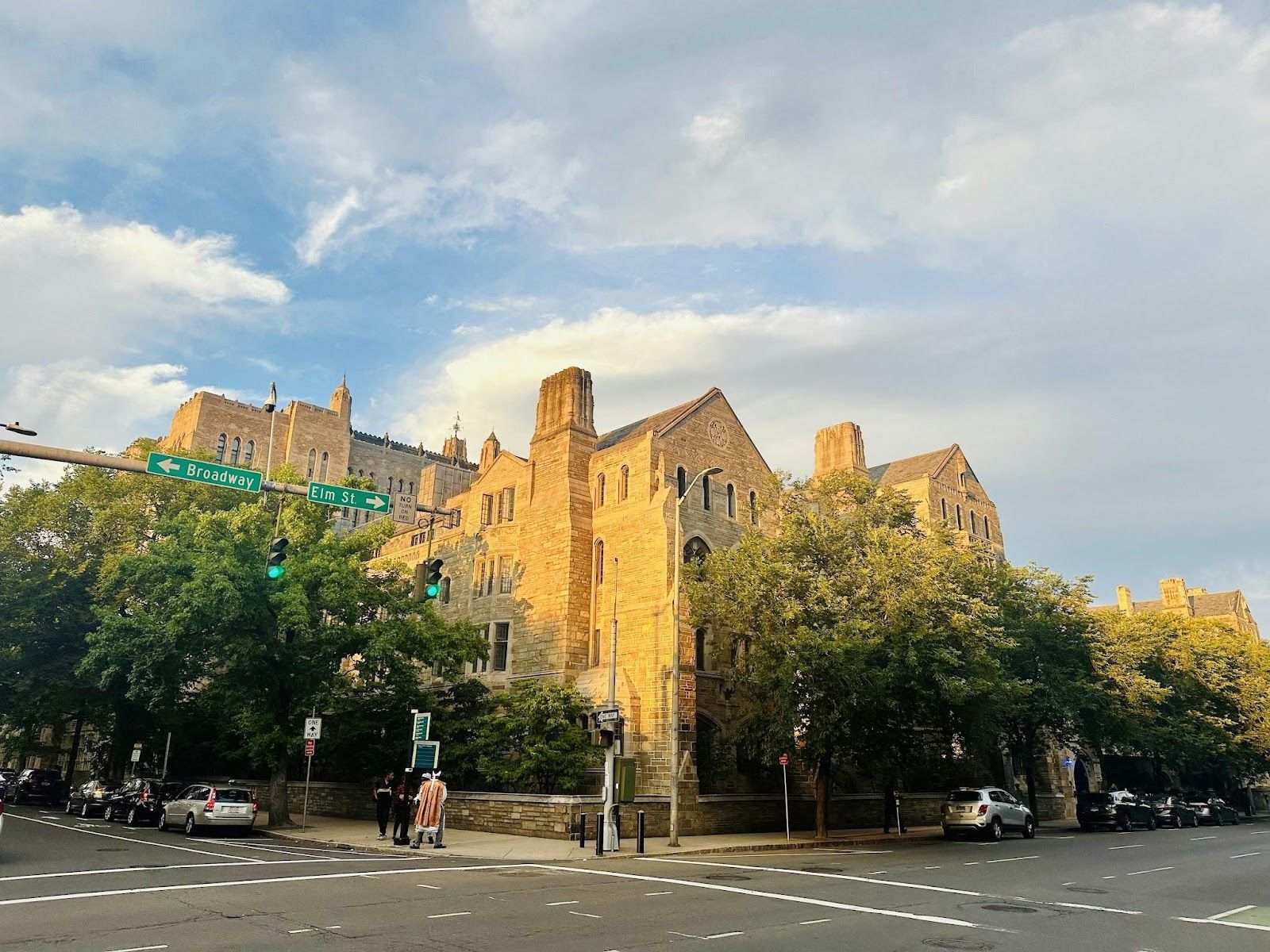
A gem of New Haven, Connecticut, Yale is another Ivy League powerhouse known for its prestigious law and drama schools.

It owes its name to Elihu Yale, a wealthy merchant who, in 1718, donated a modest shipment of goods (including portraits, books, and textiles) to a struggling collegiate school. Those goods were auctioned off, raising a much-needed £562 –a small fortune at the time.

3

Princeton University

Image: SooWan Jang

This New Jersey Ivy Leaguer, famous for its stunning Gothic architecture and strong emphasis on undergraduate education, has a bit of a nomadic past. Originally called the College of New Jersey, the educational institution moved around and changed names over the decades.

Eventually, it settled in Princeton, and became popularly referred to as "Prince-town’s College." However, the name wasn’t formally adopted until 1896.

4

Columbia University

Image: Ariel Tang

In the urban jungle of New York City, Columbia University boasts a vibrant campus life and a reputation for academic excellence. But did you know it was once known by a less-than-patriotic name?

It was founded in 1754 as King's College, which became a bit awkward after the revolution. It was then renamed Columbia College, "Columbia" being a poetic name for the new, independent country that was America at the time.

5

Dartmouth College

Image: Wei Zeng

Dartmouth is renowned for its beautiful rural setting, nestled in the picturesque town of Hanover, New Hampshire. It was named after the Earl of Dartmouth, William Legge, a British nobleman who supported the college's founding –despite never actually setting foot in America!

6

Brown University

Image: Keming Tan

This Rhode Island Ivy, known for its open curriculum and emphasis on student choice, was founded with a mouthful of a name – the College in the English Colony of Rhode Island and Providence Plantations.

It was renamed in 1704 for Nicholas Brown, Jr., a prominent merchant whose family donated generously to the school.

7

Cornell University

Image: Emily Xie

Perched atop a hill overlooking Ithaca, New York, Cornell is celebrated for its diverse academic programs and its stunning natural surroundings.

Founded by Ezra Cornell and Andrew Dickson White, this university was unique for its commitment to practical education, allowing students the freedom to choose their own course of study. It was a revolutionary notion at the time, which would guide a curricular reform across the country.

8

Stanford University

Image: Robert Gareth

Located in the heart of Silicon Valley, Stanford is renowned for its entrepreneurial spirit and its close ties to the tech industry. But this California powerhouse has a touching origin story.

Leland Stanford, Jr., the founder's son, tragically died young from typhoid fever. His father Leland Sr., railroad magnate and former state governor, and his mother Jane, founded the university in his memory, ensuring his legacy lived on through the pursuit of knowledge.

9

Duke University

Image: Charles Givens

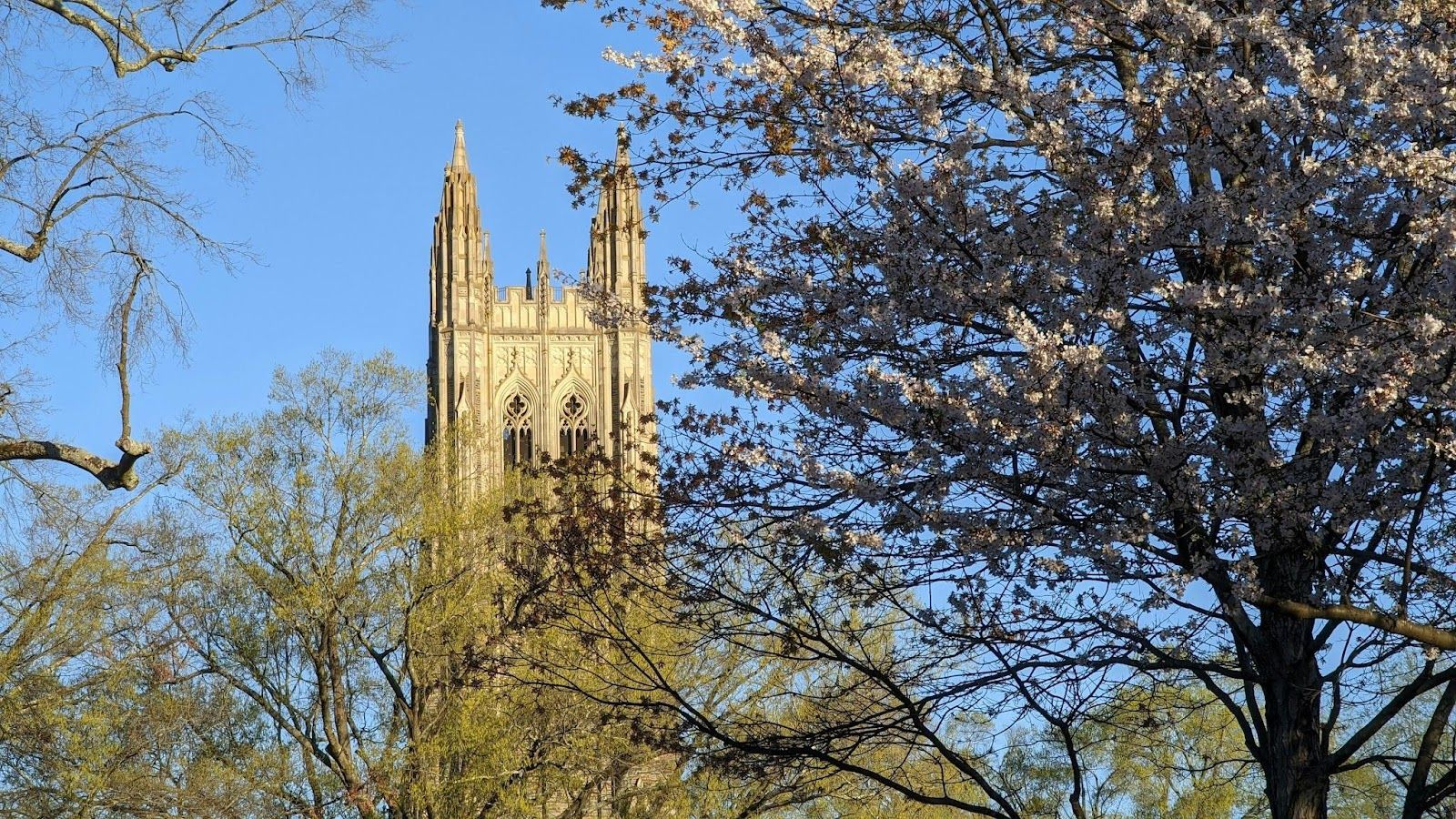
This North Carolina research giant, known for its strong medical and law schools, underwent a bit of a name change in its history.

Originally called Trinity College, it was renamed Duke University in 1924 after James Buchanan Duke, a tobacco and electric power industrialist who founded the American Tobacco Company. He established The Duke Endowment, to which he donated throughout his life and left half his estate after his death.

10

Vanderbilt University

Image: Sid Suratia

Nestled in Nashville, Tennessee, Vanderbilt is a renowned research university with a vibrant campus life. It owes its name to "The Commodore," Cornelius Vanderbilt, a shipping and railroad magnate, who provided the initial gift to establish the university.

11

Rice University

Image: Siyi Zhou

Texas businessman William Marsh Rice provided the initial funding for this Houston university, but did not live to see its opening. He was murdered by his valet as he slept, in a plot to forge the man’s will.

Despite the unfortunate circumstances, Rice University flourished through the years, becoming an institution known for its strong engineering and science programs.

12

University of Southern California

Image: Greg Campbell

"USC" is a sprawling campus known for its film school and its Trojan spirit. It was founded by Robert Maclay Widney, a judge who envisioned a university that would serve the growing area. Back then it was only an expanding frontier town, which would evolve to become the city of Los Angeles.

Looking for an extra scoop of literary fun?

Learn more with our Word of the day

uneasiness

/ˌənˈizinəs/