Eastern influences

10 Asian words that are part of our daily vocabulary


Published on August 18, 2026


Image: JJ Ying

English vocabulary is riddled with words borrowed from other languages, but we often think about those that come from French, Spanish, or other Romance languages, though we are aware of the influence of Germanic and Nordic languages. But how often do we think about the influence of Asian languages in our everyday words? Asian influence might not be as pervasive as that of some European languages, but it’s much more present than you would think. Here are 10 Asian words that everyone has used at least once.

1

Typhoon (Chinese)

Image: Олег Мороз

Several different languages —such as Arabic, Persian, or Greek— have used words with the same roots as ‘typhoon’ to describe strong winds or storms, but the term adopted into English is of Chinese origin.

During the 16th century, Portuguese sailors traveling across China adopted the Mandarin táifēng (in Cantonese, daaihfùng), meaning ‘big wind’, to describe severe storms. They spelled it as tufão, although English adopted it as touffon. Down the line, Greek influences affected the spelling, rendering our modern ‘typhoon’.

2

Tofu (Chinese through Japanese)

Image: Sherman Kwan

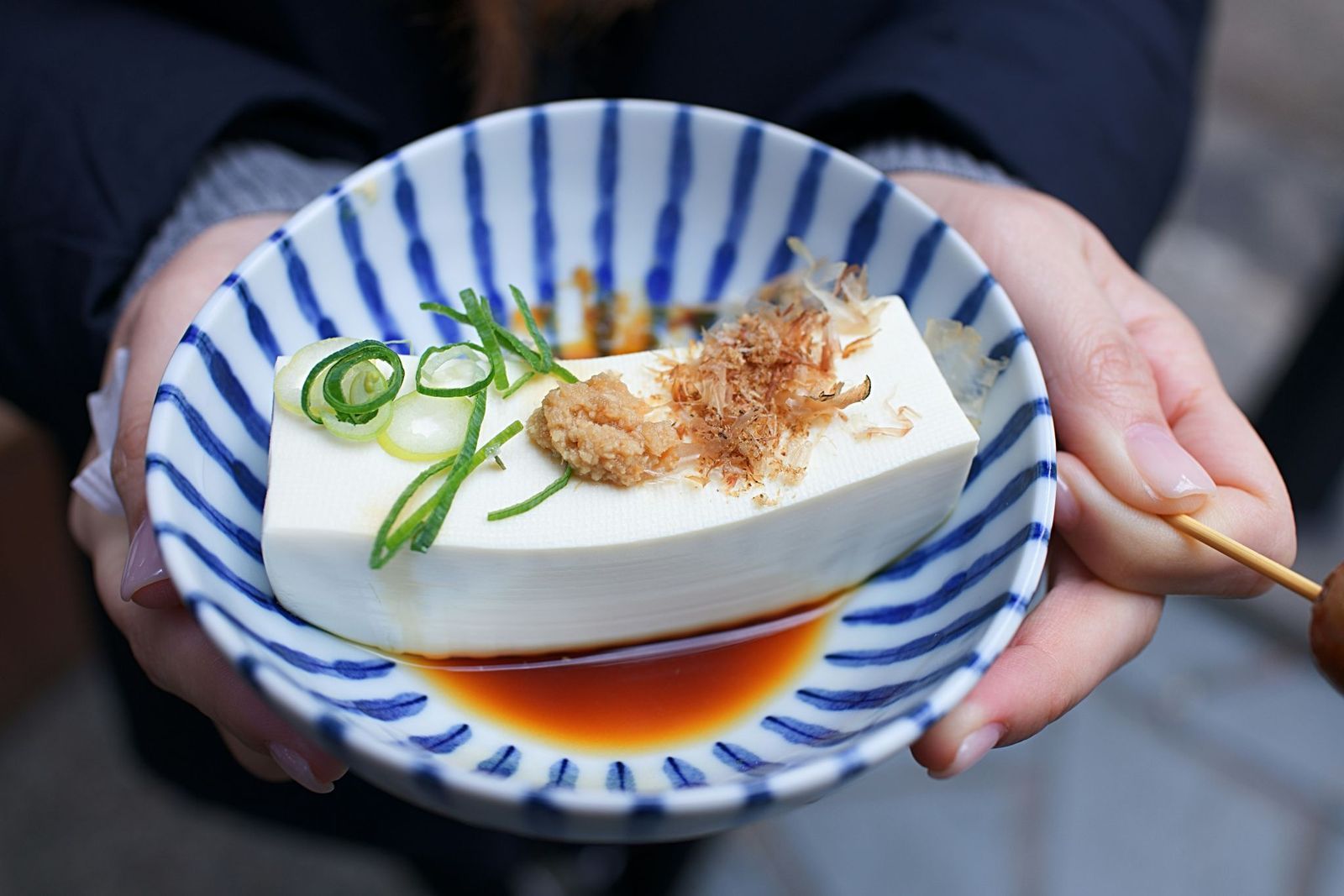
Most people know that tofu is an ingredient of Asian origin, but have you ever wondered what this word means? Although English borrowed it from Japanese, its origins are rooted in China.

The Japanese tōfu is a phonetic copy of the Chinese dòufu, a combination of dòu (‘bean’) and fǔ (‘curdled’ or ‘fermented’). However, the Chinese character for fǔ is also related to the character for ‘meat’ or ‘flesh’, and some linguists interpret that its use in ‘tofu’ is also a reference to tofu’s texture.

3

Ketchup (Hokkien Chinese)

Image: Erik Mclean

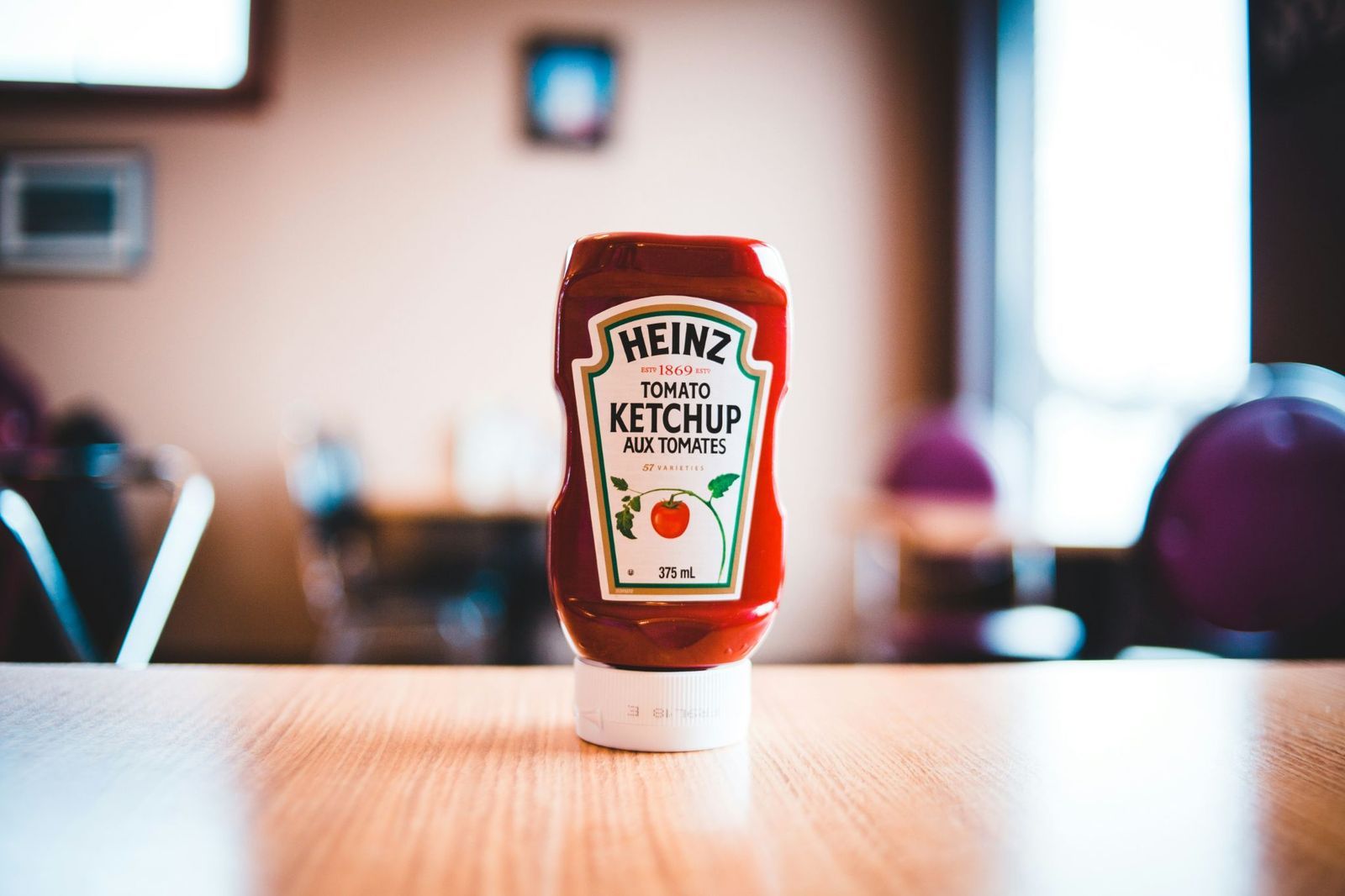
If we tried the original ketchup, we might not find many similarities with the ketchup we know. Originating from the Fujian region of China, kê-chiap or kôe-chiap was used for a pickled fish brine, but neighboring regions adopted the term to refer to savory dark sauces in general.

English and Dutch merchants picked up the term in Malaysia as kicap or kecap, but spelled it such as catchup, catsup, or ketchup. Initial English recipes relied on mushrooms, walnuts, and oysters to replicate the umami flavor of the original ketchup, but it was the addition of tomato in the 19th century that shifted the term ketchup to its current meaning.

4

Emoji (Japanese)

Image: Domingo Alvarez E

A fairly new word, the term emoji was coined in 1999 by Shigetaka Kurita, the creator of the first telephone emojis. The word is a combination of e (‘picture’) and moji (‘character’ or ‘letter’); this last term is related to words like kanji, the Chinese ideograms used in Japanese writing,

Despite what many people think, emoji is not related to the term ‘emoticon’, a portmanteau of ‘emotion’ + ‘icon’. The fact that emojis and emoticons have phonetic similarities and are used for the same purpose is just a coincidence.

5

Tycoon (Japanese)

Image: Rock Staar

We might not use the word ‘tycoon’ daily, but you might have heard it in reference to wealthy and influential businessmen or politicians. Although it can now carry a slightly negative connotation, it was not negative in its origin. In Japanese, taikun (meaning ‘great lord’) was a title given to the shogun, the Japanese military leader, often more powerful than the Emperor.

When Japan opened to foreign trade in the 19th century, the word was adopted by English-speaking diplomats to refer to the shogun and, later, to other powerful politicians. It was not until the early 20th century that its meaning shifted from politics and came to be used for wealthy and highly influential people.

6

Ginger (Sanskrit)

Image: Go to Mockup Graphics's profile Mockup Graphics

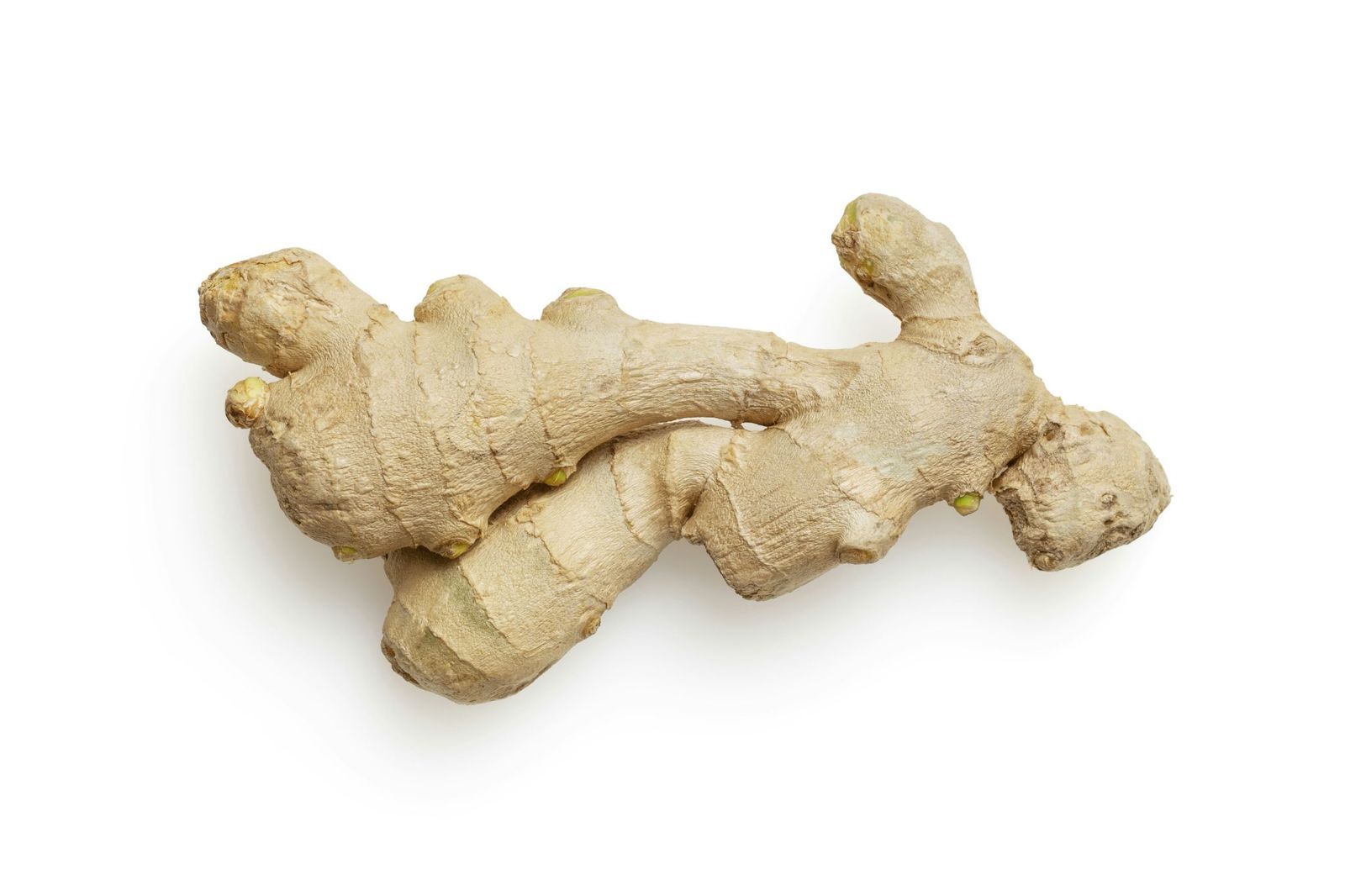
The term ‘ginger’ comes from an Old French word, but this doesn’t mean its origins are not rooted in Asia. We can find them in the Sanskrit śṛṅgavera, meaning ‘horned shaped’, a description of the antler-like shape of the ginger root.

How did śṛṅgavera become ‘ginger’? It first evolved into siṅgabera, a term adopted into Greek as zingiberis and into Medieval Latin as gingiber. Gingiber became the Old French gingibre, from where Old English got gingifer, later shortened to ‘ginger’.

7

Curry (Tamil)

Image: Yubraj Timsina

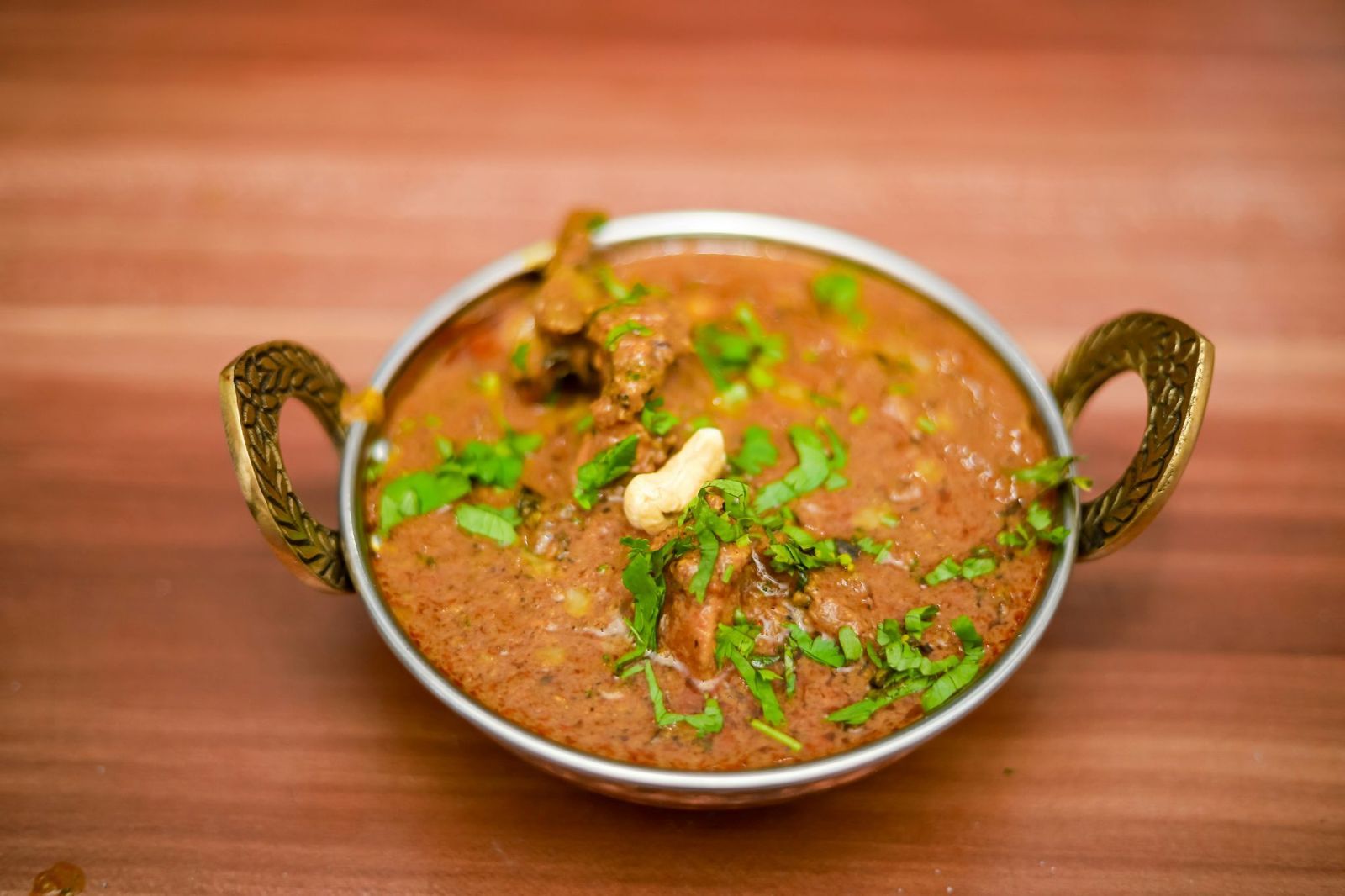
You might associate ‘curry’ with a specific spice mix, typically used for a dish also named curry. This is not wrong, but is also not exactly right. In the Tamil language, kaṟi means ‘sauce’, ‘relish’, or any spiced meat and vegetables that were eaten with rice.

The word was adopted as ‘curry’ by English and as ‘caril’ by Portuguese traders, who used it as an umbrella term for any Indian spiced stew. By association, they also used the term for a mix of spices, called masala (‘mixture’, ‘blend’) in Indian cuisine. This way, hundreds of dishes and several masalas were grouped under the name ‘curry’.

8

Zen (Japanese)

Image: Jay Castor

In Western mentality, the term ‘zen’ is associated with Eastern spiritual practices, or at least with meditation and balance, but its story and meaning are much more complex. ‘Zen’ is a transliteration of the Japanese zen, which in turn comes from the Chinese chán or chánnà, meaning ‘meditation’.

But the roots of zen go deeper. Chánnà is not an original Chinese word, but the phonetic transliteration of the Sanskrit dhyāna, meaning ‘meditation’, ‘contemplation’, or a ‘state of meditative absorption’, a term that originated in ancient India and then travelled to China and Japan as part of Buddhist spirituality.

9

Brainwashing (Chinese)

Image: Milad Fakurian

Neither ‘brain’ nor ‘to wash’ are words of Chinese origin, so how can ‘brainwashing’ be a Chinese term? It is because ‘brainwashing’ is a calque, meaning a word-for-word translation, of the Chinese xǐnǎo, which means ‘to wash the brain’.

The term xǐnǎo became popular in Chinese to describe political re-education policies used by the Chinese Communist Party. How did it enter the English vocabulary? It was translated and adopted by American journalist Edward Hunter to explain the actions of some American prisoners during the Korean War, claiming that they had been ‘brainwashed’ into adopting their captors’ ideologies or into making false statements.

10

Chop chop (Chinese)

Image: Towfiqu barbhuiya

Most Americans will understand ‘chop chop’ as slang for ‘hurry up’, but did you know that it comes from Chinese? The phrase comes from 19th-century Guangzhou (also known as Canton), where English and Cantonese had mixed to form a pidgin or contact language between two distinct languages.

Chinese language often reduplicates words for emphasis; in this case, the word sù, meaning ‘fast’, is reduplicated to make sù sù, ‘hurry up’. American and British sailors heard this phrase in the Guangzhou ports, and adopted it as the pidgin ‘chop chop’.


From the Big Ben to the Big Apple

10 Differences Between American And British English


Published on August 18, 2026


Image: Nick Fewings

Picture in your mind a conversation between a New Yorker, someone raised in the American Midwest, and someone from the Deep South. You can probably imagine a rich tapestry of accents, regional variations, and idiomatic expressions. All within the borders of the United States. Now, the Atlantic Ocean is vast. Over time, American English and its counterpart from across the pond have grown apart, sometimes evolving in completely different ways. From pronunciation and vocabulary to spelling, here are 10 differences between American and British English.

1

Colorful flavor

Image: Diana Polekhina

Most of the words that end in -our in British English are spelled -or in American English. You'll find examples in words like flavor, armor, and color. These are words of Latin origin that have found their way into English either directly or through some intermediary, particularly French.

For some time, both variations were widely accepted. However, when the time came to make a final decision, Americans decided to stick closer to the original Latin spelling of the words, while the British favored a more French-influenced spelling, keeping the extra u.

2

Toward a brighter future

Image: Jon Tyson

In Old English, the suffix -weard was used to specify direction, and it's the origin of words such as toward, forward, backward, etc. However, in a quirk of language that has stumped linguists for years, for every -ward word there is a -wards counterpart with the same meaning.

There's no consensus regarding where the extra s came from, but -wards has been the preferred British spelling since at least the 20th century, while most American writers agree that it's unetymological.

3

Zed v. Zee

Image: Diomari Madulara

British speakers call zed what Americans call zee. It seems that Americans chose the latter pronunciation because of its similarity to bee, cee, dee, etc. But, when it comes to the letter z, the differences run deeper than just naming conventions.

Most verbs that end in -ize in American English are spelled -ise in British English. In a similar fashion to the -or/-our words, both spellings were once accepted until American 20th-century dictionaries standardized the -ize spelling. Apparently, the British then decided to keep the -ise termination as a matter of national identity.

4

A central issue

Image: Jad Limcaco

In words like center, fiber, and theater, British writers prefer to use the -re termination, again influenced by their French neighbors. In these cases, Americans showed their practicality and chose a spelling that better reflects the way these words are pronounced with an American accent.

As we saw in previous entries, it wasn't until very recently that these norms were formalized. The pattern of favoring the -er termination in American English solidified itself with the 19th-century publication of Webster's Dictionary.

5

Fish and chips

Image: Gilly

We step out of the realm of spelling quirks and dive into the world of diverging vocabulary with a well-known classic: Open a bag of Lay's in the UK and they'll call them crisps. However, ask for chips and they'll serve you fries.

To add to the confusion, some British speakers accept the term fries, but consider fries and British chips to be different products, based on the thickness of the cut. In any case, we would rather put the matter to rest and agree that any and all fried potato varieties are delicious, whatever you choose to call them.

6

A flat flat

Image: Hernan Lucio

Generally speaking, flat is a British term, while apartment is an American term. They both refer to a housing unit that occupies part of a building, generally on a single story.

However, for some speakers, there's further distinction: the word apartment is reserved for more luxurious units, sometimes occupying more than one floor; while flat applies to more economical apartments, exclusively arranged on a single level–hence the name.

7

Absolute pants

Image: Robert Gramner

Another classic example when it comes to the differences between British and American English, this one could cause some embarrassment if it catches you off guard. In the UK, the word pants refers to underwear, particularly boxer shorts. For pants, they use the word trousers.

Pants is the shortened form of pantaloons, which itself derives from Pantaloon, the name of a stock character in Italian theater. Pantaloon had skinny legs and wore long pants to cover them. Trousers, on the other hand, comes from trews, a form of traditional men's garment from the Scottish Highlands.

8

Football

Image: Rémi Müller

The source of endless battles among English speakers, football means two completely different things for American and British audiences. The debate around the nature of true football is heated, and it involves quite a bit of national pride. As a matter of fact, both sports are related: They share a common ancestor, and football is their last name.

Soccer is derived from association, and association football is the full name of the sport. In the UK, it's called just football. It's extremely popular worldwide and, since 2009, the UEFA Champion's League men's final has been the most watched sports event in the world.

Outside the United States, most English-speaking countries refer to the sport played during Super Bowl Sunday as American football. The term gridiron football is also sometimes used, albeit seldomly, based on the characteristic marks on the playing field.

9

Autumn leaves fall

Image: Matt

Both autumn and fall are used to refer to the season between summer and winter in which leaves fall and pumpkin spice lattes blossom. However, autumn is much preferred for British speakers, while Americans usually refer to it as fall.

Both terms are quite common and, even if it's just from hearing it in movies, most people in the UK will understand if you use the word fall to talk about the season, even if it takes a few tries.

10

Full stop, period

Image: Jan Kahánek

This might come as a surprise, but British and American speakers have different terms for that little dot that marks the end of a sentence. The period, as it's called in America, is referred to as a full stop across the pond. It's one of those unexpected differences between these two branches of English, and one that can actually hinder fluid communication if you are not aware of it.

Even if it's not immediately understood as the name of the punctuation mark, the word period, as an interjection meaning "that's all," is slowly winning territory in British everyday language.

Looking for an extra scoop of literary fun?

Learn more with our Word of the day

diligent

/ˈdɪlədʒənt/