DOOMSDAY TALES

Did you know about these 10 famous failed predictions?


Published on March 10, 2024


Image: Javier Miranda

Oddly, the idea of the apocalypse has always fascinated humanity. Throughout history, many have predicted the end of the world with fervor and certainty - and many have believed in these predictions with genuine dread.

However, time and time again, these doomsday prophecies have failed to materialize, leaving many scratching their heads or just breathing a sigh of relief. Let's take a look at 10 instances where the world didn't end as predicted.

1

The Year 1000

Image: Zoltan Tasi

Some historians believe that as the first millennium drew to a close, widespread panic gripped Europe, with many fearing the end of the world would coincide with the year 1000. The belief was rooted in Christian theology, as a thousand years had passed since Jesus’ birth. However, when the anticipated end-of-days came, absolutely nothing happened. Some were disappointed, while others hit the snooze button on the prophesized apocalypse until 1033, a thousand years after Jesus’ crucifixion (spoiler alert: they were also wrong).

2

Johannes Stöffler's Deluge

Image: Elias Null

In 1499, Johannes Stöffler, a German mathematician and astronomer, predicted that a great flood would engulf the world on February 20, 1524. Stöffler based his prophecy on the alignment of planets under the watery sign of Pisces, believing it foretold a catastrophic deluge. His prophecy was believed by many, and boat builders saw an unexpected boom in sales, with even a German nobleman ordering to build a three-story ark.

3

Millerites' Great Disappointment

Image: eberhard grossgasteiger

One of the most notable failed doomsday predictions in religious history was the prophesied by William Miller, an American clergyman. Miller predicted the Second Coming of Christ on October 22, 1844, and his prophecy led to an ardent following known as the Millerites. However, when Jesus failed to appear as expected, his followers experienced what they called the "Great Disappointment." Many were justifiably angry, as they had sold their earthly possessions in a hurry, while many others turned to different congregations, or abandoned their beliefs completely.

4

Halley's Comet Panic

Image: Steve Busch

As Halley's Comet made its close approach to Earth in 1910, an observatory in Chicago announced that it had detected a toxic gas called cyanogen in the composition of the comet’s tail. Although ridiculous by modern standards, rumors then spread of the danger of the comet's poisonous gas tail, exacerbated by reports from media outlets like The New York Times, which reported that a French astronomer believed the gas could "impregnate the atmosphere" and asphyxiate all life on the planet.

5

Edgar Cayce's Cataclysm

Image: Daniil Silantev

Famed psychic Edgar Cayce prophesied a series of cataclysmic events he called "Earth Changes," that included the sinking of continents and the shifting of poles among many other catastrophes, during the late 20th century. Despite Cayce's reputation for accuracy in other predictions, these apocalyptic visions never materialized, leaving his followers perplexed.

6

A New Ice Age

Image: Tom Wheatley

In the 1970s, scientists noticed that global temperatures had decreased slightly since the 40s, and some conjectured that this trend could lead to an impending ice age. Though very few scientists actually thought this was likely - and most actually warned of the opposite trend of global warming - sensationalist media quickly picked up the ice age prediction, sparking fears of widespread famine and societal collapse. However, as subsequent research revealed the complexities of climate dynamics, the notion of an imminent ice age apocalypse was thoroughly debunked.

7

The Jupiter Effect

Image: Planet Volumes

In 1974, John Gribbin and Stephen Plagemann - two actual scientists for a change - theorized that the tidal forces resulting from the alignment of planets in our solar system, particularly Jupiter, could lead to catastrophic earthquakes in 1982. Though they later reconsidered their position after further research, their predictions gained some traction in the media. Luckily, the supposed effect failed to cause any noticeable disruption, and planetary alignments again proved to be completely harmless to life on Earth.

8

Y2K Bug

Image: Jake Walker

The turn of the millennium brought widespread fear of a technological meltdown due to a hypothetical software error known as the Y2K bug. Experts warned of computers crashing and electronically operated infrastructure collapsing as their internal clocks rolled over to the year 2000. Yet, when the clock struck midnight, the anticipated chaos failed to materialize, in part thanks to extensive preparation and updates to computer systems worldwide, but even where little had been done to prevent the error, problems were almost non-existent.

9

CERN's Large Hadron Collider

Image: Antonio Vivace

When the Large Hadron Collider (LHC) was switched on in 2008, concerns arose of potential black holes swallowing the Earth or the accidental creation of strange particles that could convert all matter into a new form. Since one of the stated goals of the LHC was actually to simulate microscopic black holes, it was natural for some people without knowledge of the matter to get a little nervous. However, obviously nothing bad happened, and the LHC has operated safely, advancing our understanding of particle physics without bringing about our demise.

10

End Of The Mayan Calendar

Image: Kym MacKinnon

As the end of the Mayan Long Count calendar approached in 2012, speculation ran rampant that it signaled the end of the world. Despite Mayan scholars stating that there were no end of the world prophecies included in the ancient calendar, believers predicted all sorts of crazy catastrophes, from planetary alignment to cataclysmic events. As we all know, December 21, 2012, came and went without incident, proving doomsayers wrong once again.



Linguistic smothies

Twirling, as in twisting and whirling? 10 common portmanteaus


Published on March 10, 2024


Image: Kim Menikh

We all know that brunch means breakfast plus lunch, or that Eurasia is used to refer to the connected European and Asian continents. But did you know that words like twirl, smog, or Texarkana are in the same category of portmanteaus or blend words?

Portmanteaus (from the French porte-manteau, ‘cloak-carrier’, a suitcase that opens in two equal parts) are terms formed by combining two or more words, their sounds, or their meanings. They were named by Lewis Carrol (the one from Alice in Wonderland) to explain the logic behind some odd words in his poem Jabberwocky: like a porte-manteau that you open in two parts, portmanteaus are opened to reveal two meanings. Let’s explore some common portmanteaus (and also some that are false).

1

Twirl

Image: Nihal Demirci

This word is used to talk about anything that spins or rotates, like someone doing a pirouette or moving their thumbs around each other. It is a term common in everyday language, but did you know it’s a blend of two words?

Yes, twirl comes from combining twist and whirl, both in sound and meaning. A twirl, then, is a rotation (twist) that happens rapidly (whirl). Something to think about the next time you find yourself twirling your thumbs.

2

Popsicle

Image: Jarritos Mexican Soda

The word ‘popsicle’ was originally the name of an ice pop brand started by Frank Epperson, who forgot a bucket of powdered lemonade on his porch and found it frozen the next morning. But how did the word ‘popsicle’ come to be?

This treat was originally called the "Epsicle ice pop", a combination of Epperson and icicle. Allegedly, Frank’s children started calling it a ‘popsicle’ (pop + icicle) and insisted the name be changed. In time, the brand became so popular that it became the usual term for any ice pop.

3

Texarkana

Image: Domino Studio

If you ever find yourself near the Texas-Arkansas border, you might find a city called Texarkana. In fact, you might find two cities called Texarkana, one in each state, both in the Texarkana Metropolitan Area.

It’s not clear who named them, but everyone agrees that Texarkana is a portmanteau for Texas-Arkansas-Louisiana. Both cities claim to have the same birth date, but we can debunk this: Arkansan Texarkana was founded a year before Texan Texarkana.

4

Contrail

Image: William Hook

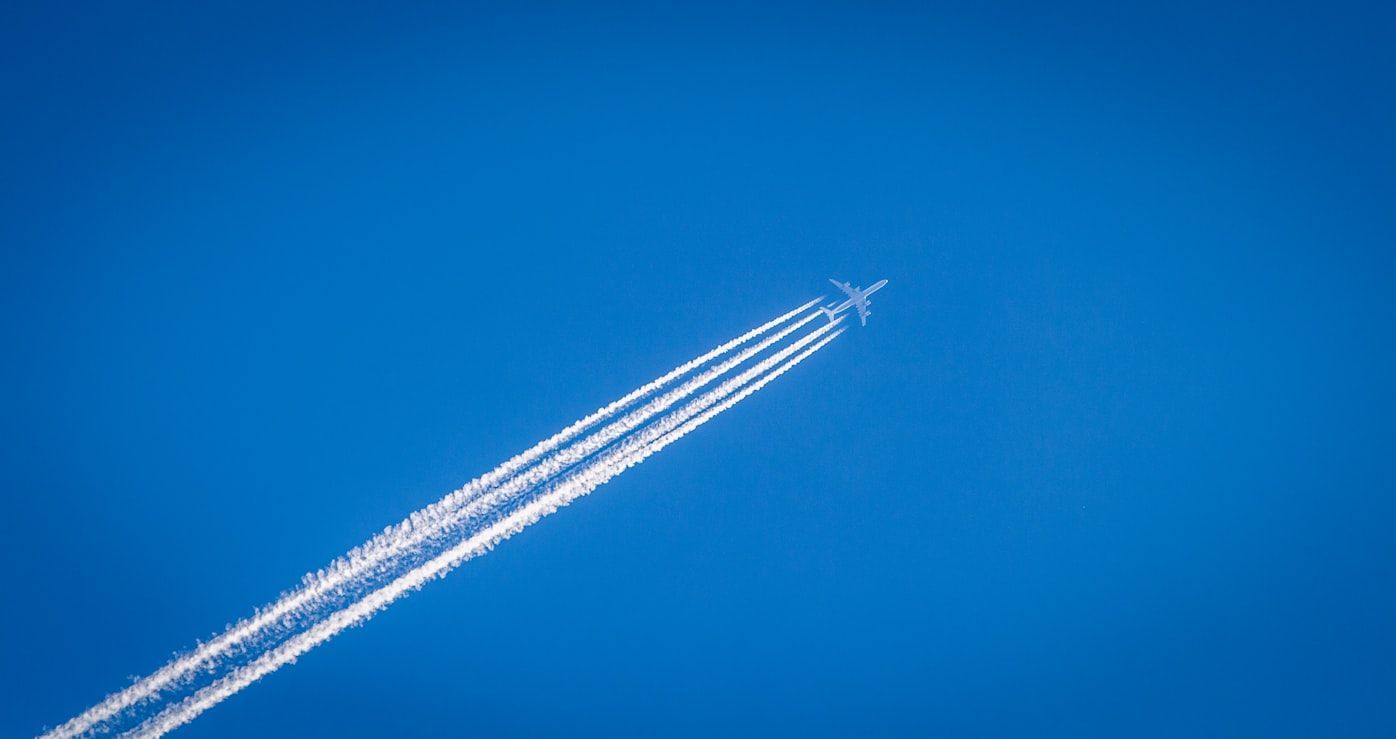
First of all, what is a contrail? Contrails are the line-shaped clouds left by aircraft, missiles, or rockets as a result of engine exhaust vapor combining with low temperatures. The vapor of the engines condenses when it contacts the cold atmosphere, leaving a trail, so condensation + trail: contrail.

5

Endorphin

Image: Madison Oren

Sadly for couch potatoes everywhere, it is a proven fact that exercise makes you feel good. This is because, during physical exercise, our brain creates endorphins, which work as painkillers and mood boosters.

Why are these natural painkillers called this way? You might remember the word morphine, the name of a common opiate analgesic. Endorphins are endogenous, meaning they are created by our organism. Combine this word with an old spelling of morphine, endogenous + morphin: endorphin.

6

Sitcom

Image: Ben Griffiths

Any sitcom fan might tell you that the appeal of the genre is not about the narrative arcs but the funny situations the characters find themselves in.

This comedic format, originally produced for radio, was first called situational comedy. With time, it was combined into a portmanteau, situational + comedy: sitcom.

7

Parsnip

Image: Carl Tronders

Let’s have a look at a false portmanteau. For centuries before sugar was brought to Europe, parsnips were used as a sweetener. Ancient Romans called them pastinaca, now part of their scientific name (pastinaca sativa). How did they come to be called parsnips?

It is a widespread belief that parsnip is a portmanteau for parsley + turnip, since parsnip leaves look similar to parsley, but this is not true. In Old French, parsnips were called pasnaie, a word that Old English adopted as pasnepe. The ending -nepe meant turnip, so in time, pasnepe evolved into parsnip. So, not a blended word, but one that you will find in many portmanteau lists.

8

Electrocution

Image: Nikhita Singhal

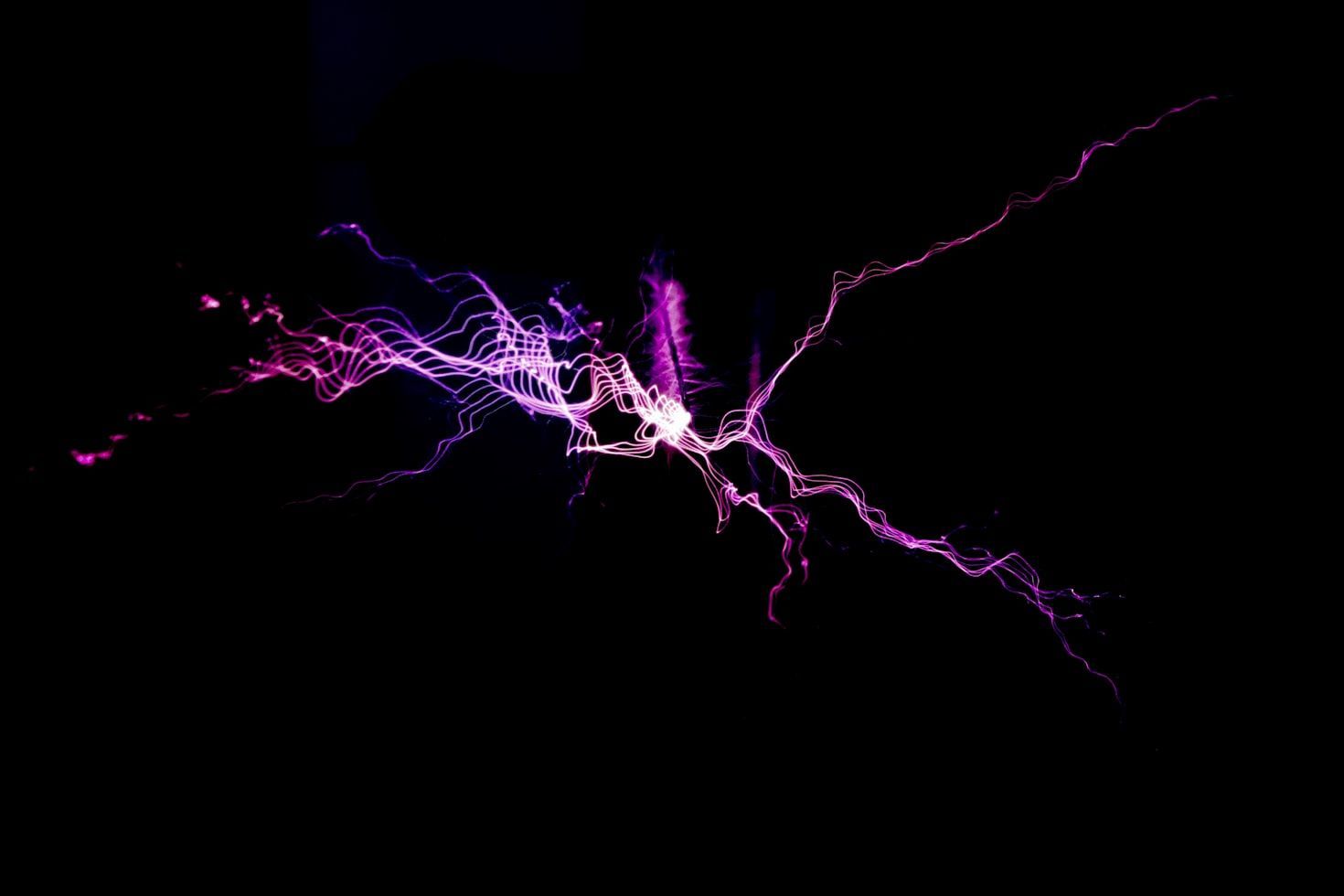
Being electrocuted is not a pleasant experience, and the origins of the word are as gruesome as the thing described. In the late 19th Century, the state of New York adopted the electric shock as the standard form of capital punishment. Newspapers covering the first execution by this method mixed the words electric + execution, coining the portmanteau electrocution.

Lacking a judicial term to describe accidental deaths caused by electricity, electrocution came to be used for all incidents involving an electric shock.

9

Smog

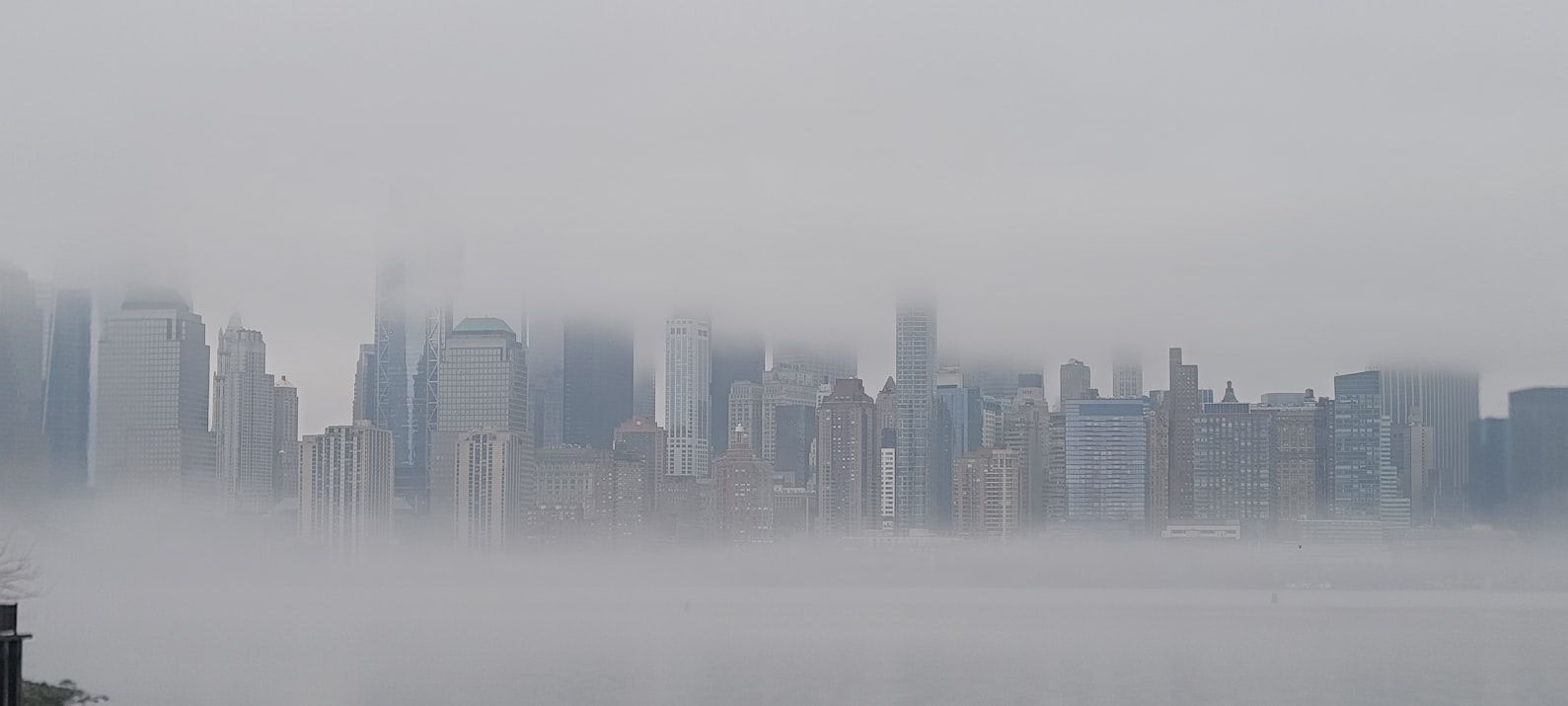
Image: Uvi D

Air pollution is an unfortunate reality in our current world, and words like smog are a byproduct of these environmental issues. The city of London has suffered from bad air quality and fog for many centuries, an issue only worsened by smoke during the Industrial Revolution.

This phenomenon, also called pea soup fog, eventually became known as smog, a portmanteau of smoke + fog. The term not only describes the greyish color associated with it, but also the smell produced by chemical contaminants.

10

Shepherd

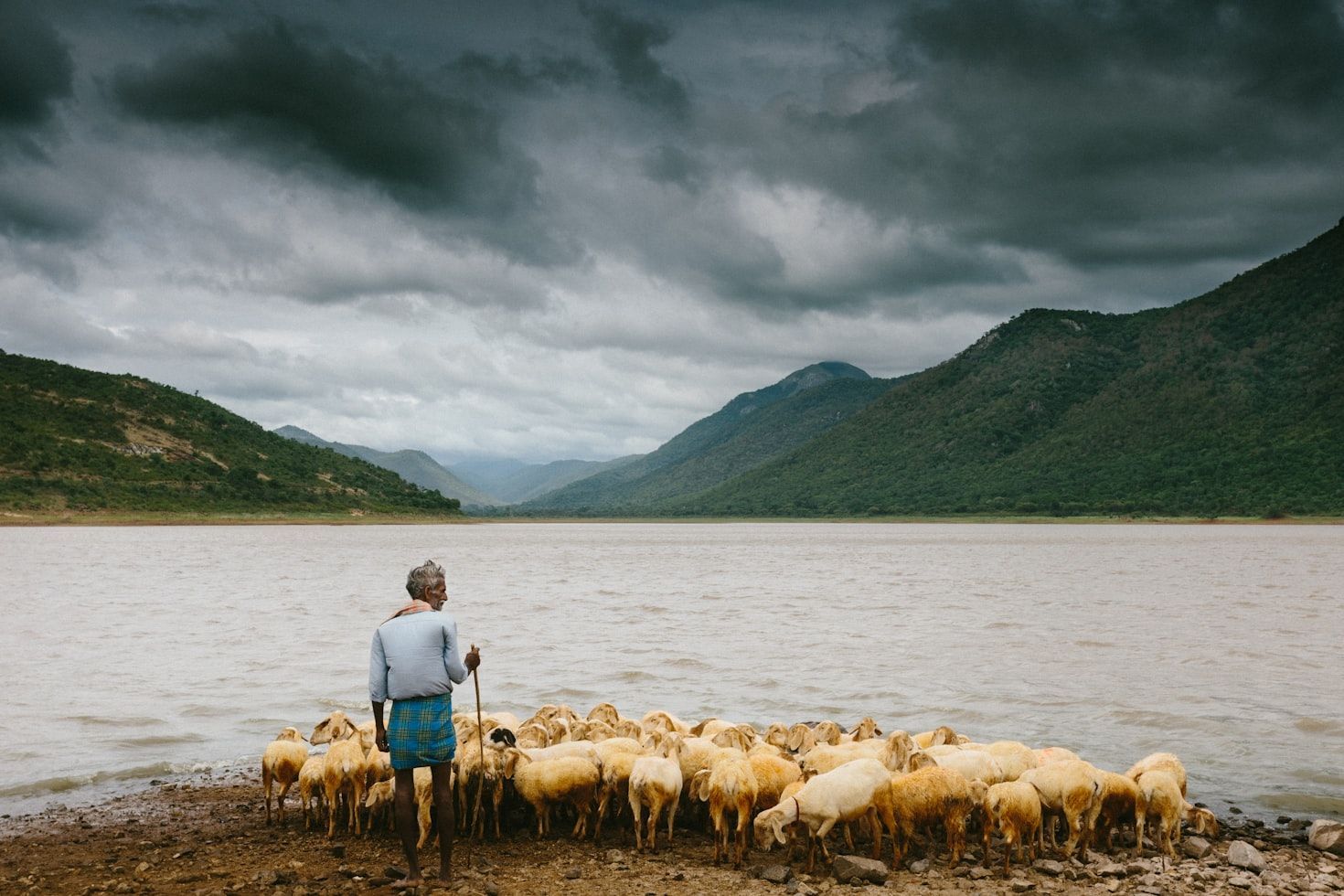
Image: joseph d'mello

Let’s end our list with a portmanteau nearly as old as the profession it names. In the English language, the word shepherd is recorded as early as the 12th Century, though it had been in use for many centuries before that. Middle English sceepherde comes from Old English scēaphyrde, a portmanteau for scēap (sheep) + hierde (herdsman, someone who keeps domesticated animals).

The original term was only used for animal keepers, but eventually gained the added meaning of ‘leader’ or ‘guide’. Lewis Carroll might have named portmanteaus in the 19th Century, but they have existed since the dawn of time.

Looking for an extra scoop of literary fun?

Learn more with our Word of the day

iterate

/ˈɪdəˌreɪt/